


US3 min(s) read
Warning issued to all video doorbell owners as Nancy Guthrie masked kidnapping footage emerges
.webp_SmgFsc?tr=cr-292.0.1244.952,f-webp,q-70,w-100)
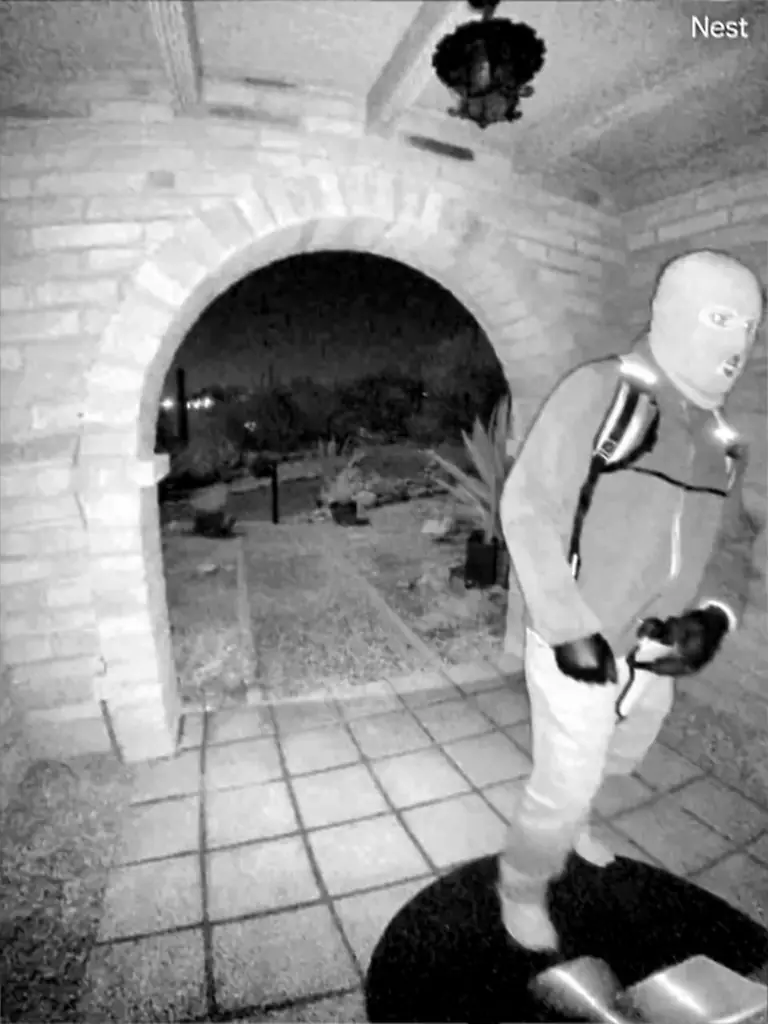
The case surrounding the disappearance of Nancy Guthrie, the mother of Today co-host Savannah Guthrie, has taken a dramatic turn. The FBI recently released crucial footage from a Google Nest Doorbell outside Guthrie’s Arizona home, showing a masked suspect.
This footage, initially thought to be lost due to the lack of an active subscription, has raised serious privacy and security concerns for owners of video doorbells. How did investigators manage to recover this footage, and what does it mean for future cases involving security camera data?
Per NBC News, investigators say the footage was retrieved from “residual data located in backend systems,” but the recovery process was complex and resource-intensive. While the footage might seem like a simple retrieval, it raises an uncomfortable question for home security camera users: is your data really gone when you hit delete?
How footage was recovered from the cloud
Although Nancy Guthrie did not have a paid subscription for cloud storage, a forensic expert explains that data from cameras like Google’s Nest may not be immediately erased.
"When you delete something from a server, it doesn’t get overwritten immediately,” Nick Barreiro, a chief forensic analyst, said per The Verge. "The file system is just told to ignore this data, and this space is now available to be used. But if no new data is written over it, it’s still going to be there."
Google Nest, unlike many other video doorbell systems, offers a small amount of free cloud storage, meaning that clips can be temporarily uploaded even without an active subscription.
The footage of the masked suspect, which would normally have been deleted after a few hours, was potentially recoverable because it had been stored, even briefly, in Google’s cloud.

What does this mean for your privacy?
While the recovery of this footage was likely an exceptional circumstance, it raises serious concerns for future investigations. Experts suggest that although it’s technically possible to recover deleted footage, the process is not straightforward and would typically require significant resources. For most users, the chance that deleted footage could be accessed is extremely low, but it is possible.
The case has also prompted concerns over how companies like Google handle user data. Cybersecurity experts have noted that Google’s Nest system retains data in a manner that could enable law enforcement access after deletion.
Patrick Jackson, a former NSA researcher, pointed out that some video doorbell systems have tamper alerts, which may trigger companies to retain data longer. "There's nothing in the terms of service that would prevent Google from activating this feature," Jackson said, per CBS News.
With this in mind, homeowners concerned about the privacy of their security footage might consider using local storage solutions or services that offer end-to-end encryption to ensure that their data remains secure.
The recovery of footage from Nancy Guthrie's home could set a precedent for how video surveillance data is accessed by authorities in the future.