


US3 min(s) read
If Donald Trump dies while in office, this is the first thing you will hear
.webp_QQJmGo?tr=cr-345.0.1535.1190,f-webp,q-70,w-100)
Donald Trump is alive and well, but the question of what would happen if he were to die while in office keeps coming up.
The President has remained adamant that his health is so good that even doctors are amazed, but viewers can't help but notice whenever he has bruises on his hands.
Should Trump pass away while in office, there are procedures in place to ensure the handover of power is as seemless as possible.
What Happens When a President Dies?
The U.S. Constitution is clear on the matter of presidential succession. If a president were to die, the vice president would step into the role immediately, per the Mirror.
Article II, Section 1, Clause 6 of the Constitution states: “In Case of the Removal of the President from Office, or of his Death, Resignation, or Inability to discharge the Powers and Duties of the said Office, the Same shall devolve on the Vice President.”
In practice, this means the Vice President becomes the acting President right away, taking the oath of office at the earliest possible moment.
This ensures there is no leadership vacuum during a national crisis or transition.
So the first thing you will hear, should Trump pass away within the next three years, is JD Vance taking the oath.
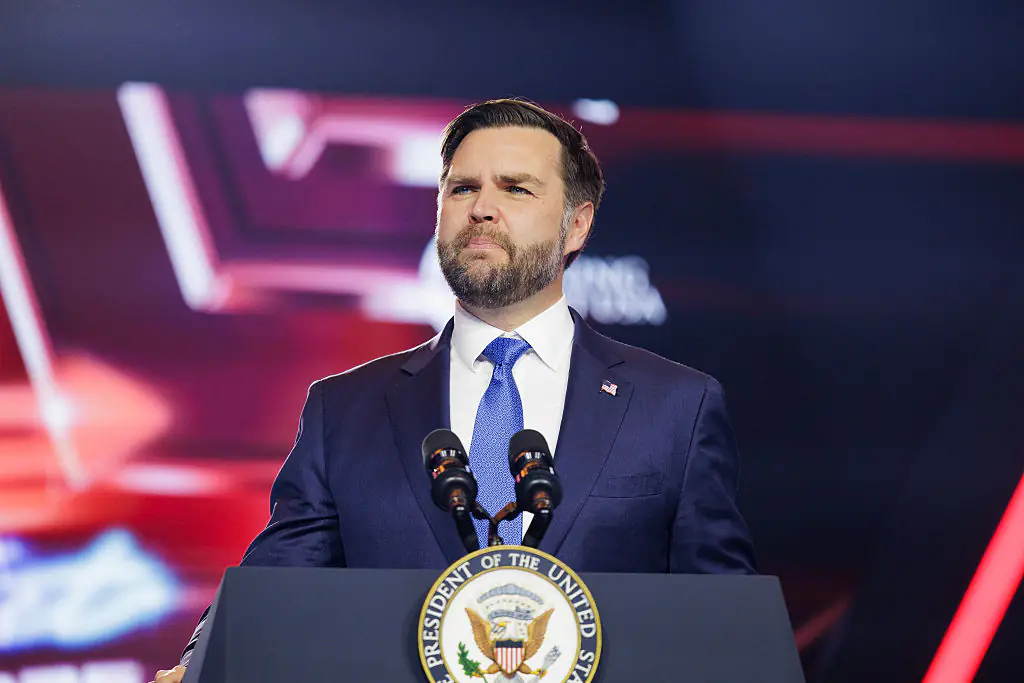
What Happens to the Vice President When They Become President?
When a vice president assumes the role of president following the death of the incumbent, the transition is swift.
The vice president is immediately sworn in as acting president and is then free to make important decisions regarding the former president’s administration. They have the option to retain any or all of the former president's cabinet members or replace them with their own team.
The new president also has the ability to select a new vice president, who must be confirmed by both houses of Congress.
The rules for running for election differ depending on how long the vice president has served. If they have served less than two years of the term, they can run for two additional terms. If they have served more than two years, they are only eligible to run for one more term.

The most recent example of a vice president stepping into the role of president after a death in office was Lyndon B. Johnson.
After President John F. Kennedy was assassinated in 1963, Johnson was sworn in as the 36th president of the United States aboard Air Force One at Dallas Love Field, just two hours and eight minutes after Kennedy’s death.
Johnson, who chose to keep most of Kennedy’s cabinet, won re-election in 1964 but did not seek a second full term in 1968.