


US4 min(s) read
What will happen if President Trump gets assassinated? Protocol has been explained
.webp_QQJmGo?tr=cr-345.0.1535.1190,f-webp,q-70,w-100)
Donald Trump remains one of the most talked-about figures in modern politics.
In recent months, social media has been flooded with rumors about his health, including a false claim that the president had died.
His brief disappearance from public view, comments from Vice President JD Vance, and renewed scrutiny over visible bruising on his hands have only intensified speculation.
With Trump in his second term, questions about presidential succession are once again surfacing.
What would actually happen if a sitting president were to die in office?
A nation thrown into chaos
In a YouTube video by Unsolved, the country is glued to screens as Donald Trump prepares to take the stage at a packed rally.
Just as he is about to deliver another broadside against “fake news” and the “Deep State,” the unthinkable happens. He is assassinated in front of thousands of supporters and millions watching at home.
The country is thrown into turmoil. Conspiracy theories erupt almost immediately. Was it the Deep State? A former supporter? An extremist? Even someone within his own party? Social media explodes with hashtags and speculation, with some pushing #TrumpWasRight while others demand answers with #WhoDoneIt.
The immediate consequences would be seismic.
The Republican Party, already preparing for a high-stakes election cycle, would be plunged into crisis.
A convention meant to formally back Trump could quickly devolve into a fierce power struggle.
Figures such as Mike Pence, Ron DeSantis, Nikki Haley, and Ted Cruz would suddenly find themselves at the center of a political storm, each weighing how to step into the vacuum without alienating Trump’s fiercely loyal base.
For many supporters, Trump’s death would transform him from political leader to martyr.
Protests could erupt nationwide. Armed militia groups might claim they are defending his legacy.
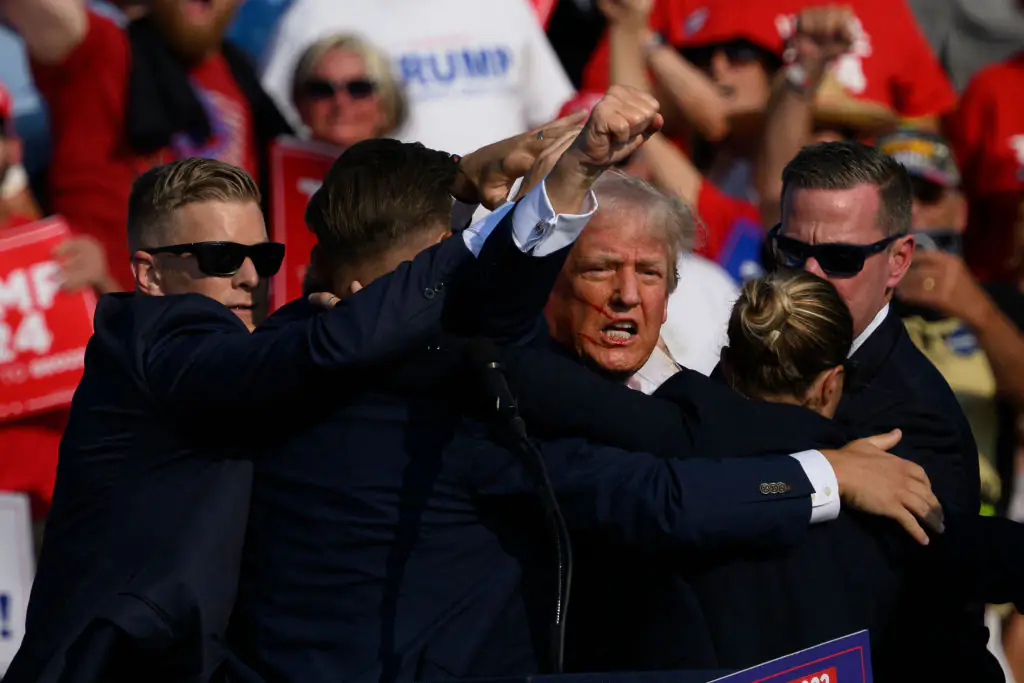
Others would fear the unrest could spiral into something even more destabilizing than the protests seen in 2020. The Democrats, meanwhile, would hardly be in a comfortable position.
Facing an election amid national upheaval would carry its own risks, especially with tensions over legitimacy and the potential for unrest.
There would likely be calls to delay the election, though doing so would require bipartisan agreement that seems improbable in today’s climate.
Moving forward as scheduled would pose its own dangers, as the country grapples with grief, anger, and uncertainty. In the worst case scenario, disputes over the election’s fairness could ignite deeper conflict.
Beyond politics, the cultural shock would be enormous. News coverage would intensify even further. Late night hosts would struggle to balance satire with solemnity.
Social media would blur the lines between fact and speculation. The assassination of such a divisive and influential figure would leave lasting scars, potentially fueling more extreme movements on both sides and testing the resilience of American democracy itself.

The constitutional process: how power would transfer
While the political fallout could be chaotic, the legal framework is clear.
Over America’s 248 year history, eight presidents have died while in office, four due to assassination and four from natural causes.
The most recent was President John F. Kennedy in 1963. His assassination led directly to the ratification of the 25th Amendment, which clarifies presidential succession.
The amendment states: “The Vice President shall become President if the President is removed from office, dies, or resigns.”
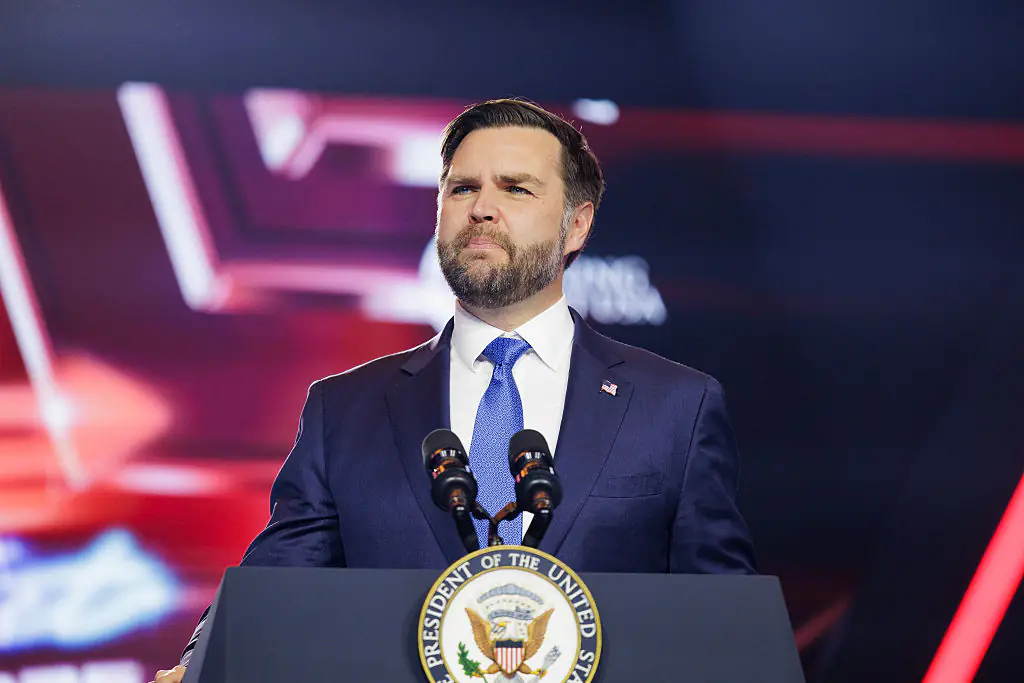
If Trump were to die in office, Vice President JD Vance would immediately be notified and sworn in as president. Only after the transition of power would the public be formally informed. National flags would be lowered to half staff for at least 30 days.
Once sworn in, Vance would be required to nominate a new vice president.
That nominee would need to be confirmed by a majority vote in both the House and the Senate. If, for some reason, the vice president were unable to assume the presidency, the Speaker of the House, currently Mike Johnson, would be next in line.
In other words, while emotions and politics might run high, the constitutional mechanism for succession is designed to function swiftly and decisively.
Ceremonial honors and a global farewell
If a president dies outside Washington, DC, their body is typically returned to the capital. It would most likely lie in state in the Capitol Rotunda, allowing members of the public to pay their respects in a solemn and widely televised ceremony.
Though the president is a government employee, the funeral itself is organized by the family and remains a private matter. Services could stretch across several days or even a full week. World leaders would likely attend, and global broadcasts would carry every moment.
A 50 gun salute, one round for each state, would mark the occasion.