Loading...
World3 min(s) read
world3 min(s) read
uncategorised3 min(s) read
Published 16:09 01 Dec 2022 GMT
us3 min(s) read
Published 10:00 23 Dec 2022 GMT
A woman is facing a lengthy prison sentence due to the collapse of a cryptocurrency company.
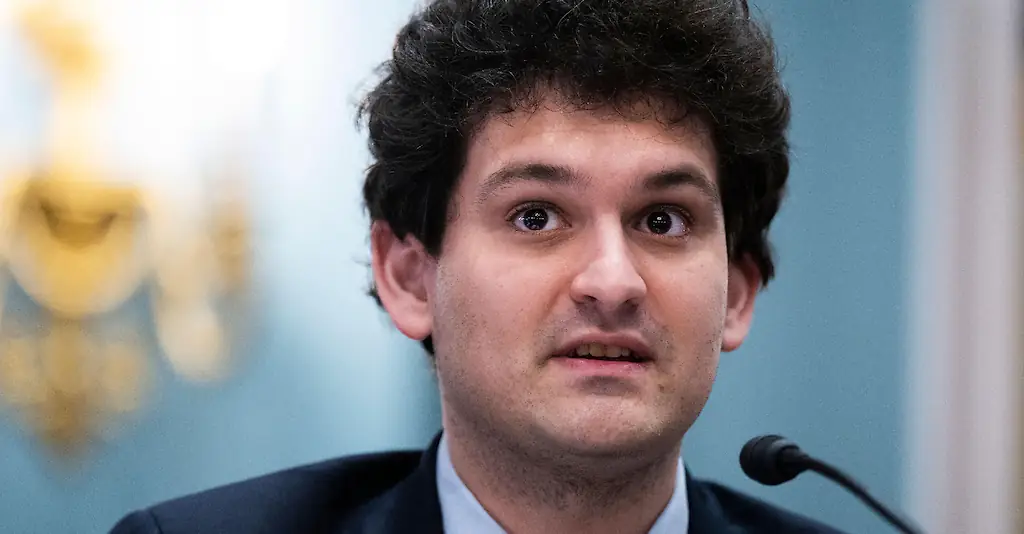
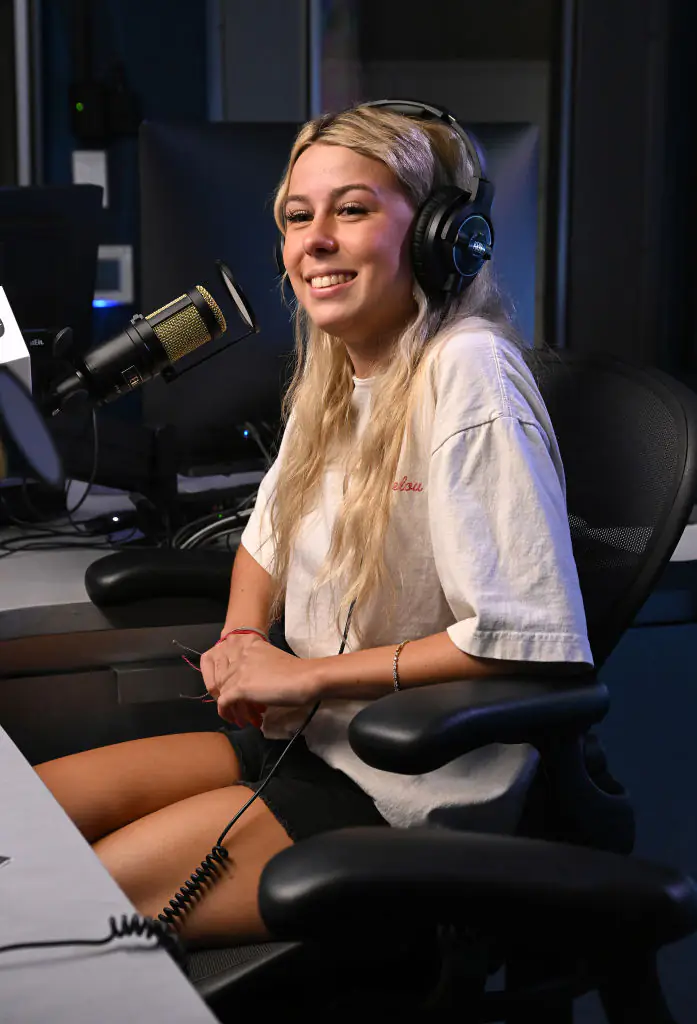
Per The Washington Post, Caroline Ellison could be looking at a 110-year prison sentence after she pleaded guilty to aiding the collapse of FTX Trading, as well as several other companies under the reign of CEO Sam Bankman-Fried.
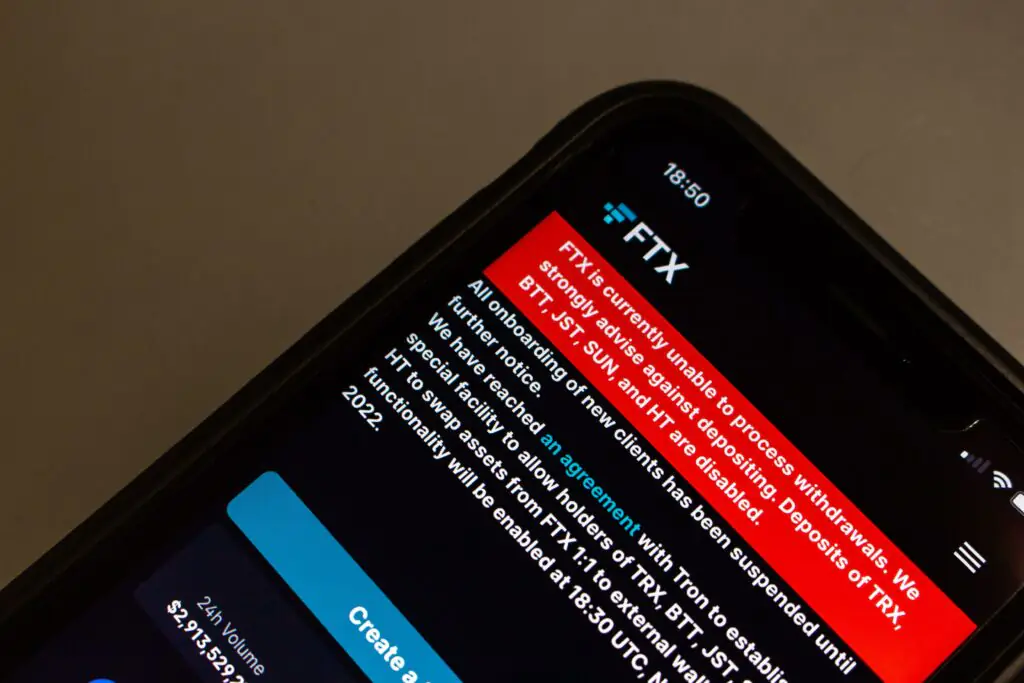
It was first reported that FTX, along with Alameda Research, as well as 130 other associated companies filed for bankruptcy on November 11 after some financial difficulties which led to investors withdrawing their funds from the businesses.
Customers were also left helpless as many of them were unable to access their funds during the tumultuous time and without a bail-out plan in place, Bankman-Fried was left with no other option but to file for Chapter 11 bankruptcy.
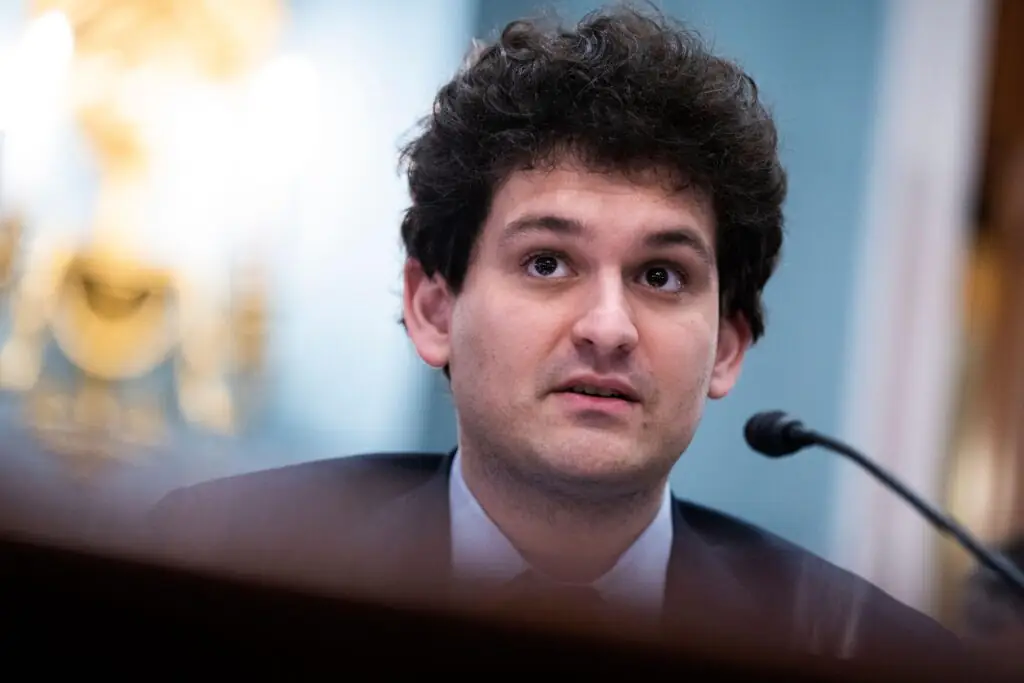
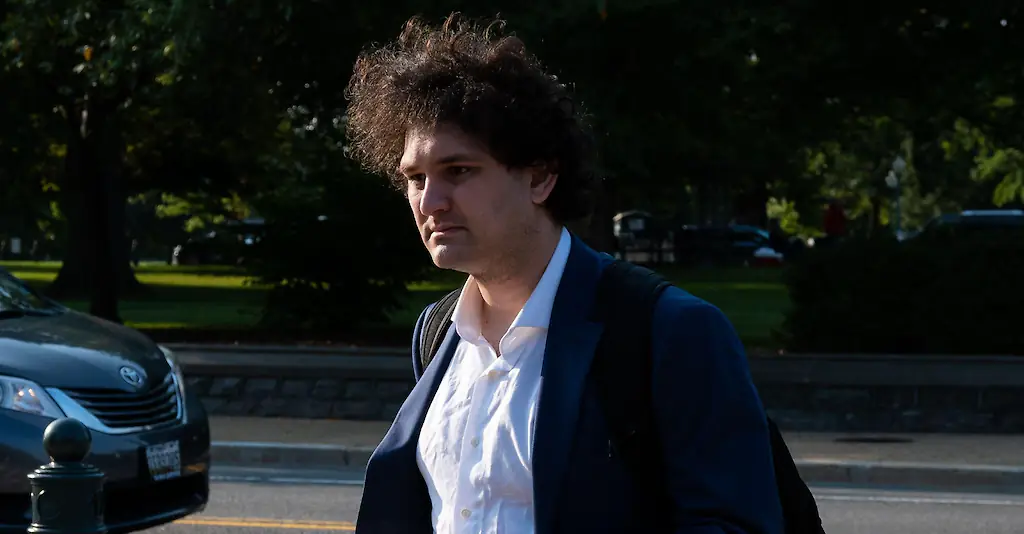
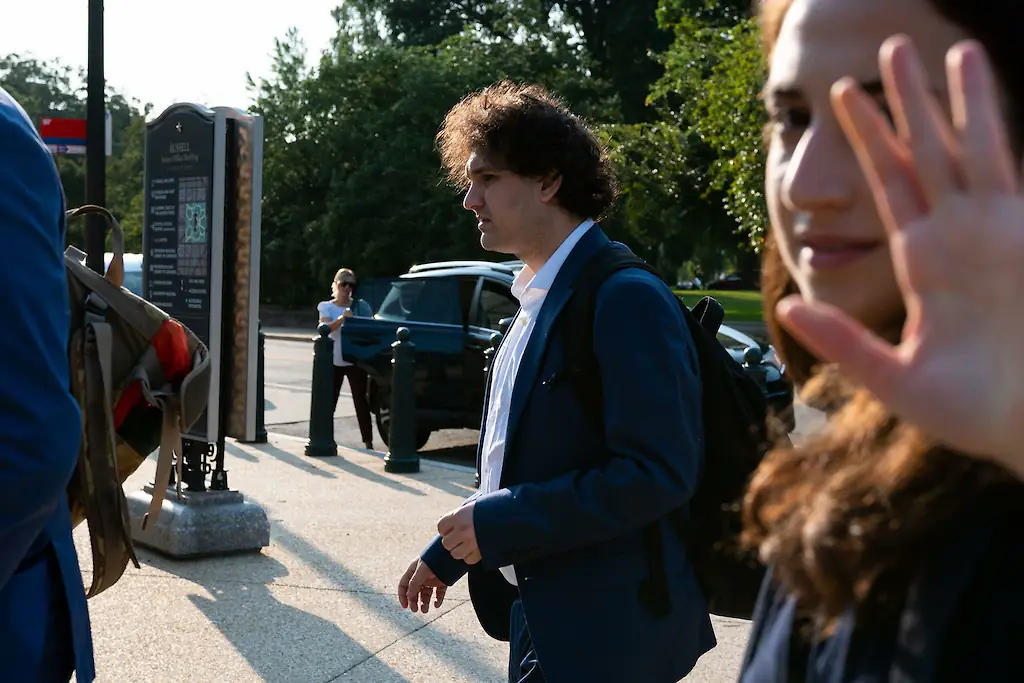
According to CNBC, the CEO whose net worth was $16 billion at the hight of his career, was arrested in the Bahamas last month, with regulators stating that this decision was necessary in order to hold individuals accountable for the multibillion-dollar implosion of FTX.
In a statement, Bahamian Prime Minister Philip Davis said: "The Bahamas and the United States have a shared interest in holding accountable all individuals associated with FTX who may have betrayed the public trust and broken the law."
"While the United States is pursuing criminal charges against SBF individually, The Bahamas will continue its own regulatory and criminal investigations into the collapse of FTX, with the continued cooperation of its law enforcement and regulatory partners in the United States and elsewhere," the statement added.
After the demise of their leader, other associates including Ellison as well as FTX's co-founder, Gary Wang, are now looking at a similar fate.
The former CEO of Alameda Research could be facing 110 years in prison after agreeing to a plea deal with prosecutors, having faced seven charges including wire fraud, conspiracy to commit wire fraud, conspiracy to commit commodities fraud, conspiracy to commit securities fraud and conspiracy to commit money laundering.
The combined maximum sentences for these charges accumulates to approximately 110 years.
As per official plea documents, the 28-year-old will be pleading guilty to all seven charges as well as forced to pay restitution - a large sum that has not yet been determined by the courts.
In exchange for the deal, Ellison, along with Wang, will have to comply with the ongoing investigation into the collapse of the company and the "ultimate betrayal of public trust."
Published 16:19 10 Nov 2022 GMT
The CEO of crypto giant FTX lost the majority of his $16 billion fortune in a single day as his company came to the brink of collapse, CNN reports.
Sam Bankman-Fried's personal fortune dropped by 94% in 24 hours, marking the biggest one-day loss by a billionaire ever.
The loss comes just a year after the 30-year-old claimed his company would soon be big enough to buy investment banking giant Goldman Sachs.
Instead, FTX has had to rely on a bailout from rival Changpeng Zhao's Binance after their token plummeted by over 75% in the space of 24 hours. It is now worth just $5.
Bankman-Fried's fall from grace comes after he spent years at the top of the crypto market. His personal wealth peaked at $26 billion earlier this year.
However, things started going downhill for the young billionaire over the summer, when his fortune declined by 66%. According to Bloomberg's Billionaire Index, he had a 53% stake in FTX worth around $6.2 billion, but the bulk of his wealth was invested in his crypto trading company, Alameda Research.
Remember when Akon announced the launch of his own cryptocurrency, Akoin?Last Friday, things took a turn for the worse when it was revealed that a token issued by FTX - FTT - accounted for over $25 of Alameda Research's assets.
Not long after, Bankman-Fried's rival Zhao announced that his company would be liquidating its holdings of FTT. The news sent FTT's value crashing down, with the token plummeting by 80%.
Amid the collapse, Zhao took to Twitter to gloat over his rival's downfall, and remind him that he should never have used his own company's cryptocurrency as collateral.
"Two big lessons: 1. Never use a token you created as collateral. 2. Don't borrow if you run a crypto business. Don't use capital 'efficiently'. Have a large reserve," he wrote.
Bankman-Fried, meanwhile, reassured customers that they would be "protected" amid Zhao's takeover of his company in a lengthy Twitter thread.
"It may take a bit to settle etc. - we apologize for that," he wrote, "But the important thing is that customers are protected."
"I know that there have been rumors in media of conflict between our two exchanges, however Binance has shown time and again that they are committed to a more decentralized global economy while working to improve industry relations with regulators. We are in the best of hands," Bankman-Fried added.
Zhao - who is already the richest man in the crypto market - will likely see his personal wealth increase as he assimilates FTX into his empire.
Crypto billionaire Sam Bankman-Fried admits he has "close to nothing" after losing 94% of his $16 billion fortune in just one day.
The 30-year-old - who often goes by SBF - made the comment following the collapse of the cryptocurrency exchange he founded, FTX, in a matter of days following allegations of fraud, CNN reported. Earlier this month, the company declared insolvency.
It wasn't long ago that the young entrepreneur was investing in a range of companies across the US and the Bahamas, had donated millions of dollars to the Democrats, and even pledged to eventually give away most of his fortune.
However, in the midst of FTX's liquidity crunch, Changpeng Zhao's Binance reportedly swept in to bail out the company, with the Bloomberg wealth index anticipating this could completely wipe out FTX's investors.
Earlier this week, SBF appeared in a video interview with columnist Andrew Ross Sorkin at the New York Times DealBook Summit, revealing that he had just one credit card linked to a bank account with $100,000 and adding he now had "close to nothing" left, Bloomberg reported.
He had maintained that all of his assets were in FTX, though the Bloomberg report has stated that it is impossible to verify the validity of SBF's claims. It was reported that he also had $500 million in venture capital firms, but that if those assets were held through FTX then they could have been wiped out.
A separate report from Reuters has since revealed that SBF, his parents, and several senior executives at FTX purchased around 19 properties worth $121 million in the Bahamas during the past two years.
That same report revealed the immense property buying spree that SBF engaged in. He had previously told the outlet that he lived in a property with nine other FTX colleagues in the Bahamas - where the company was based. SBF even said that the firm provided free meals for employees and an "in-house Uber-like" service around the island.
Following FTX's collapse, numerous reports emerged that appeared to show that SBF secretly used $10 billion in customer funds to prop up his trading business and that $1 billion of those funds have disappeared.
John Ray - the new CEO of FTX - revealed in court documents from a recent filing in the District of Delaware bankruptcy court that he discovered that corporate funds from FTX were used to "purchase homes and other personal items for employees and advisors," per Reuters.
Twitter users are not happy with SBF's conduct, commenting on his current controversy and allegations of money theft. "I can't believe mainstream media is still running stories about Sam Bankman-Fried without a single mention of his criminality. This is a con man who perpetrated a historic fraud. He stole billions of dollars from unsuspecting victims. How is that not the lead of every story??", one commenter wrote.
Another user added: "Cancel Culture has wiped out a lot of people yet the Wall Street Journal and The New York Times still trying to rehab and protect the image of Sam Bankman-Fried. So many young people looking to make their way in life have been wiped out. The 'elites' protect their own even under a microscope."
Published 13:54 20 Dec 2024 GMT
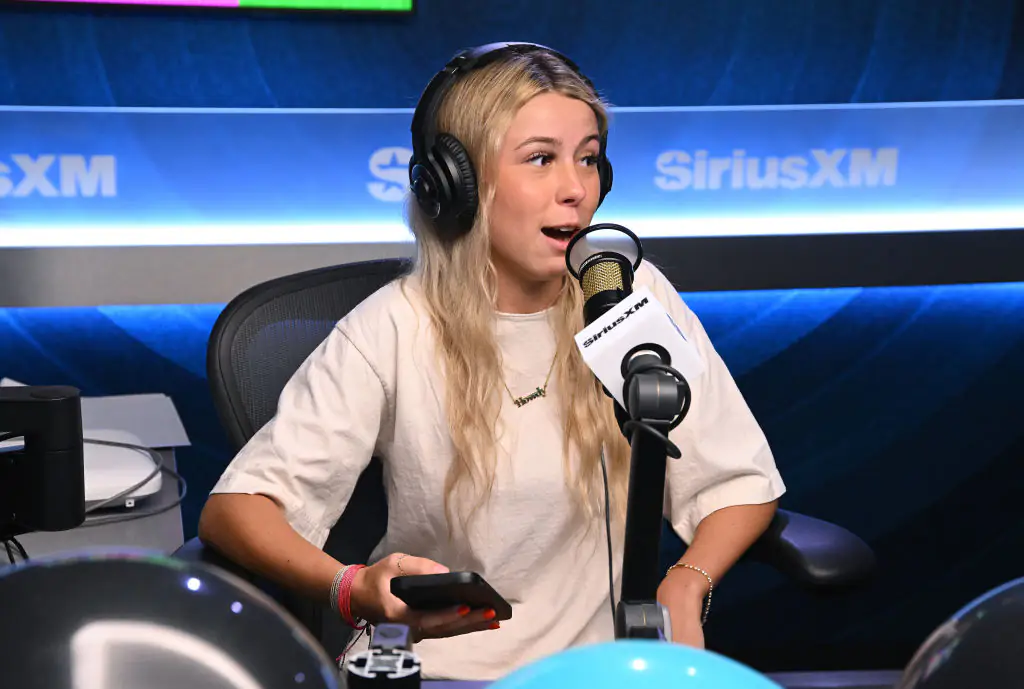
Haliey Welch, known as the "Hawk Tuah Girl," is facing legal challenges following the collapse of her cryptocurrency venture, $HAWK Token.
The memecoin, launched on December 4, 2024, experienced a meteoric rise to a market capitalization of nearly $500 million, only to plummet by over 90% within hours, leaving investors with substantial losses.
Investors have now filed a lawsuit in the U.S. District Court for the Eastern District of New York against the entities behind the token.
Per The New York Post, the defendants include Tuah The Moon Foundation, overHere Ltd., its founder Clinton So, and social media influencer Alex Larson Schultz, also known as Doc Hollywood.
The lawsuit alleges that these parties unlawfully promoted and sold $HAWK Token without proper registration, leading to significant financial harm for investors.
Despite her prominent role in promoting the cryptocurrency to her 2.6 million Instagram followers and podcast audience, Welch is not named as a defendant in the lawsuit.
Since the token's collapse, she has remained silent on the matter, refraining from posting on social media or releasing new podcast episodes.
The lawsuit contends that the defendants used Welch's online fame to market the token, emphasizing community engagement and inclusivity to attract investors.
However, the token's rapid decline has led to accusations of a "pump and dump" scheme, where creators and early investors profit at the expense of later buyers.
One investor reportedly lost $70,000, contributing to total claimed damages exceeding $151,000.
Legal experts suggest that the failure to register $HAWK Token as a security could have serious implications. Yuriy Brisov, a partner at law firm Digital and Analogue Partners, explained that the United States Securities and Exchange Commission (SEC) could launch civil charges for security fraud, alleging misrepresentation or deceit in the sales of securities—if the token qualifies under the Howey test.
The controversy has also sparked discussions about the responsibilities of social media influencers in promoting financial products.
Critics argue that Welch's involvement lent credibility to the project, potentially misleading her followers. In response to the backlash, Welch has not issued any public statements, and her current whereabouts remain unknown.
As the legal proceedings unfold, the case serves as a cautionary tale about the volatile nature of cryptocurrency investments and the potential risks associated with influencer-endorsed financial products.
Investors are advised to conduct thorough research and exercise due diligence before participating in such ventures.
Published 12:40 07 Dec 2024 GMT
Haliey Welch - better known as the "Hawk Tuah Girl" after her viral moment earlier this year - is facing intense backlash after the cryptocurrency she launched, HAWK, reportedly wiped out millions of dollars in value within minutes.
And it looks like she could potentially find herself in some legal trouble...
Welch, who gained internet fame with her candid response to the question "What makes a guy go crazy in bed?", introduced her cryptocurrency on December 4.
According to her manager, Jonnie Forster, the crypto coin was an attempt to "tokenize, in a sense, Haliey’s fan base".
The launch initially seemed like a massive success, with the HAWK coin reaching a staggering market capitalization of nearly $500 million, as reported by Forbes. But just 20 minutes later, the coin’s value nosedived, dropping from $490 million to a mere $41 million.
The sharp downturn has sparked accusations from fans and the crypto community, with some suggesting the collapse may have been caused by "crypto snipers" — traders who rapidly buy and sell new tokens to exploit volatility.
Speculation about insider trading has intensified following data from cryptocurrency analytics platforms.
Reports from Dexscreener and Coinspeaker revealed that insider wallets and snipers controlled 80-90% of $HAWK's initial supply.
One wallet reportedly acquired 17.5% of the token’s supply mere seconds after launch and sold it off within 90 minutes, netting a $1.3 million profit, according to Solscanner.
The crash left countless fans fuming, with some alleging they lost their life savings. One devastated investor took to social media to call out Welch, writing, “I am a huge fan of Hawk Tuah but you took my life savings. I purchased your coin $HAWK that you were so excited about with my life savings and children’s college education fund as well.”
Welch has since defended the launch, sharing a post on X (formerly Twitter) that stated: "Hawkanomics: Team hasn’t sold one token and not 1 KOL was given 1 free token. We tried to stop snipers as best we could through high fee’s in the start of launch on @MeteoraAG. Fee’s [sic] have now been dropped."
Despite Welch’s attempts to calm the storm, critics are accusing her of a "rug pull," a term used when creators of cryptocurrencies sell off their holdings, triggering a crash in value.
"I am a huge fan of Hawk Tuah but you took my life savings," one person said on X.
They continued: "I purchased your coin $Hawk that you were so excited about with my life savings and children’s college education fund as well.
"You didn’t mention that you were going to buy 97% of the supply and sell it almost immediately to make a large profit."
Some people have even claimed that Welch should face serious consequences.
"Haliey Welch you're going to f***ing jail," one person wrote.
Another echoed this, writing: "Hailey I’m not even kidding when I say this, you are most likely going to prison."
Now, law firms in the U.S. are stepping in to represent frustrated investors.
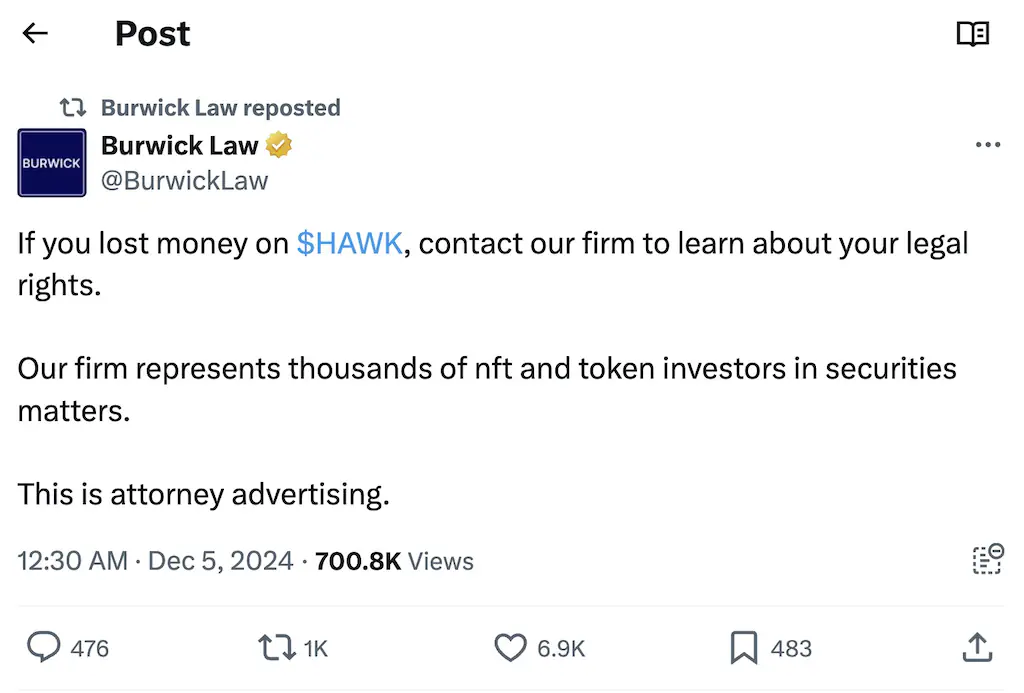
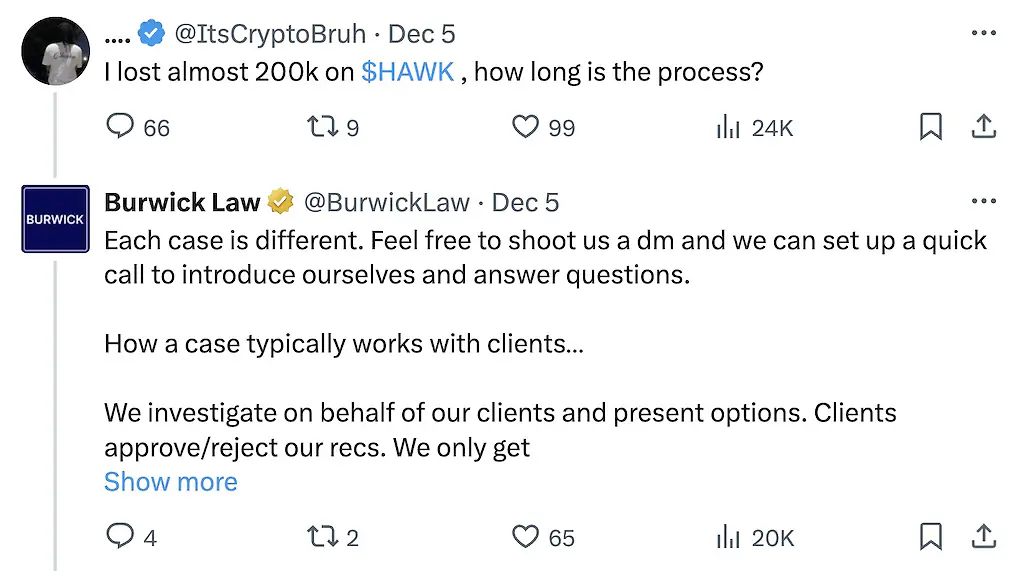
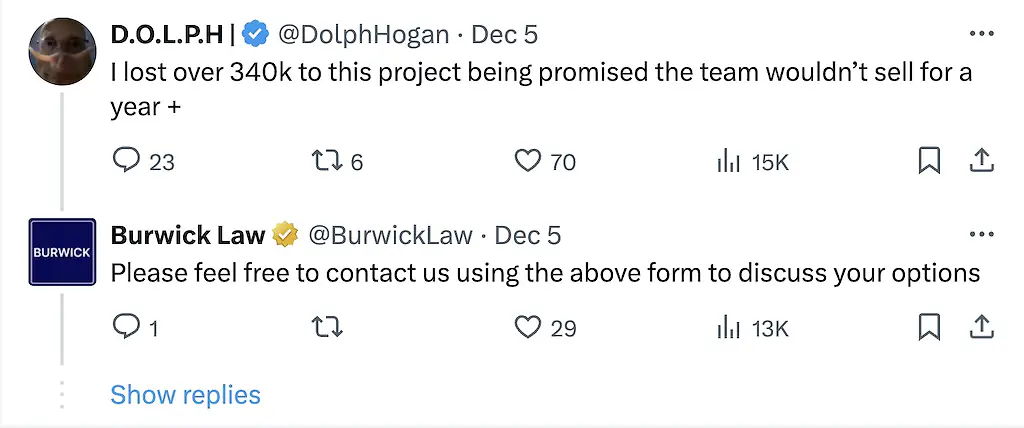
New York-based Burwick Law is actively encouraging affected individuals to reach out. "If you lost money on $HAWK, contact our firm to learn about your legal rights," the firm tweeted. "We’re here to help bring accountability to a space that desperately needs it."
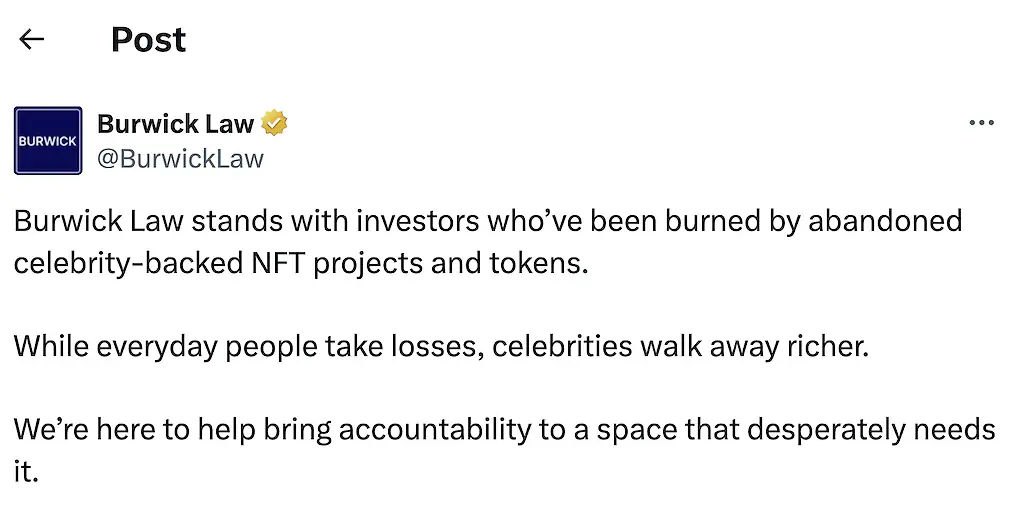
Burwick Law has also slammed the phenomenon of celebrity-backed crypto projects that leave everyday investors broke while stars walk away unscathed.
"While everyday people take losses, celebrities walk away richer," the firm added in a statement. "We’re here to help bring accountability to a space that desperately needs it."
Before the fallout, Welch told Fortune that the project was "not just a cash grab" and said she was committed to using cryptocurrency as a way to connect with fans.
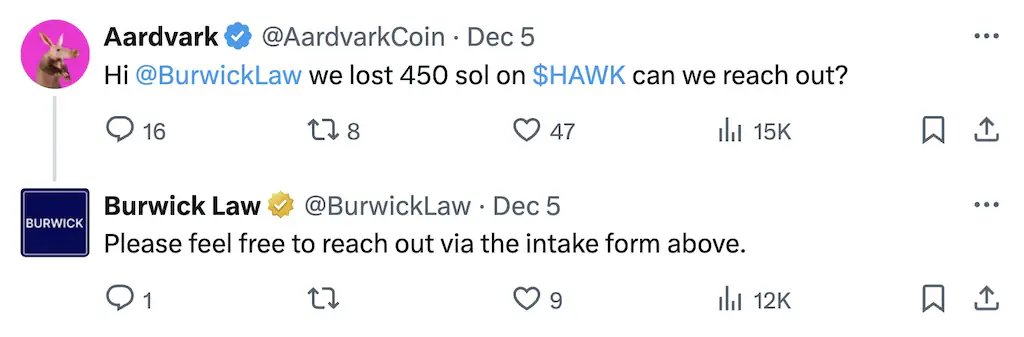
As of this writing, Burwick Law's tweet has received interest from several X users who claim to have lost out on the venture.
Of course, as many people are pointing out in the replies, there may be nothing anybody can do, as this is the risky nature of investing in cryptocurrencies.
But with the potential of a lawsuit - or lawsuits - looming, it’s clear many of those fans feel burned.
Published 12:10 29 May 2024 GMT
A woman was apprehended by cops after $1.2 million appeared in her bank account.
When Kelyn Spadoni, a Louisiana dispatcher, discovered the unexpected sum in her brokerage account in February 2021, she didn’t waste time asking questions...in fact, she didn’t ask questions at all.
The 33-year-old couldn't believe her eyes when she opened her bank account and saw that Charles Schwab, a major financial services corporation, deposited a staggering $1.2 million.
However, it was a gigantic error as Schwab was only meant to transfer the dispatcher $82.56, as reported by nola.com.
The bank staff tried to stop or reclaim the transfer but were unable to do so. The next day, they sent a reclaim request to the institution that handles the account but they were rejected, receiving a notification that stated: "CASH NOT AVAILABLE".
Captain Jason Rivarde said this was a result of Spadoni already transferring her new fortune out of the account, adding: "She secreted it, and they were not able to access it," per The Independent.
Not long after, Spadoni reportedly used some of the funds to buy a house and a 2021 Hyundai Genesis SUV, with court documents claiming that her spending was between $48,000 and $70,000.
Schwab tried to reach the dispatcher for weeks via calls, texts, and emails but was unsuccessful. "By her conduct, Spadoni has made it clear she does not intend to return the mistakenly transferred funds to Schwab," the lawsuit added.
Due to this, Charles Schwab took Spadoni to federal court for refusing to return the cash to the company, saying that she signed their client contract that specifically notes that clients must return any overpayment of funds in full.
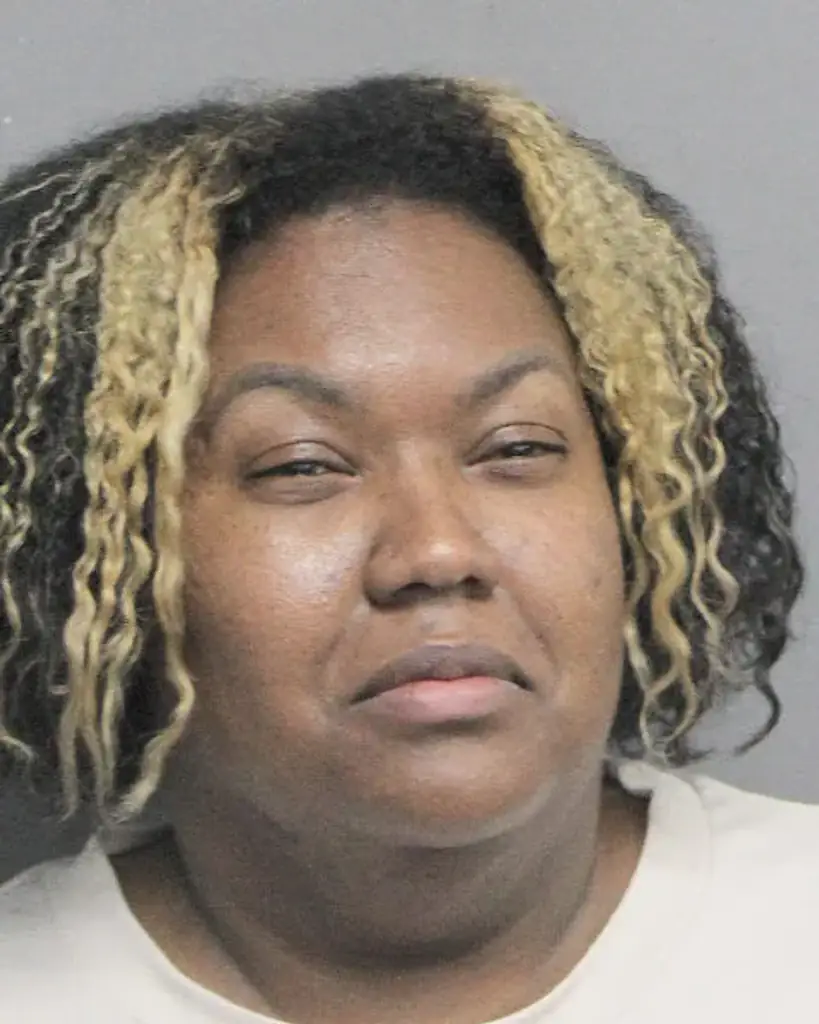
At the time, Spadoni was arrested and booked with theft valued at more than $25,000, bank fraud, and illegal transmission of monetary funds, as revealed by a Sheriff's Office spokesperson.
“She has no legal claim to that money even if it was put in there by mistake. It was an accounting error,” Rivarde told Nola.com. "If someone accidentally puts an extra zero on a utility payment, they would want that money returned or credited to them. This is no different."
The police told the outlet that detectives and lawyers were able to get back about 75 percent of the lost cash.
Jefferson Parish District Attorney's Office has since disclosed that the charges against Spadoni were dropped. Despite this, she was fired from her job as a dispatcher and ordered to complete an "adult diversion" program, per The Sun.
"We are grateful to the authorities who were able to recover most of the assets that the defendant unlawfully acquired," spokesman Pete Greenley told the publication in 2022. "As was widely reported, the Jefferson Parish District Attorney’s office in the State of Louisiana filed charges at the time."