


World4 min(s) read
Boy goes viral for jaw-dropping F-word response live on air watching Artemis II launch
.jpg_I4Ebof?tr=cr-0.338.2730.3068,f-webp,q-70,w-100)
A young boy who was watching the Artemis II mission launch to the moon has gone viral for his excited reaction.
After all, all kids dream of seeing a rocket blast off, and this kid was one of the lucky ones.
Artemis II is now on the way to the moon and back
The Artemis II mission is historic as it marks mankind’s return to the moon for the first time in ages.
After launching, the astronauts will now spend the next few days travelling out to our biggest and most famous satellite, where they will perform a full circumnavigation before hopefully returning back to earth in one piece.
In total, the mission will take 10 days and see the first visit to the moon for over 50 years.
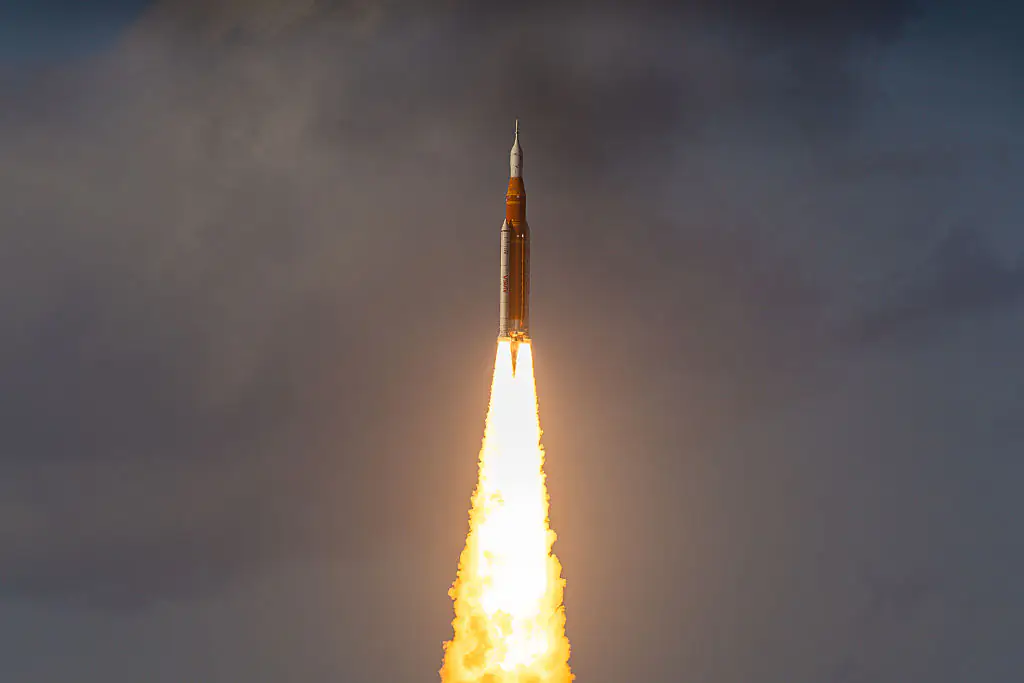
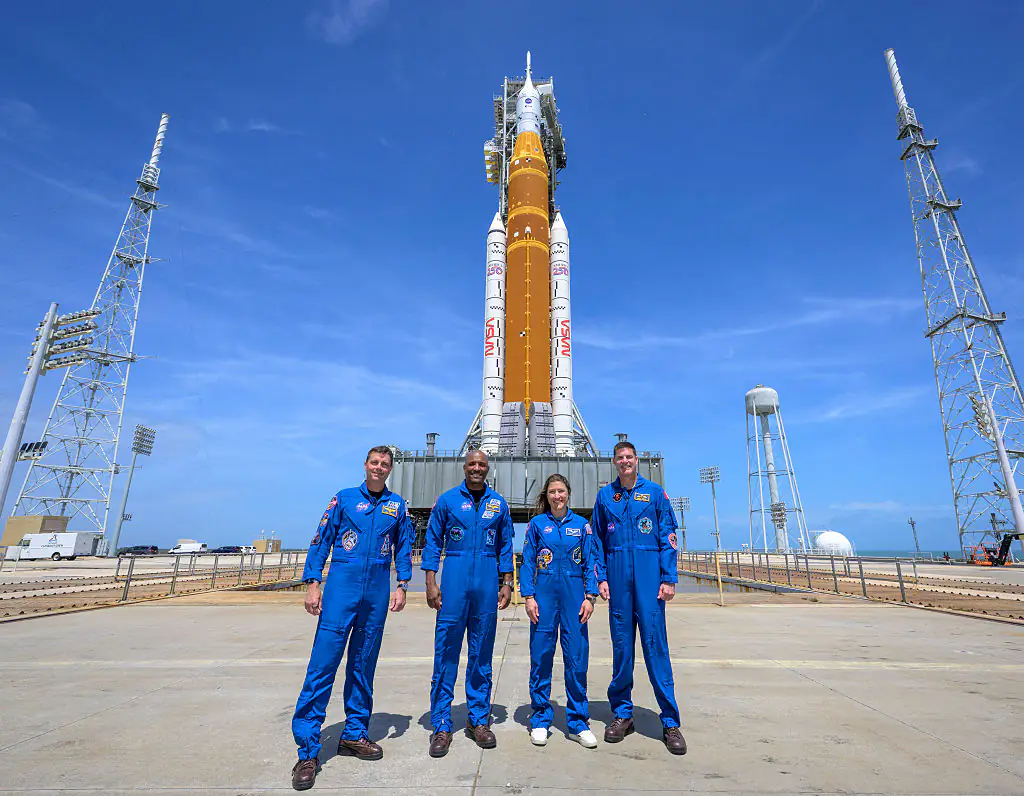
The four astronauts will also visit the dark side of the moon, before heading back for a splashdown into the Pacific Ocean.
Following on from the Artemis I mission that was unmanned but took the same route, this crewed space trip could help hasten humans returning to the surface of the moon, a feat which could be achieved as early as 2028.
Naturally, the excitement around the launchpad was palpable, and one kid went viral for his reaction to a CNN crew who asked him why he’d turned up to watch the launch.
This kid is all of us watching a rocket launch
The young rocket enthusiast could barely contain his excitement as he was asked why he’d travelled up to Florida for the launch.
Well, it’s not every day you get to see a crewed space mission take off.
In fact, this is definitely the first human-crewed moon launch in his short life.
As he waited at the NASA Kennedy Space Center in Titusville, he had a GoPro camera strapped to his hat in order to preserve the moment for ever.
Asked by the camera crew why he’d travelled, the kid was asked why he wanted to ‘be a part of history’.
His simple response came: “We’re going back to the frickin’ moon, that’s why!”
Yep - that about covers it.
Honestly, it’s exciting stuff for anyone, let alone a kid who gets to watch it all.

The Artemis II mission over 10 days
The shuttle launched successfully just after 6:30pm local time, and now the 685,000-mile journey begins.
The first leg to the moon takes around four days, then the return leg after that is about the same, with extra time for a go-around of the moon.
Thankfully, the takeoff went without any major hitches, and Artemis II was in orbit around nine minutes after blast off.
Full timeline of the Artemis II mission
Pre-Launch (Months–Days Before)
- Final assembly and integration of the Orion spacecraft and Space Launch System
- Wet dress rehearsal and fueling tests at Kennedy Space Center
- Crew quarantine and final mission simulations
Launch Day (T-0)
- Liftoff from Launch Complex 39B
- Solid rocket booster separation (~2 minutes after launch)
- Core stage separation and upper stage ignition
- Orion inserted into Earth orbit, followed by Trans-Lunar Injection (TLI) burn
Outbound Transit to the Moon (Days 1–4)
- Orion separates from upper stage and deploys solar arrays
- Crew conducts system checks and early mission operations
- First trajectory correction maneuvers
Lunar Flyby Phase (Around Day 4–6)
- Closest approach to the Moon (~7,000–10,000 km altitude)
- Uses lunar gravity for a free-return trajectory
- High-resolution imaging and navigation demonstrations
Deep Space Operations (Days 6–9)
- Orion travels farther from Earth than any human-rated spacecraft since Apollo program
- Crew performs manual navigation and spacecraft handling tests
- Life-support and communications systems evaluated in deep space
Return Transit to Earth (Days 9–10)
- Final trajectory correction burns
- Crew prepares for reentry procedures
Reentry & Splashdown (Day 10–11)
- Orion reenters Earth’s atmosphere at ~40,000 km/h
- Heat shield undergoes critical testing
- Parachute deployment sequence
- Splashdown in the Pacific Ocean and recovery by U.S. Navy forces
Post-Mission
- Crew extraction and medical checks
- Data analysis to support Artemis III
- Evaluation of spacecraft performance for future lunar missions