


World5 min(s) read
Three cruise ship passengers dead and another fighting for life after virus outbreak on board with warning issued
.jpg_I4Ebof?tr=cr-0.338.2730.3068,f-webp,q-70,w-100)
Three passengers have died and another is fighting for their life after a suspected outbreak of a deadly virus broke out on board a cruise ship sailing in the Atlantic Ocean.
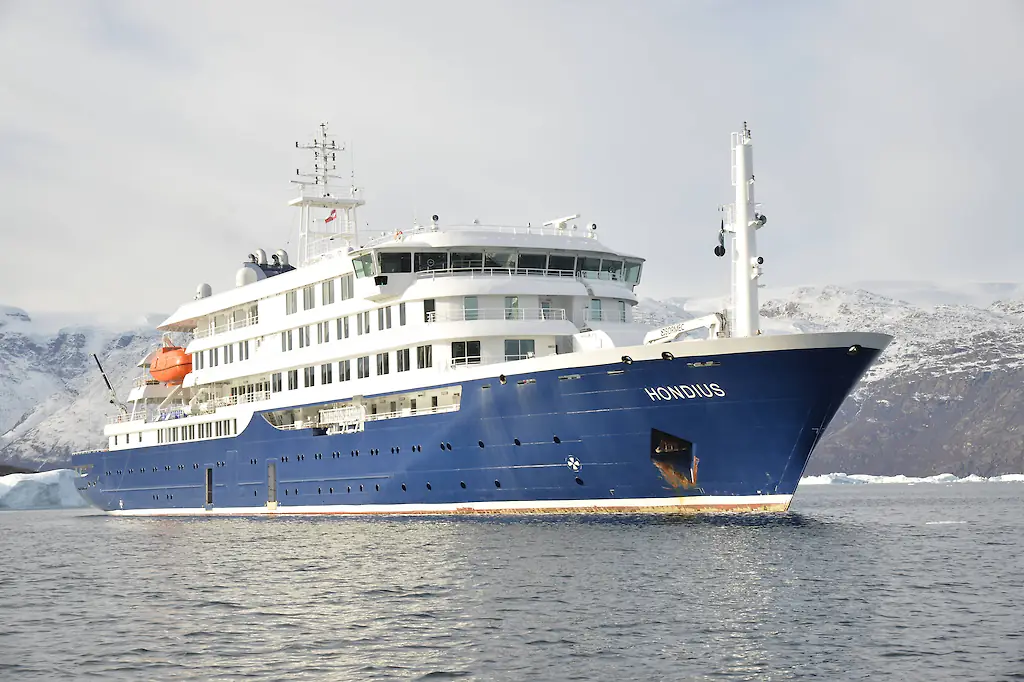
The MV Hondius, a Dutch-flagged passenger cruise ship operated by Oceanwide Expeditions, is currently anchored off the coast of Cape Verde while authorities scramble to deal with what the World Health Organization has officially declared a 'public health event.'
The virus believed to be behind the outbreak is one that most people will be unfamiliar with, but one many will recognise from a recent high-profile celebrity death.
It's hantavirus.
What we know so far
According to a statement from the World Health Organization on Sunday, confirmed by Oceanwide Expeditions, three people on board the Hondius have died, and at least three others are sick.
Of the six people sickened, hantavirus has been confirmed in one case so far, with the other five suspected.
One of the survivors is currently in intensive care at a hospital in South Africa, as reported by NBC News.
The two other people who have tested or are suspected positive are still on board the ship, with health authorities working to medically evacuate them. Cape Verdean officials had not, as of late Sunday evening, allowed any passengers to disembark to seek medical care.
Who has died
Two of the three people who died have been identified as a married couple from the Netherlands.
A 70-year-old Dutch man was declared dead on arrival in Saint Helena, the British overseas territory in the South Atlantic, while the ship was making a stopover.
His 69-year-old wife collapsed at Johannesburg's international airport in South Africa as she attempted to fly back home to the Netherlands. She died at a nearby health facility.
The third victim has not yet been publicly identified.
A British passenger who became ill while the ship was travelling from Saint Helena to Ascension Island is currently being treated at a hospital in South Africa, with his lab results having tested positive for hantavirus, according to South African Health Ministry spokesperson Foster Mohale.
What is hantavirus?
Hantavirus is a serious viral infection that, while rare, can be deadly.
According to the US Centers for Disease Control and Prevention, it can cause two main illnesses: hantavirus pulmonary syndrome (HPS), which affects the lungs, and hemorrhagic fever with renal syndrome, which affects the kidneys.
HPS, the more dangerous of the two, kills more than a third of patients in the United States.
Early symptoms include fatigue, fever, muscle aches, headaches, dizziness, chills and abdominal problems. Later symptoms include coughing, shortness of breath, and tightness in the chest. There is no cure beyond treating the symptoms, with patients suffering severe breathing difficulties sometimes needing to be intubated.
The virus is most commonly spread through contact with the urine, droppings, or saliva of infected rodents.
You may recognise the name from a recent high-profile case. Hantavirus was confirmed as the cause of death of Betsy Arakawa, the wife of Hollywood legend Gene Hackman, who died at the couple's New Mexico home in February 2025.
How did it get on the ship?
This is where it gets unusual, and where the warning becomes important.
According to Dr Scott Miscovich, a family physician and President and CEO of Premier Medical Group, the case is genuinely baffling.
"When I first read this, I thought that they were making a misprint," he told CNN.
"It's highly unusual for there to be a hantavirus outbreak on a ship that has not traveled anywhere where the virus is endemic."
Dr Miscovich identified two plausible explanations.
The first is that the ship itself may have become contaminated with rat or mouse droppings or urine, the typical way the virus spreads.
The second is far more concerning.
One of the passengers may have picked up the Andes variant of hantavirus, the only known strain capable of human-to-human transmission, in Argentina before boarding.
If that turns out to be the case, Dr Miscovich said, it would "change the future of travel medicine and infectious disease and tropical medicine."
The MV Hondius left the Argentine port of Ushuaia around three weeks ago, before sailing to mainland Antarctica, the Falklands, South Georgia, Nightingale Island, Tristan, Saint Helena, Ascension, and finally Cape Verde.
The ship holds 170 passengers and 71 crew, and has just one doctor on board.

The warning
The World Health Organization has issued a clear public warning following the outbreak.
"While rare, hantavirus may spread between people, and can lead to severe respiratory illness and requires careful patient monitoring," the WHO said in a statement.
Oceanwide Expeditions said in a statement to CNN that it is 'currently focused on the health and safety of passengers and crew' and would offer further information as the situation developed.
For the passengers and crew still trapped on board the Hondius, the wait continues.
For the wider cruise industry, and for global public health authorities watching closely, the answer to how hantavirus ended up on a ship in the middle of the Atlantic could prove enormously important.