


World4 min(s) read
Doomsday Clock moves closer to midnight in chilling 2026 update
.webp_QQJmGo?tr=cr-345.0.1535.1190,f-webp,q-70,w-100)
As you have probably noticed, the world isn't in a great place right now.
For decades, the iconic Doomsday Clock has served as a warning, ticking closer to midnight as threats to the planet intensify.
And now, in 2026, the clock is closer to midnight than it has ever been.
What Is the Doomsday Clock?
The Doomsday Clock, first introduced in 1947 by the Bulletin of the Atomic Scientists, represents the potential for global disaster.
Midnight symbolizes the apocalypse, and each year, the clock's minute hand is adjusted to reflect humanity's proximity to catastrophic events.
"It is a metaphor, a reminder of the perils we must address if we are to survive on the planet," the official Doomsday Clock website explains.
The clock first made its debut in the Bulletin’s inaugural magazine issue in June 1947, and since then, it has become a poignant symbol, influencing some to prepare for end-of-the-world scenarios.
With each annual update, experts reassess the state of the world, adjusting the time to reflect the increasing or decreasing likelihood of disaster.
The Doomsday Clock's decision is made annually by the Bulletin's Science and Security Board, in consultation with a group of distinguished experts, including nine Nobel laureates.
These experts consider various global risks, including national security, nuclear threats, climate change, disruptive technologies, and biosecurity.
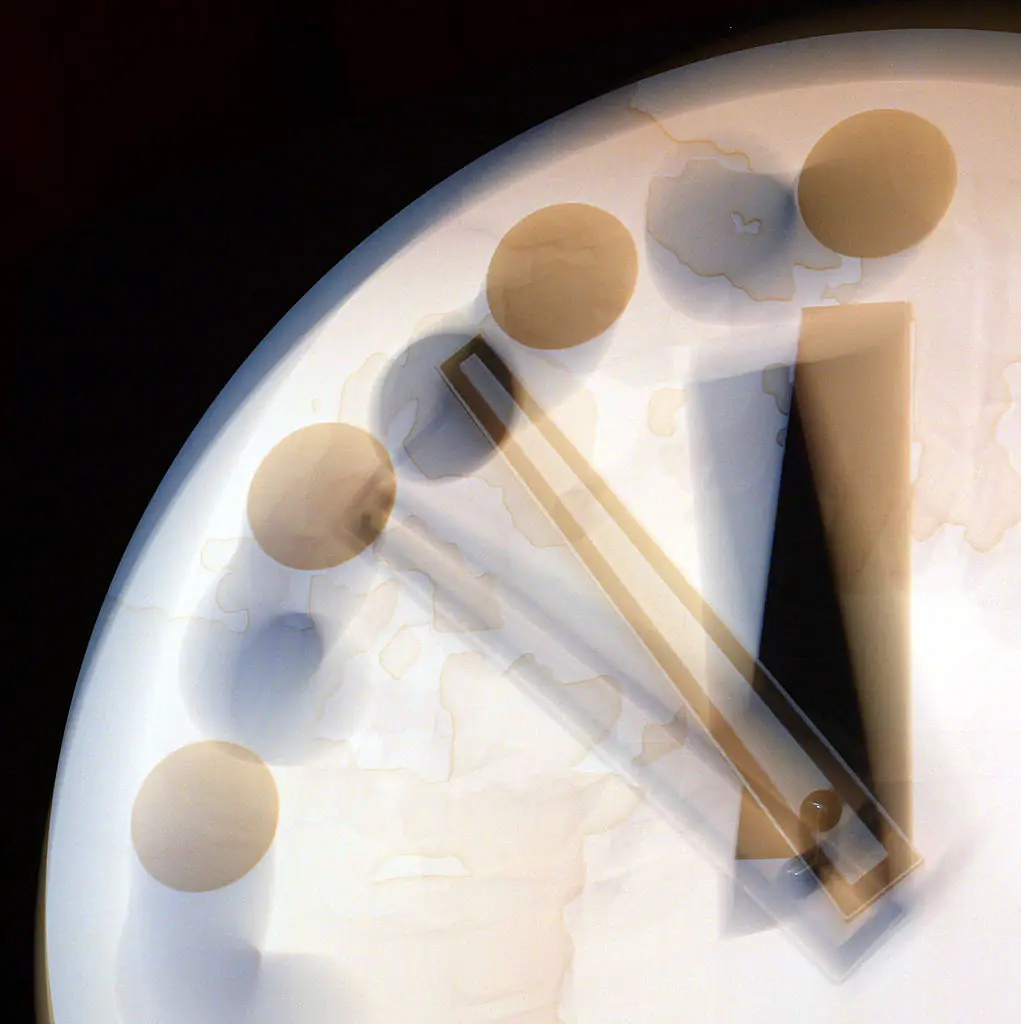
2026 Update: 85 Seconds To Midnight
Tragically, as you might have imagined, we haven't done anything to turn back the clock, and we are now 85 seconds to midnight - the closest we have ever been.
Worryingly, one of the experts involved in the Doomsday clock notes that in every area, we have failed to take steps to reduce the risk of a global catastrophe.
They noted that nuclear weapons around the world are on the rise again, and we could be entering an era of rearmament.
It was also noted that nuclear weapons and climate change are not the only threats to humanity, but AI is a rising concern worldwide.
It could, as noted by experts, create fake images and spread misinformation that could further fracture global relationships.
There is hope, though, as a "call to action" was issued as people can work together within their communities to turn back the clock.
The Global Risks Behind the Clock's Setting
The past year has been marked by numerous global crises, from the ongoing war in Ukraine to the conflict between Israel and Hamas in Gaza, to Donald Trump's desire to expand the borders of the USA.
Experts also cite the growing threat of emerging technologies such as artificial intelligence and the risks they pose, alongside ongoing nuclear tensions and the devastating effects of climate change.
What Happens if the Clock Reaches Midnight?
The Doomsday Clock has always been a symbolic tool, and while nothing literal occurs when it reaches midnight, the message is clear: humanity is on the verge of irreversible catastrophe.
In 2023, the clock was set to 90 seconds to midnight, primarily due to the Russian invasion of Ukraine and the looming threat of nuclear war.
This marked the closest point to disaster in the clock's history, and it remained at that setting in 2024. Last year saw it move to 89 seconds to midnight.
Historically, the clock has moved closer to midnight in response to escalating global tensions.
From 2019 to 2022, it remained unchanged, but in 2018, it was adjusted forward by 30 seconds due to growing geopolitical instability and other existential threats.
The furthest the clock has ever been from midnight was in 1991, at the end of the Cold War, when the United States and the Soviet Union signed the Strategic Arms Reduction Treaty, marking a period of significant de-escalation in nuclear arms.

The Doomsday Clock's Role in Shaping Global Awareness
While the clock’s symbolic countdown may not lead to immediate catastrophe, it serves as a critical tool in raising awareness about the existential threats facing humanity.
As the clock edges ever closer to midnight, it sends a loud and clear message to global leaders and the public alike about the need for urgent action to address these global dangers.
The Bulletin's former CEO, Rachel Bronson, has previously explained the ultimate significance of the clock: "When the clock is at midnight, that means there's been some sort of nuclear exchange or catastrophic climate change that's wiped out humanity."