


World4 min(s) read
Fascinating small detail in satellite photo reveals the 'precision' strikes on Iran military targets

A newly released satellite picture of Iran’s Chabahar Konarak Airport reveals just how precise the recent strikes on Iranian military targets were.
Over the weekend, the world was thrown into uncertain waters as the US and Israel launched coordinated airstrikes on Iran.
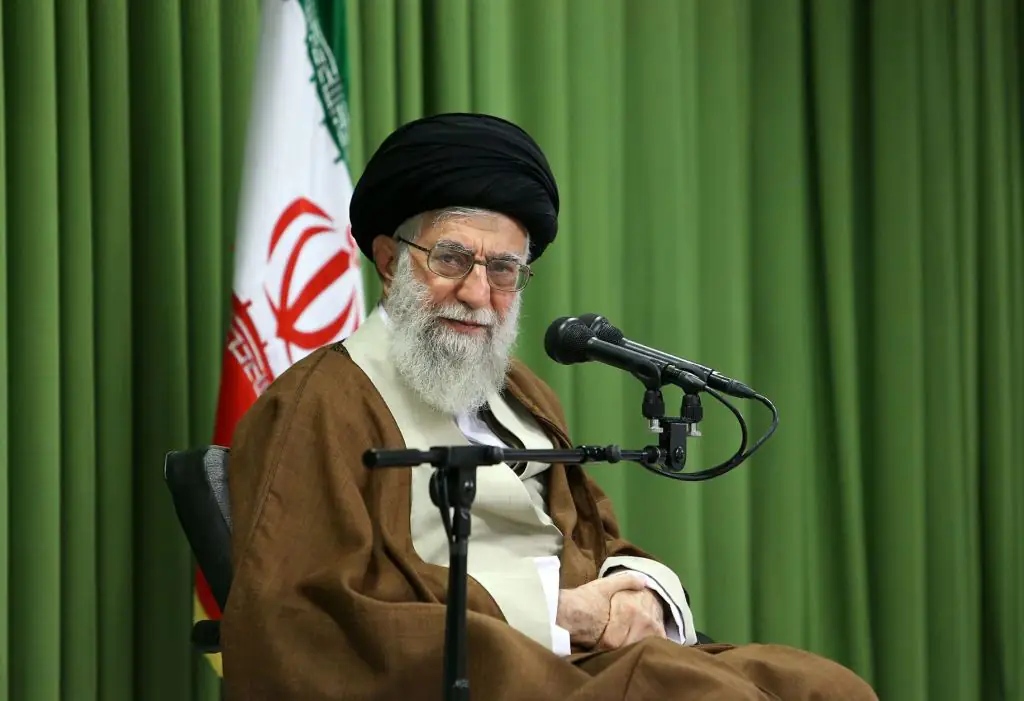
Iran's Supreme Leader, Ayatollah Ali Khamenei, was killed in a strike that targeted his Tehran compound. T
he attack also claimed the lives of dozens of senior Iranian officials and members of Khamenei’s family.
Fascinating Detail In The Satellite Photo
A particularly striking detail has emerged from a satellite image of Iran’s Chabahar Konarak Airport.
The image, which was shared on X by a user who goes by the handle @ShivAroor, shows four perfectly aligned, clean holes punched through the roofs of aircraft shelters by 'air-launched precision penetrator weapons'.
The poster wrote that the four holes are "practically in a straight line," adding: "Notice how there are no chaotic scars of conventional bombing.
Each entry point sits with almost elegant, geometric precision, spaced evenly, placed exactly where the structure is most vulnerable."
"The air strikes cleanly calibrated to penetrate the reinforced concrete and detonate inside, collapsing the protected space within while leaving the outer structure largely intact," they wrote.
According to the user, this highlights the use of clear, intelligence-guided airstrikes, moving away from random bombings to calculated attacks.
"The targeting design itself here is the message: your assets are mapped, your protections are understood, and even your most hardened spaces are reachable at will," they added.
Trump Under Pressure
As the strikes continue, President Donald Trump is facing increasing pressure to clarify the long-term goals of the US in Iran.
Many experts have raised concerns about the US being drawn into a prolonged conflict, something the 79-year-old has repeatedly vowed to avoid.
“If the administration has a game plan, they have yet to reveal it, frankly,” Alex Vatanka, an Iran specialist at the Middle East Institute, said, per The Guardian.
He said that if the US intends to pursue regime change, it could become a much longer campaign, potentially lasting years, with no clear end in sight.
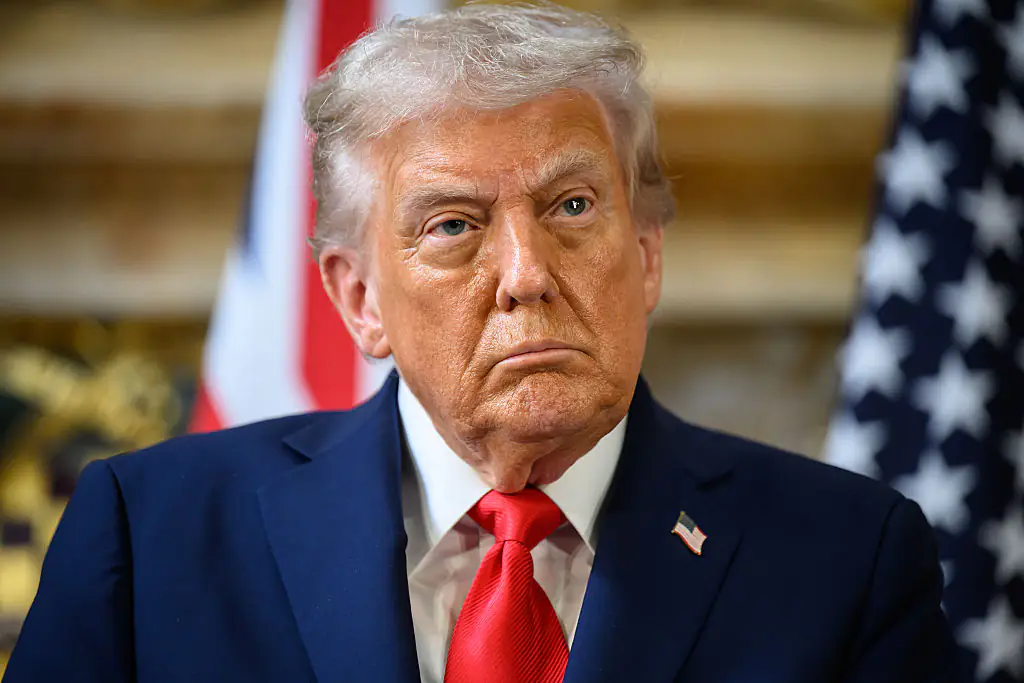
Trump has not explicitly laid out his plans for the situation in Iran, and his statements have focused on the military threats posed by Iran’s nuclear program and ballistic missile capabilities.
In his most recent State of the Union address, he made no mention of regime change but instead hinted at diplomatic efforts to address Iran’s military threat.
“Where does this all go?” Jim Himes, the senior Democrat on the House of Representatives’ intelligence committee, told NPR.
“We can bomb Iran along with the Israelis for, you know, lengthy period of time, but in the service of what?
“Is the intention regime change? Because there aren’t many examples either of regime change affected through bombing, or, quite frankly, of American military forces actually doing regime change in a way that is satisfactory," Himes said.
Vatanka said that if the president 'wanted' a regime change, he could bring opposition figures into the White House and announce that they would be the next ruling leader in Iran.
“He doesn’t do that, which leaves us thinking, maybe he’s still thinking to [make a deal with] same regime," they added.
Some analysts, including former CIA officer Steven Cash, warn that starting a war without a plan to end it could lead to disastrous consequences.
“One of the things that we have certainly learned from everything from the Korean war through the cold war, through Vietnam, and certainly in Iraq and Afghanistan, is it’s not enough to start a war, you need to have a plan to end a war,” he said.