ADVERT
World2 min(s) read
Published 10:28 25 Nov 2022 GMT
During their World Cup match against Wales, Iranian fans could be heard and seen booing their own national anthem.
As players for Iran started to sing their national anthem prior to Friday morning's game, boos and whistles erupted throughout the Ahmed bin Ali Stadium.
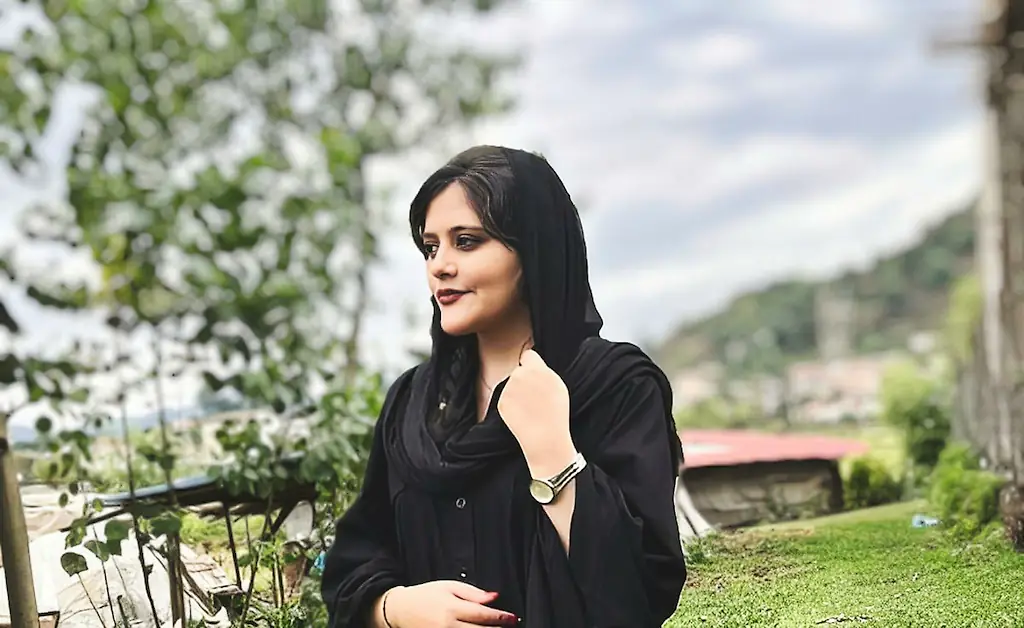
The Metro and several other outlets report that the boos were a "powerful statement" regarding the protests currently taking place in the nation - which were sparked by the death of 22-year-old Mahsa Amini.
READ MORE: How Mahsa Amini became a symbol of resistance in IranVideos of the defiant moment were quickly shared across social media, with ESPN's Mark Ogden tweeting: "Iran fans booing and whistling their own national anthem. Big statement being made there."
As reported by CNN, this comes as the United Nations High Commissioner for Human Rights Chief Volker Turk has stated that a "full-fledged" is crisis underway in Iran amid the ongoing crackdown on protesters.
Amini, a Kurdish Iranian woman, was detained by the country's morality police back in September for allegedly not wearing her hijab properly.
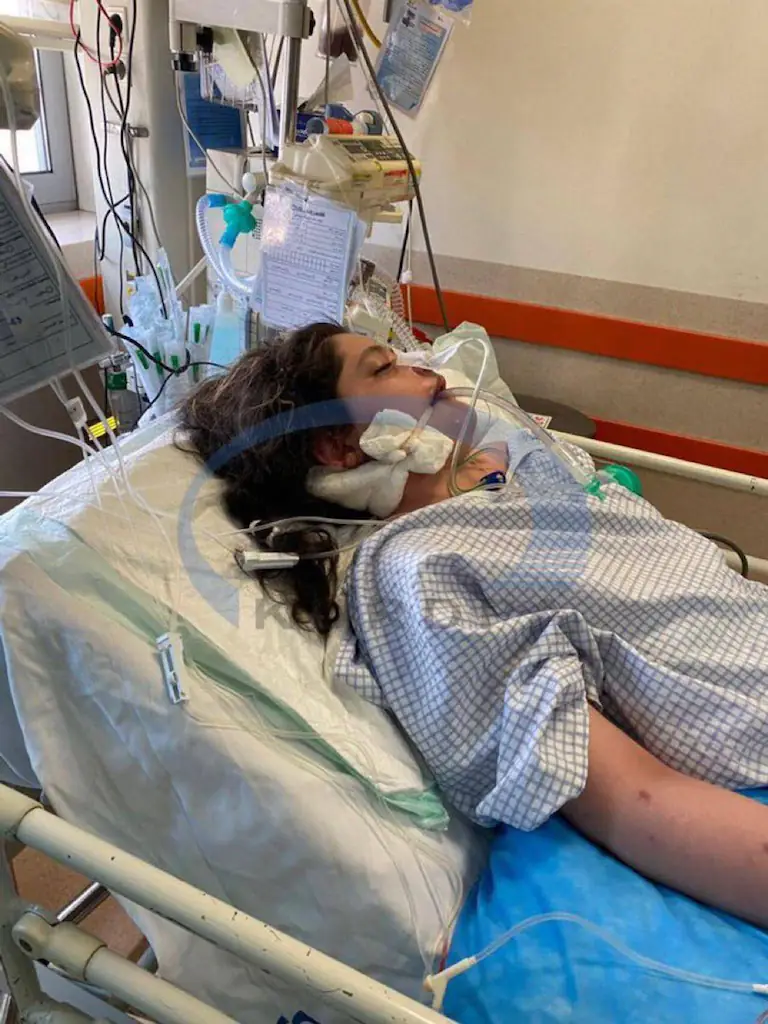
According to her family, witnesses saw Amini being beaten by police in the patrol van, causing lasting damage that would have rendered her brain dead and in a coma. Though, officials have alleged Amini had epilepsy, diabetes, and suffered a heart attack, Al Jazeera reported.
Her family has strongly refuted this claim, stating that she was in perfect health.
News of Amini's death angered women across the globe, and resulted in hundreds of protests erupting across Iran. Some Iranian women have even resorted to burning their hijabs and cutting their hair as a symbol of solidarity with Amini.
And as Iran attempts to crack down on the civil unrest, a recent CNN investigation has accused the country of violating human rights laws within its detention centers.
As a result of the allegations, UN chief Turk has called for an "independent, impartial, and transparent investigative processes" into Iran's detention measures while speaking at the UN Human Rights Council on Thursday.
world5 min(s) read
Published 19:30 26 Sep 2022 GMT
When 22-year-old Mahsa Amini took a trip to Tehran, Iran, on September 13, she could never have known that it would be her last.
It was on this visit that Amini was arrested by the Middle Eastern nation's so-called "morality police," after they alleged she was wearing an inappropriate hijab.
Her brother, who was with her at the time, was told she would be released after attending a "briefing class" at a local detention center. That was the last time he ever saw his sister.
CCTV footage eventually emerged, showing Amini collapsing to the ground after her arrest. She was eventually brought to a hospital, where The Guardian reported: "Resuscitation was performed on the patient, the heartbeat returned and the patient was admitted to the intensive care unit. Unfortunately, after 48 hours on Friday, the patient suffered a cardiac arrest again, due to brain death. Despite the efforts of the medical team, they failed to revive her and the patient died."
According to her family, witnesses saw Amini being beaten by police in the patrol van, causing lasting damage that would have rendered her brain dead and in a coma. Though, officials have alleged Amini had epilepsy, diabetes, and suffered a heart attack, Al Jazeera reported.
Her family has strongly refuted this claim, stating that she was in perfect health.
News of her disturbing murder angered women across the globe, galvanizing them into protests across the world, with hundreds erupting across Iran. Some women have even resorted to burning their hijabs and cutting their hair as a symbol of solidarity with Amini.
In the days following her death, Iran has restricted access to WhatsApp and Instagram, and severe internet shortages have affected many places across the country, per Al Jazeera.
Much of the anger felt has stemmed from the harsh restrictions on freedom women in Iran endure on a daily basis. Hadi Ghaemi, executive director of the Center for Human Rights in Iran (CHRI), spoke on this, stating: "Mahsa Amini is one among countless victims of the Islamic Republic's war on women."
"She was arrested under the guise of the state's forced-hijab law and died shortly after. The government is responsible for her death and decades of women being harassed, detained and otherwise harmed under the guise of this discriminatory, inhuman law," he added, per IranHumanRights.org.
CHRI has implored the international community to hold Iranian President, Ebrahim Raisi, accountable for Amini's death and mounting human rights violations - especially as he is at the United Nations General Assembly in New York this week. It was at this event that Raisi sent his condolences to Amini's family and promised her death would be investigated, per PBS - though, it is feared this could simply just end up with a show trial and serve no actual justice.
The palpable anger felt by women across the planet can be felt intensely across social media, with thousands of women choosing to cut their hair in protest - posting videos and images on TikTok and Instagram.
One woman posted a clip of her cutting up her hijab on TikTok, just two years after starting to wear the headscarf. "Today exactly two years ago I started wearing hijab, today I cut my hair for #mahsaamini," she captioned the clip.
"I cannot show the video of me cutting my hair out of religious reasons [...] so as a symbol of solidarity I made a video cutting my scarf as well in order to spread the message. I am wearing one of our traditional Persian scarfs around me to represent my people as an Iranian woman. I cannot go into detail for my own safety, so please do the research and spread our message," she bravely added.
Aside from drawing attention to injustices in Iran, many social media accounts have promoted various organizations that are working to help women and protect their safety in the wake of Amini's death.
One app, Gershad, is being promoted as a tool that can help citizens, journalists, activists and civil society groups to monitor the whereabouts of officials from the "morality police" so that they can steer clear of locations where officers are known to be active, avoiding the risk of confrontation.
Another app, Toranj, offers a similar protection for women in Iran, and is currently taking donations via their website here.
There is also a Change.org petition demanding justice for Mahsa Amini, which can be signed here.
When Amini made her last fateful journey to visit family on September 13, she could never have imagined that she would become a symbol of women's resistance. However, she tragically never lived to see the impact she made.
us3 min(s) read
Published 13:12 10 Jun 2026 GMT
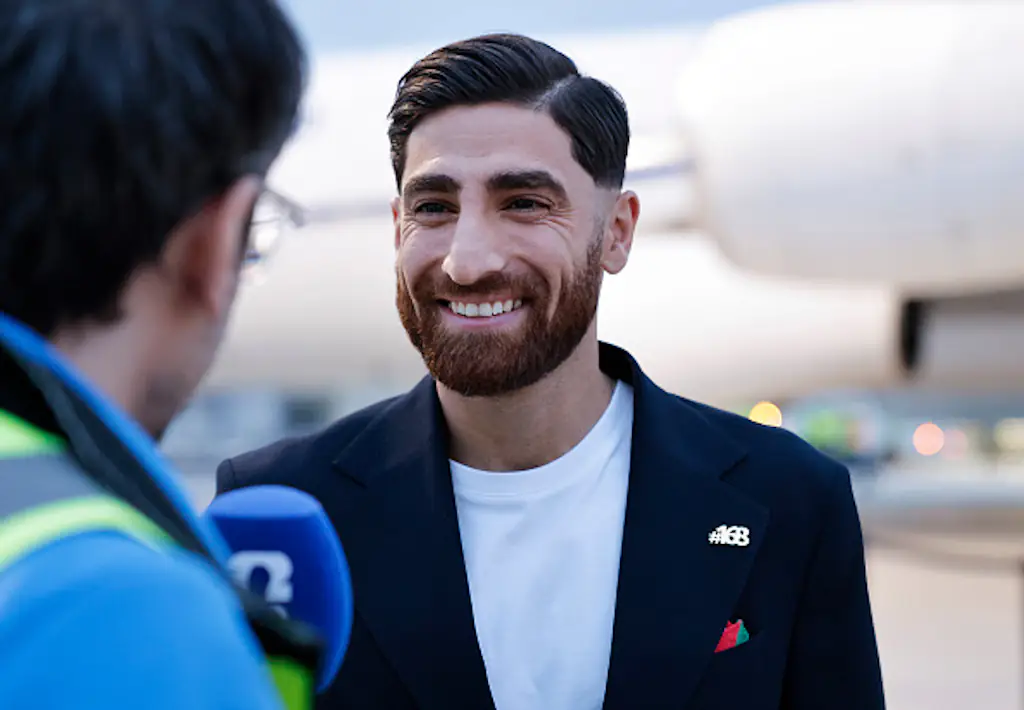
Iran's national team drew attention upon arriving in Tijuana, Mexico, on Sunday ahead of the World Cup after players were seen wearing lapel badges marked "#168."
The badge, designed to resemble a social media hashtag, references what Iranian officials say was the number of children killed at an elementary school on the opening day of the U.S.-Iran war on February 28, 2026. According to Iran's foreign ministry, the figure commemorates the victims of that attack.
The gesture comes amid ongoing controversy surrounding reports about the strike. The New York Times, citing U.S. officials and individuals familiar with preliminary findings, reported that an ongoing military investigation concluded the United States was responsible for the missile attack.
However, neither Donald Trump nor the U.S. government has publicly confirmed those findings.
Interestingly, the Iranian squad was not wearing the badges when they departed their training camp in Antalya, Turkey, on Saturday.
During the journey, which included a refueling stop in Spain, the badges were added to players' dark blue jackets and were visible when they arrived in Mexico before heading to their hotel.
Whether the badges violate FIFA regulations still remains unclear.
Because the players were not participating in an official match or team event when they wore them, the situation falls into something of a gray area.
However, the incident has raised questions about whether political messaging could become an issue during the tournament as geopolitical tensions continue.
FIFA regulations state that "equipment must not have any political, religious or personal slogans, statements or images" and warn that players or teams may face sanctions from either FIFA or competition organizers.
The rules apply not only to players but also to officials in the technical area. If head coach Amir Ghalenoei or other staff members were to wear similar badges during official activities, they could potentially face disciplinary action.
FIFA's guidelines acknowledge that political issues can be difficult to define, noting that political infringements are "less clear" in some circumstances.
However, the regulations specifically prohibit "slogans, statements or images" relating to "any person(s), living or dead" or "any specific political act/event."
The Athletic has reportedly contacted FIFA seeking clarification on whether wearing the badges while travelling to the World Cup constitutes a rules violation. The publication also asked the Iranian Football Federation whether players intend to continue wearing the badges during the tournament.
This is not the first time Iran's national team has used public displays to commemorate victims linked to the war.
Before a friendly match against Nigeria during the March international break, Iranian players held school bags during the national anthem as a tribute to the children who died.
A few days later, ahead of a game against Costa Rica, members of the squad displayed photographs of victims, including children, as well as images of sporting and cultural sites damaged in bombing raids.
Although those actions were presented as acts of remembrance, they also appeared to test FIFA's restrictions on political displays.
Following those incidents, FIFA told The Athletic that any potential disciplinary action would be handled under its disciplinary code. No formal punishment was ultimately announced.
FIFA president Gianni Infantino was present at the Costa Rica match and witnessed the display, which took place in a stadium where FIFA branding was prominently displayed.
More recently, before warm-up matches against Gambia and Mali in Turkey ahead of their departure for Mexico, Iranian players stood during the national anthem with their right hands placed across their chests, another symbolic gesture that attracted attention as the team prepared for the World Cup.
world0 min(s) read
Published 21:22 15 Mar 2020 GMT
A man was caught on camera allegedly attacking a woman because she was not wearing her veil correctly, the Daily Mail reports. However, the woman does not take the unwarranted assault lying down and immediately fights back.
Footage of the incident was posted to Twitter by Iranian journalist and activist Masih Alinejad.
[[twitterwidget||https://twitter.com/AlinejadMasih/status/1237725381077106688]]
"Watching this video makes one very angry," Alinejad wrote. "In broad daylight in Iran, a woman walking in the street is physically harassed by a pro-regime vigilante due to her hijab. Next time they tell you compulsory hijab is a small issue, show them this video. Many Iranian women face this".
The activist then revealed in the tweet that she had spoken to the woman, who said she had gone to the police station to file a complaint on the incident.
Alinejad explains: "Yet, the authorities refused to arrest the man because 1) she only faced internal injuries 2) the man said he was voluntarily enforcing morality codes ( tolerated in Iran)."
[[twitterwidget||https://twitter.com/AlinejadMasih/status/1237731579432177665]]
Unsurprisingly, many Twitter users took to the thread to praise the woman for fighting back, with some even calling her a "heroine".
[[twitterwidget||https://twitter.com/PowindaC/status/1237764725439705088]]
[[twitterwidget||https://twitter.com/GreatBeingCyrus/status/1237733804472762369]]
[[twitterwidget||https://twitter.com/Sabi98288193/status/1237733529699704832]]
One person wrote: "I think if the other passers-by hadn’t intervened, she may well have broken his nose. Look at her! She just keep going and going at him, despite the fact he’s much bigger than her."
Another added: "She is such a heroine. She even went to the police station! The only sane solution. But in insane environment it does not work, i guess."
An appalled Twitter user referred to the man as an "insane monster".
They added: "This veiled lady rightfully told the man to go mind his own business when he shamelessly attacks her. The #Iranian authorities make a perverse mockery of their religion. Is it not an immoral crime to assault a woman?Why was he looking at her in the 1st place ?"
Related - This is the insane moment surveillance cameras caught a woman attacking another woman in a tea shop:
[[jwplayerwidget||https://content.jwplatform.com/videos/lUuaXb4Z-Q0L14jDU.mp4||lUuaXb4Z]]
us2 min(s) read
Published 11:19 02 Nov 2018 GMT
To many patriotic Americans, the national anthem is something sacrosanct. The verses and lyrics are familiar and reassuring, and even if you don't know any words, most people can get through the chorus and hum the rest. Some Americans see the song as a pledge of loyalty to the ideals and aspirations that the great American experiment espouses - liberty, justice, equality, and democracy. The stirring words of the Star-Spangled Banner can act as a rallying cry; a comfort in times of national mourning, and a reminder of the bigger picture before a sports game commences.
However, there are those who don't have a high opinion of the national anthem; those who believe that, in its current state, American society does not embody the ideals of the founding fathers. In fact, there are many who believe that the US anthem is a hypocritical one, and that until America provides the same liberty and privileges to all genders and minorities, it cannot in song profess its own exceptionalism.
[[twitterwidget||https://twitter.com/newsdamian/status/1058155145182175233]]
As a result, many athletes have knelt during the singing of the national anthem, as a form of protest against perceived injustices and social inequalities in American society. However, in what appears to be a historic incident, an NFL cheerleader has taken a knee during the national anthem for the first time ever.
The San Francisco 49ers cheerleader was photographed by spectators at a November 1 fixture against the Oakland Raiders at Levi’s Stadium. The brunette woman was photographed kneeling during the anthem by NBC Bay Area reporter Damian Trujillo, who immediately uploaded his snap to Twitter. The woman in question has not yet been identified, nor have her motives been made public, but the gesture has already polarised opinion on social media.
Commenting on the image, one disgruntled Twitter-user wrote: "Lol so shes protesting a country where she can make money dancing at a football game... and her protest is based on a false narrative like Kaepernick's ... the irony is a lot to handle. [sic]" However, others were more supportive, with another commenter writing: "Brave woman. The brave should always be honoured. An anthem is just a song. A country should be judged by the integrity, courage and strength of her people. Support her America. She is America."
[[twitterwidget||https://twitter.com/StarTrek68/status/1058216812448407553]]
US president Donald Trump has been vocal in his condemnation of athletes who use the national anthem as a form of public protest. On August 10 the Republican leader tweeted: "The NFL players are at it again - taking a knee when they should be standing proudly for the National Anthem. Numerous players, from different teams, wanted to show their “outrage” at something that most of them are unable to define. They make a fortune doing what they love."
He added: "Be happy, be cool! A football game, that fans are paying [so] much money to watch and enjoy, is no place to protest. Most of that money goes to the players anyway. Find another way to protest. Stand proudly for your National Anthem or be Suspended Without Pay! [sic]"
Representatives of the 49ers have not released the cheerleader’s name, or commented on the act of protest.
us2 min(s) read
Published 09:52 17 Nov 2025 GMT
The NFL’s first-ever game in Spain delivered drama even before kickoff, as many viewers took aim at the performance of the Star-Spangled Banner - not for the vocals, but for the singer’s outfit.
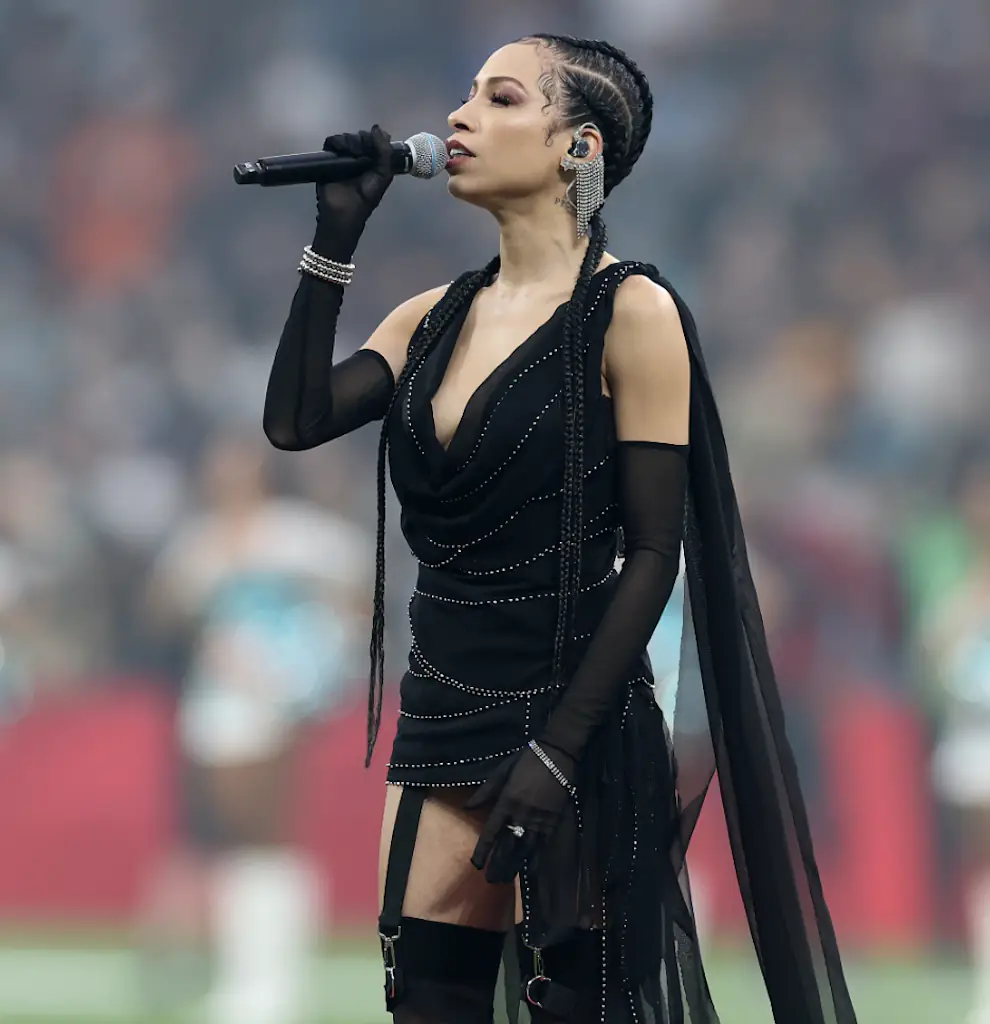
American pop artist Karina Pasian opened Sunday’s matchup between the Washington Commanders and Miami Dolphins at Madrid’s Santiago Bernabéu Stadium, but her wardrobe became an unexpected flashpoint for fans watching around the world.
Pasian, 34, took to the field in a black mini dress with a plunging cowl neckline, paired with thigh-high stockings, garters, and opera-length gloves. A video posted by the NFL on X quickly drew thousands of comments, many of which argued that her clothing undercut the solemnity of the anthem.
“Nice, but why did she have to dress like a hooker?” one user wrote, while another questioned: “Why is she dressed like a hooker? Lovely voice, but the outfit is distracting.”
Others echoed similar criticisms, saying the ensemble felt “inappropriate” or more fitting for a cabaret performance than a national anthem ceremony. One person commented, “Who dresses like that to sing a national anthem? Shame.”
Despite the criticism, a portion of the audience pushed back, arguing the focus should remain on Pasian’s voice rather than her attire.
Amid the polarized debate, a wave of commenters applauded the singer’s rendition, calling it one of the standout moments of the Madrid event.
“Not many people can sing that song well. She knocked it out of the park,” one viewer wrote. Another added,:“Historic game, historic vocals. She delivered.”
Several praised the NFL’s choice to spotlight Pasian during such a landmark game. “Cool seeing her get that spotlight in Madrid,” one fan commented. “First NFL game there needed a moment like that.”
Another added: "What a beautiful performance for an anthem."
Pasian currently lives in Madrid but originally hails from New York City.
Credit: Florencia Tan Jun/Getty Images.
Pasian has been in the music spotlight since childhood. At 13, she drew competition among major record labels including Def Jam, Interscope, and Bad Boy, ultimately signing with Def Jam in 2006.
She later earned a Grammy nomination for her single 'Can’t Find the Words' in the Best Contemporary R&B category and performed at the White House in 2007 for President George W. Bush during Black Music Month.
Her performance on Sunday set the stage for a dramatic matchup, which ended with the Miami Dolphins edging out the Washington Commanders 16–13 in overtime.