


World3 min(s) read
'Jeffrey Epstein's neighbor' gives chilling account of life on his island - 'this wasn't a small operation'

A former resident of the US Virgin Islands has come forward with a bizarre claim about Jeffrey Epstein’s private retreat, adding yet another strange layer to the already notorious reputation of Little Saint James.
The woman, who goes by Emma on TikTok, says she lived on nearby St. Thomas in her twenties and frequently passed Epstein’s secluded compound by boat.
What she allegedly saw still stands out decades later: life-size plastic cows positioned around the island.
Her account, while purely anecdotal and not tied to any official investigation, has sparked renewed curiosity about the unusual and often secretive features surrounding Epstein’s properties.
Life on the Island Next to ‘Pedophile Island’
In her viral video, Emma explained that residents of St. Thomas commonly referred to Little Saint James as Pedophile Island – a nickname that became widespread as allegations against Epstein grew.
She claims the sight of the plastic cows was something her family noticed repeatedly, describing them as deliberately arranged rather than decorative.
According to her speculation, the faux livestock may have been displayed to create the illusion of agricultural activity, potentially allowing Epstein to claim tax exemptions or other financial benefits available to landowners with livestock.
She emphasized that the scenario was strange but insisted the plastic animals were real.
Could Plastic Livestock Be Linked to Tax Loopholes?
While the claim sounds surreal, experts say the idea itself isn’t entirely far-fetched.
Epstein was known to operate through a complicated network of shell companies and tax-incentive programs provided by the U.S. Virgin Islands.
In fact, a civil lawsuit filed by the USVI government accused him of exploiting local economic benefits to mask illicit activity and discourage scrutiny.
After Epstein's death in 2019, his estate ultimately settled with the USVI for more than $105 million, including repayment of improperly obtained tax advantages.
However, no official court filings, investigative reports, or government documents make any mention of livestock, or plastic replicas, being used in his financial schemes.
One charter-boat operator did report seeing life-size plastic cows moved around the island, but his comments surfaced only in media accounts, not in any legal case materials.
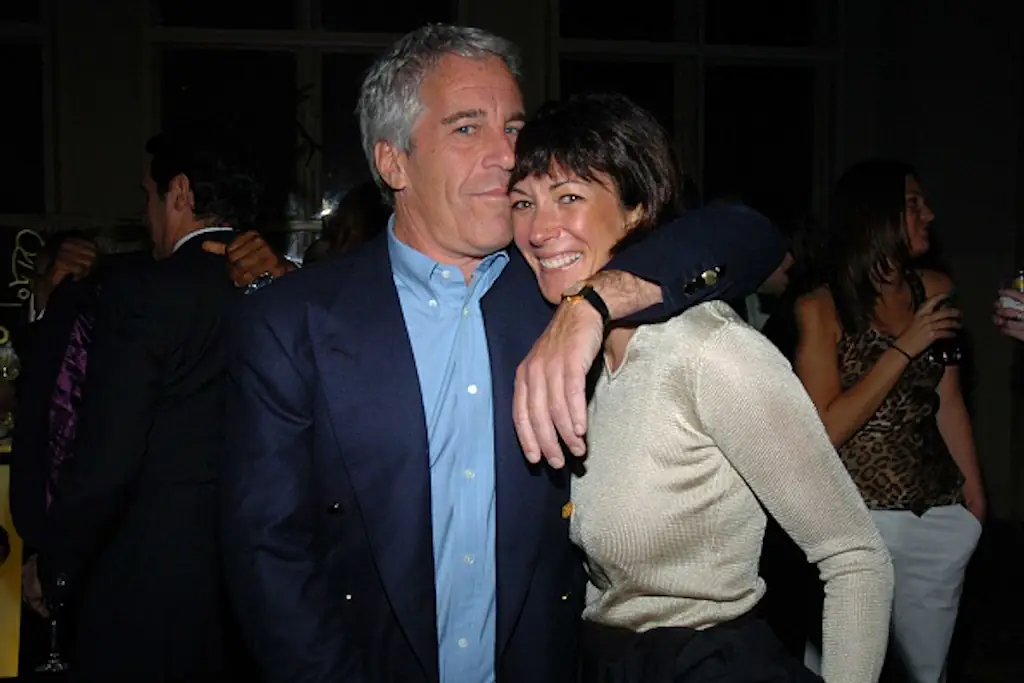
Jeffrey Epstein and his accomplice Ghislaine Maxwell pictured in New York, 2005. Credit: Joe Schildhorn / Patrick McMullan / Getty Images.
A Strange Detail in an Even Stranger Case
Though unverified, the plastic-cows claim fits within a long history of secrecy, unusual behavior, and odd symbolism associated with Epstein’s properties.
Little Saint James, purchased in 1998, became the center of numerous allegations involving the trafficking, abuse, and exploitation of minors.
Epstein later acquired Great Saint James as well, reportedly through a covert purchase intended to expand his privacy and reduce outside scrutiny.
Former employees have described environments controlled with strict rules, limited staff movement, and high security – conditions that protected Epstein’s operations for years.
Against this backdrop, the notion of plastic cows scattered across the island becomes yet another unsettling footnote – an absurd detail in one of the most disturbing criminal sagas of the modern era.