


World3 min(s) read
'Living Nostradamus' reveals 2026 prediction he fears the most
.webp_QQJmGo?tr=cr-345.0.1535.1190,f-webp,q-70,w-100)
As we look forward to 2026, let's see how things are going to go horribly wrong next year... because these predictions are never of nice things, are they?
Among the most notable figures in the realm of prophecy is Athos Salomé, a Brazilian mystic often referred to as the "Living Nostradamus."
Known for his predictions on major world events, Salomé has recently shared a chilling warning about what he believes will be one of the most significant threats in 2026: devastating solar storms.
A Look Ahead: The 'Most Scared' Prediction for 2026
In an interview with UNILAD, Salomé revealed that his biggest concern for the year 2026 is the possibility of massive solar storms, an event he believes could cause significant disruptions to daily life.
These solar storms, he argues, are more than just speculative - they are grounded in scientific evidence.
Salomé’s warning comes after observing a steady increase in solar activity since 2024, signaling an impending rise in instability in the solar system.
He emphasizes that this trend is not mere hype but rather a tangible risk growing stronger by the month.
"Since 2024 it has peaked in solar activity and exhibited a marked trend of increasing instability. This is not inflated language. It mirrors an actual physical risk that’s growing month after month," Salomé explained.
According to the mystic, the solar storms expected in early March 2026 are especially concerning because they could happen quickly, with little warning, unlike other predicted events for the year, such as geopolitical tensions or economic instability.
"Solar storms now seem like the most plausible scenario to have such immediate impact on daily life, and backed by robust science," Salomé added.
"This deserves full focus. Not out of fear, but rather due to measurable signals in synchrony with potential power cuts, communication failures, and technological disruptions in affected regions."
What Exactly is a Solar Storm?
To understand Salomé's warning, it’s important to grasp what a solar storm is and how it could disrupt our lives.
NASA defines a solar storm as a sudden explosion of particles, magnetic fields, and other debris blasted into the solar system by the Sun.
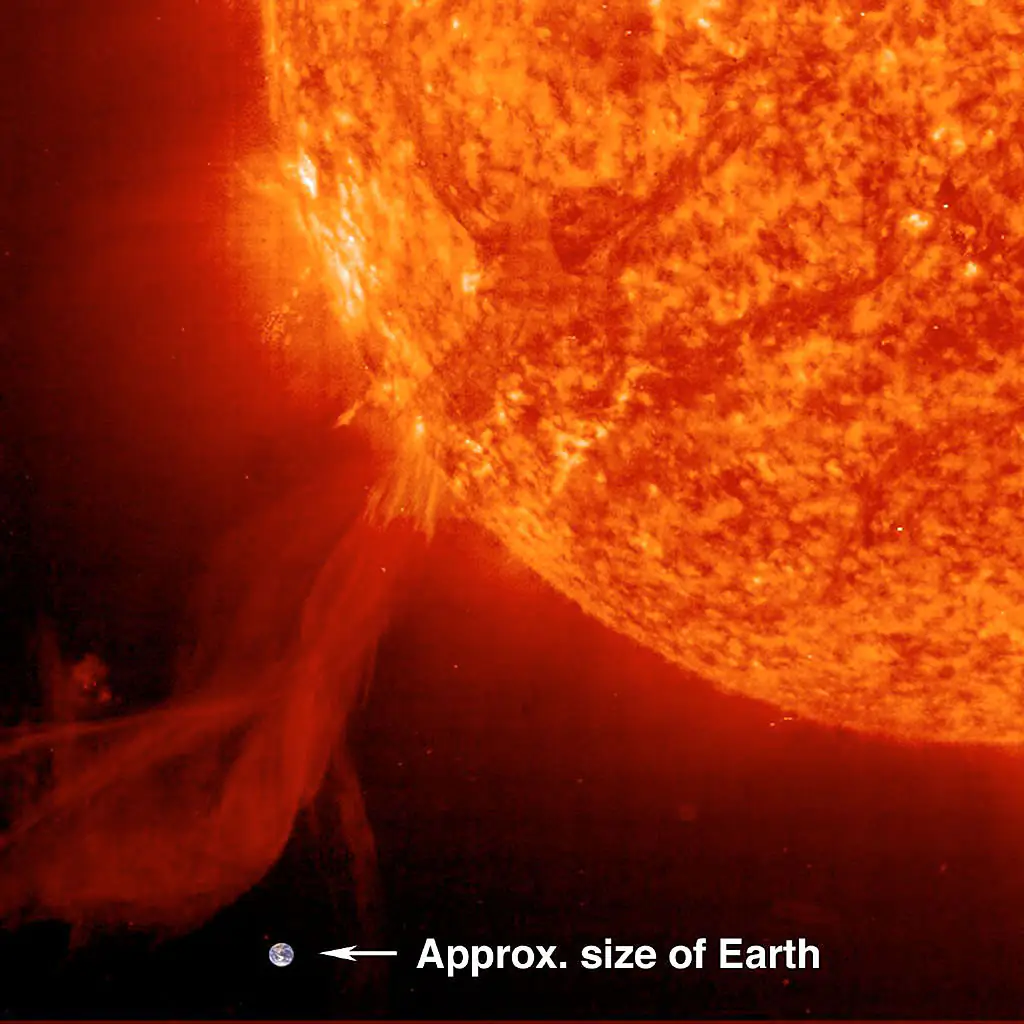
If these particles are directed toward Earth, they can disrupt the planet's magnetic field, potentially leading to power outages and other technological failures. While the storm itself doesn’t pose a direct threat to human health, the impacts on infrastructure could be severe.
The most notable historical example of a solar storm is the Carrington Event of 1859.
This massive geomagnetic storm is considered the strongest in recorded history. It caused beautiful auroral displays but also sparked fires in telegraph stations, showing just how much disruption a solar storm can cause to communication systems.