


World4 min(s) read
Mystery of missing MH370 plane may finally have been solved
.jpg_xKEaT0?tr=cr-0.328.2730.3058,f-webp,q-70,w-100)
Over 12 years ago, Malaysia Airlines flight MH370 vanished on its planned route from Kuala Lumpur to the Chinese capital of Beijing.
The Boeing 777 had 227 passengers and 12 crew members onboard, all of whom have been presumed dead since the aircraft disappeared on March 8, 2014.
It still remains a mystery, as crew onboard didn't send any distress calls despite losing contact with air traffic control at 1:19AM over the South China Sea on that fateful day, before veering off-course and flying an an unknown path for seven hours before vanishing.
Underwater theory on MH370's disappearance
People continue to theorise about the airplane's disappearance and while many think that the truth can be uncovered through the discovery of its black box flight recorders, they remain missing.
But back in 2024, investigators believed that an underwater pressure monitor may help to find the wreckage of the lost aircraft.
Despite it still remaining unconfirmed, the Malaysian government claimed that the flight had "ended in the Southern Indian Ocean."
Hundreds of pieces of underwater audio data were analysed by researchers at Cardiff University from previous aircraft accidents and a submarine disappearance, finding that an underwater signal could have been caused by the impact of the Boeing plane hitting the waves when crashing.
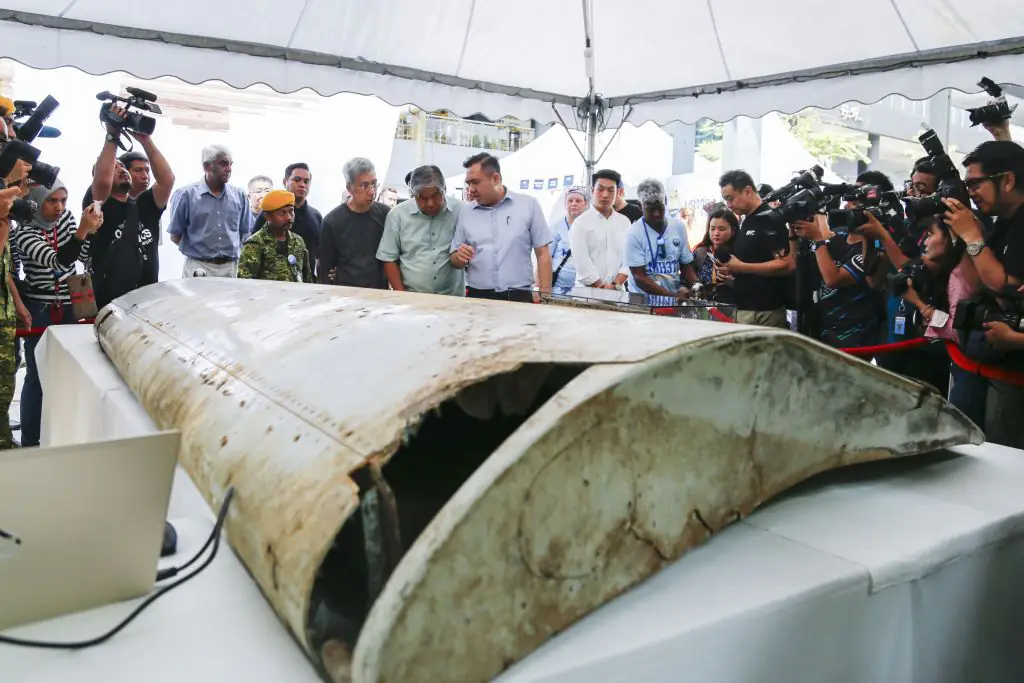
How hydrophones could be used to detect MH370
Dr. Usama Kadri, a mathematician and engineer, claimed that a network of hydrophones, which have been used to keep tabs on pressure changes in the ocean as part of a nuclear explosion detection system, could be the key.
After he and his team went through large volumes of data from the time the aircraft was said to have disappeared, the doctor discovered an unidentified event in an area called the Seventh Arc.
Speaking to The Conversation, Dr. Kadri explained: "A 200-tonne aircraft crashing at a speed of 200 metres per second would release the kinetic energy equivalent to a small earthquake. It would be large enough to be recorded by hydrophones thousands of kilometres away.
"Given the sensitivity of the hydrophones, it’s highly unlikely that a large aircraft impacting the ocean surface wouldn’t leave a detectable pressure signature, particularly on nearby hydrophones."
He noted that "unfavourable" ocean conditions could still affect a signal this large though.
The engineer believed that the search would have to be approached with this method to see if these signals were linked to the missing plane, as researchers suggested that a number of controlled underwater explosions be carried out so search teams can finally find the elusive wreckage.
Over the years, many theories have been put forward, whether it be a possible hijacking or the near-impossible chance that the plane was flown into a 'black hole'.
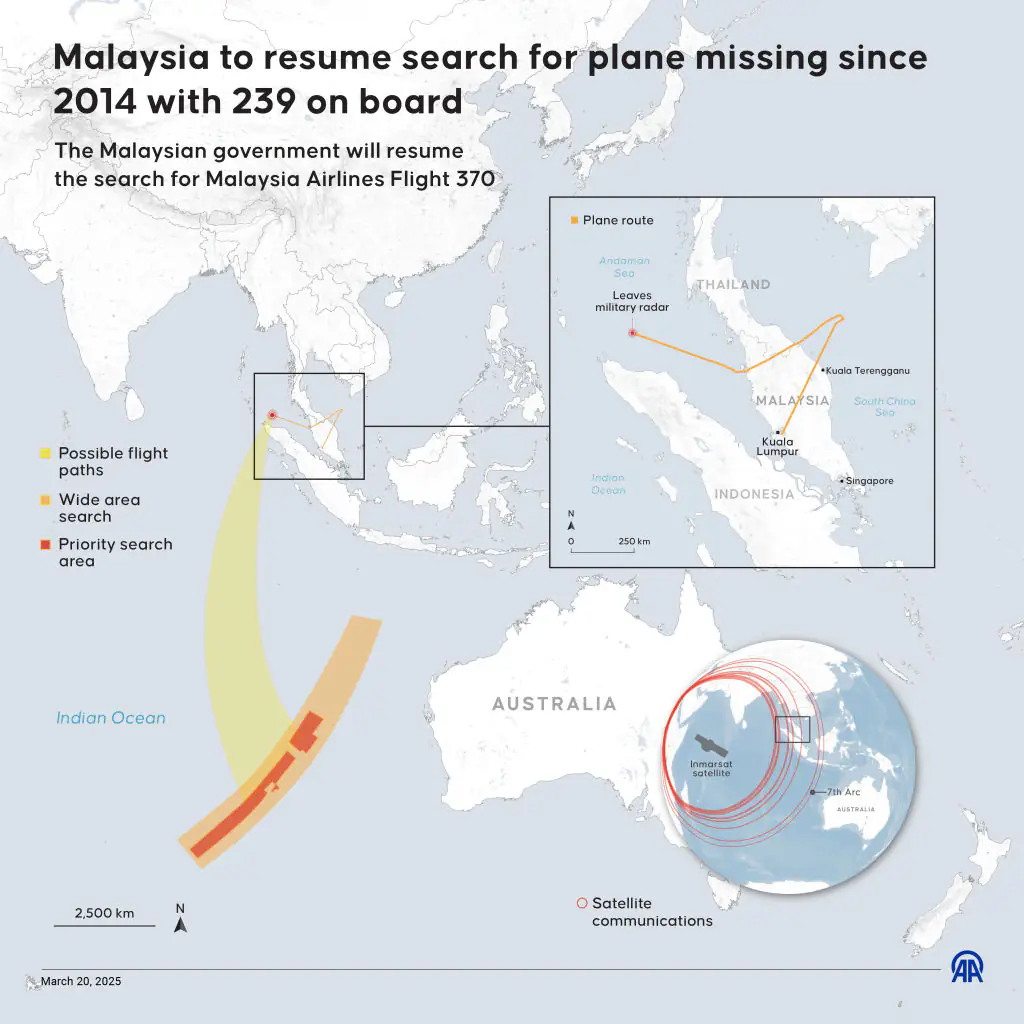
Latest searches for MH370
Ocean Infinity, a UK-based marine robotics firm, carried out searches for the airplane in both March 25–28 last year and in December 31 to January 23 this year.
Unfortunately, no wreckage was found apart from numerous pieces of marine debris.
The firm splashed $67.2 million on advanced technology and resources, with the search taking place over 7,571 square kilometers on the seabed of the Indian Ocean.
They carried the search out on a no-find, no-fee basis, as Malaysia's Transport Minister, Anthony Loke, had claimed they would have been awarded $70 million if they found the missing aircraft.
Ocean Infinity said in a statement this year: “The search activities undertaken have not yielded any findings that confirm the location of the aircraft wreckage.
“The government pays nothing unless the aircraft is found. Any request by Ocean Infinity to extend the search contract should therefore be granted without hesitation,” they added.
The firm then urged the government to offer the same deal to other "capable deep sea exploration companies.”