


World4 min(s) read
Nostradamus's terrifying predictions for 2026 revealed

Michel de Nostredame, better known as Nostradamus, has a way of resurfacing in popular culture every time a new year approaches. His centuries-old verses, eternally vague and endlessly debated, become fertile ground for fresh interpretations. As 2025 fades and speculation turns toward 2026, interest has once again spiked in what the famed astrologer may or may not have foretold about the coming year.
Did Nostradamus Actually Predict Anything for 2026?
The simple truth is that Nostradamus never explicitly dated predictions for 2026. None of his quatrains attach themselves directly to the year. However, that hasn’t stopped enthusiasts from poring over his writings in search of symbolic references that could be mapped onto modern events.
What gives 2026 particular allure is a major astronomical event: a total solar eclipse crossing parts of Europe, the first in nearly three decades. For many devoted readers of Nostradamus, this has become a tempting anchor for connecting certain passages to the upcoming year, Sky History writes.
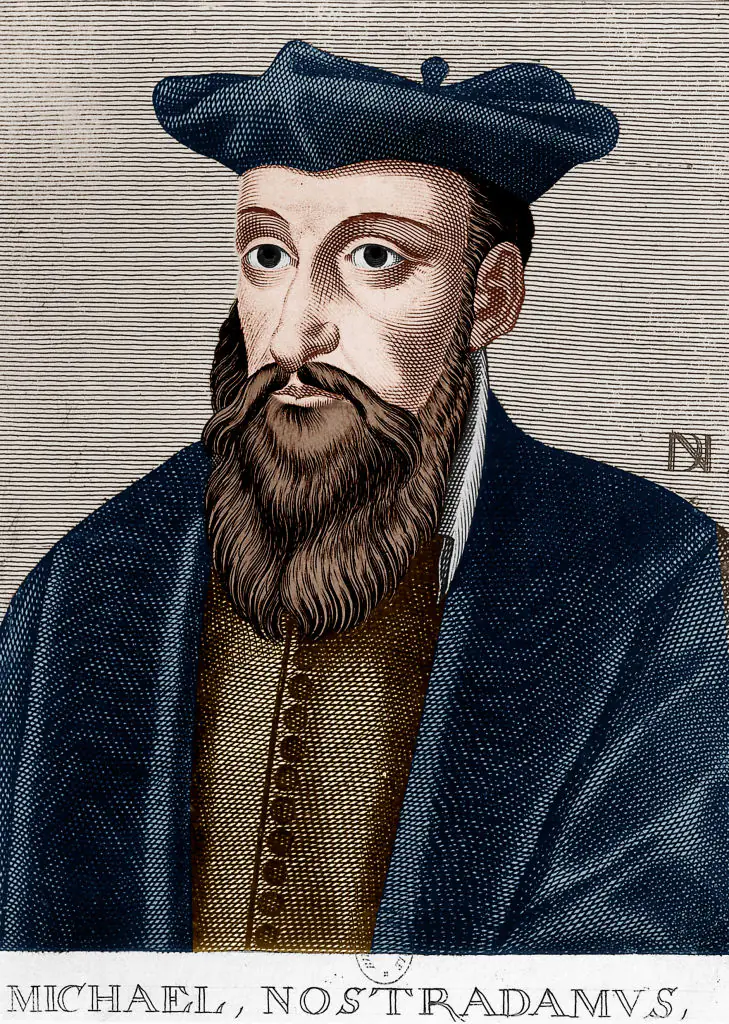
Nostradamus. Credit: Apic / Getty Images.
The Debate Around the “Seven Months, Great War” Verse
One of the most frequently cited quatrains reads (via Express):
Seven months great war, people dead through evil
Rouen, Evreux the King will not fail.
Whenever European tensions rise, this verse reappears in discussions. With ongoing geopolitical friction between Russia and Ukraine, some have highlighted it as newly relevant. Although the text references French place names rooted in the 16th century, some interpreters believe 2026 could align symbolically with the verse’s imagery.
Nostradamus has been linked to accurate predictions before – at least by those who subscribe to retroactive interpretation. For example, the line: “Within two cities, there will be scourges the like of which was never seen” has frequently been associated with the devastation of Hiroshima and Nagasaki at the end of World War Two.
The Obsession With “26” in Nostradamus Numerology
Another strategy used by believers is numerology: the assumption that quatrains numbered “26” must correlate to the year 2026. While this approach isn’t rooted in textual evidence, it frequently appears in speculative articles.
One example is I:26, translated by Leoni as: “The great swarm of bees will arise… by night the ambush…” Some readers draw symbolic connections between the bee motif and political figures or movements, occasionally tying it to well-known leaders like Donald Trump or Vladimir Putin. Such leaps are not unprecedented, especially given the resurgence of old political prophecies online, including those found in Ingersoll Lockwood’s novels.
Another often-mentioned quatrain is II:26: “Because of the favour that the city will show… the Ticino will overflow with blood…” While it names a real European region, Ticino in Switzerland, it still offers no timestamp.
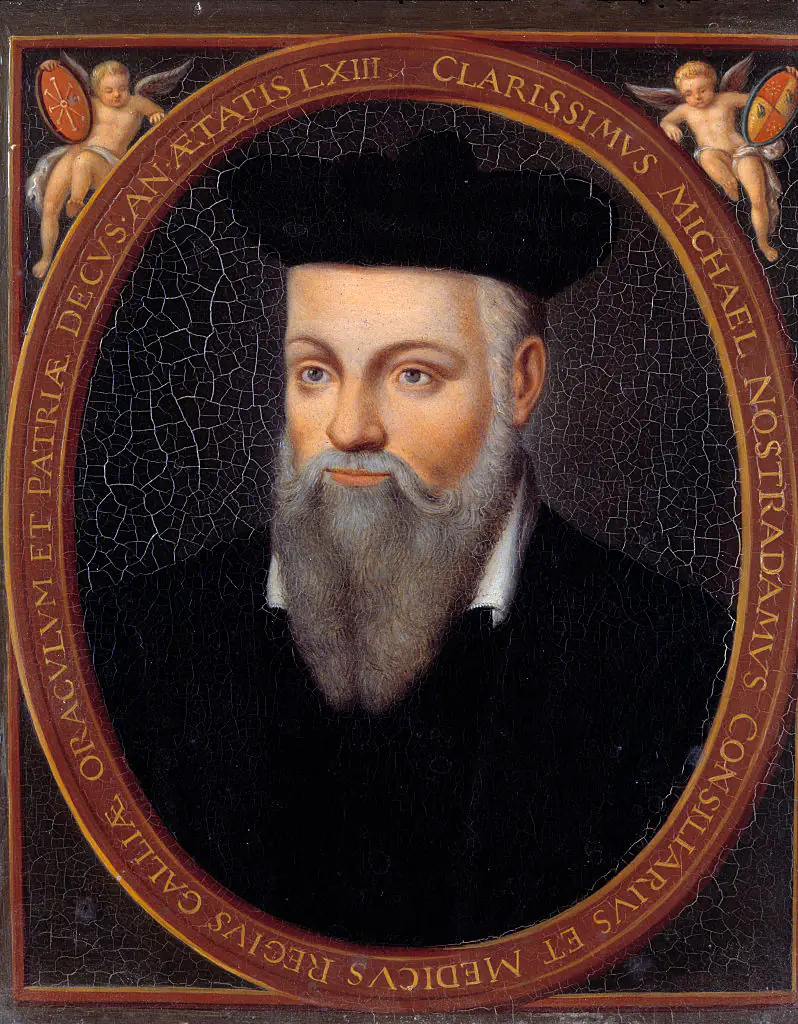
Credit: Photo Josse/Leemage/Getty Images.
Why the 2026 Eclipse Fuels New Predictions
The 2026 European solar eclipse naturally encourages people to hunt for Nostradamus verses mentioning darkened suns, celestial fire, or planetary turmoil. Although his writings include references to eclipses and cosmic disturbances, these motifs were common in Renaissance astrology and are not tied to specific years.
Experts point out that Nostradamus wrote in Middle French while mixing in Latin terms and intentionally vague phrasing. Variations in manuscripts, inconsistent spelling, and poetic ambiguity make it easy to retrofit quatrains to modern events or future anxieties. Depending on translation and creative liberty, the same verse can be made to “predict” anything from global conflict to natural disasters.
Whether he was a visionary or simply a clever writer is something each reader decides on their own.
Why Nostradamus Continues to Fascinate Us
If the predictions are so vague, why do they still captivate us? Historians say Nostradamus lived in a world marked by political turbulence, social upheaval, and emerging mass communication – the printing press being the social media of his time. Much like today, such conditions made people hungry for patterns, signs, and explanations.
Confirmation bias also plays a large role: we often assign meaning to a prophecy after an event has occurred. That’s how predictions like the Great Fire of London in 1666 end up credited to him centuries later, per Sky History. The same dynamic fuels interest in other prophetic figures such as Baba Vanga.
Nostradamus’s appeal endures because his cryptic language leaves endless room for interpretation – especially when a new year, like 2026, arrives with uncertainties of its own.