


World4 min(s) read
Real reason behind superyacht sinking that killed billionaire and his 18-year-old daughter revealed in damning new report
.jpg_I4Ebof?tr=cr-0.338.2730.3068,f-webp,q-70,w-100)
A damning new investigation into the sinking of a billionaire's superyacht off the coast of Sicily has revealed that the freak storm long blamed for the disaster wasn't actually to blame at all.
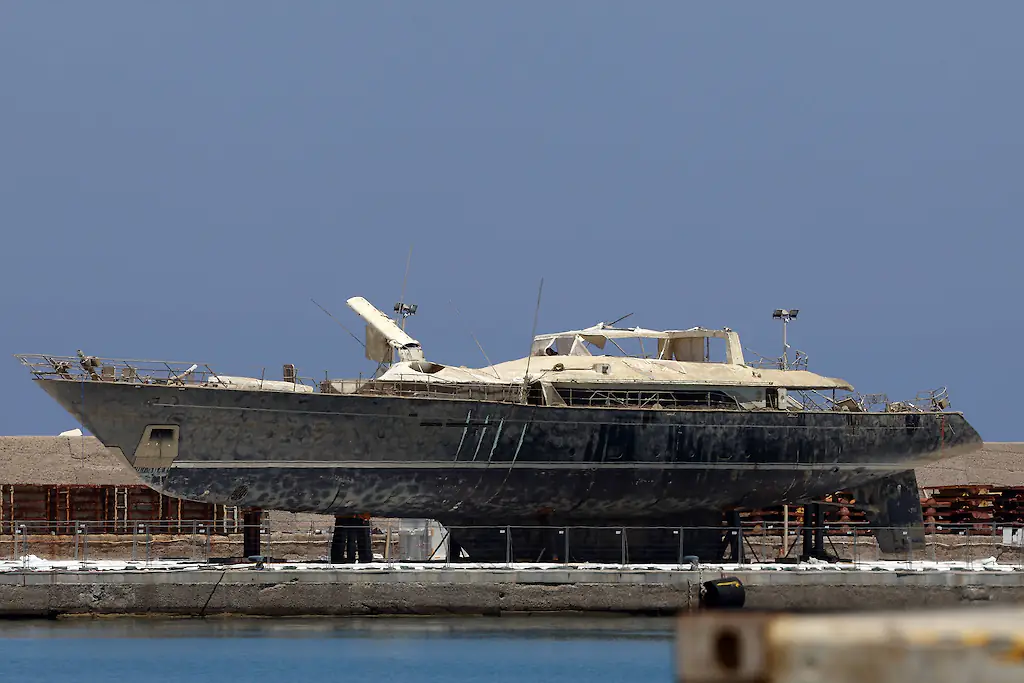
The Bayesian, a 184-foot sailing superyacht owned by British tech tycoon Mike Lynch, sank in the early hours of August 19, 2024, while moored just off the fishing town of Porticello.
Seven people on board were killed, including Lynch himself, his 18-year-old daughter Hannah, and the yacht's chef.
For nearly two years, the prevailing theory was that an unprecedented storm, possibly even a waterspout, had simply overwhelmed the vessel.
Italian prosecutors now appear to disagree.
What the new report says
According to a preliminary report by Italian prosecutors in Termini Imerese, first reported by Sky News, the weather that night was nowhere near as catastrophic as it had been described.
A source connected to the findings told the broadcaster the storm was 'little more than a squall, a sudden increase in wind speed that precedes thunderstorms and downpours.'
In other words: the kind of weather a yacht of Bayesian's size and class should easily have been able to ride out.
Instead, the report finds, the sinking was caused by a series of preventable errors made by the crew on board.
According to the preliminary findings, the yacht sank due to crew actions, an underestimation of the weather, and certain safety devices not being activated properly.
Italian prosecutors are reportedly considering charges of negligent shipwreck and multiple counts of manslaughter against the captain and two members of the crew.

What happened that night
The Bayesian had been anchored around 300 metres from shore in Porticello on the night of August 18, 2024.
The owners, Lynch and his wife Angela Bacares, were on board with their daughter Hannah and a number of business associates and friends. The captain and nine crew members were also on board.
At around 4am on August 19, security cameras on land captured a sudden, dramatic storm rolling in. Within minutes, the yacht's mast lights went dark.
By 4:30am, the Bayesian had sunk in around 50 metres of water.
Of the 22 people on board, 15 escaped. Seven did not.
The dead included Lynch, 59, his 18-year-old daughter Hannah, Morgan Stanley International chairman Jonathan Bloomer and his wife Judy, Lynch's lawyer Chris Morvillo and his wife Neda, and the yacht's chef, Recaldo Thomas.
The group had been out at sea celebrating Lynch's acquittal earlier that summer on US fraud charges related to the 2011 sale of his software company Autonomy to Hewlett-Packard.
Heartbreaking tributes for Hannah Lynch in particular poured in from family and friends in the days that followed.
The contradicting reports
The Italian prosecutors' new findings appear to contradict an earlier report from the UK's Marine Accident Investigation Branch (MAIB).
The MAIB's interim report, published in May 2025, said the Bayesian had been hit by sudden, violent winds of more than 70 knots, forcing the yacht beyond a 'recoverable heeling angle.'
The MAIB also found that the yacht's stability booklet contained limited information about how vulnerable the vessel was to storms, and contained nothing on sudden squalls or gusts when the keel was up.
A separate analysis noted that the Bayesian's 72-metre mast, one of the tallest in the world, accounted for around 50% of the wind's heeling force, making the boat exceptionally susceptible to being knocked over.
The Italian Sea Group, the company that owns Perini Navi (the firm that built the Bayesian), has firmly denied any suggestion the boat had design flaws.
It has previously sought to pin the blame on the crew, suggesting that someone may have left a hatch open near the waterline that allowed large quantities of water into the hull.
The MAIB's final report has not yet been released, with no set date.
What happens next
The Italian prosecutors' preliminary findings are not the end of the road. The full criminal investigation is still ongoing, and any charges, if brought, would still need to be tested in court.
The captain and crew members under scrutiny have not been named publicly.
The investigation comes against an already painful backdrop for Lynch's family.
In April, the widow of the late tech tycoon was ordered to pay £930 million in damages to Hewlett Packard Enterprise, a long-running court case that effectively wiped out the family fortune.
For now, what once looked like a terrible accident at the hands of nature is being reframed as something far more troubling: a tragedy that may, by Italian prosecutors' reckoning, have been entirely avoidable.