


World3 min(s) read
The Big Short's Michael Burry warns of 'bloody' financial event with devastating consequences worldwide
.jpg_xKEaT0?tr=cr-0.328.2730.3058,f-webp,q-70,w-100)
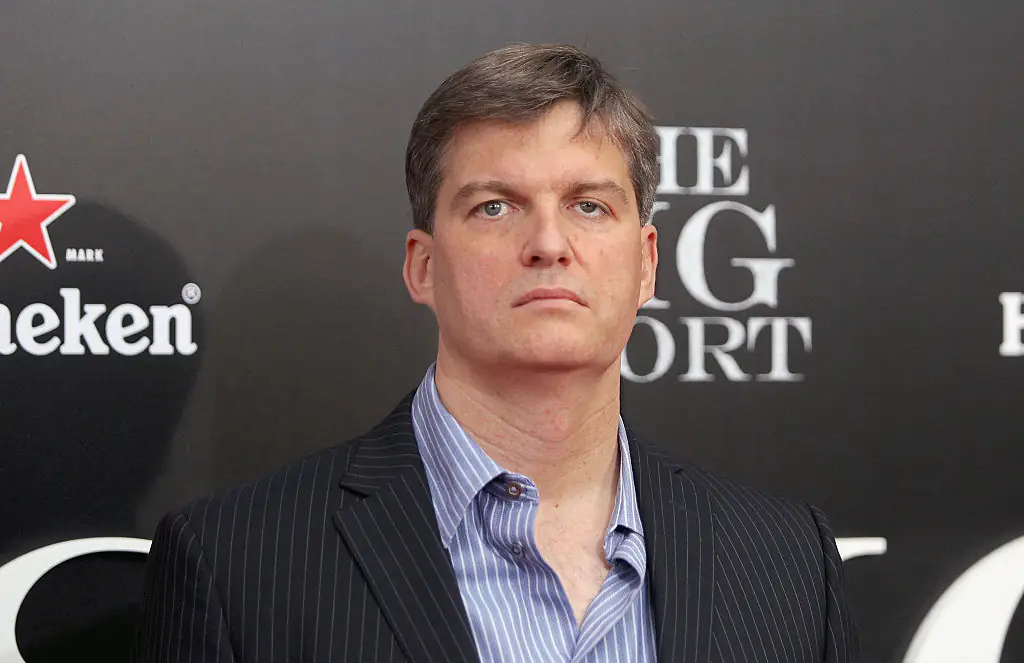
Michael Burry, best known for being portrayed by Christian Bale in the 2015 hit film The Big Short, has warned us about the state of the economy and the stock market.
It's not good news from the hedge fund manager, who has highlighted the instability in the market as a result of rising geopolitical tensions, the rise of AI and other factors.
The rising prices of goods and oil have been something that can be primarily attributed to the restrictions on the Strait of Hormuz, a shipping lane responsible for exporting a fifth of the world's oil.
While Donald Trump is reiterating that he's not struggling financially from the spike in oil prices, other investors who have money in the industry are also claiming to see benefits.
But Burry claims that these positives will only be short-lived, and that something far scarier might be on the horizon for those in the stock market.

A 'bloody' financial event
Burry took to his Substack, claiming that we are moments away from a 'bloody' event which could devastate the economy, giving us shades of the 2008 financial crisis.
While many may believe that this is the case anyway, Burry says that he isn't bothered with the current Nasdaq 100 index, going as far as claiming that it may be too good to be true.
“This, all of it, is the scene of the bloody car crash, minutes before it happens," he wrote.
Burry is best known for being one of the few people who predicted the devastating economic crash in 2008, as he believes that history may be repeating itself.
Apparently, a financial crash this year could be even worse than any previous crash, because of the high levels of debt involved, and what's known as the AI bubble.
This theory suggests that the perception of AI and its hype is so high that people are putting significant amounts of money into its potential, which may never materialise, and leave investors out-of-pocket.
“In the next two days, I will release a valuation exercise that seems to suggest almost no tech stock, not even bombed out software stocks, are inexpensive when held to strict accounting standards, more strict and more forensic in nature than GAAP," he penned.
Certain factors will affect stock prices
Burry explained in his article that other things could have a negative impact on stock prices.
He told investors to delve into potential issues such as depreciation practices, construction-in-progress spending, M&A expenses and capital leases.
It's not all about GAAP income, as Burry explained: “In addition, there are the future write-downs, such as Nvidia’s growing contracts with TSMC, securing over one hundred billion dollars of capacity at TSMC.
"CSCO in 2001 and 2002 wrote down years of its best earnings when it had to write off the same types of contracts with its suppliers.”
While you may have made a sizeable earning from the recent upsurge in values, you may be better off selling your shares before disaster strikes.
He claimed: “History tells us that even if the party goes on for another week, month, three months, or year, the resolution will be to much lower prices.”