ADVERT
World2 min(s) read
Published 09:56 20 May 2024 GMT
world4 min(s) read
Published 10:23 13 Mar 2026 GMT
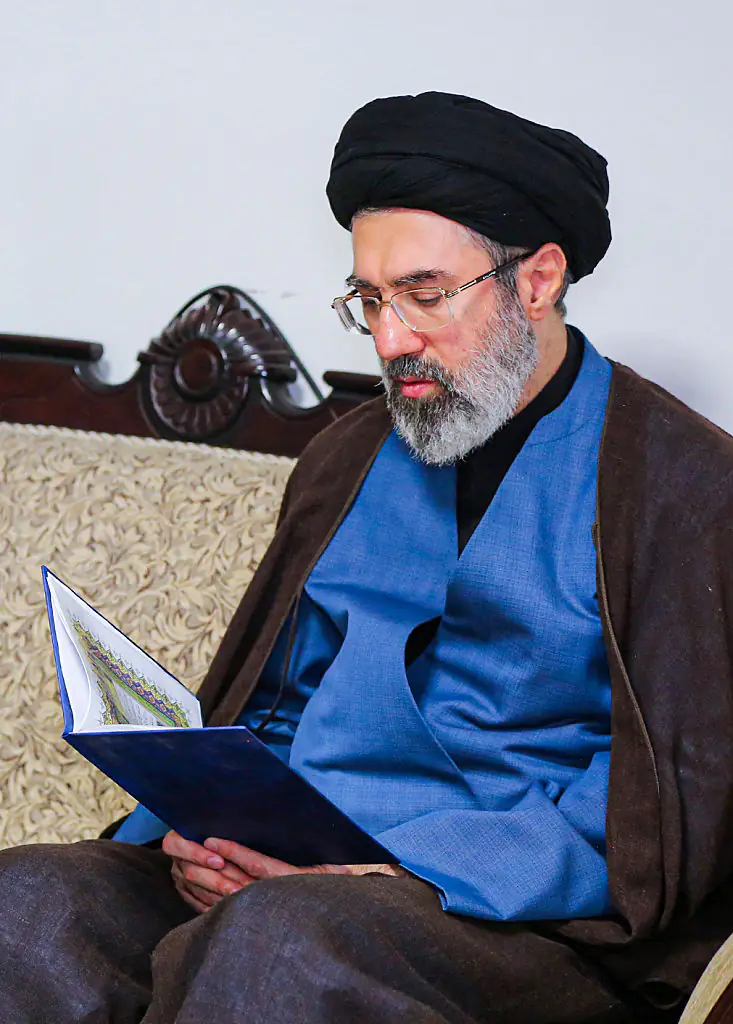
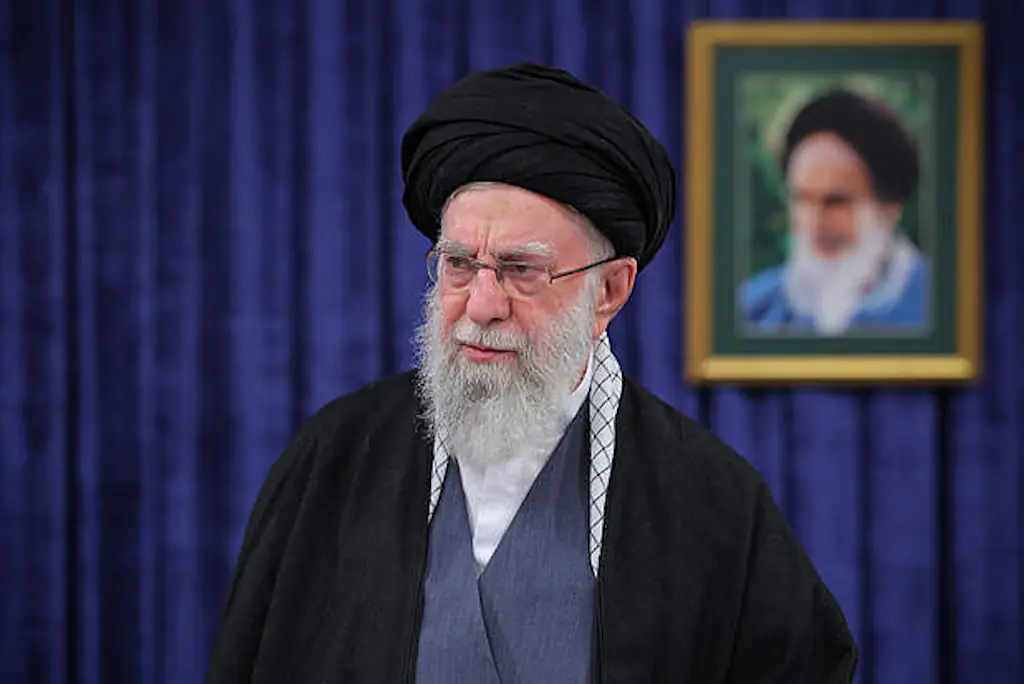
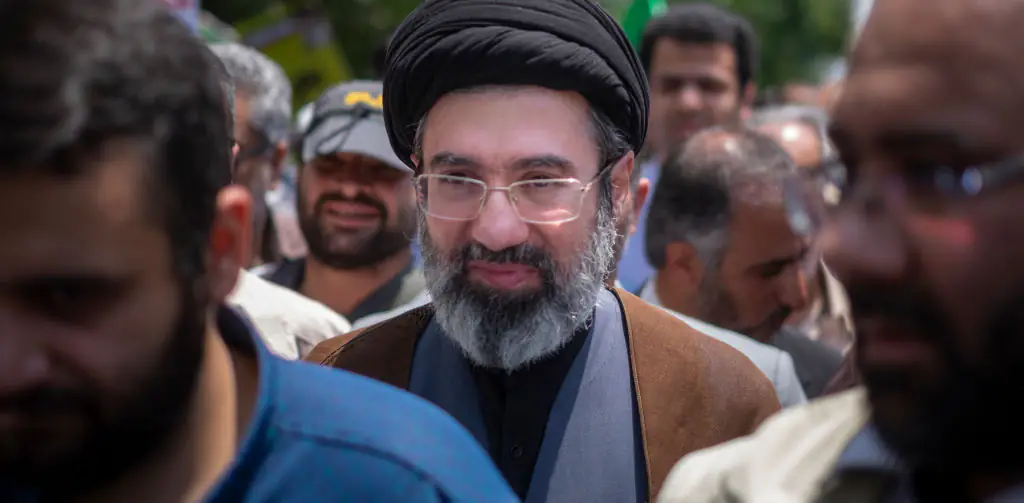
Reports claim Iran’s new Supreme Leader, Ayatollah Mojtaba Khamenei, is in a coma after suffering devastating injuries linked to the ongoing war in the region.
The 56-year-old, who is the son of the late Ayatollah Ali Khamenei, has not been seen publicly since taking over the role on Monday. His father and wife were both killed in an Israeli air strike on February 28 that triggered the conflict.
According to The Sun, the Iranian leader is currently in a coma after losing one or both of his legs and suffering severe stomach or liver damage. Despite the reports about his condition, he released his first written statement on Thursday since assuming leadership after his father’s death.
The outlet reported that Khamenei remains in intensive care at Sina University Hospital in Tehran’s historic quarter. A section of the hospital has reportedly been sealed off and surrounded by security.
It is unclear whether Khamenei was injured on the same day his father was killed, though reports suggest he is not directing the country’s strategy in the conflict.
Sources cited by the outlet described his condition as critical and said he is under the care of Mohammad Reza Zafargjani. Zafargjani serves as Iran’s Minister of Health, Treatment, and Medical Education and is also considered one of the country’s top trauma surgeons and a trusted physician within the regime.
A source for The Sun said in a message: “One or two of his legs have been cut off. His liver or stomach has also ruptured. He is apparently in a coma as well.”
Even as questions surround his health, Khamenei released a written statement addressing tensions in the region.
"We send a message to the leaders of the region and emphasise that we are going to have good relations with the countries around us," the statement says, per The Mirror.
It adds: "But the existence of the US bases in some of these countries and usage of those bases to attack Iran is not benefiting the region, and they must be closed.
"As we said, we are not an enemy of the countries around us, and we are only targeting the bases of those Americans."
The conflict has already caused major disruption across the region. Many foreign nationals have left the Persian Gulf area since the war began, including more than 45,000 UK citizens, according to the UK Foreign Office.
About 40,000 people have returned to the United States, the American State Department said. Nearly 500 people have been killed in Lebanon, while Iran says more than 1,300 people have died there. Israel has reported 12 deaths. The US has lost seven soldiers, and another eight have suffered severe injuries.
At sea, Iraq rescued more than 20 crew members from foreign oil tankers attacked overnight in the Strait of Hormuz. Two ships were struck near the port of Umm Qasr, killing one person and injuring 38 others. The vessels caught fire and were still burning after the attack, according to Farhan al-Fartousi, Iraq's director general of the General Company for Ports.
Following the strikes, the country’s oil ports have reportedly completely stopped operations, though commercial ports remain open.
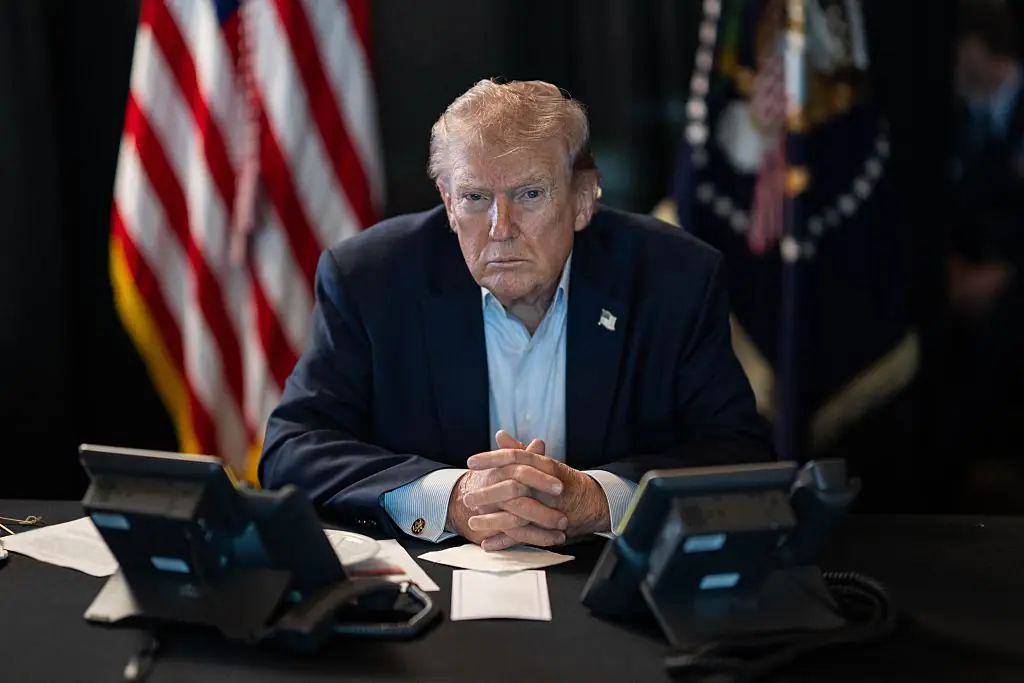
As the crisis escalates, President Donald Trump posted a fierce message on Truth Social on Friday.
He wrote: “We are totally destroying the terrorist regime of Iran, militarily, economically, and otherwise, yet, if you read the Failing New York Times, you would incorrectly think that we are not winning.
"Iran’s Navy is gone, their Air Force is no longer, missiles, drones and everything else are being decimated, and their leaders have been wiped from the face of the earth. We have unparalleled firepower, unlimited ammunition, and plenty of time - Watch what happens to these deranged scumbags today.
"They’ve been killing innocent people all over the world for 47 years, and now I, as the 47th President of the United States of America, am killing them. What a great honor it is to do so! Thank you for your attention to this matter.”
Meanwhile, the United Nations Security Council is expected to vote on a Gulf Cooperation Council resolution condemning Iranian attacks on Bahrain, Kuwait, Oman, Qatar, Saudi Arabia, the United Arab Emirates, and Jordan. The measure calls for an immediate end to strikes and threats against neighbouring states, including through proxy groups.
us2 min(s) read
Published 14:40 02 Mar 2026 GMT
Recent satellite footage depicts the extent of the destruction from U.S. airstrikes on Iran and the country’s capital, Tehran.
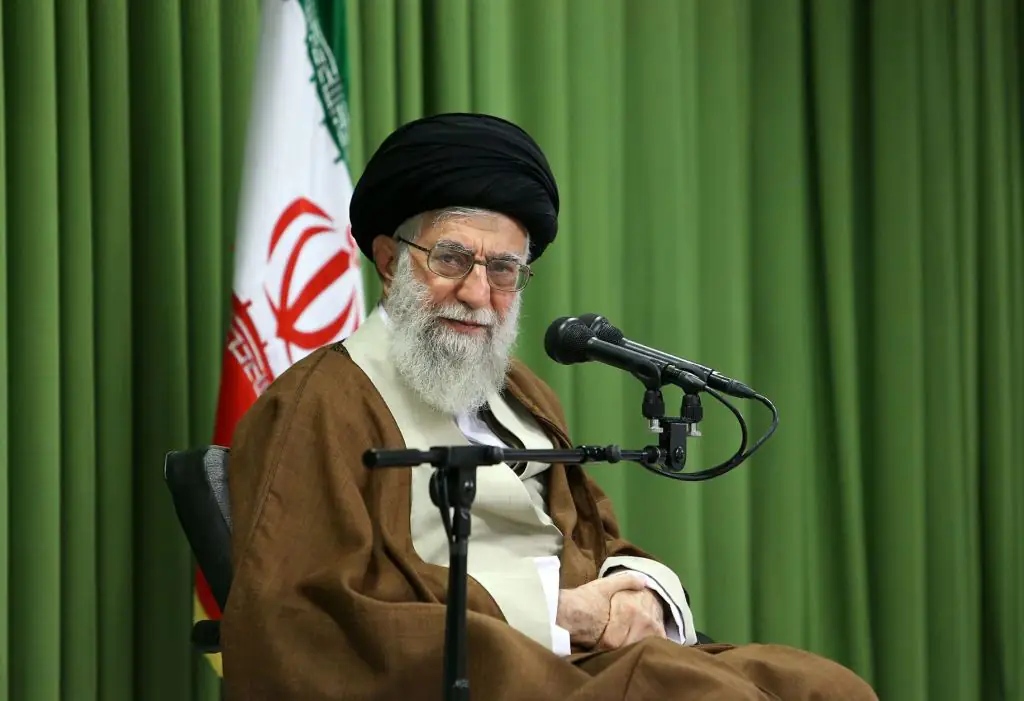
Aerial images of the late Iranian Supreme Leader, Ali Khamenei’s compound, were captured by the satellites following America’s bombing campaign on Saturday, which killed Iran's controversial figurehead and other Iranian government officials.
The images provide a stark before-and-after comparison of Khamenei’s residence, showing widespread structural damage, collapsed sections of roofing and debris scattered across the grounds after the U.S. raid that reportedly killed the 86-year-old leader.
The strikes are a dramatic escalation in hostilities between the U.S. and Iran, capping months of mounting tensions that had already made diplomatic relations seemingly irreparable.
Joint operations carried out by U.S. forces, with assistance from Israel, targeted key Iranian military and political sites in what American officials described as a decisive effort to neutralize strategic threats.
In a statement posted on Sunday on Truth Social, President Donald Trump confirmed that Khamenei had been killed in the operation.
He characterized the strike as a necessary response to what he described as decades of aggression by Tehran, asserting that U.S. intelligence and close coordination with Israel enabled the mission’s success.
The conflict intensified after a series of confrontations in the region, including alleged attacks on U.S. personnel and assets that Washington attributed to Iranian-backed forces.
American officials argued that the airstrikes were intended to weaken Iran’s command-and-control capabilities and deter further hostilities.
Iranian authorities, meanwhile, condemned the attacks as an act of war and vowed retaliation, with the Secretary of the Supreme National Security Council, Ali Larijani, stating Iran 'will not negotiate' with the U.S.
Thus far, the U.S. military has reported the deaths of four of its service personnel in the fighting, making them the first confirmed American combat fatalities of the campaign, with several others having been wounded in the process.
In his address, Trump acknowledged that he expected more casualties as Middle Eastern operations continue, saying: “Sadly, there will likely be more before it ends. That’s the way it is. [There will] likely be more but we’ll do everything possible where that won’t be the case.”
The aftermath of the bombing has raised urgent questions about regional stability.
Analysts warn that the removal of Iran’s top leader could create a power vacuum within Tehran’s political establishment, potentially triggering internal uncertainty while simultaneously hardening anti-American sentiment.
world1 min(s) read
Published 09:44 08 Jan 2020 GMT
The 167 passengers and nine crew members of a Ukraine International Airlines flight have been killed after crashing to the ground shortly after take-off early this morning (06:12 local time / 02:42 GMT), the BBC has reported.
Iranian news stations confirmed that the Boeing 737 plane - carrying passengers from eight different countries - crashed to the ground two minutes after it had taken off from Imam Khomeini Airport in Iran.
Check out a report on the crash below:
[[jwplayerwidget||https://content.jwplatform.com/videos/Emlh5HCK-dkXnENEs.mp4||Emlh5HCK]]
According to Ukrainian news-site Obozrevatel, three British nationals, 73 Canadian citizens, 71 Iranians, six Afghans, eight Swedes, and four Germans were killed in the crash.
Pirhossein Koulivand, the head of Iran’s Emergency Medical Services, has said that teams were deployed to the scene - located between the cities of Parand and Shahriar, both in the Tehran province - immediately after the crash was reported, but were unable to assist due to the area being on fire.
Images have been taken from the crash site, showing debris, books, and children's toys strewn among the wreckage.
Per the Ukraine Foreign Ministry's website, they say: "According to preliminary information, the plane crashed as a result of an engine failure for technical reasons. Currently, the version of a terrorist attack is ruled out."
Ukraine's President Volodymyr Zelensky has also said in a statement that he will be cutting short a trip to Oman and flying back to Kyiv. He warned against "speculation or unchecked theories regarding the catastrophe" until official reports were ready.
Zelensky added: "My sincere condolences to the relatives and friends of all passengers and crew."
Ukraine International Airlines has since suspended all flights to Tehran indefinitely, and added that the fallen aircraft had received its last scheduled maintenance check on Monday.
Aviation safety analyst Todd Curtis told the BBC:
"The airplane was heavily fragmented which means either there was an intense impact on the ground or something happened in the sky.
"From all appearances this was an airplane that had been properly cared for and there were no outstanding issues with respect to European authorities or American authorities so at this point there is nothing that points to a particular cause.
"They will start putting together the story of what happened on that airplane... to see if there is something about the condition of the aircraft or the fuel on board that might have led to this.
"And also one cannot discount the possibility that something outside the aircraft, a mid-air collision or some other issue, may have been involved."
Mr Curtis also revealed that Iranian, Ukrainian, US, and French authorities would all be involved in the investigation - which is sure to raise tensions due to the ongoing conflict between the US and Iran.
world3 min(s) read
Published 10:06 01 Mar 2026 GMT
US and Israeli forces carried out coordinated airstrikes on Iran early Saturday morning and again on Sunday local time, in a dramatic escalation that President Donald Trump confirmed resulted in the death of Iranian Supreme Leader Ayatollah Ali Khamenei.
Four members of the supreme leader’s family were also killed in the strikes.
The joint military action came after weeks of tense talks over Iran’s nuclear program collapsed. The regime had refused to dismantle its nuclear capabilities, prompting the US to increase its military presence across the Middle East.
President Trump had previously warned Tehran that failure to reach a deal would carry serious consequences.
Israel later confirmed that the operation specifically targeted both the Supreme Leader and Iran’s President Masoud Pezeshkian.
In a video message posted to Truth Social shortly before 3:00AM, President Trump made his position clear.
“It’s a very simple message. They will never have a nuclear weapon,” Trump vowed.
He followed that with an uncompromising warning directed at Tehran, urging its leaders to “lay down your arms or face certain death.”
At the same time, the president is reportedly weighing immunity for supporters of the ayatollah, provided they agree to stop fighting.
The message from Washington was firm. The nuclear standoff had reached a breaking point, and the administration made clear it would not allow Iran to continue advancing its program.
Iran responded swiftly.
Tehran warned that the “first wave of extensive missile and drone attacks” was underway across Israel, per the New York Post.
The situation intensified further when Iranian officials announced that attacks on US bases were being prepared. State media declared that Iran was ready to unleash what it described as "the most devastating offensive operation in the history of the Islamic Republic of Iran's armed forces."
The message, distributed by the semi-official Fars News Agency at approximately 6:15AM local time, or 9:15PM Saturday Eastern Time, warned: "The most devastating offensive operation in the history of the Islamic Republic of Iran's armed forces will begin toward the occupied territories and American terrorist bases in just moments."
US and Israeli officials now believe the military campaign inside Iran could stretch on for weeks.
Iran’s parliament speaker, Mohammad Bagher Qalibaf, delivered a fiery televised address on Sunday, becoming the highest-ranking Iranian official to appear publicly since the strikes began.
He condemned the leaders of the United States and Israel as “filthy criminals” who would face “devastating blows” for what he described as ongoing attacks on the Islamic Republic.
“You have crossed our red line and must pay the price,” he said. “We will deliver such devastating blows that you yourselves will be driven to beg.”
President Trump later took to Truth Social again, responding directly to reports that Iran planned to escalate its retaliation.
"Iran just stated that they are going to hit very hard today, harder than they have ever hit before. THEY BETTER NOT DO THAT, HOWEVER, BECAUSE IF THEY DO, WE WILL HIT THEM WITH A FORCE THAT HAS NEVER BEEN SEEN BEFORE!" Trump wrote. "Thank you for your attention to this matter! President DONALD J. TRUMP."
world4 min(s) read
Published 15:32 12 Mar 2026 GMT
Iran’s new supreme leader, Mojtaba Khamenei, has allegedly issued his first public statement after reports circulated claiming he had fallen into a coma and lost a leg following the strikes that killed his father and other family members.
The message aired on Iranian state television Thursday, with an anchor reading the lengthy statement while a still image of the 56-year-old leader appeared on screen. No explanation was given for why Khamenei did not appear in person or read the message himself.
The statement surfaced days after Khamenei failed to attend his own succession rally in Tehran on Monday. He has not been seen publicly since being appointed as successor to his father, Ayatollah Ali Khamenei, who was killed in an Israeli strike shortly after the war began.
In the televised message, Khamenei vowed retaliation for those killed during the conflict and warned that Iran could continue using one of the world’s most critical shipping routes as leverage.
“I assure everyone that we will not refrain from avenging the blood of your martyrs,” the supreme leader said, per CBS News. “The retaliation we have in mind is not limited only to the martyrdom of the great leader of the revolution [Ayatollah Ali Khamenei]; rather, every member of the nation who is martyred by the enemy constitutes a separate case in the file of revenge.”
He also praised Iranian fighters responding to attacks by the United States and Israel.
“Our sincere thanks go to our brave fighters who, at a time when our nation and beloved homeland have been unjustly attacked by the leaders of the front of arrogance, have blocked the enemy’s path with their powerful blows and dispelled their illusion of being able to dominate our beloved country or possibly divide it,” he added.
Khamenei said Iran would seek compensation from its enemies and warned of further action if those demands are rejected.
“If it refuses, we will take from its assets to the extent we deem appropriate, and if that is not possible, we will destroy its assets to the same extent,” he said.
He also warned that the strategic waterway linking the Persian Gulf to global energy markets could remain a pressure point in the conflict.
“The lever of closing the Strait of Hormuz must certainly continue to be used as well. Studies have also been conducted on opening other fronts in which the enemy has little experience and would be highly vulnerable. Their activation will take place, if the wartime situation continues and in accordance with considerations of expediency,” Khamenei said.
The televised statement arrived after an Iranian source told The Sun that Khamenei was actually in a coma and receiving intensive care at Sina University Hospital in Tehran.
“One or two of his legs have been cut off. His liver or stomach has also ruptured. He is apparently in a coma as well,” the source alleged.
Other Iranian sources disputed the claims, insisting Khamenei suffered only minor injuries during the first wave of airstrikes. Those injuries were described as a fractured foot, a bruised eye, and cuts to his face while he sheltered inside a highly secure location.
In the statement, Khamenei confirmed he had seen his father’s body after the strike that killed him.
“I had the honor of seeing his body after his martyrdom,” Khamenei said of his father. “What I saw was a mountain of steadfastness, and I was told that the fist of his intact hand had been clenched.”
He also confirmed that several family members died in the same attack, including his wife, one of his sisters, his niece, and the husband of another sister.