


Innovation3 min(s) read
Scientists reveal incredible interactive map of all 2.75 billion buildings on Earth - including your home

Scientists have unveiled a remarkable interactive map that shows every one of the planet’s 2.75 billion buildings.
From ancient villas in Rome to skyscrapers in Shanghai, every building on the planet is now just a click away thanks to a groundbreaking new tool developed by German researchers.
The GlobalBuildingAtlas, an astonishingly detailed interactive map, charts the size and location of 2.75 billion buildings worldwide in 3D - a full billion more than any previous dataset. And the best part is that you can search for your own home and view it in realistic 3D.
Created by scientists at the Technical University of Munich (TUM), the atlas combines more than 800,000 satellite photos, primarily taken in 2019, with artificial intelligence to generate a model that calculates building height, volume, and even proximity to neighboring structures.
A new way to see the world
The dataset offers an unparalleled level of resolution - up to 30 times finer than previous models - especially in dense urban centers.
Unlike older tools that depended on costly laser-scanning aircraft, this model uses existing satellite data and machine learning to fill in the gaps, making full global coverage possible.
Since launching just a few days ago, the site has attracted nearly 300,000 visits - far more than expected.
While intriguing to explore, the GlobalBuildingAtlas serves a deeper purpose beyond just curiosity.
According to TUM's Professor Xiaoxiang Zhu: “3D building information provides a much more accurate picture of urbanization and poverty than traditional 2D maps.
“With 3D models, we see not only the footprint but also the volume of each building, enabling far more precise insights into living conditions.”
The AI tool’s analysis can reveal how housing and infrastructure vary between nations and even neighborhoods, offering insight into inequality, density, and development.
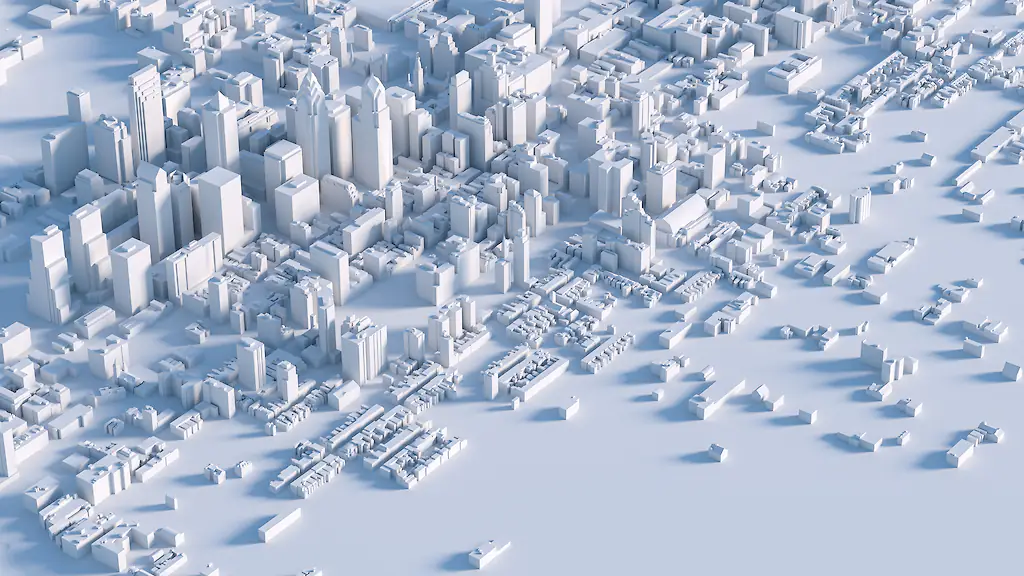
Researchers have created a new online atlas that shows the location of 2.75 billion buildings in 3D (Stock image). Credit: zf L / Getty
Measuring wealth by building volume
One of the most eye-opening uses of the data is a new metric: building volume per capita. The idea is simple: the more building space per person, the better off a population tends to be.
“We introduce a new global indicator: building volume per capita, the total building mass relative to population – a measure of housing and infrastructure that reveals social and economic disparities,” Zhu continues.
“This indicator supports sustainable urban development and helps cities become more inclusive and resilient.”
For example, Finland ranks at the top in Europe with over 3,900 cubic meters of building space per person and is frequently named one of the world’s happiest countries.
Greece, by contrast, has six times less space per person and has endured years of economic hardship.
Globally, Asia holds the largest share of the world’s buildings, with 1.22 billion structures, followed by Africa with 540 million, and Europe with 403 million.
The Americas have fewer buildings in total - 295 million in North America and 264 million in South America. Oceania trails far behind with just 14 million buildings.
Beyond offering insights into inequality and wealth, the GlobalBuildingAtlas has real-world applications in disaster response, climate research, and infrastructure planning.
The German Aerospace Center is already exploring how to use the tool to support emergency operations in disaster-prone regions.
The AI model also differentiates between buildings, roads, trees, and open spaces, enabling planners and scientists to monitor how human structures are encroaching on natural areas.
To explore the map, users can visit the website and enter any address in the input bar at the top. The system then generates a 3D model of the area using satellite data, from dense city blocks to remote rural villages.