


Innovation3 min(s) read
Truth behind shocking video showing 'man die' on Euthanasia Coaster that 'kills anyone who rides it'

Since a short film that imitates what would happen to passengers if they were to ride the fictitious euthanasia rollercoaster that “kills everyone” was released a decade ago, people have questioned how the ride could end lives.
While the killer coaster has thankfully never been built, the ride was designed by Lithuanian designer and artist Julijonas Urbonas in 2010 as an innovative, although arguably inhumane, method of euthanasia.
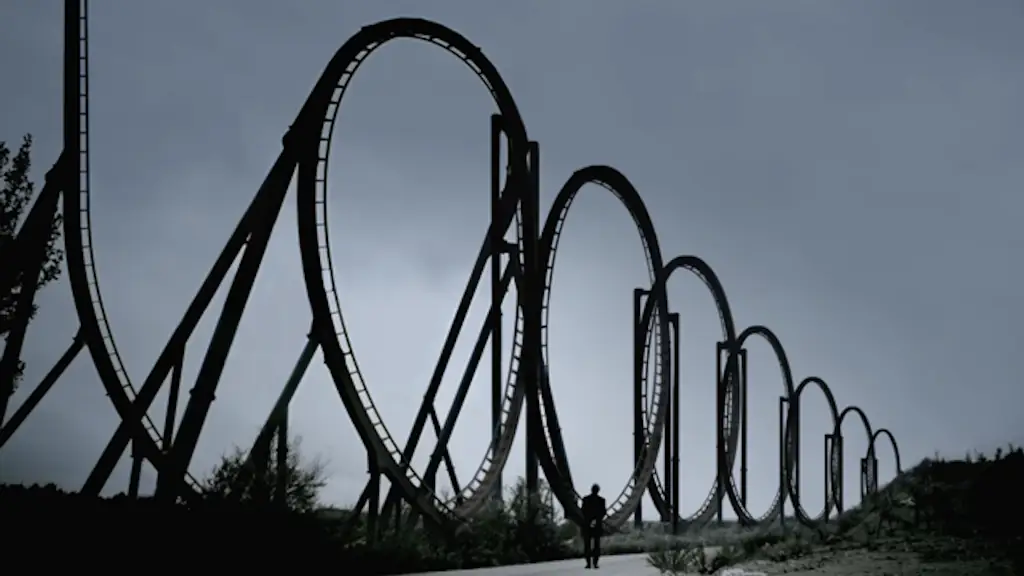
The killer coaster was designed to end human lives
Urbonas previously described his design as a "hypothetical death machine in the form of a roller coaster, engineered to humanely, with elegance and euphoria, take the life of a human being."
In the short film titled H Positive, the protagonist Mark uses his wealth to help create a euthanasia roller coaster - a roller coaster so powerful that it causes cerebral hypoxia, thus suffocating your brain and ensuring a euphoric death.
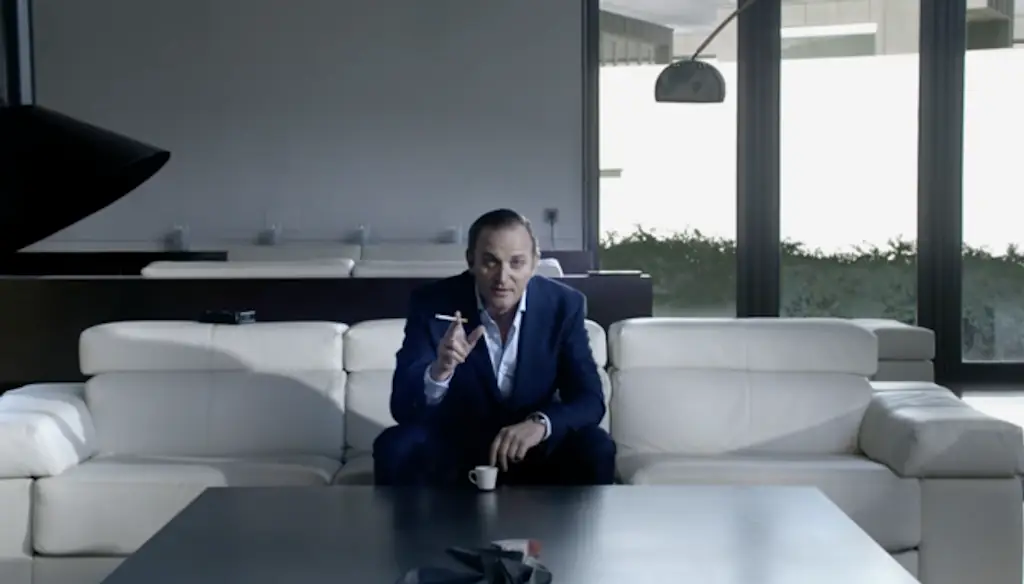
In theory, the ride would begin with a slow ascent to a staggering 510 meters, not far off the height of One World Trade Center, America’s tallest building.
Once the peak is reached, passengers must make their final decision and choose whether they want to descend safely or continue to their dramatic death by pressing a button.
After plummeting from the monumental height, the rollercoaster features inversions, or loops as they may be better known, that are engineered with progressively smaller diameters to maintain a constant force of 10Gs - far beyond what most human bodies can withstand.
To help you visualize it, Formula 1 drivers experience just over 6Gs during sharp turns, and Apollo 16 astronauts encountered 7.19Gs during re-entry.
The ride ultimately starves the brain of oxygen
Another video shared by TikTok account @ridesnslides is a simulation graphic that demonstrates how the ride works.
The narrator of the animation explained: “You would gradually begin experiencing worsening cases of cerebral hypoxia, meaning your blood would rush to the lower parts of your body, and so your brain wouldn’t be getting enough oxygen to survive.
“The first thing that you would notice is your vision greying out, which would then gradually turn to tunnel vision. From there, you would begin experiencing a blackout, and ultimately, you would eventually lose consciousness and die."

The morbid project was created while Urbonas was a PhD student at the Royal College of Art in London, and a scale model of the rollercoaster was unveiled in 2011 at Dublin’s Science Gallery as part of the HUMAN+ exhibit.
The Euthanasia Coaster went on to win the Public Prize of New Technological Art at Update 2013 and has since become a “unique media phenomenon".