ADVERT
Weird3 min(s) read
Published 13:05 16 Jul 2026 GMT
The man behind an infamous ‘euthanasia coaster’ that kills all who ride it has revealed the reason that he designed it in the first place.
It’s a fascinating thought experiment - if a little dark - but Julijonas Urbonas explained his reasoning.
Urbonas is certainly an interesting character - he’s an artist-researcher most famous for designing his remarkable euthanasia coaster, a theoretical theme park ride designed to kill anyone who boards it.
This ‘hypothetical death machine’ - as he calls it - was devised when he was studying for an engineering PhD.
He used to work at a theme park, so that clearly impacted his thinking as well.
The premise is simple - the roller coaster gets up to remarkable speeds of over 220 miles per hour, catapulting riders through loops on a 1,600-foot drop to the grave.
The idea is that the G-forces of the speed and loops would reach over 10, which would be enough to cause - Urbonas said - a ‘painless’ death.
It’s never been brought into reality, but plenty of simulations have been run and it certainly captures the public imagination.
But, why did he design it in the first place?
The former Royal College of Art student explained that his novel idea could actually thin out the world’s exploding population.
However, he did add that people would board voluntarily.
There would also be a button that riders would have to press in order to commence the huge 1,600-foot drop at the start.
He described it as a ‘humane’ death, as the loops would cause blood to pool in the lower extremities, decreasing flow to the brain and eventually causing loss of consciousness.
Eventually, the brain would shut down through lack of oxygen.
He added: "In a few words, humour here eases, facilitates the stressful debate, but also proposes the ritual of death could be merrier."
While we’ve never seen the roller coaster in real life, and - to be honest - we might never see it, there are simulations that show what would happen, often from pretty shocking perspectives.
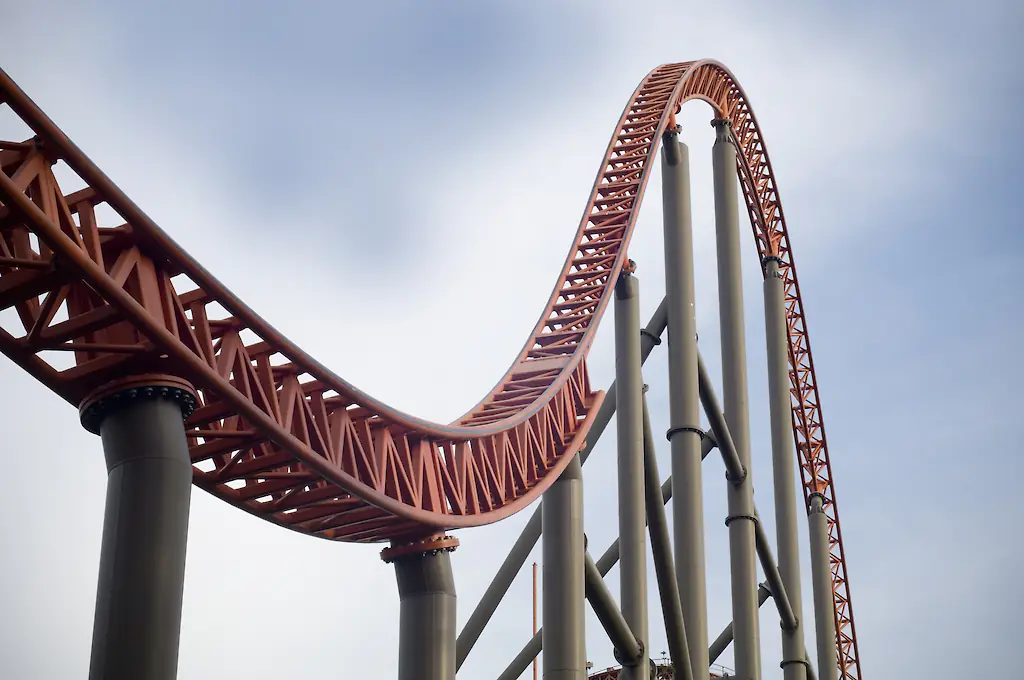
In one simulation, shared by user @ridesnslides, the video shows the ride’s mechanics and visual experience.
The video begins with a slow ascent to just shy of the tallest building in America.
Once at the peak, riders are given a final choice: descend safely or continue. If they choose the latter, each must manually press a button to initiate the ride.
The inversions are engineered with progressively smaller diameters to maintain a constant force of 10Gs - far beyond what most human bodies can withstand.
For comparison, Formula 1 drivers experience just over 6Gs during sharp turns, and Apollo 16 astronauts encountered 7.19Gs during re-entry.
“You would gradually begin experiencing worsening cases of cerebral hypoxia, meaning your blood would rush to the lower parts of your body, and so your brain wouldn’t be getting enough oxygen to survive,” the user said, cited by Vice.
“The first thing that you would notice is your vision greying out, which would then gradually turn to tunnel vision. From there, you would begin experiencing a blackout, and ultimately, you would eventually lose consciousness and die," they added.
health2 min(s) read
Published 13:53 15 Oct 2024 GMT
relationships2 min(s) read
us2 min(s) read
Published 15:23 18 Sep 2025 GMT
us4 min(s) read
Published 20:09 24 Nov 2024 GMT
A bone-chilling simulation illustrates what it's like to ride the euthanasia rollercoaster.
The controversial concept of the "euthanasia rollercoaster" was first proposed in 2010 by Lithuanian artist Julijonas Urbonas.
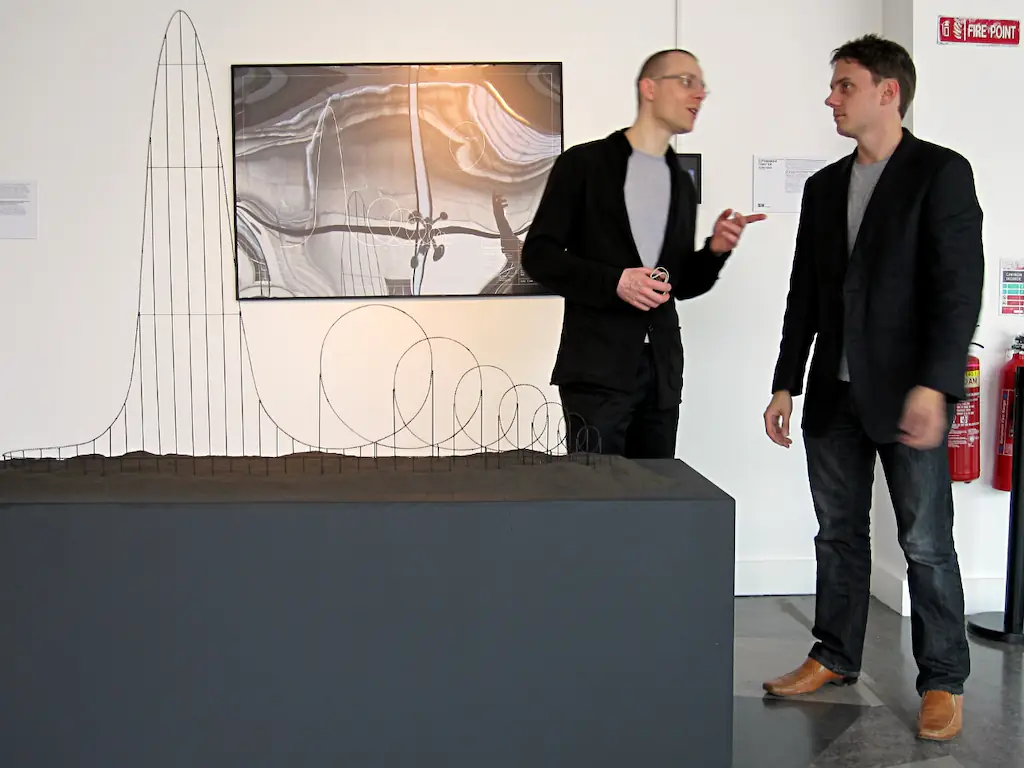
According to The Mirror, Urbonas created a scale model of the frightening idea as a PhD candidate at the Royal College of Art in London.
It was unveiled in 2011 as part of the HUMAN+ display in Dublin where it became the flagship exhibition at the Science Gallery.
TikToker Luke Davidson explained that the ride holds 24 passengers. "Once they're all on board there's a slow ascent to the top, which is 510ft in the air - that's just a little bit smaller than the tallest building in America," he continued.
"Once they're at the top it gives everyone the decision to stop and go back down safely. After that, everyone has to manually press a button to start the ride," he added.
While the "euthanasia rollercoaster" doesn't exist in reality, a terrifying simulation of this ride has been shared online, allowing viewers to experience it virtually.
The clip, shared by user @ridesnslides on TikTok, shows what a long-hypothesized and literal death contraption would look like.
Watch the clip below:
The ride begins with a 1,640-foot drop, reaching speeds exceeding 220 mph. This is followed by seven increasingly smaller inversion loops, designed to maintain a constant 10G force, ultimately leading to the rider's demise.
“You would gradually begin experiencing worsening cases of cerebral hypoxia, meaning your blood would rush to the lower parts of your body, and so your brain wouldn’t be getting enough oxygen to survive,” the user said, cited by Vice.
“The first thing that you would notice is your vision greying out which would then gradually turn to tunnel vision. From there, you would begin experiencing a blackout and ultimately you would eventually lose consciousness and die," they added.
Many users have shared their reactions to the scary simulation. One person remarked that they would've "died before falling" due to how frightening it is to reach the top of the rollercoaster.
Another questioned: "What if you didn’t [die] do you get a second go around ?" and the third said: "Screw that".
The designer's official website describes the coaster as "a hypothetic death machine in the form of a roller coaster, engineered to humanely - with elegance and euphoria - take the life of a human being".
Published 16:22 27 May 2025 GMT
A terrifying simulation has given viewers a front-seat experience of what it would be like to ride the infamous euthanasia rollercoaster that "kills everyone".
First introduced in 2010 by Lithuanian designer and artist Julijonas Urbonas, the rollercoaster has been described as a "hypothetic death machine in the form of a roller coaster, engineered to humanely, with elegance and euphoria, take the life of a human being".
While it has never been built, a TikTok simulation now offers a terrifyingly realistic look at how such a ride, which reportedly holds 24 passengers, might play out.
A simulation shows what it would be like to ride the euthanasia rollercoaster. Credit: Claudiad / Getty
Shared by user @ridesnslides, the video simulates the ride’s mechanics and visual experience.
The video begins with a slow ascent to a towering 510 feet, just shy of the tallest building in America.
Once at the peak, riders are given a final choice: descend safely or continue. If they choose the latter, each must manually press a button to initiate the ride.
Watch the simulation below:
The inversions are engineered with progressively smaller diameters to maintain a constant force of 10Gs - far beyond what most human bodies can withstand.
For comparison, Formula 1 drivers experience just over 6Gs during sharp turns, and Apollo 16 astronauts encountered 7.19Gs during re-entry.
“You would gradually begin experiencing worsening cases of cerebral hypoxia, meaning your blood would rush to the lower parts of your body, and so your brain wouldn’t be getting enough oxygen to survive,” the user said, cited by Vice.
“The first thing that you would notice is your vision greying out, which would then gradually turn to tunnel vision. From there, you would begin experiencing a blackout, and ultimately, you would eventually lose consciousness and die," they added.
Originally designed as a theoretical project while Urbonas was a PhD candidate at the Royal College of Art in London, a scale model of the rollercoaster was unveiled in 2011 at Dublin’s Science Gallery as part of the HUMAN+ exhibit.
The project went on to win the Public Prize of New Technological Art at Update 2013 and has since become a “unique media phenomenon".
The idea of using engineered devices to aid in euthanasia has gained wider attention in recent years. Another controversial concept is the “Sarco machine,” developed by Dr. Philip Nitschke, founder of the euthanasia advocacy group Exit International.
In an interview with SWI swissinfo.ch given in 2021, Nitschke explained: “It’s a 3-D printed capsule, activated from the inside by the person intending to die," cited by Right to Life.
“The machine can be towed anywhere for the death. The person will get into the capsule and lie down… They will be asked a number of questions, and when they have answered, they may press the button inside the capsule, activating the mechanism in their own time," he said.
“The person will get into the capsule and lie down… They will be asked a number of questions, and when they have answered, they may press the button inside the capsule, activating the mechanism in their own time," he continued.
Describing the actual manner of death, Nitschke said: “The capsule is sitting on a piece of equipment that will flood the interior with nitrogen, rapidly reducing the oxygen level to 1 per cent from 21 per cent in about 30 seconds.
"The person will feel a little disoriented and may feel slightly euphoric before they lose consciousness. Death takes place through hypoxia and hypocapnia, oxygen and carbon dioxide deprivation, respectively”.
A man has tragically passed away after riding a Universal theme park roller coaster.
On Wednesday night (September 17), the Orange County Sheriff’s Office said off-duty deputies responded to a “man down” call shortly after 9PM at the park.
According to NBC Miami, deputies arrived at the scene and found a man in his 30s unresponsive. He was transported to the hospital, where he was later pronounced dead.
Officials clarified that the man, who has not been identified yet, did not fall from the ride. The cause of death has not been released.
Universal Orlando Resort confirmed the horrific incident in a statement shared to several publications.
“On Wednesday night, a guest was unresponsive after riding Stardust Racers and was transported to the hospital, where the guest later died," the resort said.
"We are devastated by this tragic event and extend our sincerest sympathies to the guest's loved ones. We are fully cooperating with Orange County and the ongoing investigation. The attraction remains closed," they added.
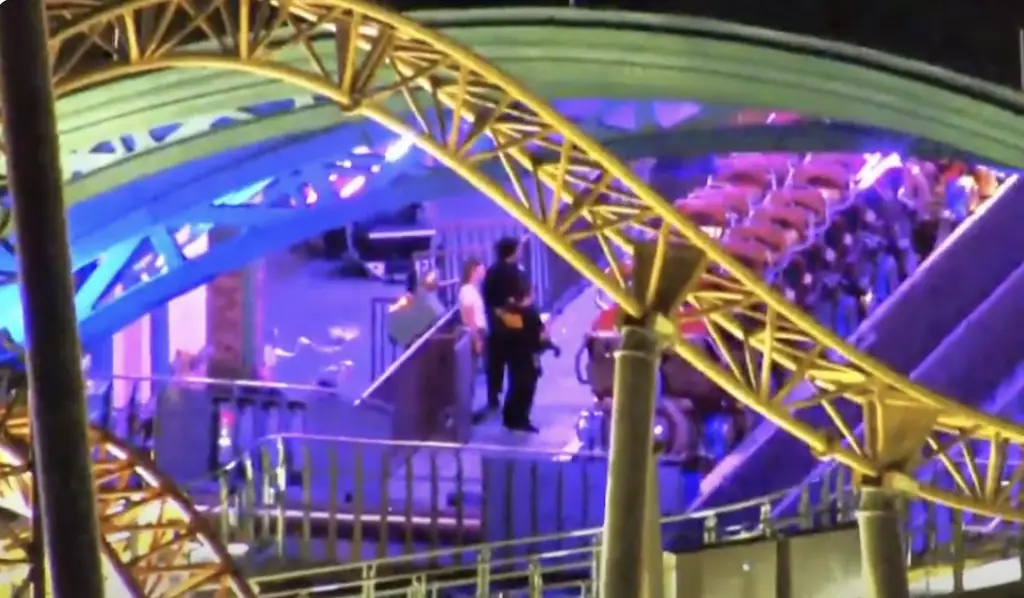
Footage from the park taken by news outlet WESH 2 News showed law enforcement officers and forensic teams at the scene following the incident.
Epic Universe is Universal's newest and fourth theme park in Florida.
It features five distinct themed "worlds" such as Super Nintendo World, Dark Universe, The Wizarding World of Harry Potter - Ministry of Magic, How To Train Your Dragon - Isle of Berk, and Celestial Park.
The Orange County Sheriff’s Office has not yet released further details about what caused the guest to become unresponsive.
For now, the Stardust Racers, which is located in Celestial Park, will remain closed as officials investigate.
The Stardust Racers ride has been one of the resort’s most anticipated attractions since the park opened to the public in May 2025.
The dueling dual-launch coaster lets riders “race across the cosmos” on 5,000 feet of track, climbing to heights of 133 feet and reaching speeds of up to 62 mph.
Universal describes the attraction as featuring a dazzling “Celestial Spin” inversion set to lights and ethereal music.
“Board a comet and rocket to the furthest reaches of the stars, at heights up to 133 feet along 5,000 feet of track,” reads the park’s official description.
Published 15:59 13 Dec 2025 GMT
New details about the death of a 32-year-old man who passed away while riding a high-speed rollercoaster at a theme park in Florida have been shared.
Kevin Rodriguez Zavala, 32, was tragically pronounced dead on September 17 at the Universal Epic Universe theme park.
According to reports from the New York Post, a medical examiner’s report released Friday showed that the left side of Zavala’s forehead had a deep gash, and the bony ridge above his eye was fractured, and that he also had bleeding above his skull and bruises on his abdomen and arms.
The report also found that Zavala's nose and right thigh bone were fractured.
His death had previously been ruled an accident by the medical examiner in Orlando, saying he died of blunt-impact injuries.
The investigative report by the Orange County Sheriff’s Office in Orlando stated that workers at Epic Universe had followed procedures and hadn't behaved in a careless or neglectful manner.
According to a Florida sheriff’s office report released this week, the investigation into Zavala's death has now been closed.
Per the outlet, security footage from Epic Universe, the newest theme park at Universal Orlando Resort, showed Zavala "engaged and well" at the start of the ride.
Tragically, by the time the ride finished, Zavala was slumped over in his seat and unresponsive, the sheriff's office report stated.
Witnesses said that when the ride came to a stop, Zavala was slumped over and bleeding from his face.
Anna Marshall, a medical doctor who was standing in line to board the ride, witnessed the ride returning to the boarding platform with Zavala's unresponsive body slumped over and covered in blood.
She told investigators that his arm was hanging over the ride, while his thigh bone was broken in half and resting on the back of the ride chair, per the New York Post.
Marshall administered aid to Zavala - who was a wheelchair user - as Zavala's girlfriend, Javiliz Cruz-Robles, who was beside him on the ride, informed her that he had metal rods in his back from a previous spinal surgery.
The report stated: "Dr. Marshall explained that she did not believe that just because Kevin Rodriguez-Zavala didn’t have use of his legs that that was the sole reason why this occurred."
Zavala's family also said that the condition which led to his disability - a spinal cord atrophy - did not cause his death.
Universal paramedic Sebastian Torres told sheriff’s office investigators that Zavala had severe facial trauma when the ride stopped but was still secured into his seat by a lap bar, which ride operators had difficulty releasing for 10 minutes.
Torres said in a statement included in the report: "The guest was stuck on the ride vehicle face down, falling out of his seat, with legs inverted."
Cruz-Robles told investigators that a ride operator had to push Zavala’s lap restraint down several times before it was secured into place before the ride began, and noted that she believed the restraint bar had been positioned too low on their laps.
She said that Zavala flew forward and hit his head on the metal bar in front of them when the rollercoaster began its first downward movement, and ended up hitting his head several more times despite her trying her best to hold him back.
The report stated: "Javiliz was crying for help, but due to being in the middle of the ride, no one heard her screaming for help until the train cart was getting close to the station."
The report noted that warning signs posted at the ride’s entrance informed riders about sudden drops and accelerations and stated that they should not go on the ride if the had certain conditions such as "back, neck or similar physical conditions," or if they'd undergone recent surgeries that could be affected by the ride.
Zavala’s parents told investigators that their son had previously fractured a thigh bone, requiring surgery in 2020, and had surgery for a dislocated hip in 2010.
The dual-launch rollercoaster had officially opened in May Universal Orlando Resort’s newest theme park was opened, and reached top speeds of 62MPH.