ADVERT
Space2 min(s) read
Published 13:03 29 Dec 2021 GMT
A priest and other religious experts are helping humanity prepare for the possibility of extraterrestrial life.
NASA has called on 24 theologians to help them determine how different religions around the world would react to alien contact.
They were hired by the space agency to take part in a year-long program called 'The Societal Implications of Astrobiology'. The study, which took place in 2016, occurred at Princeton University's Centre for Theological Inquiry, The Times reports.
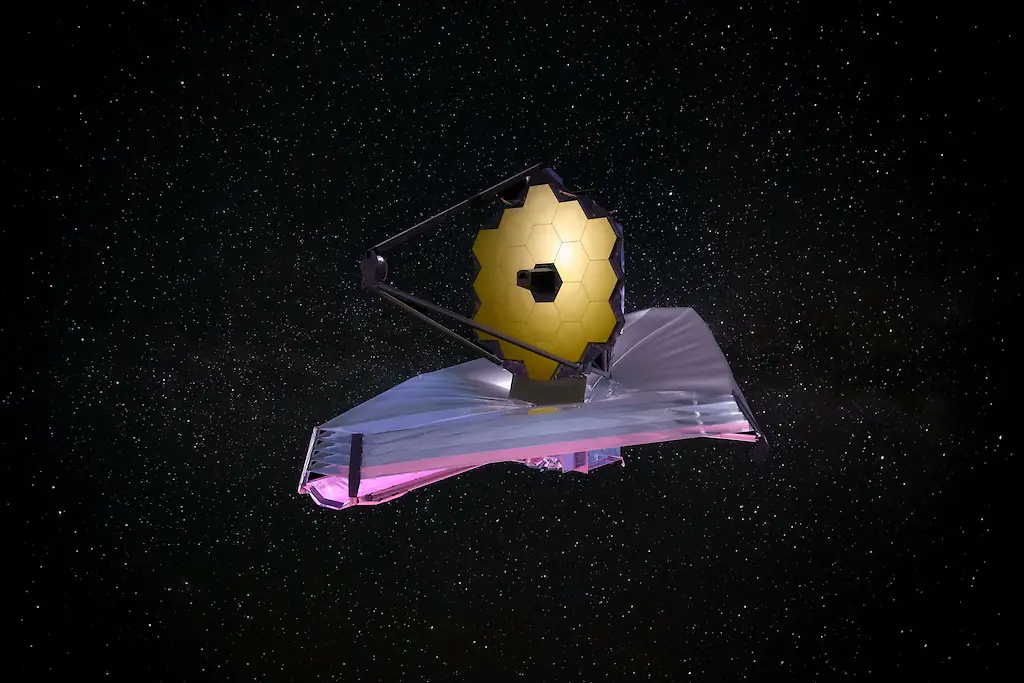
New telescopes, rovers, and probes are making the discovery of extraterrestrial life forms increasingly likely. The launch of the James Webb telescope - which will be able to see so far into space that it can trace events happening a quarter of a billion years ago - on Christmas Eve this year takes us one step closer to coming face to face with aliens.
Former head of NASA's Astrobiology Institute Carl Pilcher spoke about the program's objectives. He said it was set up to "consider the implications of applying the tools of late 20th (and early 21st) century science to questions that had been considered in religious traditions for hundreds or thousands of years."
Pilcher also said that the idea of Earth being the only planet with life is "inconceivable when there are over 100 billion stars in this galaxy and over 100 billion galaxies in the universe."
Among the religious leaders to take part was British priest and Cambridge University theologist Rev Dr. Andrew Davison.
In a new book - Astrobiology and Christian Doctrine - he considers the possibility of God creating life on other planets, as well as reflecting on the study and its findings.
One of the chief discoveries made by the study was that religions were remarkably well equipped to deal with extraterrestrial life.
"The headline findings are that adherents of a range of religious traditions report that they can take the idea in their stride," said Davison.
He added that "non-religious people also seem to overestimate the challenges that religious people... would experience if faced with evidence of alien life."
Meanwhile, a rabbi, an imam, and another Anglican priest agreed with Davison's sentiment, telling The Times that Christine, Jewish and Islamic doctrine would not be compromised by the discovery of aliens.
uncategorised2 min(s) read
Published 12:31 11 Dec 2017 GMT
world3 min(s) read
Published 12:53 28 Aug 2023 GMT
A NASA scientist has weighed in on the debate of whether aliens are real, and it seems like she's pretty convinced that they are.
Most of us will have pondered whether or not we are alone in the universe and as Arthur C. Clarke said - both are equally terrifying.
That being said, that thought has paved the way for some amazing movies, although a lot of them involve the aliens being not so friendly.
While the rest of us stew over UFOs, a prominent NASA scientist has boldly declared that alien life "absolutely" exists.
Dr. Michelle Thaller recently addressed a captivated audience at an exhibition in New York, where she delved into the tantalizing possibilities of extraterrestrial life.
Dr. Thaller's perspective challenges conventional expectations by suggesting that the search might be closer to home than we realize.
"I definitely think we'll find life on another planet," Dr. Thaller proclaimed confidently to The Sun. "I think that in our own solar system, we’re quite close to it, but once again we don’t have that 100 percent thing."
Dr. Thaller pointed to Mars as a particularly compelling candidate, citing intriguing chemical patterns that, if found on Earth, would likely be attributed to life.
"On Mars, we see chemistry that on Earth if it were here we would say is due to life," she explained. However, she acknowledged the need for caution: "But the question is, how well do we understand Mars and are we being fooled by something?"
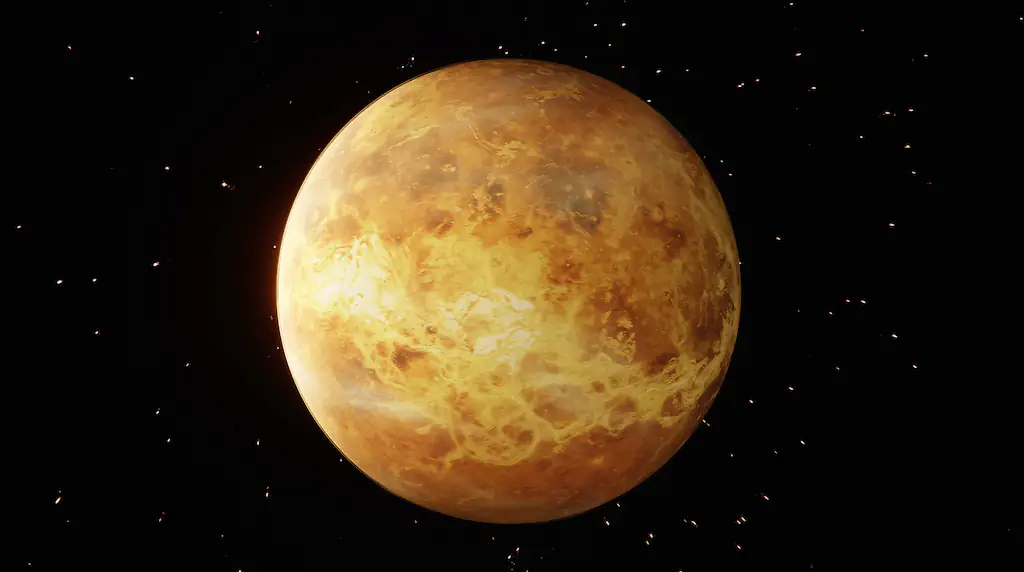
Still, Dr. Thaller emphasized that other planets within our galactic neighborhood should not be hastily ruled out. Surprisingly, Venus – a planet enshrouded in a suffocating atmosphere that has thwarted past exploration attempts – is emerging as an intriguing prospect.
She expressed astonishment at the prospect: "I never expected Venus." She went on to elaborate: "Venus is now one where we see something in the atmosphere that looks very much like it could be produced by bacteria.
"We see possible signs of life in the atmosphere of Venus, and possibly underneath the ice in the icy moons of Jupiter and Saturn."
She proposed the idea that our solar system might teem with microbial life, underscoring the need for definitive confirmation: "We just have to get that 100 percent certainty to say that we found it and we don’t have that yet."
Recent discoveries have further fueled speculation about the potential for life beyond Earth. Saturn's moon revealed essential elements required for life, yet scientists remain cautiously circumspect before making any definitive proclamations.
"That’s the thing, we’re waiting until there’s nothing else it could possibly be because can you imagine the kind of trouble we’d get in?", Dr. Thaller noted.
Maintaining a measured approach, she added: "We don’t have absolute proof yet. Do I think there’s life out there? Absolutely."
Maybe the aliens will make themselves known to us soon...
uncategorised3 min(s) read
Published 18:48 13 Oct 2017 GMT
uncategorised3 min(s) read
Published 09:54 12 Sep 2017 GMT
world4 min(s) read
Published 16:39 18 Oct 2024 GMT
The Pentagon has answered a question about whether aliens have visited Earth...
Alien life is something that most of us are interested in, and while we aren't actively hunting them down, it'll be cool to find out once and for all.
As Arthur C. Clarke famously said: "Two possibilities exist: either we are alone in the Universe or we are not. Both are equally terrifying."
Movies have shown us the disasters that would happen if extra-terrestrial life ever found its way to Earth - but what if they're already here?
Many suspect the government of covering things up, but the Pentagon has finally given a definitive answer.
The statement was delivered by Pentagon press secretary Major General Pat Ryder, who fielded a variety of questions during Thursday's press conference.
Topics ranged from the death of Hamas leader Yahya Sinwar to the use of B-2 bombers in precision strikes against Houthi military sites in Yemen, and the involvement of North Korean soldiers in Russia’s conflict in Ukraine.
Amid the intense news cycle, one reporter took the opportunity to ask about a subject that continues to fascinate many - UFOs and aliens, per News.com.au.
Jeff Schogol of Task & Purpose, a military-focused news outlet, posed the question during the press briefing.
"Given the news cycle, you could announce anything about aliens or extraterrestrial life, and no one would care," Schogol remarked. "So … I’m just going to take the shot. What do you got on UFOs, aliens, et cetera?"
Responding with a touch of humor, Ryder said: “The truth is out there, Jeff, and the truth is, we have no evidence to indicate extraterrestrial life has visited the planet.”
Boring.
This message mirrors previous statements made by the Department of Defense (DoD), which has repeatedly emphasized that there is no conclusive evidence linking unidentified aerial phenomena (UAP) to extraterrestrial origins.
This stance follows the DoD’s increased efforts to investigate such phenomena.
But if you refuse to believe the Pentagon and want something a bit more interesting, how about some alleged aliens that were found in South America?
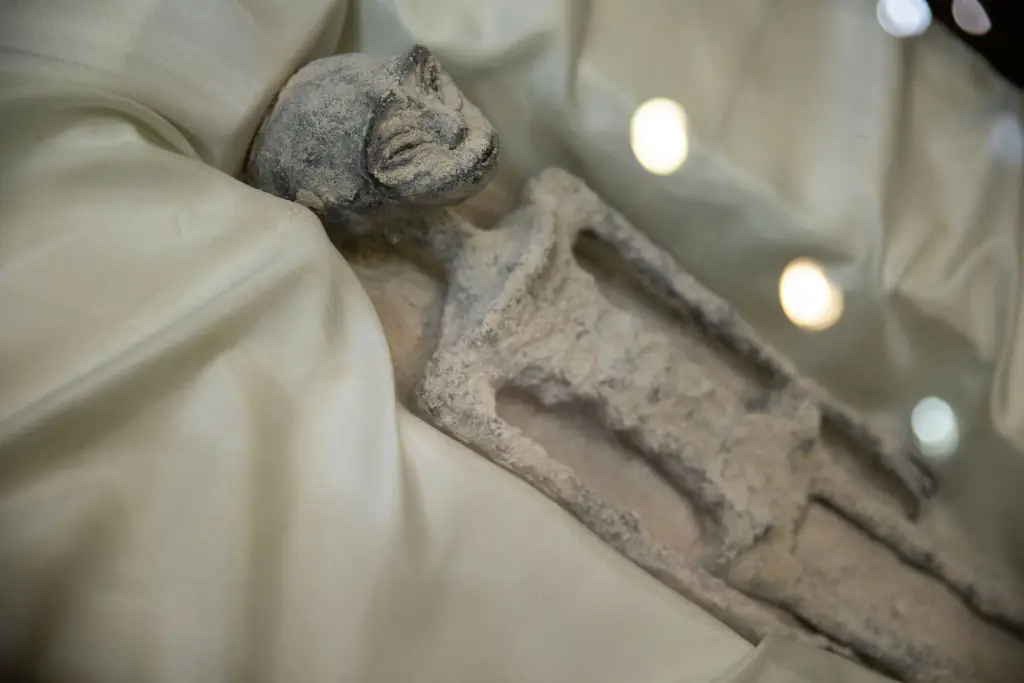
The alleged extraterrestrial bodies, reportedly recovered from Cusco, Peru, were presented by UFO researcher Jaime Maussan in transparent cases.
Since their unveiling, they have sparked widespread curiosity due to their unusual appearance and supposed otherworldly characteristics.
Carbon dating conducted by the National Autonomous University of Mexico (UNAM) has suggested that these remains date back approximately 1,000 years, adding an ancient element to the mystery.
José Zalce Benitez, director of the Health Sciences Research Institute, stated that further research has confirmed the bodies are composed of a single skeleton each, with no signs of human-made objects being part of their construction.
Benitez also revealed that one of the bodies appeared to be carrying an embryo.
"One of the specimens was alive, was intact, was biological, and was in gestation," he said, hinting at the possibility that the entities could have been harboring eggs, as reported by The New York Post.
He concluded that these remains have "no relation to human beings."
See, isn't that more fun?