


Space5 min(s) read
The extreme physical changes that have happened to Artemis II crew after 10 days in space
.webp_lli6Ty?tr=cr-74.9.445.380,f-webp,q-70,w-100)
The crew of Artemis II have splashed down on Earth after a successful mission around the Moon - but what happened to their bodies while they were in space?
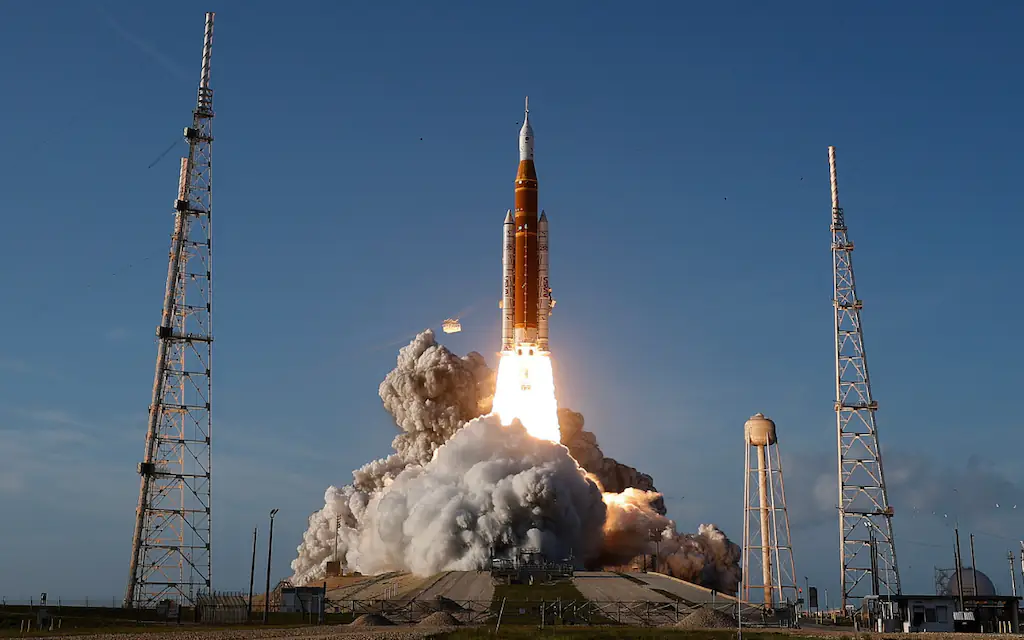
On April 1, 2026, the nine-day lunar flyby mission was launched by NASA, sending a crew of four astronauts to fly past the Moon - the furthest any humans have gone in the first crewed flight beyond low Earth orbit since Apollo 17 in 1972.
The mission was a test flight supporting subsequent Artemis missions aimed at returning humans to the surface of the Moon within the next few years.
Its crew made history, with Victor Glover, an African-American, became the first person of color, Christina Koch the first woman, Canadian Space Agency astronaut Jeremy Hansen the first non-U.S. citizen, and commander Reid Wiseman the oldest person to travel beyond low Earth orbit and near the Moon.

They also set the record for human distance from Earth during the flyby, traveling 252,756 miles (406,771 km) from Earth and breaking Apollo 13's record of 248,655 miles (400,171 km).
On the tenth day, the Integrity capsule housing the four astronauts re-entered Earth's atmosphere at a maximum velocity of about 24,661 miles per hour (36,169 ft/s; 39,688 km/h; 11 km/s) before starting to slow down and finally achieving Splashdown on April 11, 2026, 00:07:27 UTC (April 10, 5:07:27 p.m. PDT), in the Pacific Ocean near San Diego, California.
While the crew landed safely, exactly as planned, many people have been left wondering what effects 10 days in space, journeying further than any other humans have been before, has had on their bodies.
According to Sky News, travel into space exposes the astronauts to high-energy radiation, compared to Earth where the atmosphere and planetary magnetic field provide a shield against it.
This can lead to them having an increased risk of developing cancer, DNA damage, neurodegenerative effects, cardiovascular issues, and immune system dysregulation, according to experts.

The International Space Station (ISS), the most common destination for most astronauts, is somewhat protected from radiation by Earth's magnetosphere, being around 250 miles away, but the levels of radiation exposure increase the further into space a person goes.
Dr Haig Aintablian, director of space medicine at UCLA, explained to the outlet: "Once you go beyond low Earth orbit, you lose much of the protection of Earth's magnetic field."
He added that radiation is one of the "real challenges" of deep space exploration.
Astronauts on long missions also usually feel the impacts of the lack of gravity on their bodies - which is far more problematic than just being able to float around inside their capsule.
Dr Aintablian explained: "The body is built to live and work in gravity. When that gravity signal is removed, the inner ear has to recalibrate, muscles and bones are used differently, and fluids shift upward toward the head.
"That is why we can see changes in balance, strength and, in some cases, vision."
While astronauts are provided with specialist exercise equipment to try and counteract the muscle wasting effects of zero gravity, they are still subject to losing bone density, meaning their bones will get weaker and more brittle.
For every month a person spends in space, their weight-bearing bones become roughly 1% less dense if precautions aren't taken, according to NASA, and they can also experience muscle atrophy - where the muscle wastes away and weakens.
Many astronauts reports experiencing headaches, as well as motion sickness, dizziness, cardiovascular conditioning, and sleep disruption.
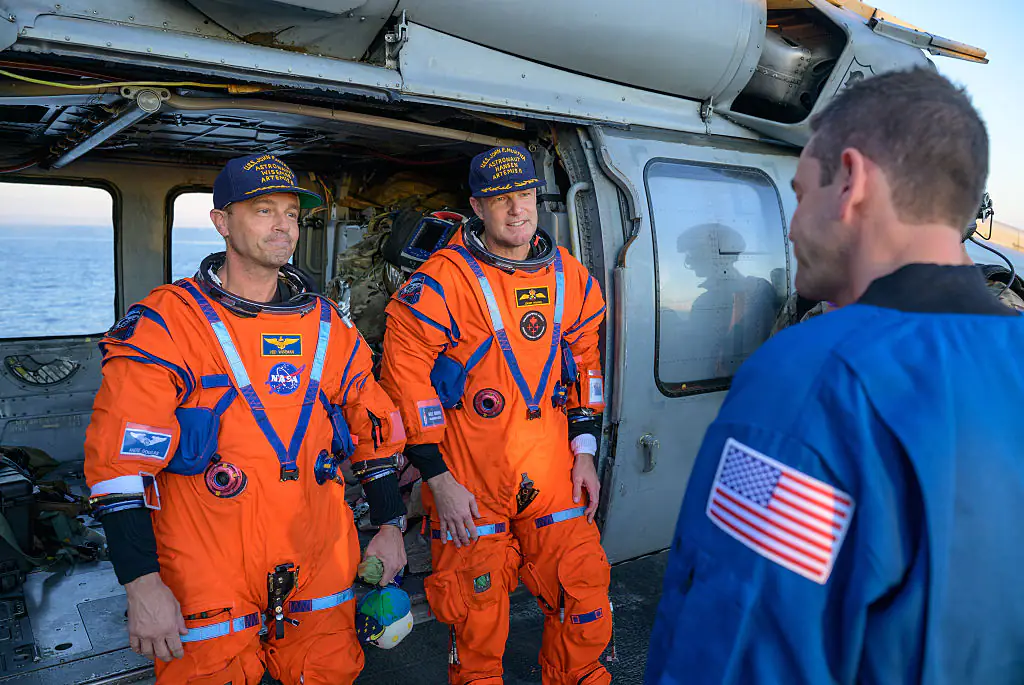
Thankfully, Dr Aintablian notes that many of the health effects of space travel are temporary and improve once the astronauts return to Earth, though some struggle with readjusting to gravity.
He added: "Some changes can take longer to recover from, and a few, particularly involving vision or bone, can persist beyond the mission."
In order to keep health implications as low as possible, the crew is closely monitored by NASA before, during, and after the mission.
"On a mission like Artemis II, doctors are tracking not just how the crew feels, but how their bodies are responding in real time," Dr Aintablian revealed.
The Artemis crew has been monitored for radiation, had their sleep and activity tracked, been encouraged to exercise, as well as having a structured post-landing medical recovery plan.
"There are a broad set of checks, including blood and other biological samples, balance and vestibular testing, strength and cardiovascular assessments, sleep monitoring, and behavioural health evaluations," he explained.
As well as helping keep on top of the current crew's wellbeing, the health data collected will also aid future missions.
"Artemis II is a critical step because it gives us human data from beyond low Earth orbit. That is essential if we are going to prepare crews safely for longer lunar missions and, eventually, Mars," Dr Aintablian added.