


Space4 min(s) read
NASA has just found a potentially habitable new planet that is strikingly similar to Earth

NASA has recently discovered a new candidate for a potentially habitable planet, called HD 137010 b, located about 146 light-years from Earth.
The planet is Earth-sized and has conditions that scientists say resemble those of Mars, making it an exciting prospect for future exploration and the search for extraterrestrial life.
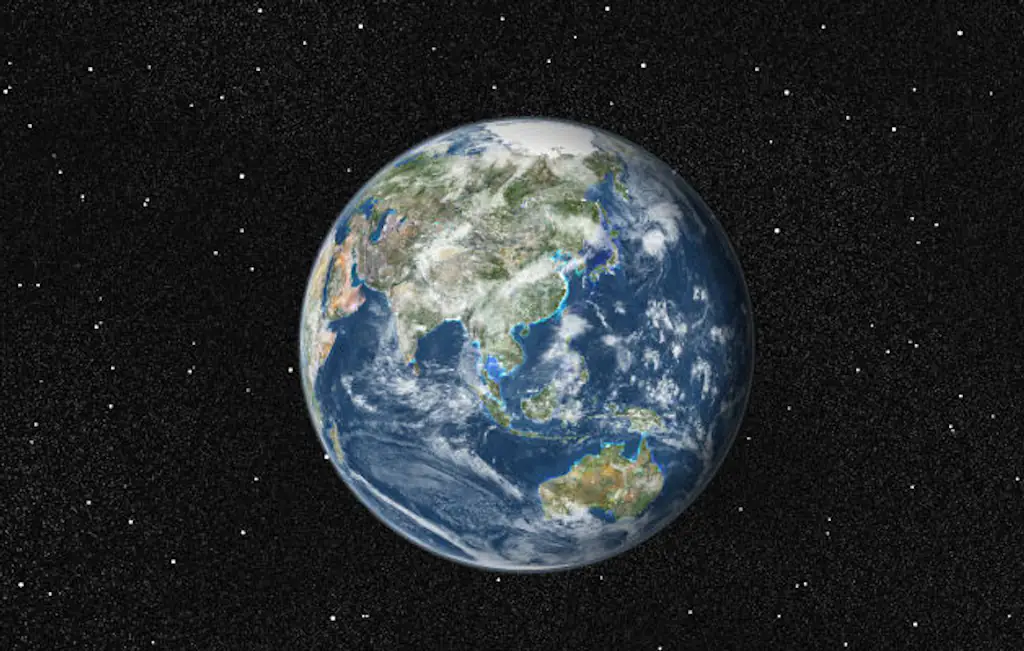
According to The Guardian, HD 137010 b orbits a sun-like star and is estimated to be about 6% larger than Earth.
Researchers from the University of Southern Queensland (USQ) in Australia, as well as teams from the UK, the US, and Denmark, have found that the planet’s orbit closely mirrors that of Earth, taking approximately 355 days to complete one cycle around its star.
Dr. Chelsea Huang, a researcher at USQ, said that the planet’s proximity to its star, which is cooler and dimmer than our Sun, places it within what is called the “habitable zone," cited by ABC.
This zone is where liquid water could potentially exist, which is a critical factor for sustaining life as we know it.
The researchers explained that HD 137010 b has “about a 50% chance of residing in the habitable zone of its star," with Huang adding: "What’s very exciting about this particular Earth-sized planet is that its star is only about 150 light-years away from our solar system."
“The next best planet around a sun-like star, in a habitable zone, [Kepler-186f] is about four times farther away and 20 times fainter," Huang said.
How HD 137010 b Was Discovered
The discovery of HD 137010 b was made possible through the efforts of citizen scientists.
Dr. Alexander Venner, the first author of the study, was involved in the initial detection while still in high school as part of the Planet Hunters project, an initiative that uses crowdsourced data to help identify potential exoplanets.
"I contributed to this citizen science project called Planet Hunters back when I was in secondary school, and it was a big part of how I got into research," Venner recalled.
The planet was spotted when it briefly crossed in front of its host star, causing a slight dimming effect.
This phenomenon, known as a “transit,” alerted the team to the possible existence of the planet.
The researchers initially doubted the finding, but after repeated checks confirmed that it was indeed a valid detection, marking a noteworthy milestone in the search for exoplanets.
Uncertainties and Future Observations
While the discovery is promising, there is still some uncertainty about whether HD 137010 b can truly be categorized as a habitable planet.
Dr. Sara Webb, an astrophysicist from Swinburne University, warned that more observations are needed to confirm the planet’s status.
"There is only one transit [detected], and typically in planetary science we’re talking a gold standard of three [detections]," Webb explained. Without further data, scientists remain cautious about making definitive claims.
Moreover, while the planet’s size and position are Earth-like, the conditions on its surface could be very different.
Some experts speculate that HD 137010 b might have a “super snowball” climate, an icy, frozen world with temperatures potentially as low as -70°C. However, if it does have a stable atmosphere, the planet could support liquid water, making it a contender for habitability.
Dr. Jonti Horner, a professor at USQ, also weighed in on the excitement surrounding the discovery.
"If you were observing the solar system from another star, you'd see three planets here that we'd consider to be potentially habitable - Venus, Earth, Mars - and only one of them is actually habitable," Horner noted.
Despite this, he stressed the importance of this finding as it gives us a "tantalising sneak peek of what there is still to discover".
For now, the next steps involve more observation using the next generation of telescopes, which may soon allow scientists to gather information about HD 137010 b's atmosphere and composition.
“I’m sure this will be the first target to be observed when the technology gets there," Huang said.