Of all the facets of the Cold War, the Space Race is perhaps the only one that is fondly remembered. A battle between the capitalist USA and the communist Soviet Union to prove their military, technological - and by extension ideological - superiority, it led to huge advances in technology and a greater emphasis on teaching science in schools. Plus, anything to do with space is always just kind of cool. With the competition having been bubbling under the surface since the 1940s, the Soviet Union shocked the world when they pipped America to the post by launching the satellite Sputnik 1 into orbit on 4 October 1957. Attached to an intercontinental ballistic missile, it was the first ever man-made object in space, a feat that would have been unimaginable just 20 years earlier. Fast forward four years and Soviet Yuri Gagarin became the first person to enter space and in 1969 Buzz Aldrin and Neil Armstrong claimed victory in the race to be the first to step foot on the surface of the moon. But while everyone remembers the achievements of Aldrin, Armstrong and Gagarin, the enormous impact of Valentina Tereshkova, the first woman in space, is often overlooked.
[caption id="attachment_21197" align="aligncenter" width="4500"]
Credit: Getty[/caption]
Having grown up in a capitalist age, it’s easy to assume that astronauts must come from privileged homes, but Tereshkova’s background is in fact refreshingly humble. She was born in a small village close to Yaroslavl, Russia, on 6 March 1937, to a tractor driver father and a mother who worked in a textile plant. She started school at the age of eight but left by 16 to work, continuing her education via correspondence courses. At the time she was selected to take part in the space programme, she was employed not as a pilot or engineer, but a factory assembly worker. At the request of Soviet Premier Nikita Khrushchev, who was keen to portray communism as promoting equal rights for men and women, five individuals were selected to be trained as part of its “women in space” programme. Tereshkova was chosen from over 400 applicants, partly because of her proletariat background, but also because of her unusual hobby: parachuting. She had made her first jump in 1959 as part of a local paramilitary flying club and by the time of her selection, had a further 90 jumps under her belt. Months of tough training followed, before Tereshkova was finally deemed the most suitable candidate for the space flight. According to Russia Today, Nikolay Kamanin, the leader of the programme, described her somewhat cruelly as: “Gagarin in a skirt”.
[caption id="attachment_21200" align="alignnone" width="2461"]
Credit: Getty[/caption]
On 16 June 1963, the then 26-year-old Valentina blasted off from a base in modern-day Kazakhstan, in a spacecraft named Vostok-6. As she lifted off, she shouted gleefully: "Hey sky, take off your hat, I'm on my way!" Until that moment, the operation had been completely classified; Valentina's own mother only discovered the truth about her daughter's double life when she heard about it on the radio. For the following 70 hours and 50 minutes, she sped through space, completing 48 full orbits of the earth. The mission was not only an enormous PR win for the Soviet government, but also allowed scientists to test the effects of space travel on the female body. Despite reporting that "all systems are working perfectly", it would be almost 20 years before the USSR sent another woman into space, having decided that the process was too dangerous for a female after all. Tereshkova protested this decision, writing a letter to the central communist party committee. She later told the BBC: “On Earth, men and women are taking the same risks. Why shouldn't we be taking the same risks in space?" To this day, she is the only woman - of any nationality - to have completed a solo space flight.
[caption id="attachment_21201" align="aligncenter" width="3900"]
Credit: Getty[/caption]
On her return from space, Tereshkova instantly became a Soviet sensation - and still is to this day. After being taken to hospital for the obligatory tests, she was driven heroically through Moscow in an open-top limousine to stand triumphantly upon Lenin’s mausoleum, next to the Soviet leader Nikita Khrushchev. She received the Hero of the Soviet Union award - the USSR’s highest award - and popular culture dedications to her, including postage stamps and monuments, appeared all over the country. She even has a crater on the moon named after her. However, the fame is not something she has ever been entirely comfortable with: “We all have a personal life and being a public figure disrupts that” she told interviewers in 2013. She was married to fellow cosmonaut Andriyan Nikolayev in 1963, completing the fairy tale Soviet space story in almost suspiciously perfect style.In later years, Tereshkova also became a political figure, partly owing to her high public standing, and was appointed to the Central Committee of the Communist Party. With a particular focus on women’s issues, she represented the Soviet Union at UN conferences all over the world. She also was the first female general in the Soviet armed forces, as well as receiving the United Nations Gold Medal of Peace. Today, she is still involved with space programmes, is a huge fan Putin - who personally celebrated with her on her 70th and 80th birthdays - and serves on the Russian State Duma. Proving that she’s not done exploring yet, she’s also offered to take part in a one-way trip to Mars.
[caption id="attachment_21202" align="aligncenter" width="5329"]
Credit: Getty[/caption]
The Soviet Union may have had many faults, but by putting a woman in space at a time when countries such as Switzerland still did not give women the right to vote, it forced the rest of the world to question the limits they imposed on the idea of what was “appropriate” for women. Since Tereshkova’s space flight, more than 50 women have made space journeys and, directly or indirectly, countless little girls have grown up not even thinking to question that they could one day be an astronaut. For her part, she remains modest about it: "One cannot deny the great role women have played in the world community. My flight was yet another impetus to continue this female contribution." To the rest of us though, she is, undoubtedly, the thought-leading, way-paving girl power icon who the west forgot about.
The Space Race was a hotly fought battle in the 20th century, with the US and Russia going toe to toe to be the first to conquer what lies beyond our planet, with many people and animals losing their lives along the way.
The US is credited as the victors after Neil Armstrong and Buzz Aldrin stepped foot onto the surface of the moon, but the work of those back on Earth is often overlooked as the astronauts take the plaudits.
This Black History Month we are celebrating Black excellence. Three Black women who were integral to the US space program exemplify why, despite being discriminated against based on the color of their skin and their gender, Black voices were and still remain an integral part of US history.
Despite being born into a system that was not equal, these women aided in the betterment of society by using their skills to progress the US scientifically - as well as showcasing that Black minds deserved to be at the same table as their White counterparts.
These three women were Mary Jackson, Katherine Johnson, and Dorothy Vaughan.
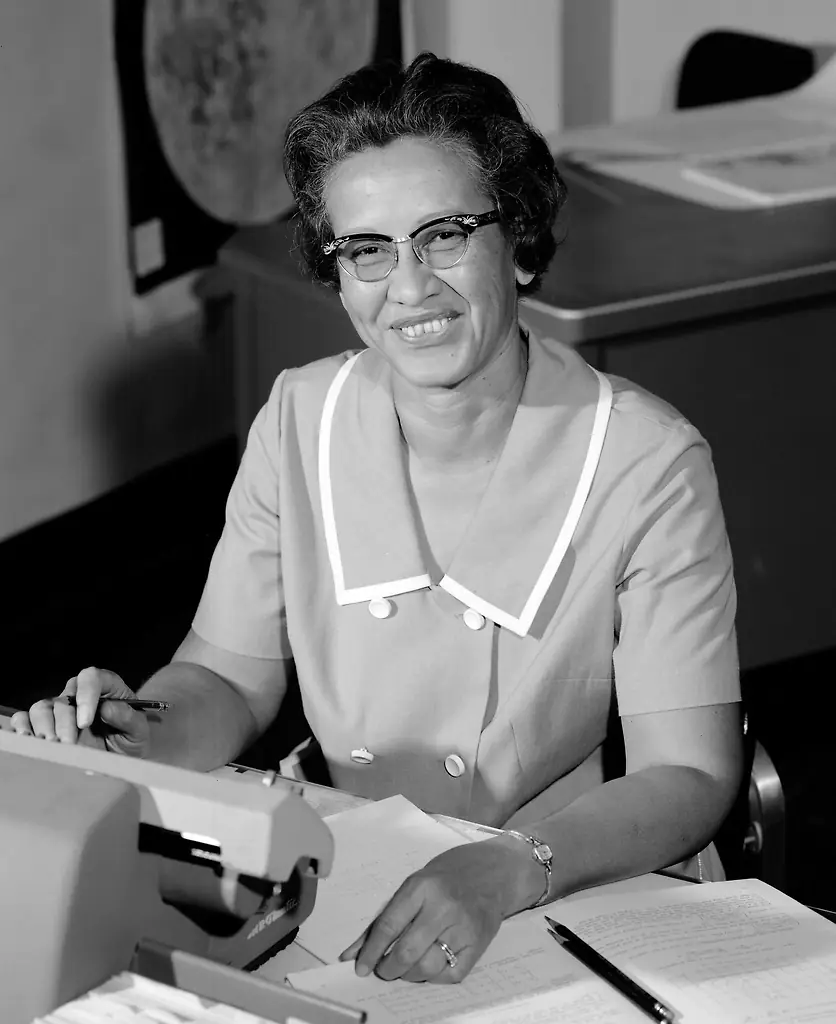
A portrait of Katherine Johnson. Credit: IanDagnall Computing / Alamy
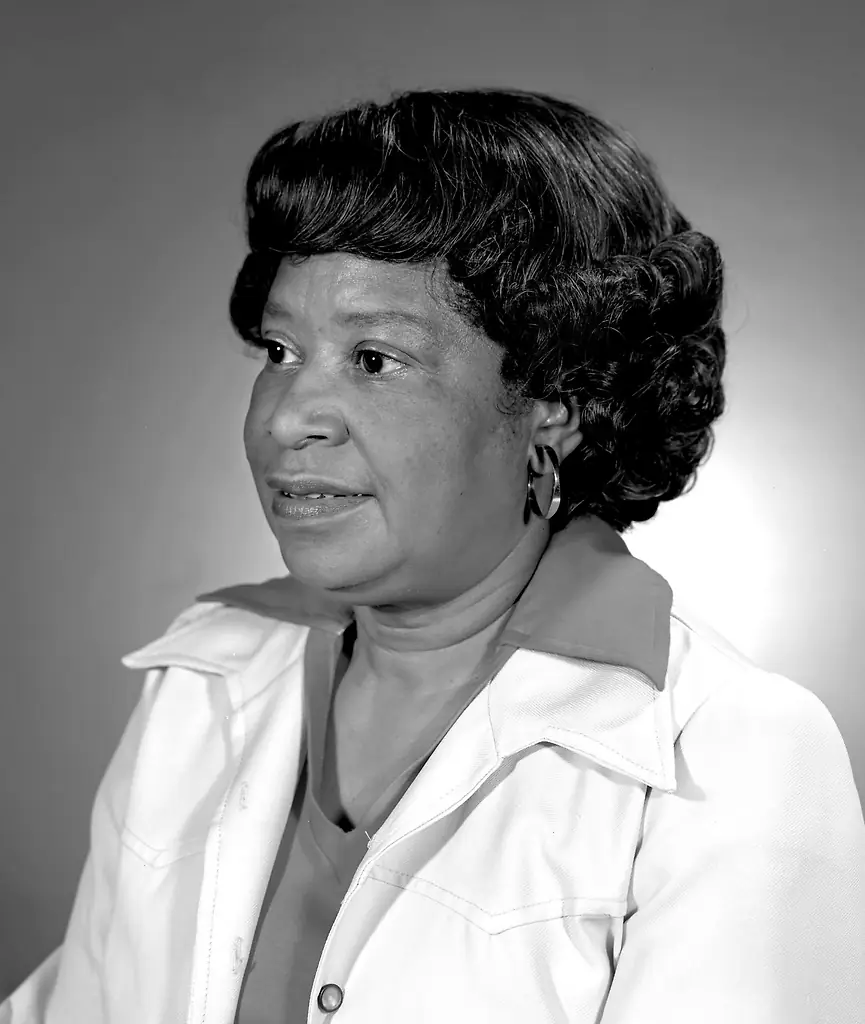
Mary Jackson was born in 1921 in Hampton, Virginia. She displayed characteristics of having a great mind from an early age and would go on to graduate from high school with the highest honors, before further developing and challenging herself as a mathematician.
Mary would later graduate from Hampton Institute in 1942 with a dual degree in Math and Physical Sciences, and would first use her knowledge as a mathematician to educate younger generations. She took a job as a teacher at a school for Black students in Calvert County, Maryland where she remained for a year before returning to Hampton.
Katherine Johnson was born in White Sulphur Springs, West Virginia, in 1918. Much like Mary, Katherine would display that she was a cut above the rest from an early age as she skipped a few grades in school due to her natural brilliance with numbers. By the age of 13, she was attending high school on the campus of West Virginia State College.
When she turned 18, she enrolled in the college where she once again displayed her excellence and was taken under the wing of professor W. W. Schieffelin Claytor, the third African American to earn a Ph.D. in mathematics.
West Virginia decided to quietly integrate its graduate schools in 1939 where after two years of teaching, Katherine and two men were the first Black students to be enrolled at West Virginia University.
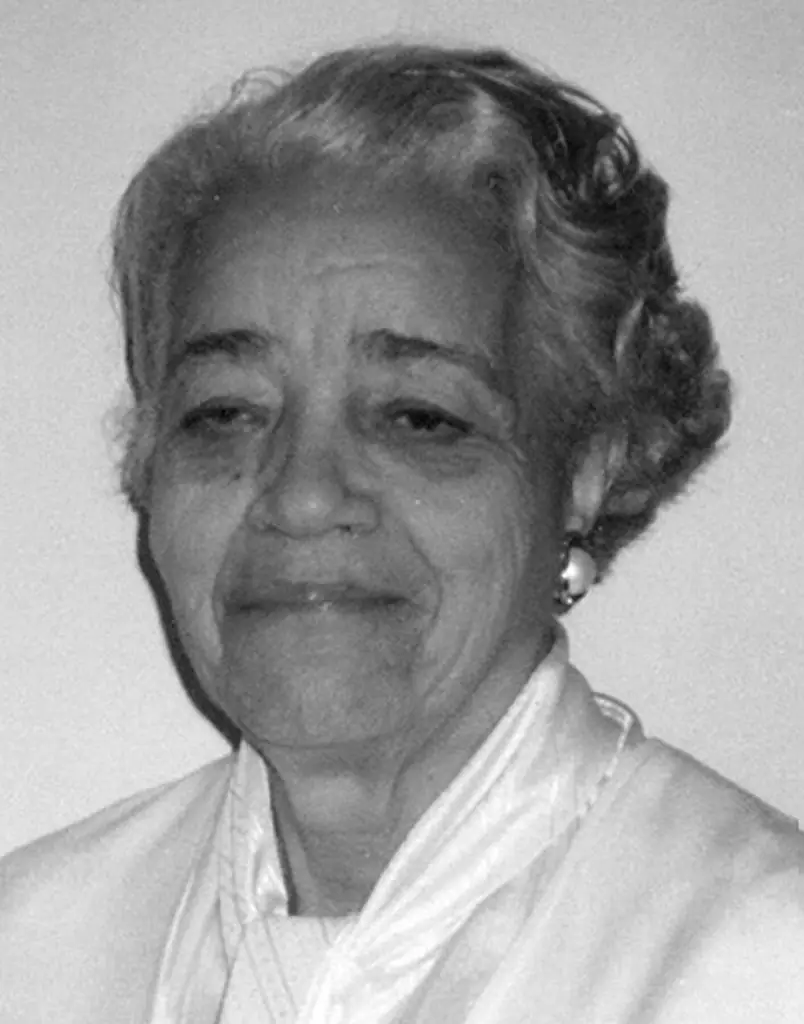
Dorothy Vaughan was born in 1910 in Kansas City, Missouri but moved to West Virginia with her family in 1917. Like the two women she was yet to meet, Dorothy had a way with numbers that meant she excelled as a bright young student.
In 1929 she graduated from Wilberforce University with a degree in mathematics. Parallel to Mary and Katherine, Dorothy took up a job as a teacher in Virginia.
The three women had similar paths in their early life, and their worlds colliding meant the rest of the country was about to prosper.
A portrait of Dorothy Vaughan. Credit: stock imagery / Alamy
Segregation remained in place until the 1960s, so when the three women were looking for work, they were aware that - whatever their job - as Black women they would be paid less than their White male counterparts regardless of their skill level.
Dorothy Vaughan was the first to join The National Advisory Committee for Aeronautics (NACA), which later became NASA. She joined the Langley Memorial Aeronautical Laboratory in 1943 during the height of the Second World War. Due to the timing of her role, she believed that her position would be dissolved when the war came to a conclusion. She worked in the West Area Computing group, which was a team of Black female mathematicians, and in 1949, Dorothy became their lead.
Mary joined the team in 1951 where she spent two years in the computing pool. After proving her excellence, she received an offer from the engineer Kazimierz Czarnecki to work in the 4-foot by 4-foot Supersonic Pressure Tunnel. She was offered the opportunity to have hands-on experience as an engineer, but trainees were required to gain graduate maths and physics degrees in after-work classes.
Mary had to receive special permission to attend these classes from the City of Hampton as they do place in a segregated school. Not letting adversity get the best of her she completed the classes and, in 1958, became NASA’s first black female engineer.
Katherine started at Langley in 1953 after a relative informed her of an open position in the West Area Computing group.
Alongside her husband and three daughters, she relocated to the area to begin her work. A mere two weeks after joining the team, she was assigned to the Maneuver Loads Branch of the Flight Research Division where she analyzed data from flight tests alongside investigating plane crashes caused by turbulence.
In 1957 the space race took an exciting turn as the Soviet Union launched the satellite Sputnik, and with this, the US needed to respond.
The three women, alongside a team of Black women who were also integral to winning the space race, were about to play their parts in putting a man in space. Katherine provided notes for the 1958 document Notes on Space Technology. When NACA became NASA, Katherine did trajectory analysis for Alan Shepard's 1961 mission, Freedom 7 which was America's first human spaceflight.
A portrait of Mary Jackson. Credit: IanDagnall Computing / Alamy
Katherine's most notable accolade came in 1962 during the orbital mission of John Glenn.
The astronauts were hesitant to put their lives in the hands of a computer, so Glenn famously said "get the girl," referring to Johnson, as her expertise was clearly well-known throughout NASA.
Katherine carried out the calculations, by hand, and the orbital mission was a great success and turned the tide of the space race between the US and the Soviet Union.
Mary would enjoy a long, prosperous engineering career that saw her publish a dozen reports which were vital in both commercial and space flights.
Unfortunately, discrimination was not a stranger to the three women, and Mary would become frustrated at the glass ceiling. She would dedicate her later career at the company to ensuring the employment and progression of women within NASA.
Dorothy became a FORTRAN (Formula Translation, computer programming language) expert, where she made computer programming more accessible. Her legacy is being the first Black supervisor at NACA, as well as being one of the only female supervisors and, without her, genius minds such as Katherine and Mary may never have thrived as well as they did.
Dorothy retired from NASA in 1971, Mary retired in 1985 and Katherine retired in 1986.
The three women, amongst a team of Black female human computers, turned the tide of the space race and their legacy is still felt today. Katherine received the Presidential Medal of Freedom from President Obama in 2015.
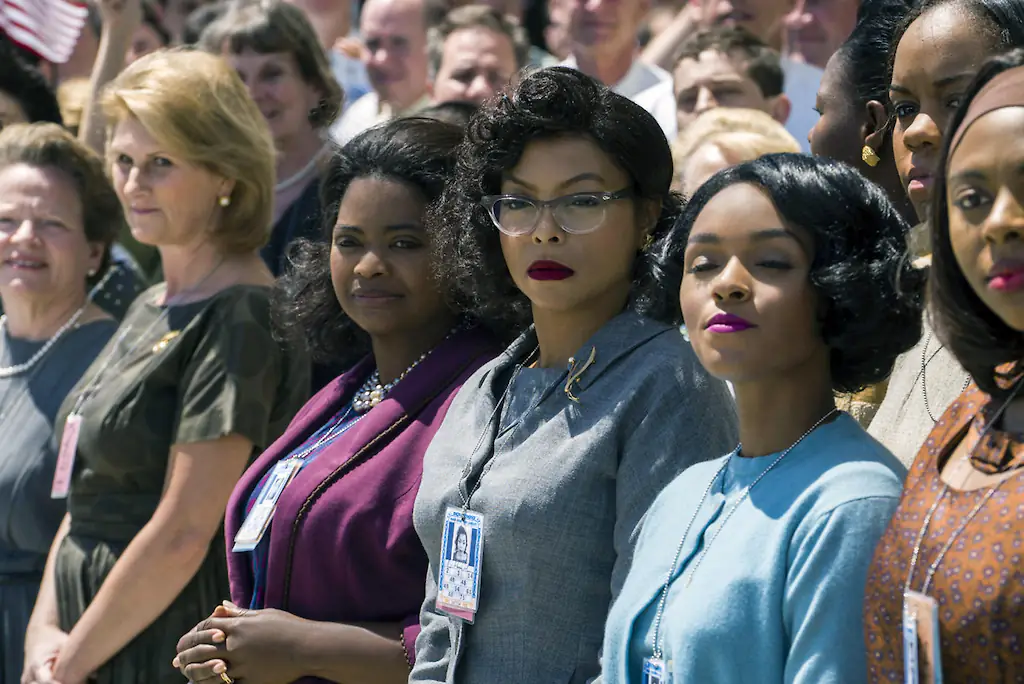
Octavia Spencer, Taraji P. Henson, and Janelle Monáe starred in Hidden Figures. Credit: Atlaspix / Alamy
The 2016 movie Hidden Figures tells their story, starring Taraji P. Henson, Octavia Spencer, and Janelle Monáe, and went on to be nominated for three Academy Awards.
By now, almost everybody knows about the conspiracy theories regarding the moon landing. Ever since that fateful day back in 1969, when Neil Armstrong took his first bouncing steps and planted an American flag in the cold, grey dust, thousands of people have speculated that the Apollo 13 mission was faked in some elaborate movie studio. It’s become something of a cliché in western culture for tinfoil hat-wearers to swear blind that NASA has lied to us for almost half a century. But what you might not know is that there’s another, even more pervasive and sinister, conspiracy theory regarding the space race - lost cosmonauts whose deaths were covered up by the Soviet Union. Let’s put the theory into historical context, before we get to all the juicy X-Files stuff. Beginning with the Nazi development of the V2 rocket in WWII, as well as the Manhattan project, the Cold Wars in the 50’s and 60’s were characterised by a competitive struggle for technological dominance between the two superpowers that we now call “The Space Race.” The USA and the USSR both wanted to conquer space - to put men on the moon and in orbit around the Earth. Initially, the need for space exploration was simply an extrapolation of the nuclear programs; East and West built rockets and launched satellites in order to eventually improve the range, accuracy and power of their respective ballistic missiles. However, eventually, the issue had more to do with propaganda than anything else: who would manage to make the stars their own?What we all forget is that, well before the Apollo 13 mission, the Soviets were way ahead of the United States. On October 4, 1957, a modified R-7 Semyorka/SS-6 "Sapwood" ICBM launched Sputnik 1, the world’s first man-made orbiting satellite, into space. They later followed this with Sputnik 2, which carried a dog called Laika that died in Orbit. By the time Sputnik 5 had managed to return a number of plants and animals back to Earth alive, the next logical step was to send a human being into space. The trouble, of course, was that this venture was, by its very nature, suicidally dangerous. Not only this, but the high level of press and public scrutiny over the space race meant that any failure would mean a devastating blow for morale. The Soviet Union was only too happy to cover up the circumstances of Laika the dog’s tragic death. She died from overheating and stress, something that remained secret for nearly 40 years. Before then, the official word from Moscow was that she had been euthanized when scientists realised she couldn't be brought back safely. Did this mean however, that the USSR was prepared to keep the deaths of experimental cosmonauts clandestine?On 12 April, 1961, Russian cosmonaut Yuri Gagarin became the first man in space; orbiting the Earth in the Vostok capsule. The mission carried every chance of failure and Gagarin had trained intensely for it. But those who believe in the Lost Cosmonaut theory hold that other astronauts were sent into space before Gagarin, and either died during the flight, perished before the launch, or were unable to return to Earth.There’s much evidence in favour of this idea: some plausible, some unfounded and some disproven. For starters, the death of Soviet fighter pilot Valentin Bondarenko, who was originally selected as a potential cosmonaut on the same mission Gagarin eventually flew, had long been covered up by the Kremlin. Bondarenko had died following a fire during a low-pressure endurance experiment when a cotton ball he had used to wash himself ignited on a hot plate and caught on fire. It took rescuers nearly half an hour to empty the pressurised chamber to save Bondarenko, who died of shock in hospital 16 hours after the accident. Because Bondarenko had appeared in numerous group photographs and videos during the flight experiments, various suggestions were put forward to explain his mysterious disappearance before the circumstances of his death were declassified. Days before Gagarin’s mission was scheduled to conclude, numerous Soviet broadcasters were apparently contacted, with the news that the Vostok mission had been a success. Furthermore, many people have found it curious that Russia’s foremost test pilot Vladimir Ilyushin, who was more decorated and experienced than Gagarin, was not chosen to helm the first ever spaceflight. Instead, Russian authorities claimed that he was recuperating in a Chinese hospital after a plane crash - but this sounded suspicious. Could it be that Soviet authorities were more willing to risk a younger, less esteemed pilot if things went south?
[[heroimage||http://cdn.junglecreations.com/wp/junglecms/2017/08/rsz_gettyimages-526762698-compressor.jpg]]
The Soviet government also managed to successfully conceal all evidence of the Nedelin catastrophe until the year 1989. On 24 October, 1960, an accident on the launchpad of the Baikonur test range for a new form of ICBM prototype led to the deaths of approximately 78 technical personnel. Soviet premier Nikita Kruschev imposed complete secrecy, and a false story was put out that Mitrofan Ivanovich Nedelin, chief marshal of the base, had died in a plane crash. Although numerous Western news sources published details of the incident, the Kremlin did not acknowledge the truth until much later. If the government was capable of suppressing information about the deaths of more than 70 people, it’s not hard to assume that they could obfuscate the truth about dead astronauts.But the most disturbing evidence in favour of the lost cosmonauts theory came in the form of a mysterious recording made by two Italian brothers. Giovanni and Achille Judica-Cordiglia were two amateur radio enthusiasts who claimed to have uncovered secret radio transmissions made in distress from Soviet astronauts. From their own experimental listen station, which they set up in the remains of a German bunker outside Turin, they allegedly managed to recover hundreds of transmissions from Russian probes and mission control.The brothers also claimed to have heard an SOS message sent in Morse code. Giovanni and Achille deduced that the spacecraft was moving further away from Earth if the Doppler effect was taken into consideration regarding the transmission. "Two days later, once again, the Soviet Union announced that it has put a 7.5-ton spacecraft into orbit, and that it has disintegrated," Achille noted in an Italian documentary about his exploits. "Strange coincidence."As well as hearing transmissions from Gagarin’s flight, the siblings also claim to have heard sounds of laboured breathing and a heavy human heartbeat in one recording, as well as the voice of a Russian woman stating "It is very hot. I see flame," in her native tongue. Their operations were shut down in 1965. Was this due to official censorship?Perhaps not. Numerous experts have cast doubt over the validity of the recordings, stating that the transcripts are poorly translated, and do not follow standard communication protocols or use the correct terminology. Furthermore, rocket scientists have refuted the recordings by pointing out that the Vostok capsule was supposed to be a low-orbit spacecraft, so the possibility of it getting lost in deep space was extremely remote considering it never had enough thrust to leave the Earth’s orbit in the first place. The recordings certainly are creepy, but they aren’t conclusive proof. Despite this, in 2001, former Soviet engineer Mikhail Rudenko stated that the recordings were genuine, and claimed that the cosmonauts in the brothers’ recordings were named Ledovskikh, Shaborin and Mitkov, and died in 1957, 1958 and 1959 respectively.Indeed, a number of other pieces of evidence have been uncovered as hoaxes and scams - attempts made to capitalise on something that may never be known. American journalist James Oberg extensively researched the case in his book Uncovering Soviet Disasters and found no evidence of any cosmonauts left unaccounted for. However, we have already seen that the Kremlin is remarkably adept at censorship.We tend to think of space exploration as one of the great technological milestones of the human species, a game-changing triumph of ingenuity, endurance and curiosity which has led us beyond the frontiers of the Earthbound, and into the stars. And yet, despite all that, I just can’t shake off the suspicion that something is amiss, that we don’t know all the facts: the chilling image that somewhere out there, in the airless vacuum, a rudderless ship cast away from its moorings is drifting off into the void, bearing a body that will never decay.
It's common to see heartwarming stories about children sending letters to NASA go viral. However, what about heartbreaking responses from NASA? It's one thing for young boys today to aspire to work for the space tech industry, but for a young girl 55 years ago, the situation was not so optimistic, to put it lightly.
With films like Hidden Figures, the role of women in space history has been expanded into the public view. Everywhere, women and their historic achievements are becoming more and more visible. Women of color particularly are finally coming into the cultural respect they've already earned.
Hillary Clinton has been a bit of a lightning rod for every ideology under the sun. Folks on the socialist left who want a more ambitious New Deal, righteous Republicans who hate Democrats, straight-up misogynists and lifelong centrists who love the Clintons all rally around her name. There's a million reasons to hate her or like her, but it's worth remembering that she wasn't always this public figure.
Once upon a time, Hillary Clinton was just an ambitious young girl with an interest in political science - and being an astronaut. In her new book What Happened, chronicling her take on the 2016 election and the surrounding chaos, she brought up a time when, as an 8th grader, she had penned a letter to NASA expressing interest in being an astronaut. In her own words:
"Like in 8th grade, when I wrote to NASA to say that I dreamt of becoming an astronaut, and someone there wrote back: Sorry, little girl, we don't accept women into the space program."
That was at least 18 years before the first female astronaut would work for NASA, in 1978. Being denied an opportunity due to your race or gender is surely one of the worst feelings possible. Without the pretense of meritocratic achievement, the American Dream falls apart.
NASA, understandably embarrassed by this, said that the letter they sent was "a reflection of the early 1960's culture when astronauts were required to be military test pilots. We believe NASA today embraces the race and gender diversity that reflects America and its values."
This statement is loaded with a few ideas. For one, the mutation of space exploration into a military venture, and the exclusion of women from the military, seemed to be the basis of their decision. How sad is it that space exploration is only supported by the government if it has ultimate military motives?
Lastly, it seems that Clinton proved NASA quite wrong - but more importantly, millions of women proved those retrograde sexist attitudes wrong. It's too large a burden to place all of feminism on any one person's shoulders, least of all someone with the strange political situation of Hillary Clinton.
By seeing Clinton as an avatar for all women, don't we degrade the billions of actual women out there, doing their own thing? We don't see Donald Trump as an avatar of all men, and that's for the best. Individual women have big dreams, and individual women will succeed in those achievements.
It's tragic that she lost in 2016 for so many. But the light at the end of the tunnel is that there will be other women, more than anyone can count, who will surpass expectations and break glass ceilings. And that's the best thing possible.
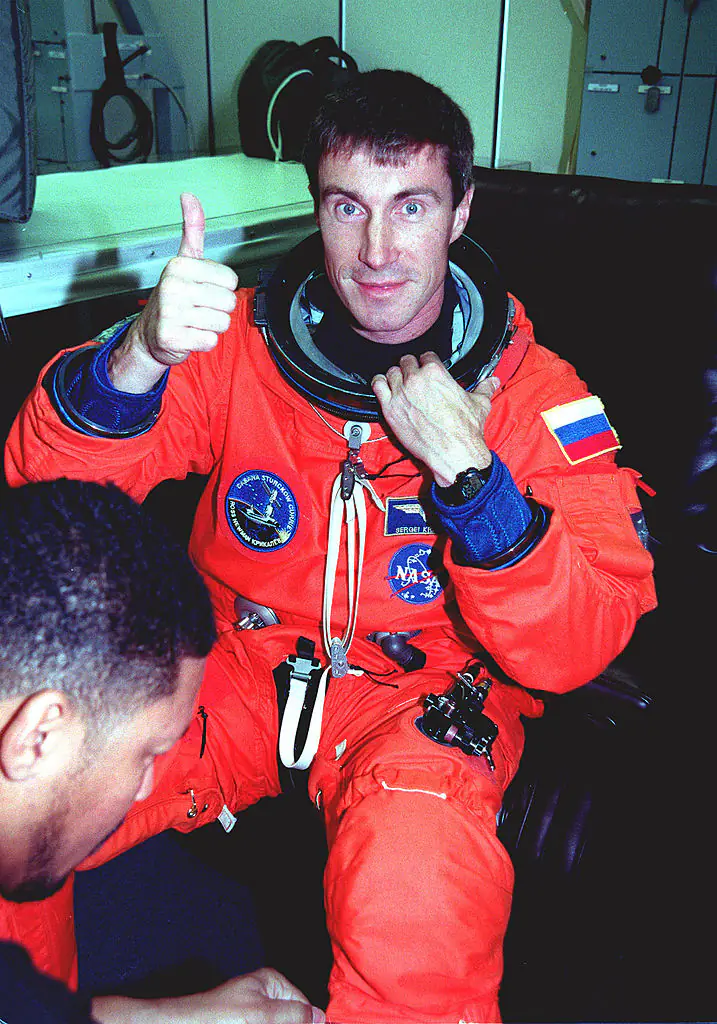
If you thought NASA astronauts Butch Wilmore and Suni Williams were in space for a long time, meet the guy who was left behind in space for 311 days -- all because his country ceased to exist while he was off the planet.
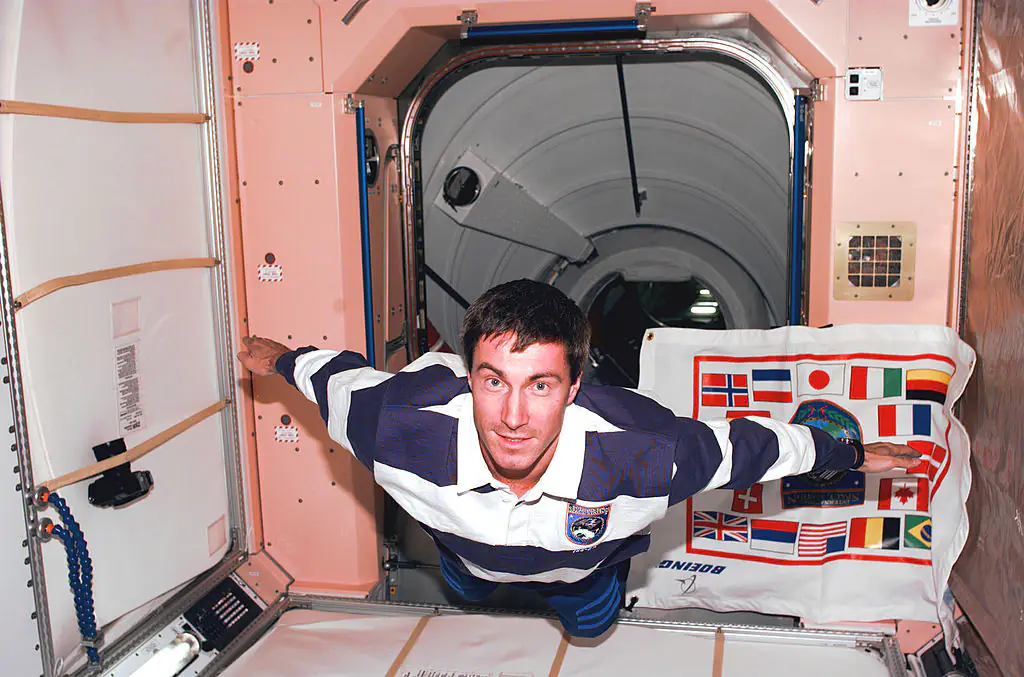
Sergei Krikalev was aboard the Mir space station for a staggering amount of time in 1991.
The cosmonaut embarked on what was supposed to be a five-month mission to the Soviet Union's Mir space station, per the Washington Post.
However, during his time in orbit, the Soviet Union dissolved, leaving him without a nation to return to.
The Soviet Union's collapse not only reshaped the geopolitical landscape but also had direct consequences for Krikalev's mission.
Boris Yeltsin became the president of the newly independent Russian Federation, and the spaceport and landing zones that Krikalev had planned to use were now located in Kazakhstan, which had declared its independence.
The dissolution of the Soviet Union resulted in economic turmoil, leaving little money available to bring Krikalev back to Earth.
At the same time, abandoning the space station without an operator would have risked its operation and repair in case of emergencies, further delaying Krikalev's return.
The cosmonaut was in space for 311 consecutive days. Credit: NASA/Getty
Reflecting on the events during a 2015 Q&A with The Guardian, Krikalev shared his initial reaction to the situation.
"It was a long process, and we were getting the news, not all at once, but we heard about the referendum, for example," he explained. "I was doing my job and was more worried about those on the ground—our families and friends—we had everything we needed!"
Despite the upheaval back on Earth, Krikalev remained focused on his duties aboard the space station.
Eventually, after months of uncertainty, international negotiations between the United States and Russia secured the funding needed to bring him home. Krikalev finally returned to Earth in March 1992, after spending an extraordinary 311 days in space.
Upon his return, Krikalev spoke of the mixed emotions he felt after such a long and unprecedented mission.
"I think I felt satisfaction that I had done my job, and done it well. The second one was a sort of relief as I had held a huge responsibility for many months," he said.
Speaking to NASA, it's evident that Krikalev didn't let the experience tarnish his experiences in Space.
"I think what we do in space together is a good example of how people need to live on the ground," he said.
Krikalev went back to space after the ordeal. Credit: NASA/Getty
Krikalev continued: "I know that people sometimes start to argue with no good reason; but especially when you are in a harsh environment, you rely on each other and try to help each other.
"That is how we live in space, and that probably can be a good example for people on the ground. We try to keep this area protected and keep this good example to politicians and maybe other people in my country and your country, showing that is really how we need to live."
In fact, during his career, Krikalev - along with NASA astronaut Bill Shepherd and cosmonaut Yuri Gidzenko - became part of the first crew to reside on the International Space Station.
Of course, NASA astronauts Butch Wilmore and Suni Williams - who launched to the International Space Station (ISS) aboard Boeing's Starliner on June 5, 2024 - found their planned eight-day mission drastically extended.
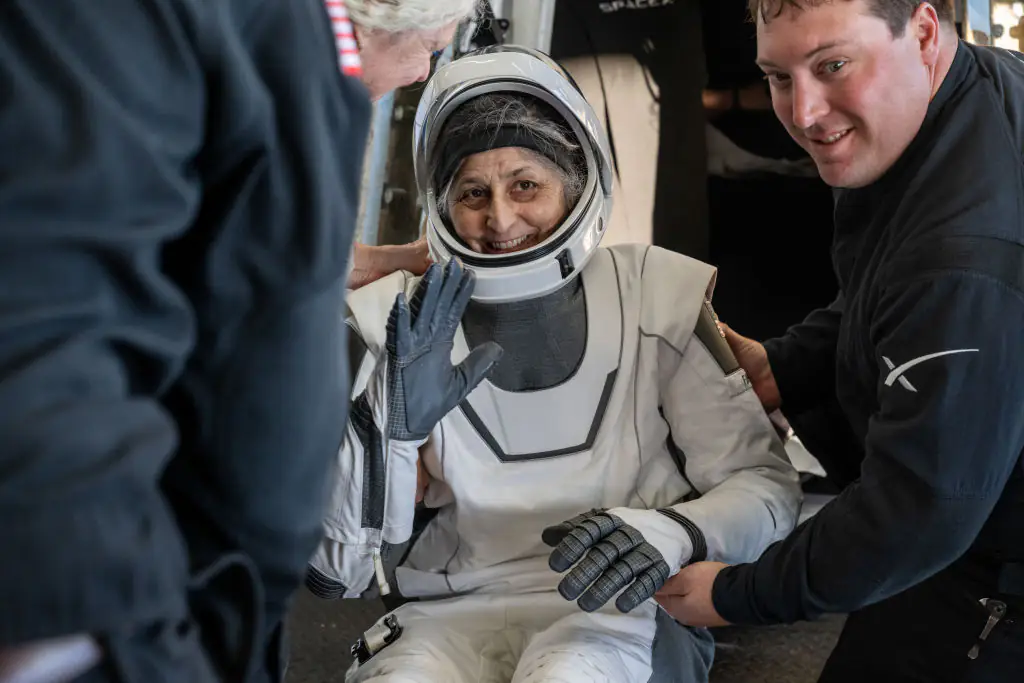
Suni Williams pictures upon her return to Earth. Credit: NASA / Keegan Barber / Handout/Anadolu via Getty Images
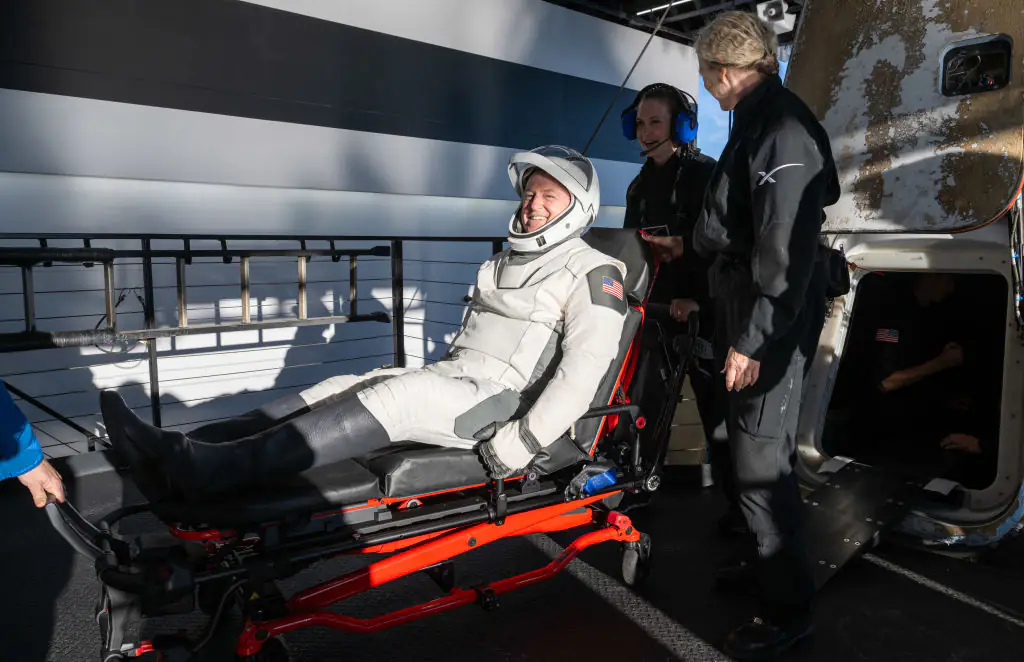
Barry 'Butch' Wilmore. Credit: NASA / Getty
Due to technical difficulties with the Starliner spacecraft, their return to Earth was delayed. What was intended to be a short stay turned into a prolonged nine-month residency on the ISS.
Ultimately, they returned safely to Earth in March 2025, utilizing a SpaceX Dragon capsule. This unexpected extended stay resulted in them spending 286 days in space - completing a whopping 4,576 trips around Earth.
Frank Rubio holds the longest NASA spaceflight record at 371 days, per the New York Post.
An 82-year-old woman who was denied astronaut training is being taken into space later this month by Jeff Bezos.
Wally Funk will also make history when she travels onboard the New Shepard - a sub-orbital spacecraft developed by Bezos’ company Blue Origin - by becoming the oldest person to ever go into space.
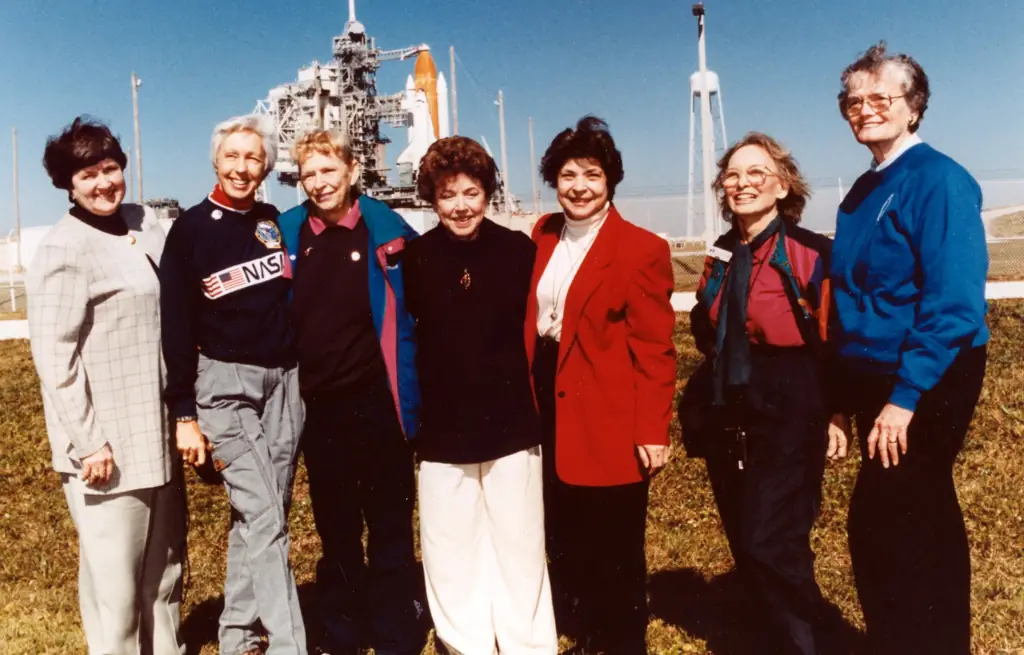
She was one of the 'Mercury 13', a group of women who received privately funded astronaut training in the 1960s, but who were ultimately prevented from ever doing into space.
This was because NASA's policy at the time only permitted men to fly as test pilots or astronauts.
Funk said in a video posted by Bezos on Instagram: "Nothing has ever gotten in my way. They said, 'Well, you're a girl, you can't do that.' I said, 'Guess what, doesn't matter what you are.
"You can still do it if you want to do it and I like to do things that nobody has ever done."
In an accompanying caption, Bezos wrote that "no one has waited longer," to go to space and added: "It's time. Welcome to the crew, Wally. We're excited to have you fly with us on July 20th as our honored guest."
She made aviation history by becoming the first female US military flight instructor and the first female air safety investigator for the National Transport Safety Board.
Credit: Alamy / Science History Images
Funk and 12 women passed NASA's physical examinations to go into space, but despite having the right qualifications and taking part in the project, she was not only prevented from going into space by the agency, but she was turned back from three commercial airlines for being a woman.
"They told me that I had done better and completed the work faster than any of the guys," Funk said of her time on the Mercury 13 program, per AP.
"So I got hold of NASA four times. I said I want to become an astronaut, but nobody would take me. I didn't think that I would ever get to go up."
The Verge reports that in addition to visiting space with Bezos and his brother this month, she will also be joining Richard Branson’s Virgin Galactic spacecraft, the SpaceShipTwo, which she has booked a ticket on after it was recently given permission to take commercial passengers to space.


.jpg_I4Ebof?tr=cr-0.338.2730.3068,f-webp,q-70,w-100)


.webp_QQJmGo?tr=cr-345.0.1535.1190,f-webp,q-70,w-100)


.webp_QQJmGo?tr=cr-345.0.1535.1190,f-webp,q-70,w-1024)

.jpg_I4Ebof?tr=cr-0.338.2730.3068,f-webp,q-70,w-1024)

