ADVERT
us3 min(s) read
Published 11:59 21 Dec 2023 GMT
A prisoner has been exonerated after a judge ruled that he was innocent of his murder charges after spending 48 years behind bars.
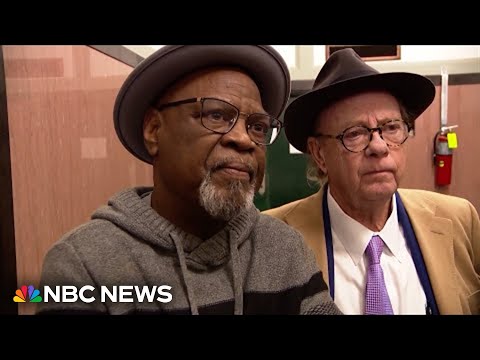
Glynn Simmons, a 71-year-old Oklahoma man, was released in July following the revelation that crucial evidence had not been disclosed to his defense lawyers, per the New York Post.
Oklahoma County District Judge Amy Palumbo, who presided over the case, declared Simmons innocent on Wednesday, stating: “This court finds by clear and convincing evidence that the offense for which Mr. Simmons was convicted, sentenced and imprisoned… was not committed by Mr. Simmons.”
Simmons, convicted in 1975 for the murder of Carolyn Sue Rogers, served an astonishing 48 years, one month, and 18 days in prison, making him the longest-imprisoned inmate to be exonerated in U.S. history, as reported by the National Registry of Exonerations.
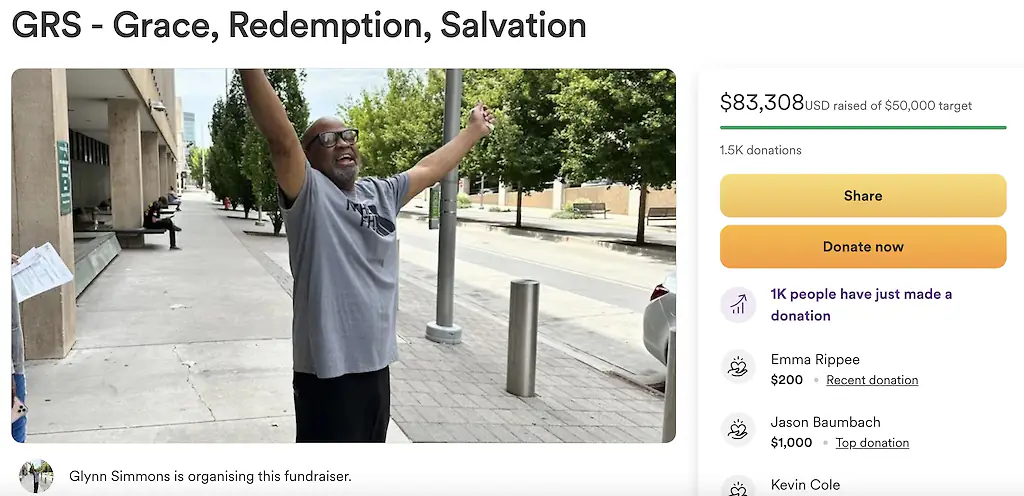
Outside the courthouse, Simmons raised his arms in victory, expressing his vindication to reporters. "It’s a lesson in resilience and tenacity," Simmons remarked. "Don’t let nobody tell you that it (exoneration) can’t happen, because it really can."
Throughout the trial and imprisonment, Simmons consistently maintained his innocence, asserting that he was in Louisiana at the time of Rogers' murder in Edmond.
Both Simmons and co-defendant Don Roberts were initially sentenced to death in 1975, a punishment later reduced to life in prison in 1977 following Supreme Court rulings on capital punishment. While Roberts was released on parole in 2008, Simmons remained incarcerated.
In July, Judge Palumbo ordered a new trial for Simmons after District Attorney Vicki Behenna disclosed that prosecutors had withheld crucial evidence, including a police report suggesting eyewitnesses may have identified other suspects. In September, Behenna announced that there was no physical evidence linking Simmons to the crime scene, and he would not be retried.
Despite his newfound freedom, Simmons is currently relying on donations from a GoFundMe campaign, according to defense attorney Joe Norwood.
Norwood noted that Simmons is eligible for up to $175,000 in compensation from the state for wrongful conviction and may pursue a federal lawsuit against Oklahoma City and authorities involved in his arrest and conviction.
However, any potential compensation is likely years away, Norwood cautioned, emphasizing the immediate need for Simmons to sustain himself.
At the time of writing, the fundraising page has gained over $80,000.
On the page Simmons outlined his intentions for the money: "I've got nothing and I am grateful for the support of relatives as I wait for the state of Oklahoma to compensate me for wrongly sending me to death row, where I was for 2.5 years.
"When that death penalty law was ruled unconstitutional, they changed my sentence to life. All for something I did not do. I'm going to use these funds to live!
"I want to get my own place to live, clothes, furniture, transportation, food, plus medical needs, because I am currently undergoing chemotherapy for liver cancer. I'm 70 years old. I plan to use my remaining time to help others who are still stuck where I was. We need to fix this system so that what happened to me will never happen to anyone else, ever again!"
us1 min(s) read
Published 11:13 31 Jan 2019 GMT
A death row inmate has been executed in Texas 30 years after he was sentenced to death for killing a policeman.
Robert Mitchell Jennings was pronounced dead at 6.33pm local time after being taken from his cell at 6.04pm, becoming the first person to be put to death in the US in 2019.
Before his lethal injection at a prison in Huntsville, the 61-year-old is said to have advised those around him to "enjoy life's moments, because we may never get them back."
[[instagramwidget||https://www.instagram.com/p/BsEIWFPD7kY/]]
His last words were: "To my friends and family, it was a nice journey. To the family of the police officer, I hope this finds you peace and be well and stay safe. Enjoy life's moments because we may never get them back."
Jennings was convicted of murdering Houston Police Department Vice Officer Elston Howard in July 1988 in Houston, Texas.
According to Houston Chronicle and prison records, the 24-year-old was in the bookstore serving an arrest warrant on a clerk for showing films without a license when Jennings entered, having just robbed a neighbouring adult movie theatre.
He shot him three times and left the officer collapsed on the floor, to eventually die of his wounds.
A co-defendant, Robert Harvell, was driving the getaway car, but ordered Jennings out of the vehicle when he found out that he had shot a "security guard." When Jennings refused, Harvell shot him in the hand, official records state.
Police later arrested Jennings at a hospital where he sought treatment for his wound and Harvell was arrested at his mother's house.
Jennings, a high school drop-out, was given the death penalty and his co-defendant was given a 55-year sentence for his role in the crime.
Before Jennings' death, The Forgiveness Foundation - "a non-profit prison ministry devoted to bringing the word of God to death-row inmates and internet recipients" - pleaded for clemency for him, arguing that he should be spared given his tragic past.
According to their website, the 61-year-old's mother became pregnant with him after being raped, and "frequently blamed Robert for her failing to complete her education."
In addition, he "changed places of residence frequently as a child and had no lasting, positive adult influence in his life."
After entering the juvenile justice system at the age of 10, he eventually dropped out of school in the ninth grade when he began using drugs.
[[instagramwidget||https://www.instagram.com/p/BtRsToWhV08/]]
He served 10 years in prison for aggravated robbery and burglary with intent to commit theft and was on parole for this crime when he fatally shot Howard.
While in prison, he obtained his GED and completed more than forty hours of college credit.
The Texas Court of Criminal Appeals allegedly rejected two requests to halt his execution.
us3 min(s) read
Published 10:33 22 May 2026 GMT
The last words of a death row inmate who made a 'mistake' with his last meal before his execution have been revealed.
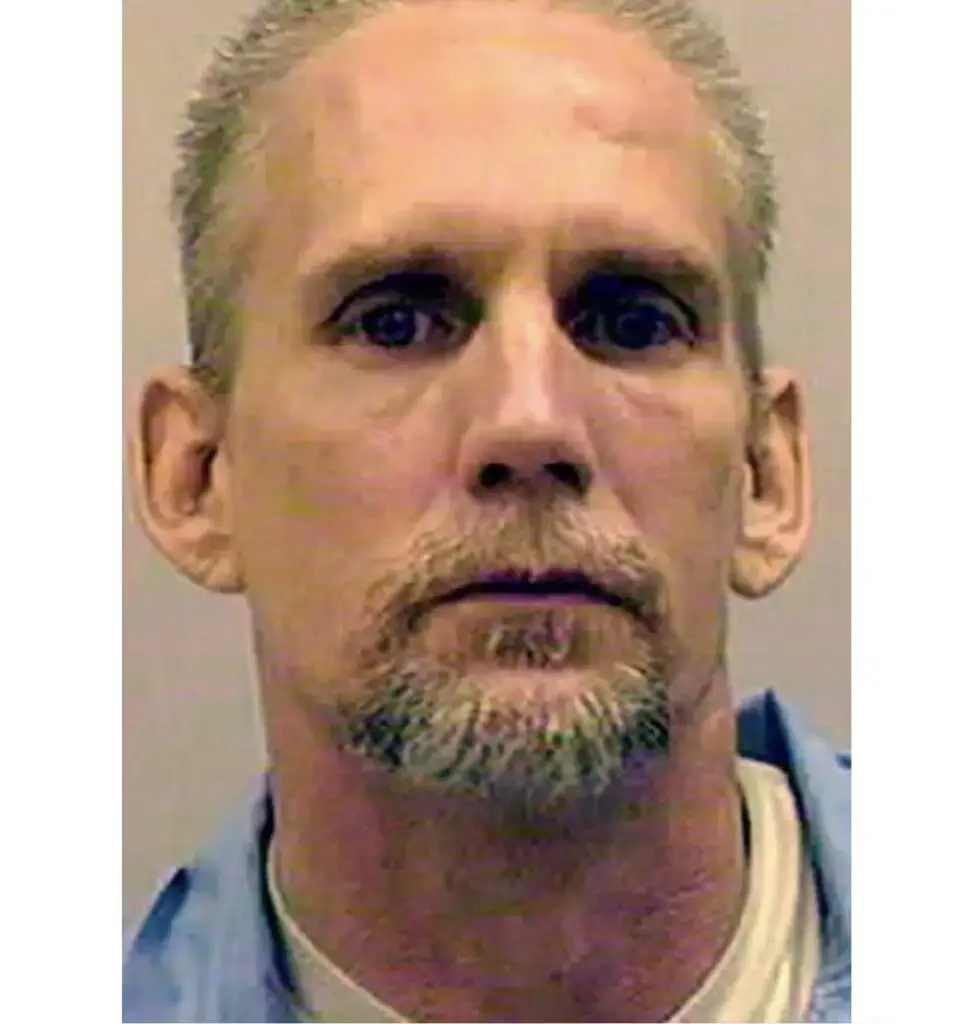
As previously reported, 68-year-old Wesley Ira Purkey had an "excruciating" execution in July 2020 after spending 16 years on death row.
He had been convicted of kidnapping, raping, and then murdering 16-year-old schoolgirl Jennifer Long in 1998.
The teenage student was last seen at East High School in Kansas City, Missouri, on January 22, 1998, and the alarm was raised after she failed to attend lessons.
Purkey reportedly lured the girl into his pick-up truck outside a grocery store before driving her to his home, where he raped and fatally stabbed her.
Long's body was dismembered with a chainsaw and partially burned in a fireplace before Purkey buried her remains in a septic pond in Clearwater, Kansas. Jennifer's remains have never been found, per the Death Penalty Information Center.
Purkey then beat 80-year-old polio sufferer Mary Bales to death with a claw hammer. He had been to Mary's home to fix a kitchen tap when he carried out the murder, and was arrested after neighbors saw him attempting to burn Mary's body.
A death row inmate had an "excruciating" execution after making a mistake with his last meal, according to an autopsy report.
Wesley Ira Purkey was 68 years old when he died by lethal injection after he was placed on death row in 2004 for kidnapping, raping, and then murdering 16-year-old schoolgirl Jennifer Long in 1998.
He was sentenced to death in January 2004 and would remain on death row until July 16, 2020, when he was executed using the lethal injection.
When his execution date rolled around, Purkey - who was said to be suffering from dementia - had reportedly requested pecan pie as his last meal, and asked to save it for later.
However, he seemingly did not realize that there would not be a "later" for him.
This would soon become the least of his concerns, as Purkey's autopsy report detailed his execution, showing he likely died an "excruciating" death.
Purkey's autopsy revealed that he suffered "severe bilateral acute pulmonary oedema" and "frothy pulmonary oedema in trachea and main stem bronchi".
This essentially meant that fluid quickly entered his lungs and trachea, causing "a near-drowning" sensation which a medical expert described as "among the most excruciating feelings known to man".
Dr Gail Van Norman, a Professor of Anesthesiology and Pain Medicine, said the filling of Purkey's lungs could only have happened while he was still alive. "It is a virtual medical certainty, that most, if not all, prisoners will experience excruciating suffering, including sensations of drowning and suffocation from [the lethal injection drug] pentobarbital."
Purkey's final words before he was executed at an Indiana prison reportedly were: "I deeply regret the pain and suffering I caused to Jennifer's family.
"I am deeply sorry. I deeply regret the pain I caused to my daughter, who I love so very much. This sanitized murder really does not serve no purpose whatsoever."
The New York Times reported that Jennifer's father and stepmother told reporters that Purkey's execution was long overdue.
William Long, Jennifer's father, stated: "He needed to take his last breath, he took my daughter's last breath."
us5 min(s) read
Published 14:38 22 Jan 2024 GMT
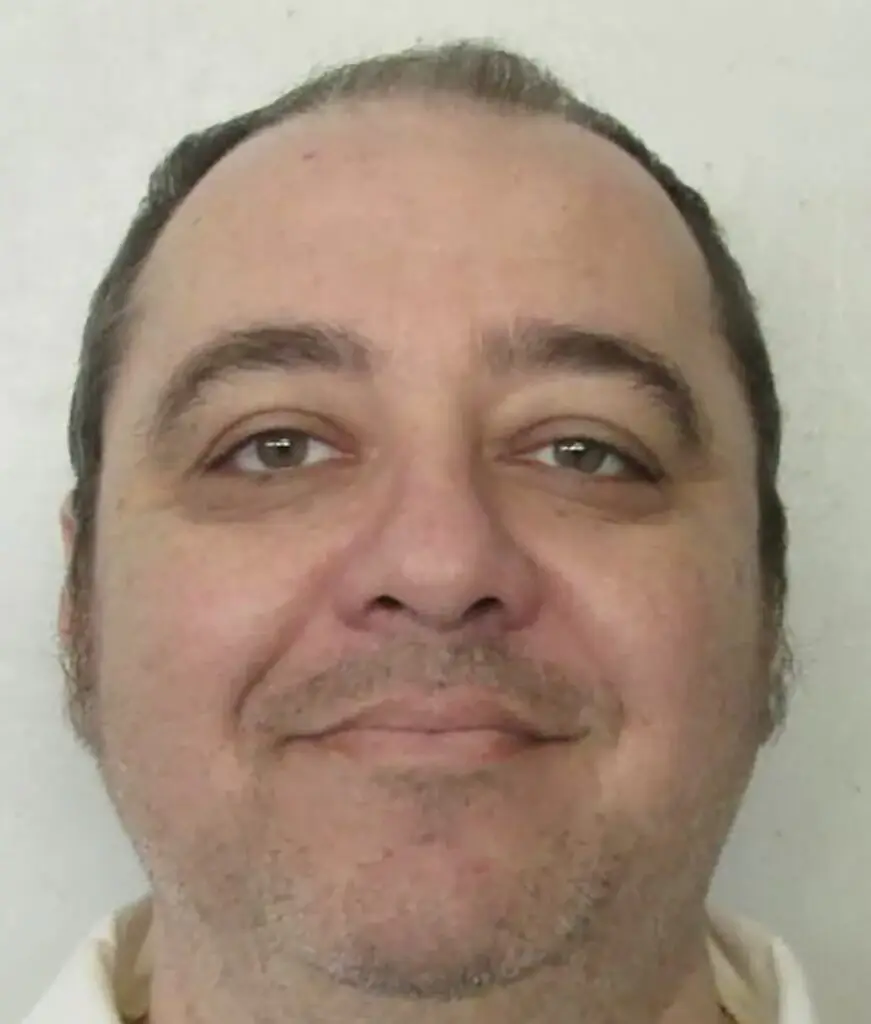
The Alabama death row inmate set to be executed on Thursday knows exactly how to feels to be led into a "death chamber" - because he's already been there once before.
Kenneth Smith, a 58-year-old inmate at the Holman Correctional Facility in Alabama, is set to face an unprecedented execution method in the United States.
On Thursday (January 25), Smith is scheduled to be judicially killed using nitrogen hypoxia, a technique that has never been used for capital punishment in the country.
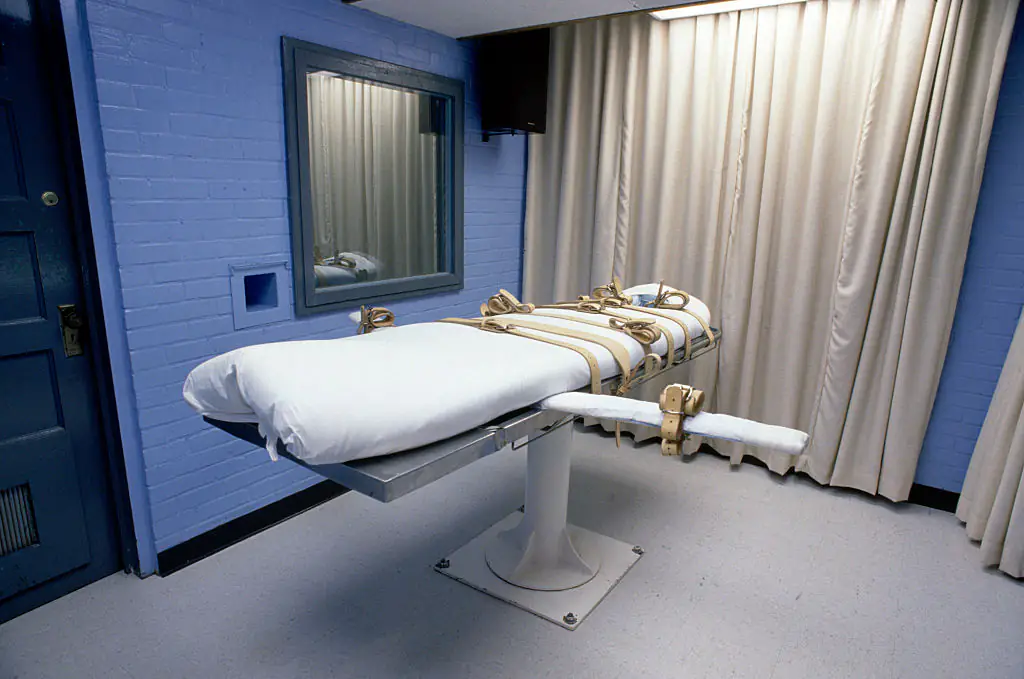
Prior to his scheduled execution, Smith will be transported to the facility's "death cell" on Tuesday - the name given to the holding unit for condemned prisoners awaiting their demise. According to The Guardian, this cell is located roughly 20 feet from the death chamber where - unless Smith is granted a last-minute reprieve - he will be executed.
Unbelievably, this is a feeling and experience Smith knows all too well.
In November 2022, Alabama's Department of Corrections placed Smith in the death cell as they prepared to execute him by lethal injection.
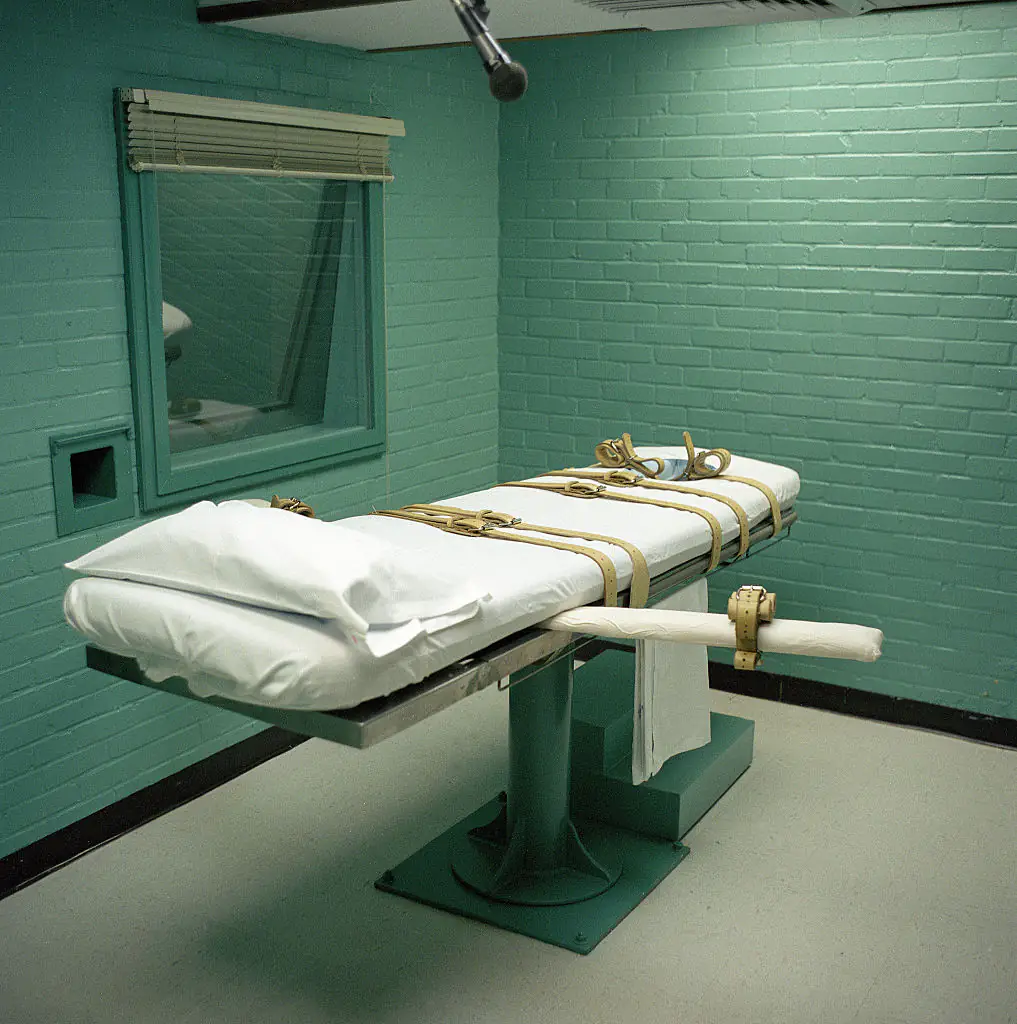
On November 17, 2022, guards placed Smith in handcuffs and leg irons and led him to the execution chamber, where he was strapped tightly to the gurney. Smith’s lawyers later details his experience in court documents, writing: "[Smith] believed that he would die soon and that there was nothing more that could be done".
But despite preparing himself for imminent death, it never came.
During that ill-fated execution, he endured four hours on the gurney as officials struggled to find a suitable vein for the procedure.
Smith was subjected to numerous puncture holes in his body and even suspended upside down during the ordeal.
The Guardian reported at the time that at 10:00PM that day, a three-person IV team - their identities concealed behind green, blue, and red scrubs - entered the chamber and prepared to administer the drugs that would end Smith's life. This was a lethal cocktail of midazolam hydrochloride, rocuronium bromide, and potassium chloride.
Blue Scrubs secured a tourniquet around Smith's upper arm and inserted a needle. When Smith protested, claiming the needle was piercing his muscle, Blue Scrubs reportedly responded: "No, I'm not."
Following the failed attempt, Green Scrubs resorted to striking Smith's right hand and repeatedly inserting needles into it. Smith said he experienced excruciating pain with each jab, as the needles went in and out, moving under his skin.
When the team could not locate a suitable vein, Blue Scrubs instructed the prison guards to flip the gurney backward. This peculiar maneuver positioned Smith with his feet pointing towards the ceiling and his head bowed to the ground.
Subsequently, the IV team exited the chamber, leaving Smith in this distressing position for several minutes. Upon their return, they restored the gurney to its original position.
Clad in face masks and shields to protect against potential blood splatter, Red Scrubs wielded a large-gauge needle. He attempted to insert it beneath Smith's collarbone, aiming to initiate a central line IV in his subclavian artery.
Despite five or six attempts, the needle proved unsuccessful. In a final effort, a deputy warden repositioned Smith's head to provide a clearer path for the needle, intensifying the harrowing ordeal.
All of the attempts were unsuccessful.
Now, a mere 14 months later, Smith faces a return to the death cell and the prospect of another execution attempt. However, this time, the protocol is different and untested.
The novel execution method awaiting Smith involves nitrogen gas, which has never been utilized in capital punishment in the US. The process involves forcing the inmate to breathe pure nitrogen, depriving them of the oxygen required to sustain vital functions.
This approach to execution has raised ethical concerns and has been rejected by veterinarians for euthanizing most animals, except for pigs.
Smith's previous execution attempt has taken a significant toll on his mental health, leading to a diagnosis of post-traumatic stress disorder (PTSD). He now relies on a combination of medications, including those for migraines, insomnia, anxiety, and depression, which are often associated with severe trauma.
Smith, who is currently on death row at William C. Holman Correctional Facility, was convicted for the 1988 murder of Elizabeth Dorlene Sennett; the culmination of a tragic plot involving her husband, a local minister entangled in an affair, and debt. Smith was one of two men convicted of capital murder for the murder-for-hire killing of a preacher’s wife, Elizabeth Dorlene Sennett.
Prosecutors said Smith was paid $1,000 by Charles Sennett, the pastor of the Westside Church of Christ in Sheffield, Alabama in 1988, to forcefully take his wife's life, per CBS News.
us3 min(s) read
Published 10:05 26 Feb 2018 GMT
Though opinions are divided on the matter, the death penalty still exists in a nunber of states across the US. Inmates who are sentenced to die can be executed in a number of different ways depending on which state they're convicted in - from electrocution to hanging to firing squad - but the lethal injection is the most common method.
Unfortunately, it doesn't have a 100 per cent success rate.
61-year-old Doyle Lee Hamm, who was sentenced to death back in 1987, was due to be executed in Alabama. However, complications arose when medical staff could not obtain "appropriate venous access", and they called off the procedure at 11:30 pm.
The inmate's lawyer, Bernard Harcourt, is now saying that the execution was botched, and that he had previously argued in court filings that the lethal injection would be difficult to administer to Hamm due to pre-existing medical conditions.
In July, Harcourt had stated that his client's veins had been severely compromised due to lymphoma, hepatitis, and prior drug use - but the execution went ahead anyway.
In his latest court filing, the lawyer revealed that two executioners tried multiple times to insert an intravenous line on both of Hamm's ankles and legs, before proceeding to attempt to connect the line through his groin. Two-and-a-half hours after the Supreme Court had cleared the execution to proceed, however, the prison officials announced that they had been forced to give up.
Speaking about his client, Harcourt said that: "He’s in great pain from yesterday evening, physically, from all of the attempts to access his veins in his lower extremities and in his groin."
The following day, US District Judge Karon Bowdre ordered a medical examination of the convicted inmate in order to determine the cause of the failed execution.
Meanwhile, Jeff Dunn - the state prison commissioner - has stated that the execution was delayed due to an issue with the timing. "I wouldn’t necessarily characterize what we had tonight as a problem," he said. "The only indication I have is that in their medical judgment it was more of a time issue given the late hour."
The 61-year-old had been waiting on death row for decades after murdering a motel clerk named Patrick Cunningham in 1987. Hamm had shot Cunningham once in the head while he was working the night shift at a Cullman motel and then proceeded to rob the place. He got away with just $410.
The murderer was later apprehended by police, at which point he confessed to the crimes. Two other accomplices also testified against Hamm in exchange for lighter sentences, meaning that he was the only one sentenced to death out of the trio.
Hamm is not the only person to have experienced a botched execution, however.
In fact, it is estimated that three per cent executions in the states between 1890 and 2010 were performed incorrectly in some way. Surprisingly, the lethal injection had the highest rate of failure.
Two UN human rights experts had previously voiced their concerns about Hamm's execution before it went ahead, warning that "attempts to insert needles into Mr Hamm’s veins to carry out the lethal injection would inflict pain and suffering that may amount to torture."