


Uncategorised8 min(s) read
35 Little-Known Facts About The Titanic
.jpg_I4Ebof?tr=cr-0.338.2730.3068,f-webp,q-70,w-100)
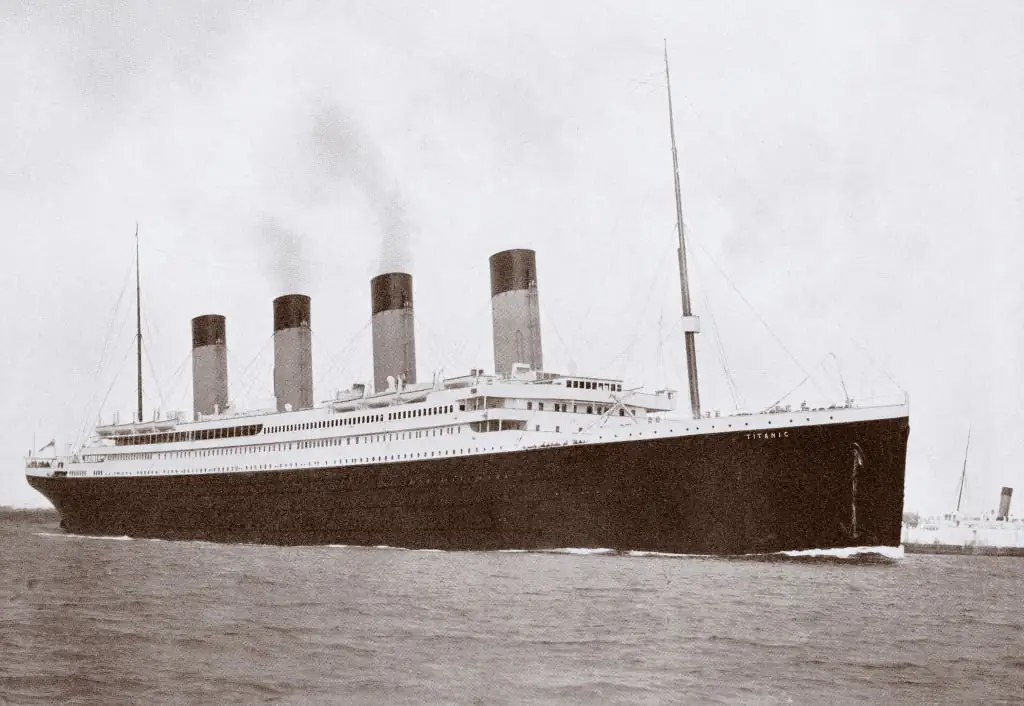
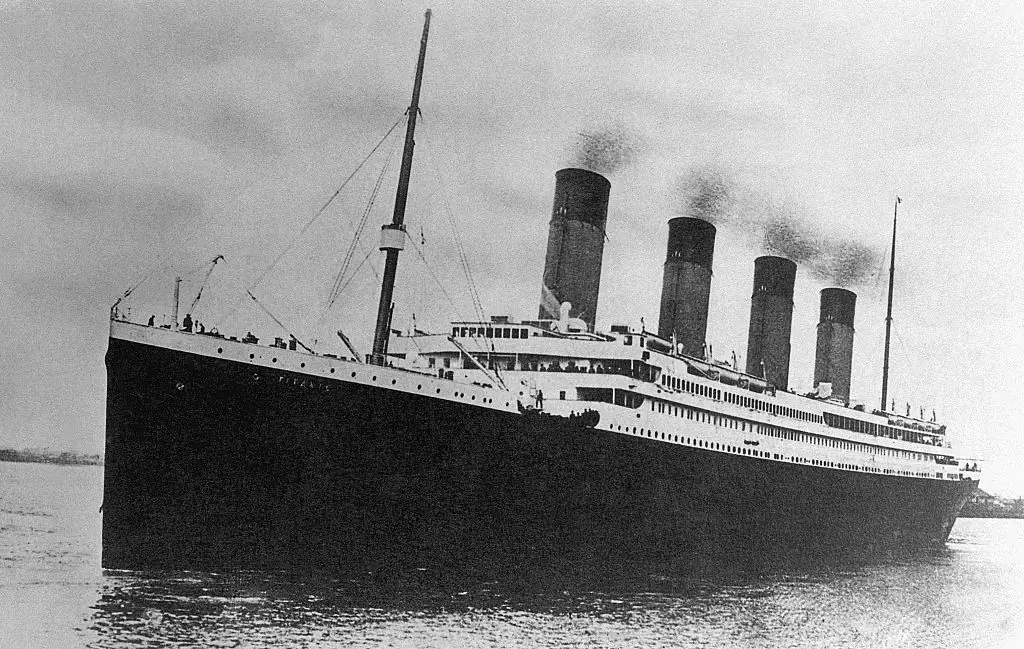
The story of the ill-fated Titanic has become a legend. It was the grandest and largest ocean liner of its day when it set sail from Southampton on April 10th, 1912. Built in Belfast by Harland and Wolff, the ship had a watertight compartment system that caused many to believe it was unsinkable.
[post_page_title]The True Story Of The Titanic[/post_page_title]
As we all know, the Titanic wasn't unsinkable. The tragedy which unfolded on the Atlantic ocean just five days after the ship set sail was the greatest maritime disaster in history. However, there's still a lot of unbelievable facts about the Titanic that people don't know!

[[pagebreak]]
[post_page_title]The Titanic Wasn't Full[/post_page_title]
The Titanic disaster claimed the lives of 1,517 people. Only 706 survived. But what makes the disaster even more shocking is the fact that Titanic wasn't full on her maiden voyage. She had the capacity to hold 3,547 passengers and crew, but only set sail with 2,223. It's a good thing that she did. Otherwise, over a thousand more would have perished.

[[pagebreak]]
[post_page_title]Forty-Eight Lifeboats[/post_page_title]
Titanic's designer, Thomas Andrews, had planned for the ship to carry 48 lifeboats. But the number was reduced to just 20 boats so that there was more deck space - despite the fact that the ship could have held 64 boats, more than enough for her maximum capacity. It was a cosmetic decision that cost the lives of more than half of the passengers.

[[pagebreak]]
[post_page_title]Famous People Didn't Sail[/post_page_title]
One of the most famous people who didn't sail onboard the Titanic was Milton Hershey. As you can probably guess from his surname, he was the creator of the chocolate bar that we've all came to know and love. He was asked to return to America early and left England three days before Titanic set sail on another liner called the America.

[[pagebreak]]
[post_page_title]Only One Child In First-Class Died[/post_page_title]
Many steerage passengers died because they had to travel further up the ship to get to the lifeboats. They were kept in separate quarters from the rich because there were a number of nationalities on board, and, under immigration law, they had to be separated to prevent the spread of infectious diseases. Only one first-class child died during the sinking, all second-class children survived, but only 25 of the 80 third class children survived.

[[pagebreak]]
[post_page_title]Hundreds More Could Have Lived[/post_page_title]
The people who got onto the lifeboats first were very brave because they were leaving the safety of a ship to go onto a small raft. When the officers began to load the lifeboats, many people believed the Titanic wasn't going to sink. The officers who were in charge of loading up the boats were also frightened that if they put too many people into them, they might sink.

[[pagebreak]]
[post_page_title]The Lifeboat Drill[/post_page_title]
A lifeboat drill was scheduled for April 14th, however, it was canceled at the last minute for reasons we'll never know. On top of underfilling the boats, another fatal mistake was that the two collapsible lifeboats weren't properly launched. If the drill had taken place, this information would have been fresh in the officer's minds.

[[pagebreak]]
[post_page_title]No Binoculars[/post_page_title]
There were no binoculars on the crow's nest on the Titanic. The night of April 14 was a famously clear one, and if Fleet had binoculars there's no doubt the iceberg would have been spotted sooner. The officer who'd been on the shift before Fleet, David Blair, simply forgot to give him the key to the box which contained them.

[[pagebreak]]
[post_page_title]Ice Warnings[/post_page_title]
The day she sank, the Titanic received no less than six ice warnings. These were all ignored. The wireless operator was too busy sending out passengers' messages. If they'd been heeded, there's no way that Fleet wouldn't have had binoculars.

[[pagebreak]]
[post_page_title]Poor Materials[/post_page_title]
Research has shown that Harland and Wolff were struggling to find enough skilled riveters to build Titanic and enough good quality rivets. To complete the project, they had no option but to use substandard rivets and riveters. If better materials and more skilled tradesmen had been used, Titanic may have survived her collision with the iceberg.

[[pagebreak]]
[post_page_title]A Fire[/post_page_title]
There was a fire on board the ship. Whilst attempts were made to extinguish it, they were ultimately unsuccessful, and it was kept a secret from passengers and crew alike. "We have experts telling us that when you get that level of temperature against steel it makes it brittle, and reduces its strength by up to 75 percent," journalist Senan Malony said.

[[pagebreak]]
[post_page_title]Speed[/post_page_title]
If the Titanic had been going slower, that 37 second impact time would have been a lot longer. Even if she'd still hit the iceberg, if she'd been going at a slower pace, the damage it would have caused to the ship's hull wouldn't have been anywhere near as bad. As you can tell by now, the perfect storm was brewing onboard the world's grandest ship.

[[pagebreak]]
[post_page_title]Wrong Turn[/post_page_title]
Trying to avoid the iceberg was the wrong choice, but the crew was obviously panicking, and it does seem like a logical decision to make. If the Titanic had hit the berg head-on, she wouldn't have suffered as much damage. She would have stayed afloat for longer, allowing ample time for the Carpathia to come to her rescue.

[[pagebreak]]
[post_page_title]The Bulkheads[/post_page_title]
The bulkheads - whilst an innovative design - could overflow into the rest of the ship if damage was sustained to more than two of them. So these compartments weren't watertight at all. As the iceberg hit the side of the ship, too much damage had been done for them to be effective. The unsinkable design really wasn't unsinkable.

[[pagebreak]]
[post_page_title]People Were Calm[/post_page_title]
Everyone on board was relatively calm. This probably contributed to the reluctance of passengers to board the lifeboats when they were launched. Historians who have analyzed the event have compared it to similar sinkings and reached the conclusion that the people were calm because the ship took so long to sink. As a result, panic did not set in until near the end.

[[pagebreak]]
[post_page_title]The Californian[/post_page_title]
The Californian was arguably close enough to the Titanic on the night of the sinking to save everyone onboard. However, it didn't answer the ship's distress calls, or the flares it sent off into the night sky. Another lesser-known fact about this part of the sinking was that Titanic was the first ship in history to use the SOS signal but to no avail...

[[pagebreak]]
[post_page_title]A True Love Story[/post_page_title]
Isidor and Ida Straus, owners of Macy's department store, were last seen walking off together onboard the Titanic. They had both been offered a place on a lifeboat, but Isidor refused to leave because women and children were still on board the ship. Despite telling Ida to go, she refused and instead chose to die by his side. She was heard saying, "We have lived together for many years. Where you go, I go."

[[pagebreak]]
[post_page_title]Famous Last Words[/post_page_title]
Once they knew that they were doomed, wealthy businessman Benjamin Guggenheim and his valet went back to their rooms to change into their finest evening wear. They went to the ship's famously beautiful grand staircase, and, Guggenheim said, "We've dressed in our best and are prepared to go down as gentlemen."

[[pagebreak]]
[post_page_title]The Ship's Band[/post_page_title]
As depicted in James Cameron's movie, the band onboard the Titanic played for over two hours on the deck, attempting to console the passengers and keep them as calm as possible. The last song they were heard playing was 'Nearer my God to Thee'.

[[pagebreak]]
[post_page_title]Thomas Andrews[/post_page_title]
Andrews was the man who knew the design of the Titanic best, and he used this knowledge to save lives on the night of the sinking. People trusted him enough to take his advice and get into the lifeboats. He was last seen throwing deck chairs and lifebelts to people flailing in the water as the ship sank.

[[pagebreak]]
[post_page_title]The Ship Split In Two[/post_page_title]
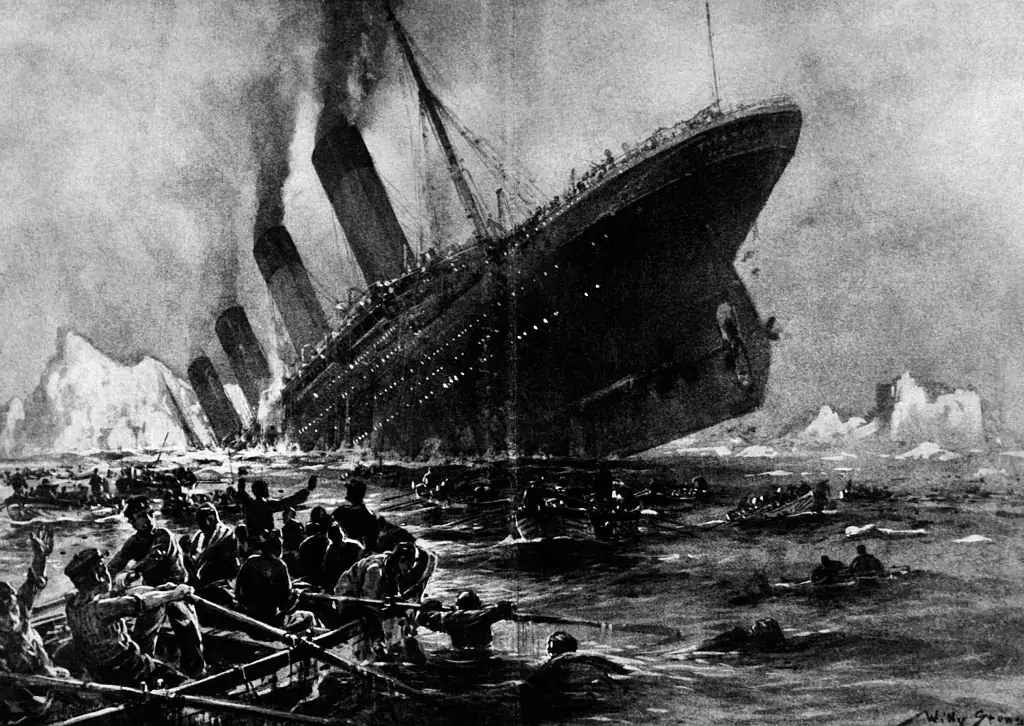
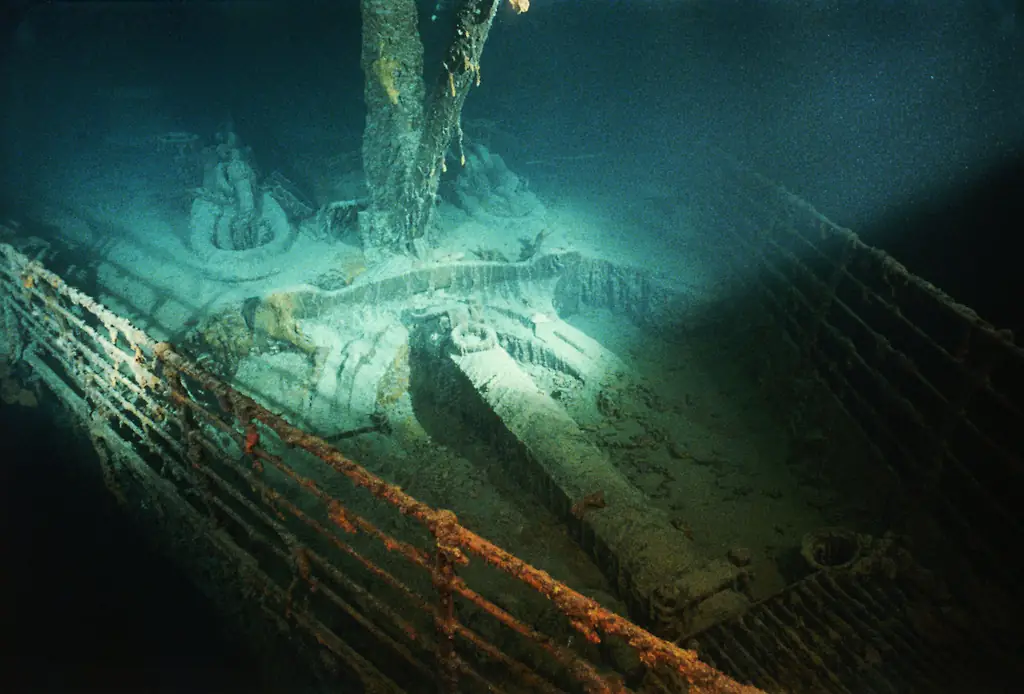
Shortly before she sank, the Titanic split in two. However, unlike in the movie, reportedly, there was no huge swell which dragged those on deck deep into the water. The Titanic went down bow first, and the pressure this put on the stern of the ship resulted in it splitting. The two halves of the ship now lie just under 2,000 feet apart on the seabed.

[[pagebreak]]
[post_page_title]The Unsinkable Molly Brown[/post_page_title]
Molly Brown famously helped to row her lifeboat - number six - away from the stricken ship to safety and encouraged the other women on board to do the same, something which wouldn't have been considered ladylike at the time. Once the ship had sunk, she argued with the officer in her boat, pleading with him to return to the site to look for survivors.

[[pagebreak]]
[post_page_title]People Survived In The Water[/post_page_title]
Jack Thayer, who was just 17 at the time of the Titanic's sinking, was one of a few people who survived going down with the ship. He revealed that one in 36 of those who found themselves in the water survived. His savior came in the form of an upturned lifeboat which he desperately held onto until help arrived.

[[pagebreak]]
[post_page_title]Whiskey Saved A Life[/post_page_title]
Titanic's head baker, Charles Joghin, survived the sinking all thanks to alcohol. After doing his duty by the women and children onboard, he was offered a space in a lifeboat, but declined and went off to get a drink - or twenty. He drank so much alcohol that it helped him to survive for at least two hours until a lifeboat returned looking for survivors!

[[pagebreak]]
[post_page_title]Rhoda Abbott[/post_page_title]
Rhoda Abbott was the only woman to go into the water and come out alive. She was one of around 20 people to climb into a boat that was partially submerged. Of these 20 people, only 13 survived long enough to be rescued. But she never got over the disaster or the loss of her two young sons who were just 16 and 13 when they met their fate on board the Titanic.

[[pagebreak]]
[post_page_title]No Deaths[/post_page_title]
"Late last night the White Star officials in New York announced that a message had been received stating that the Titanic sank at 2.20 yesterday morning after all her passengers and crew had been transferred to another vessel," it was reported in The Guardian on April 16, 1912. "Later they admitted that many lives had been lost."

[[pagebreak]]
[post_page_title]Burce Ismay[/post_page_title]
Chairman and director of the White Star Line Bruce Ismay managed to survive the sinking by jumping into a lifeboat after assisting women and children into it. There was such a backlash at his survival that his name was ruined for the rest of his life. Ismay was the highest-ranking member of the company to live to tell the tale of what happened on the Titanic.

[[pagebreak]]
[post_page_title]Dogs Survived[/post_page_title]
Horrifyingly, three of the 13 dogs on-board survived the sinking. They were admittedly small and carried onto the lifeboats by their wealthy owners. It was reported that one woman refused to get into a lifeboat and instead chose to stay with her dog.

[[pagebreak]]
[post_page_title]The Money Boat[/post_page_title]
Fashion designer Lady Duff Gordon and her husband Cosmo survived the sinking on a boat that contained just 12 people, seven of whom were crew members. Their wealth and the fact that the boat did not return to collect other passengers caused many to speculate that the couple had bribed their way to safety, but they were later cleared of any wrongdoing.

[[pagebreak]]
[post_page_title]Till Death Us Do Part[/post_page_title]
The reason that a number of honeymooning couples were able to survive the sinking was because they were the first people to board the lifeboats. As the first lifeboat was being launched, number seven, the officer in charge realized that too few people were willing to get into it, so he said that as well as women and children, "all brides and grooms may board".

[[pagebreak]]
[post_page_title]It Was Predicted[/post_page_title]
In a bizarre coincidence, a novel seemed to predict the Titanic's fate. It was about a ship called the Titan, which is freakishly similar in name, to the Titanic that people claimed was unsinkable. It too was sunk by an iceberg, resulting in the deaths of the majority of its passengers. The Titan also sunk in April.

[[pagebreak]]
[post_page_title]Alice Elizabeth's Fortune[/post_page_title]
A first-class passenger called Mary Elizabeth was approached by a fortune-teller who emerged from a crowd to tell her that "You are in danger every time you travel on the sea, for I see you adrift in an open boat. You will lose everything but your life." This came to pass, and she survived the sinking.

[[pagebreak]]
[post_page_title]A Hero's Premonition[/post_page_title]
Jonathan Shepherd was praised for his calmness during the Olympic's collision with the warship. He remained equally calm during the Titanic disaster as the boiler rooms flooded with water, but sadly broke his leg and didn't survive. It was reported that "[he] was not so jolly when he went away, as he seemed to have an idea that something would happen."

[[pagebreak]]
[post_page_title]The Recovery[/post_page_title]
The bodies of 334 people were recovered from the site. These included the body of the most wealthy passenger on the ship, John Jacob Astor. His death was symbolic because it was a reminder that money couldn't save anyone onboard the Titanic. Of the bodies recovered, 125 were buried at sea.

[[pagebreak]]
[post_page_title]The Curse[/post_page_title]
The cursed survivor who stands out most to me, however, was stewardess Annie Robinson. She was so traumatized by her experience that she killed herself in October of 1912 when she was traveling on board another ship that was passing through a patch of dense fog. Terrified of another disaster, she committed suicide by jumping from the ship's deck.

[[pagebreak]]
[post_page_title]The Law Was Changed[/post_page_title]
The Titanic disaster resulted in various maritime laws being changed in both Britain and the United States. The first of which, naturally, was the number of lifeboats which were legally required on a vessel. The absence of a lifeboat drill would never happen again either, nor would officers possess insufficient knowledge about how to evacuate a ship.

.webp_QQJmGo?tr=cr-345.0.1535.1190,f-webp,q-70,w-100)


.webp_lli6Ty?tr=cr-74.9.445.380,f-webp,q-70,w-100)


.jpg_I4Ebof?tr=cr-0.338.2730.3068,f-webp,q-70,w-1024)

.webp_QQJmGo?tr=cr-345.0.1535.1190,f-webp,q-70,w-1024)


.webp_lli6Ty?tr=cr-74.9.445.380,f-webp,q-70,w-1024)