Uncategorised2 min(s) read
health2 min(s) read
As someone with allergies, I can confirm that they suck. Even if it does bug me that I can't snuggle up with a cat or go for countryside walks for too long before I need to be taken to hospital, it's not as bad as having a food allergy.
For those who are allergic to peanuts, it can be hard to avoid trace amounts - given how many surprising foods contain just enough to cause a problem.
However, a recent study has revealed that there may be a way to build tolerance up in those that have serious peanut allergies.
The PALISADE group of Clinical Investigators published the findings of their study this week in the New England Journal of Medicine, in which participants were shown to improve their tolerance. In the study, random groups were given either capsules of peanut protein or a placebo, while the amount given was gradually increased.
Of those in the study, nearly 500 of them were four to 17 years old, and weren't able to tolerate even a 10th of a peanut dose before the study. However, after taking small doses for a year, two-thirds of them can now tolerate at least two whole peanuts.
Emily Pratt, a six-year-old who took part in the study, spoke to the BBC's Today programme about how it's helped her. "I couldn't have a birthday cake at parties and now I can," Emily, who can now tolerate around seven peanuts, said. Her mother, Sophie, was very happy with the results as well, considering what her diet was like in the past:
"It's been a constant stress. We were quite shocked how you could find traces of peanuts and nuts in all sorts of food, particularly foods that are childhood foods - cakes, biscuits, ice-creams - and that's what was stressful.
"We had to constantly study food labels to ensure peanuts were completely eliminated from Emily's diet. Her allergy was very severe, so even a small amount of peanut could lead to a very serious reaction. The impact on our family life was huge."
The drug that this study uses, 'AR101', is a peanut-derived biologic drug that delivers a daily maintenance dose of 300 mg of peanut protein. The idea is to cause desensitisation, known as a "transient upward shift in threshold reactivity to an allergen as a result of ongoing controlled exposure to that same allergen".
According to the study, 250 out of 372 participants (67.2%) who received active treatment were able to ingest 600 mg or more of peanut protein without any symptoms. UK chief investigator for Palisade, Professor George du Toit, who is a consultant at Evelina London Children's Hospital, said:
"The results of this ground-breaking study are very promising and suggest that we will be able to protect children who are allergic to peanuts from having a severe reaction after accidental exposure.
"This is extremely good news as the number of children being diagnosed with peanut allergy in the UK has more than doubled over the past two decades.
"Peanut allergy is extremely difficult to manage for children and their families, as they have to follow a strict peanut-free diet. Families live in fear of accidental exposure as allergic reactions can be very severe and can even lead to death."
Hopefully, this research can be utilised to help those that suffer from serious peanut allergies in the near future.
science & tech2 min(s) read
Over the past few decades, there has been a worrying trend in people opting out of vaccinating their children - despite overwhelming evidence to suggest that it's a terrible idea.
Study after study has proven that there is no link between vaccinations and autism (one of the main arguments put forward by anti-vaxxers), and that denying a person the necessary inoculations leads to a greater risk of certain health problems in later life.
Joshua Nerius, a 30-year-old software product manager, found this out the hard way three years ago when he was diagnosed with measles.
At first, a doctor prescribed him antibiotics to combat the rash and high fever, but they had no effect. This prompted the doctor to ask whether Nerius had been vaccinated against measles as a child, as anyone who had been immunised would have been safe from the illness as an adult.
When Nerius messaged his mother to check whether he had received the vaccine, she replied with a thumbs down emoji. He was furious.
Because of the severity of the disease, Nerius had to be kept in an isolation room at Northwestern Memorial Hospital. He was in extreme discomfort, could hardly walk without assistance, and - over the course of his illness - lost 25lbs.
"I felt horrible," he said. "It took a serious toll."
As well as being annoyed about his own illness, though, Nerius feels for all the children who have had to experience the pain and discomfort because of their parents' ignorance.
"It makes me so angry," he said. "My parents thought they were doing the right thing. They were persuaded by the anti-vaxxers."
Nerius is actually very lucky, though, as measles can kill. Before the introduction of a vaccine in 1963, 400 to 500 people in the United States died each year as a result of the disease.
And yet, there is a worrying amount of advocacy for vaccinations to be banned or avoided.
Darla Shine, wife of the White House communications chief, Bill Shine, recently tweeted that she wished her children had caught measles as she did when she was young. "Bring back our #ChildhoodDiseases they keep you healthy," she wrote - much to the horror and dismay of medical professionals.
"When Darla Shine talks about how great it was that she had measles as a child, what she forgets to mention is that she gets to tell her story because she's alive. The ones who died - we don't hear from them," said Dr. Paul Offit, director of the Vaccine Education Center at the Children's Hospital of Philadelphia. He remembers the measles outbreak in 1991, during which nine children lost their lives.
Really, with the understanding we have now, there is no need to be so wilfully ignorant about the dangers of the anti-vaxxer stance.
"The science on this has been settled. It's been solved," Nerius said. "When I look at where we are today, with people who are wilfully deciding to ignore the facts, it really frustrates me. I just don't understand the mindset of people who want to spread fear."
In this case, Nerius was able to make a full recovery but tragically, others in his position have not been so lucky.
uk2 min(s) read
For many parents, baby rice is 'baby's first food.' It's ground to a fine consistency, like flour, therefore easily digested, making it the perfect meal for weaning babies. Also, it contains vitamins that help strengthen the immune system, promote healthy blood and help the body release energy from food.
However, new research shows that seven popular baby rice products in UK supermarkets contain dangerous levels of arsenic. According to tests conducted by Channel 4's Food Unwrapped, nearly a quarter of 26 baby rice foods broke European Union safety rules. The program did not name the seven products with high levels.
Arsenic is an element found in nature, but exposure can become aggravated through human activities. Low levels of the substance are in drinking water, air and many foods. However, rice contains contains higher levels of arsenic because it absorbs more water as it grows. Long-term exposure to arsenic can increase the risk of skin, bladder, kidney and lung cancer, as well as heart disease and diabetes.
Food research expert Professor Andy Meharg told Food Unwrapped that parents should restrict baby rice intake to 30 grams a day, which is about three tablespoons. "I would not feed young children rice at all," Meharg told The Daily Mail. "As a parent I would want to take problematic things out. I would not want to take a risk with it." He added that small concentrations of the substance could dramatically affect children's immune development, growth and IQ.
The television series interviewed mothers, who were shocked by the disturbing reports. One described the arsenic levels as "scary," while another stated, "There should be more warnings because I wouldn't give my child that product." The concerned mothers, and Professor Meharg, have called for clearer labelling on all baby rice products. The pertinent information should be displayed on the packaging - perhaps through a color-coding system - so that parents know what they're feeding their children.
In response to this controversy, a Food Standards Agency spokesman said, "Arsenic is naturally occurring in the environment and it is not possible to totally eliminate it from the diet. But because it has the potential to increase the risk of illnesses, including cancer, it is important to reduce exposure to as low as reasonably achievable."
He continued, "Maximum legal levels are in place for arsenic in rice, with stricter levels for rice used in the production of foods for infants and young children. It is the responsibility of food manufacturers to ensure they use ingredients in compliance with the legislation. Where non-compliance is found, enforcement officers will investigate and take action as needed."
Well, hopefully an investigation will be conducted and action will be taken to resolve this issue. Parents put a lot of thought into what they feed their children, and deserve to know if products contain dangerous levels of arsenic.
us4 min(s) read
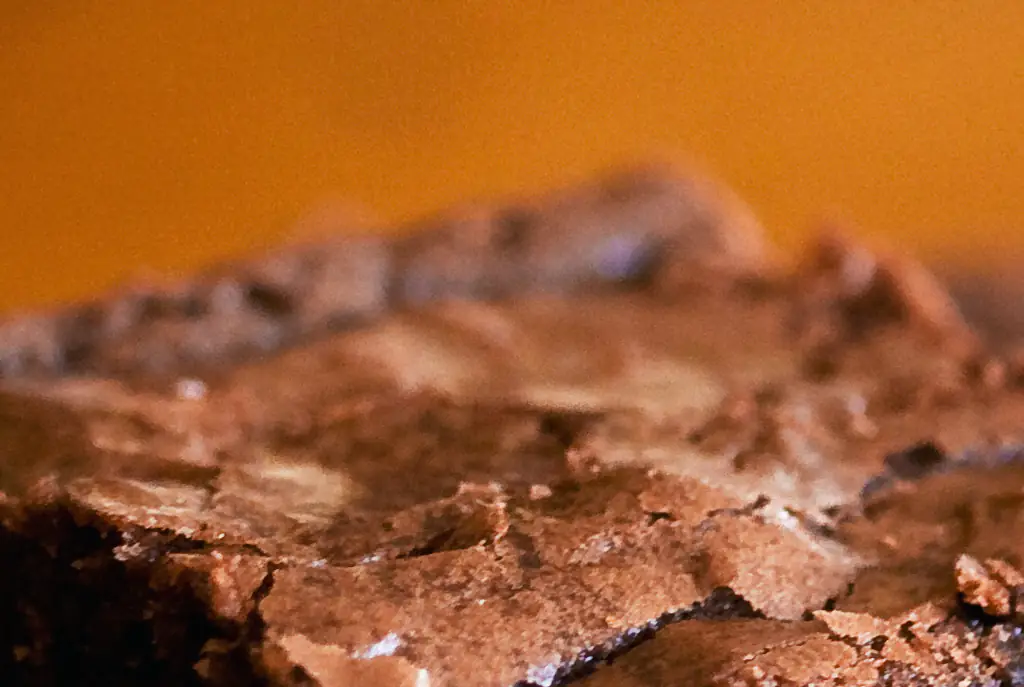
A college student from Wisconsin suffered a fatal allergic reaction after being given a brownie.
Hannah Glass, 19, became severely ill after consuming a "gluten-free brownie" that sent her into anaphylactic shock, according to her family.
The teenager, who suffered from a severe peanut allergy, was given a brownie at Maranatha Baptist University that contained roasted peanut flour.
Speaking to WISN12, her father, David Glass, recalled the moment he realized something was wrong with his daughter.
"The second bite, she knew something was wrong," he recalled, noting that Hannah started breaking out in hives and vomiting. "We believe because this product contained roasted peanut flour, separate from oily peanut butter, that masked this."
The freshman contacted her family as soon as it happened, stating that this did not feel like any other previous reactions she'd suffered as a child.
The situation took a turn for the worse after Hannah took some Benadryl and laid down on her stomach leading her to experience shortness of breath, discomfort, a collapsed lung, and eventually, she lost consciousness altogether.
Her parents rushed down to the campus to help her, but even after administering her EpiPen, Hannah remained unresponsive.
The emergency services were called to the scene before they started administering life-saving aid to the teenager, but it seemed to be no use.
Taking to Facebook, the family released a lengthy statement detailing their heartbreaking ordeal.
"[The doctor] told us that she began having seizures between Watertown and Froedtert," the statement posted to Hannah's personal Facebook account read. "This was an indication that her brain was severely damaged.
"Without getting into every detail of the next five days, it is easy enough to say that we were informed that the situation was bleak, but due to her age and good health, she was definitely going to be given every available opportunity and option to save her life."
However, during that time, the family received some terrible news.
"The majority of her brain was unmistakably, seriously, critically, and without the life-sustaining measures in place, TERMINALLY damaged. There were no conversations about quality of life or anything like that. This was only life and death," the statement continued.
So the family made a difficult choice and stated - that despite losing their loved one - Hannah's story did have a silver lining.
"At this point, there was no actual decision to be made, except that we decided to donate her body to help others have the chance at life that she no longer had and to prevent other parents or loved ones from having to endure the torture that we had over the previous week," Hannah's loved ones said.
"We suffered here, but she was and will forever remain free and others have a chance to live! We are blessed," the post concluded.
Hannah's heartbroken parents took their daughter off life support on November 10, 2024 - five days after Hannah had initially consumed the brownie - and have used this tragedy to help prevent others from suffering the same fate.
In the wake of the incident, hundreds of family members, friends, and medical staff lined the hallways of Froedtert Hospital for an emotional 'Honor Walk' as Hannah was wheeled into surgery for her organs to be donated.
CBS58 reported that the 19-year-old's primary organs have since saved four lives.
It is estimated that 1 in every 3000 inpatients in US hospitals suffers from an anaphylactic reaction according to the JAMA Medical Network. Furthermore, the risk of death among those who suffer a reaction has been estimated to be about 1%, with as many as 500 to 1000 deaths annually.
Our thoughts go out to Hannah's family and loved ones at this time.
us3 min(s) read
In the wonderful worldwide passion that is the consumption of food (I dare you to find someone who doesn't like eating), there's nothing sadder than not having the means to eat anything at all, or having certain foods stricken off the menu through no fault of your own.
While modern science is doing its level best to ensure food security across the globe; sometimes, for seemingly no reason, your body reacts to certain foods in bizarre - and as we'll see here, deadly - ways.
It's every parent's worst nightmare to be forced to bury their own child, and it's a situation that's sadly befallen Kellie Travers-Stafford, mom to 15-year-old Alexi Ryann Stafford, who tragically died after accidentally eating a cookie that contained peanut - which she was deadly allergic to.
[[facebookwidget||https://www.facebook.com/ktraversstafford/posts/10156328174096271]]
"Our whole lives we dedicated to keeping our child safe from one ingredient, peanuts," said Travers-Stafford in a now-viral Facebook post dedicated to her daughter. On June 25, Alexi had been over at a friend's house, just like any other teenager, when she spotted a open packet of cookies.
With the top flap of the cookies eerily similar to what she was allowed to eat at home, Alexi took a bite of the cookie, but this turned out to be a fatal error. According to her mom, these cookies had an extra ingredient: peanut butter.
"She started feeling tingling in her mouth and came straight home. Her condition rapidly deteriorated. She went into Anaphylactic shock, stopped breathing and went unconscious. We administered 2 epi pens while she was conscious and waited on paramedics for what felt like an eternity. "
But sadly, all of those efforts were in vain. Alexi tragically lost her life - within an hour and a half of ingesting the cookie, and rather than blame herself for her daughter's tragic misstep, Kellie Travers-Stafford says that the company involved could have done more to highlight the difference between the various types of cookie.
"As a mother who diligently taught her the ropes of what was okay to ingest and what was not, I feel lost and angry because she knew her limits and was aware of familiar packaging, she knew what 'safe' was. A small added indication on the pulled back flap on a familiar red package wasn’t enough to call out to her that there was 'peanut product' in the cookies before it was too late."
Since its posting back on July 12, Kellie Travers-Stafford's post has been shared over 75,000 times - with many commenters throwing their support behind this grieving mother, her child taken from her in such agonising fashion.
"Yes, it would be helpful if a peanut warning was made in a specific colored package. So very sad," said one such commenter, while another said: "This is my greatest fear being a Mom of a child with peanut allergy! My heart goes out to her family." But at this point, commiserations are of little use to this heartbroken mother.
"It’s important to us to spread awareness so that this horrible mistake doesn’t happen again," she said.