Uncategorised3 min(s) read
uncategorised3 min(s) read
film & tv3 min(s) read
The new Peter Pan movie has received backlash after Disney cast a Black actress as Tinker Bell, with some people having unwarranted outrage and others questioning why original characters aren't being written for Black performers.
Peter Pan is a story that has been loved through generations since it was first thought up by Sir James Matthew Barrie in Scotland in the early 1900s.
There have been many retellings of the classic story, with the late Robin Williams arguably performing the most notable portrayal to date.
Disney has an abundance of stories to choose from, and they seem to enjoy creating modern remakes of classic films and Peter Pan is the latest story to receive such treatment.
See the trailer for Peter Pan & Wendy below:The announcement has received backlash from certain corners of the internet after Black-Ish star Yara Shahidi was cast as the iconic fairy, Tinker Bell.
It seems important to remember that Tinker Bell is completely fictional, and fairies don't actually exist, so a Black actress getting the role shouldn't warrant the outrage that it has.
Whilst it's good to pay homage to the classics and to love them for what they accomplished when they were first released, arguing that Tinker Bell should remain white due to previous portrayals seems odd.
One individual took to Twitter to write: "This is just woke nonsense. Turning historically white characters black is white-erasure & lame. Please stop."
Others have questioned why Disney is casting Black performers in classic roles instead of writing new, original stories with Black leads.
"There are incredible African stories to be told. Why does Hollywood continue to ignore this and just casts them in remakes? Mami Wata should be made by Disney. It is currently on the market with little coverage, especially by social media," one Twitter user wrote.
Of course, despite the negative critics getting all frustrated over a fictional pixie, there were plenty of Disney fans who couldn't wait to see Shahidi as the sassy Tink.
One Twitter user rightfully pointed out: "tinkerbell is a fairy, fairies don't exist stop complaining yara shahidi will be amazing [sic]".
A second praised: "I have no idea who Yara Shahidi is but she looks amazing as Tinkerbell and I wish her the best in the role."
Another social media user added: "Yara Shahidi looks really stunning and cute as Tinkerbell in #PeterPanAndWendy. It bugs me so much that older racist folks are making such big deal that a young beautiful black actress is playing an iconic fairytale character for a new generation knowing their childhood is over."
And let's just say it louder for the people at the back:
The latest version of The Little Mermaid has received similar backlash after Black actress Halle Bailey was cast in the leading role of Ariel.
Speaking to THE FACE magazine, the 22-year-old gave her thoughts on the unwarranted criticism she has received: "As a Black person, you just expect it and it’s not really a shock anymore."
Speaking on her YouTube channel, Bailey explained why casting Black performers in classic stories is important: "I want the little girl in me and the little girls just like me who are watching to know that they're special, and that they should be a princess in every single way. There's no reason that they shouldn't be. That reassurance was something that I needed."
She went on: "It was an inspiring and beautiful thing to hear their words of encouragement, telling me, 'You don't understand what this is doing for us, for our community, for all the little Black and brown girls who are going to see themselves in you."
Bigotry hidden behind claims of wanting to keep classic stories "faithful" to the original is still bigotry.
Regardless of the backlash, both Shahidi and Bailey are sure to shine in their roles!
opinion12 min(s) read
For the purpose of this article, I will be focusing primarily on mixed-race individuals with an experience that mirrors my own; a black parent and a white parent.
Representation of people from ethnic minority backgrounds in film and television has been a recurring topic for some years now.
And what has been unsurprising to me as someone who has a German mother and a Zambian father is that biracial people are often overlooked in any discussion on diversity.
It’s unsurprising because it's what I'm accustomed to - but that doesn't make it any less frustrating.
It mostly boils down to the fact that in almost every society, the concept of being mixed-race just isn’t really a "thing". To most people, race is quite literally a black-and-white concept, with no middle ground, no nuances, or grey areas.
People with any black heritage are often conflated into one single category as though we were all just one homogenous group - with no individual backgrounds and continents of origin.
Did you know, for example, that Nicki Minaj (real surname: Maraj) is of part-Indian descent? I'm guessing not.
And incredibly, despite mixed-race individuals being one of the fastest-growing minorities, there still wasn't a "mixed-race" category in the most recent US census of 2010.
Society's constant dismissal of "mixed-race" as a racial identity meant that growing up, the characters in the mostly American TV shows and films I watched were never mixed-race.
And why would they be? After all, there's no such thing as being half black and half white, right?
Now, I don’t mean to say that biracial actors were never cast. However, even when the actors themselves were mixed-race, the actual characters they played were not. That is, their onscreen parents would not be portrayed by a black actor and a white actor.
In fact, as far as I can remember, the first time I'd ever seen a specifically half black/half white character in a mainstream American movie was in 2011's Bridesmaids when I was 17 years old.
In a fleeting moment at the engagement party of bride-to-be Lillian (Maya Rudolph), the camera briefly pans over to her parents, a white mum, and a black dad. (Yes, mixed-race representation really is that simple.)
So to clarify, I had seen just one mixed-race character in an American film before the age of 18 - and plenty of American films and TV shows in which biracial actors were cast not to play biracial characters.
Oscar-winning actress Halle Berry
Clueless' Stacey Dash
High School Musical's Corbin Bleu
The Cosby Show's Lisa Bonet
The Fresh Prince Of Bel-Air's Karyn Parsons
Recently cast live-action Tinkerbell Yara Shahidi (Black and Iranian)
The Vampire Diaries' Kat Graham
My Wife and Kids' Parker McKenna Posey
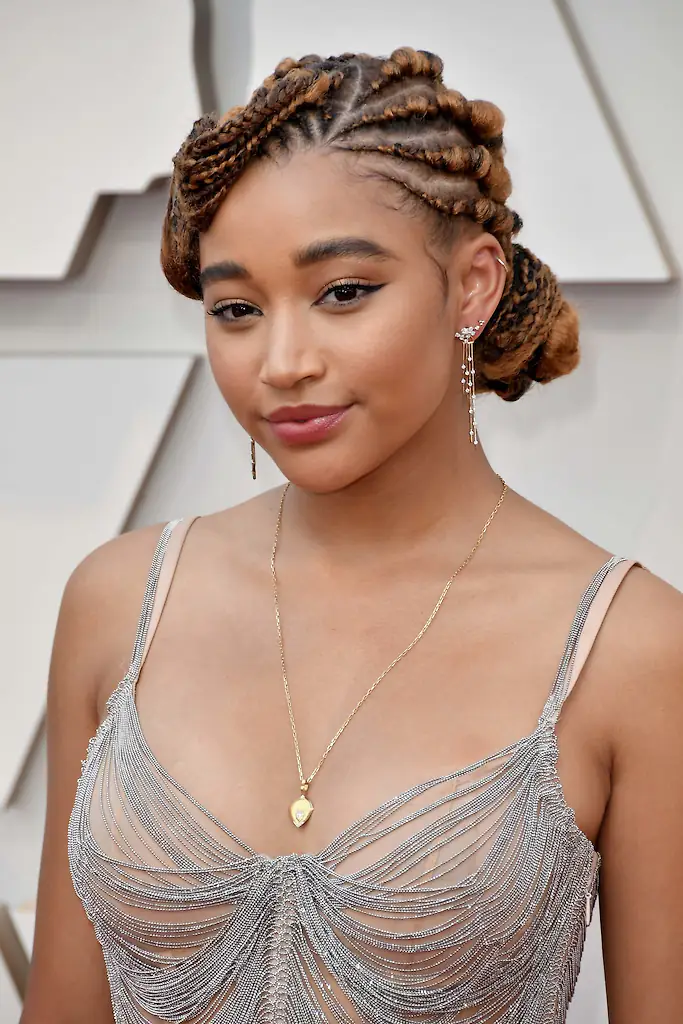
The Hunger Games' Amandla Stenberg
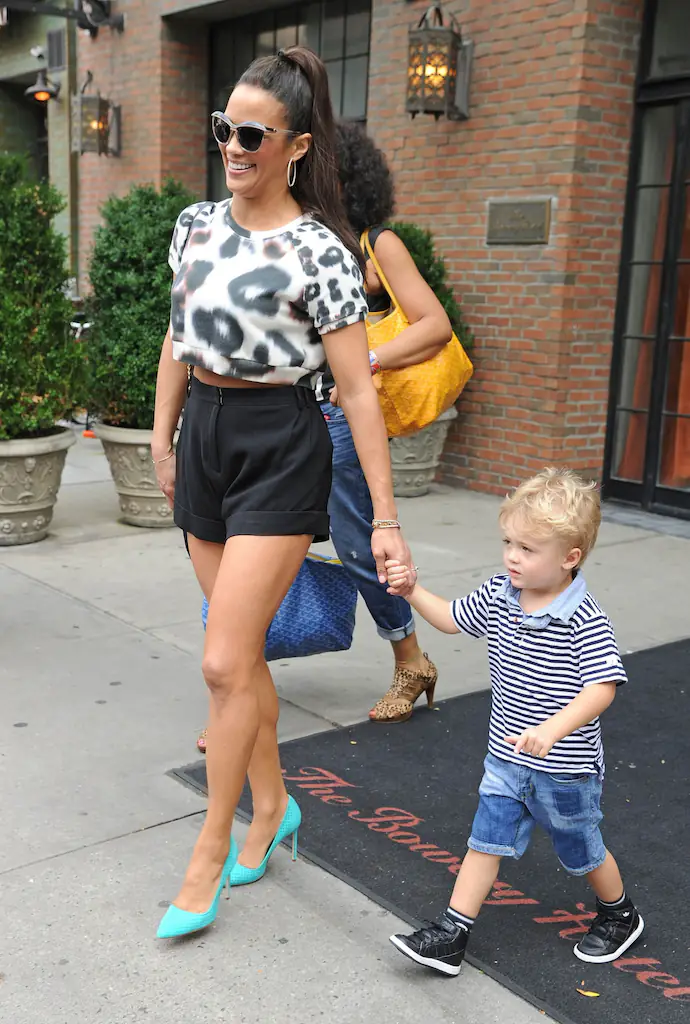
Precious' Paula Patton
So, why is it that almost every single time a mixed-race actor is cast in a role, they suddenly cease to be mixed-race?
Is it somehow offensive to portray a character as being the child of both a black parent and a white patent?
Is it somehow ludicrous of me to think that my own mum (who happens to be white) is just as much a part of me as your mum is a part of you?
Or is she really as irrelevant to my life, my existence, and my ethnicity as Hollywood would have me believe?
The influence of film and television should never be underestimated. And I honestly believe that the lack of mixed-race characters in Hollywood has led to widespread ignorance about real-life mixed-race people.
In fact, our society is so accustomed to believing that mixed-race people are black only, that people are actually shocked (and this is based on my own personal experience) when it turns out we have a white parent as well as a black parent.
Even in cases where our skin tones and features are evidently a mixture of our darker-skinned parent and our lighter-skinned parent.
I grew up watching - or at least being aware of - "white family sitcoms" like Full House and Modern Family, as well as "black family sitcoms" like The Cosby Show and The Fresh Prince of Bel-Air.
But where were the black and white family sitcoms?
The short answer is there weren't any. In fact, until 2019's premiere of ABC sitcom Mixed-ish, I can confidently assume there had not been a single one.
On a more positive note, I would say that film and TV in the UK - specifically in England - tends to be a lot more inclusive of mixed-race people.
While there are nowhere near as many sitcoms and blockbusters in the UK, there are many popular, long-running soaps such as Eastenders, Hollyoaks, Emmerdale, and Coronation Street.
In many UK soaps, there have been a number of half black/half white actors playing mixed-race characters. These include Hollyoaks' Dominique Jackson and Chelsee Healey, and Eastenders' Jessica Plummer and Belinda Owusu.
Sitcoms such as Chewing Gum and Sex Education have also featured mixed-race characters.
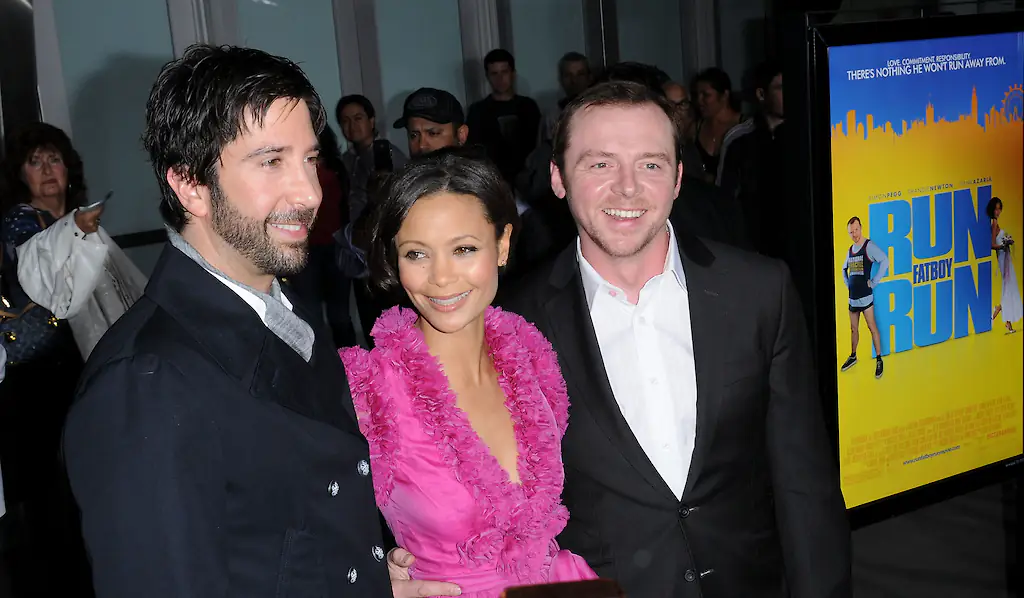
And 2007's Run Fatboy Run is one example of the UK's comparatively small overall film output, which happened to feature a mixed-race character in the main cast, played by Thandie Newton.
I should point out, though, that these are primarily London-based productions and they certainly don't signify that half-black people are recognised as mixed-race in the UK as a whole.
But the point is, if mixed-race characters can be included in UK-based programs, there’s no reason why that shouldn’t be the case in the US. Particularly as the US is a much bigger country with a much more substantial film industry.
Part of the reason that being mixed-race isn’t considered a feasible concept in the US is that "full" African Americans themselves tend to have varying amounts of European ancestry - mostly tracing back to the days of the transatlantic slave trade.
In fact, according to The New York Times, scientists have found that around 16.7% of the average African American's ancestry is European in origin.
Now, we don’t consider the average African American to be mixed-race even when they do have non-African ancestry, so why differentiate simply because a member of the community happens to have a white parent?
I would argue, however, that this fact does not have to mean that mixed-race people (that is, those with parents of different races) should not be portrayed as just that - mixed race.
And unless it's due to a personal dislike of interracial families - I don't really see how you could argue against it.
One of the most high-profile mixed-race actors in Hollywood right now is recent Emmy-winner Zendaya.
The 24-year-old had her breakthrough role back in 2010 as Rocky Blue in Disney’s Shake It Up.
Now, in real life, Zendaya has a white mum and a black dad. But surprise, surprise, when casting her character's parents, execs of the show (thinking it was 1910 rather than 2010) chose not to portray them as an interracial black and white couple.
Interestingly, some argue that this type of casting actually benefits mixed-race actors, who are often considered "light-skinned" black people in the African American community.
It is argued that "light-skinned" black people are seen as the more "palatable" face of the black community, and are therefore able to secure more roles.
In fact, Zendaya herself once agreed with this theory, saying she was Hollywood's "acceptable version of a black girl".
"As a black woman, as a light-skinned black woman, it's important that I’m using my privilege, my platform to show you how much beauty there is in the African-American community," she said speaking at 2018's BeautyCon Festival.
"I am Hollywood's, I guess you could say, acceptable version of a black girl and that has to change," she added.
This is a valid critique that applies to the entertainment industry as a whole, where black artists with significant European heritage tend to - with some exceptions - find it easier to achieve mainstream popularity.
In the music industry, performers like Drake, Beyoncé, and Barbadian-born Rihanna have become the face of the black community, leaving some darker-skinned African Americans to feel that they themselves don't cater to a Western audience.
This, as well as the marginalisation of mixed-race identities, needs to be addressed.
Now, I don't want to jump the gun here, but I do feel that it is changing - albeit incredibly slowly.
In fact, nearly a decade on from her days as a Disney starlet, and Zendaya is now starring in HBO's Euphoria - in which, miraculously, her character’s mum happens to be black and her dad white. (Again, mixed-race representation really is that simple.)
Other examples of mixed-race characters I have encountered in recent years include:
American Honey's lead character, Star (Sasha Lane), Glee character, Jake Puckerman (Jacob Artist), Grey's Anatomy character, Jackson Avery (Jesse Williams), and 13 Reasons Why character, Jessica Davis (Alisha Boe).
As fantastic as this is, it would be great to get to a point where I don't instinctively double-take every time I see a mixed-race actor playing - you know - a mixed-race character.
Because contrary to what mainstream media would have you believe... black and white are not mutually exclusive.
uncategorised6 min(s) read
1. Breakfast At Tiffany’s
Breakfast At Tiffany’s is a delightful movie brought by its inclusion of a toxic Japanese caricature. Brooklyn-born Mickey Rooney played Mr Yunioshi, Holly Golightly’s cantankerous Japanese upstairs neighbour, but the portrayal was problematic given that Rooney was not Japanese and put on an awful accent, as well as donning thick glasses and fake teeth for the role. The actor was said to be “heartbroken” at the modern day reassessment of the movie as “horribly racist”, but no one can deny that his casting and his acting - described as “broadly exotic” at the time - pushes whitewashing to its absolute limits.2. Exodus: Gods And Kings
Despite taking place in the Middle East and north Africa, white movie actors were still cast in the main roles of biblical epic Exodus: Gods and Kings. Amid public uproar, director Ridley Scott and lead actor Christian Bale spoke openly - and unapologetically -about whitewashing in Hollywood, arguing that attitudes had to change before white people stopped snatching roles. Scott himself blamed studio bosses, saying: "I can’t mount a film of this budget … and say that my lead actor is Mohammad so-and-so from such-and-such. I’m just not going to get it financed," while Bale stated "If people start supporting [north African and Middle Eastern] films more and more, then financiers in the market will follow."3. Gods Of Egypt
You would've thought the producers and director of Gods Of Egypt would have known better than to whitewash Egyptian deities and demigods, but you would have had far too much faith in Hollywood to honestly believe this. In fact, almost all of the actors in fantasy action adventure movie were white, aside from a token appearance from black American actor Chadwick Boseman. But director Alex Proyas wasn’t susceptive to criticism, instead choosing to call reviewers “a pack of diseased vultures pecking at the bones of a dying carcass”, as well as “deranged idiots” in response.
4. The Conqueror
No one needed to see cowboy archetype John Wayne starring as a Mongol warlord, but that’s not to say it didn’t happen in 1956 film The Conqueror. With the help of an abnormal amount of make-up, the all American star stepped up to portray the future leader and looked completely and utterly ridiculous doing so. Nevertheless, karma appears to have bitten back in this case; the film was a massive flop, with some critics naming it as “the worst film in history”.
5. A Mighty Heart
It’s a shame that the film that is generally regarded as Angelina Jolie’s greatest is also regarded as yet another truly awful instance of whitewashing in Hollywood. Despite coming from a Caucasian background, Jolie was cast as Mariane Pearl, an Afro-Cuban French journalist, the wife of an American journalist who was kidnapped and murdered in Pakistan. The initial casting was bad enough, but Jolie’s performance in the film was also heavily criticised as she used a “challenging accent” and wore an afro hairstyle.6. Othello
While it’s true that back in the day “blackface” was perfectly acceptable, nowadays people admit that the act of using theatrical make-up to make white actors black is pretty disgraceful. But it didn’t stop it from happening in the 1965 version of Othello when Sir Laurence Olivier played the Moor. However, at least this blackface in particular had critics discussing whitewashing afterwards for one of the first times. Apparently during a rendition at London’s Old Vic in 1964, some of Olivier’s make-up rubbed off when touching Desdemona and people began questioning whether a white man should ever play the role again.7. Aloha
Initially Aloha seemed like the perfect film, namely because it was set in ideal Hawaii and featured an all-star cast including Emma Stone and Bradley Cooper. But the movie was thrown into disrepute when it was pointed out that the island state has a 70% non-white population, yet the movie actors were all Caucasian. To make things even worse, Stone’s character was even described as being ‘half-Chinese and half-native Hawaiian’.8. Argo
Ben Affleck’s Argo shows that even Oscar-winning hits can make big mistakes when it comes to whitewashing. Affleck turned heads when he starred as the CIA operative who masterminded the escape of six US embassy employees from Tehran during the 1979 hostage crisis, but critics where quick to point out that the character’s name was Tony Mendez and speculated that a Latino should have played him. However, in an interview, the real life Tony Mendez stated that he didn’t consider himself Hispanic, and had no reservations about Affleck portraying him, instead insisting that the issue was how society regularly discriminated against Latinos.9. Doctor Strange
When Tilda Swinton clinched the role of the Ancient One in Marvel’s Doctor Strange, she claimed she had grown up reading the comics and was incredibly familiar with the characters. The problem with her nostalgic declaration? In the comics, the character is Asian, so should the acclaimed actress really have taken the role with this knowledge in hand? In the film’s defence, writer Robert Cargill claimed that the filmmakers felt they couldn’t cast the role as it was seen in the comic, as it was a “racist stereotype who comes from a region of the world that is in a very weird political place”. But, was this strong enough justification for whitewashing?10. The Great Wall
When accused of Hollywood whitewashing with his role in The Great Wall, Matt Damon bit back claiming that the role of William Garin was meant to be white; he stated “The whole idea of whitewashing, I take that very seriously ... it’s a monster movie and it’s a historical fantasy and I didn’t take a role away from a Chinese actor. It wasn’t altered because of me in any way.” However, this didn’t stop critics from tearing apart the film still, claiming that, even if it didn’t whitewash, it was guilty of having a heroic white man swoop in to save other races. These 10 examples just go to show that no matter what excuses movie bosses come up with, they should never be let off the hook for whitewashing in Hollywood. The key to equality is not erasure, but inclusion and we hope to see ethnic minorities in their rightful roles soon.entertainment3 min(s) read
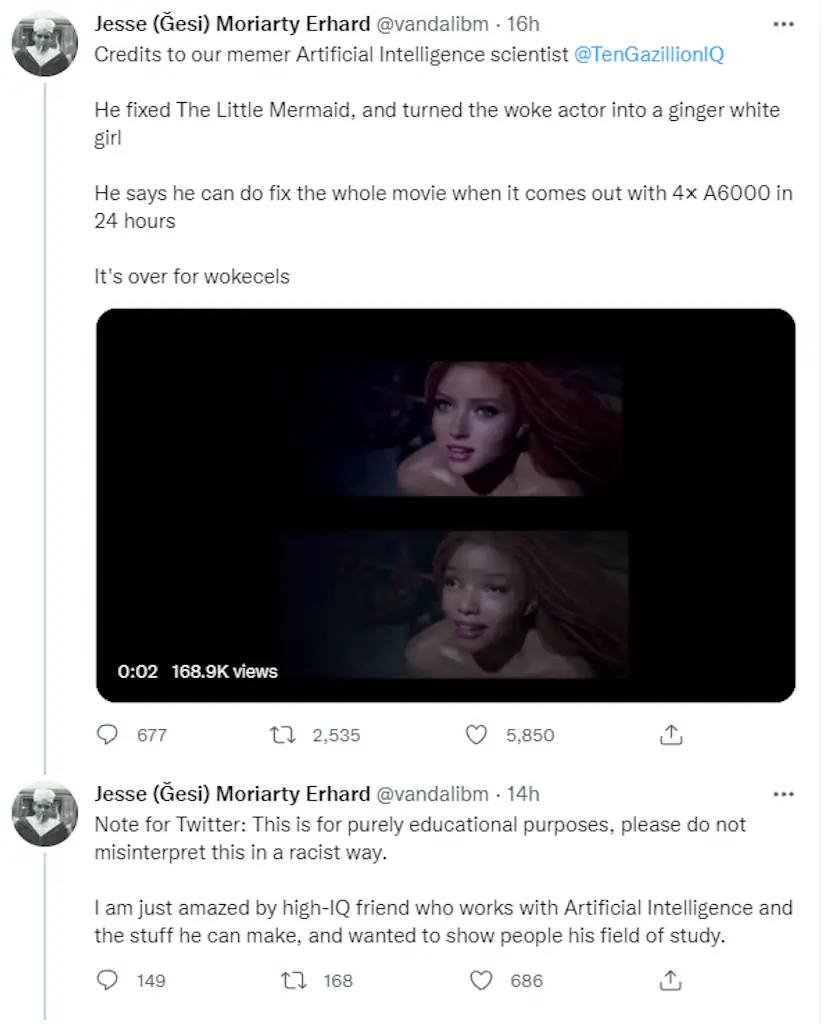
An Artificial Intelligence artist has sparked backlash after making a digitally altered version of the new The Little Mermaid trailer, replacing Halle Bailey with a white woman.
The trailer for the live-action remake - which was unveiled by Disney at the d23 expo on September 10 - has amassed over 16 million views in just five days.
However, the forthcoming animation has also received criticism from people who do not wish for Ariel to be portrayed by a Black woman. Thus far, the teaser trailer has garnered a shocking 2 million dislikes.
The ongoing discourse intensified when one user on Twitter used AI technology to transform the 22-year-old singer into a white woman - much like her previously animated counterpart.
In a now-deleted tweet from a suspended Twitter account, the tweet had read: "Credits to our memer Artificial Intelligence scientist @TenGazillioinIQ."
"He fixed The Little Mermaid and turned the woke actor into a ginger white girl. He says he can fix the whole move comes out with 4x A6000 in 24 hours. It's over for wokecels."
In a follow-up tweet, they continued: "Note for Twitter: This is for purely educational purposes, please do not misinterpret this in a racist way."
"I am just amazed by a high-IQ friend who works with Artificial Intelligence and the stuff he can make, and wanted to show people his field of study," the now-suspended account added.
As you can expect, the tweet generated a slew of angry responses from fans who pointed out the racism and absurdity of changing the character's skin color.
One user wrote: "I'm not racist, I just 'fixed' a kid's movie by changing the main character's race. Totally not racist," while another user sarcastically reacted: "Please do not interpret my blatant racism as racism."
A third user chimed in, writing: "Someone used AI to make the Little Mermaid white. Just don't watch the movie. Okay? Like why go to all this trouble? What point are you trying to make? 'They won't replace us!!' No one's replaced anything? The animated version is still available? Like...what's wrong with you?"
Despite all the negativity, many parents took to TikTok to share their children's positive reactions to seeing a Black woman as the beloved mermaid.
One user on Twitter did the honor of compiling all the heartwarming reactions under a thread to share the positive side of the Grammy-nominated musician playing Ariel.
In an interview with People, Bailey spoke on the importance of representation in the movie and how she will have the opportunity to inspire a younger generation.
"The fact that now it's getting to be played by me, a person who looks like me, woman of color, I'm just like, wow, I'm so grateful [for] what it will do for all the other little Black and brown boys and girls who will see themselves in me," she said.
"Because I know if I had seen myself when I was younger, I think my whole perspective would've changed," she added, explaining that she put her "all and passion" into the project.
The highly anticipated flick also stars Melissa McCarthy, Jonah Houer-King, Jacob Tremblay, Awkwafina, Javier Bardem, Daveed Diggs, and Simone Ashley.
The Little Mermaid is set for release in theaters on May 26, 2023.