


Stories2 min(s) read
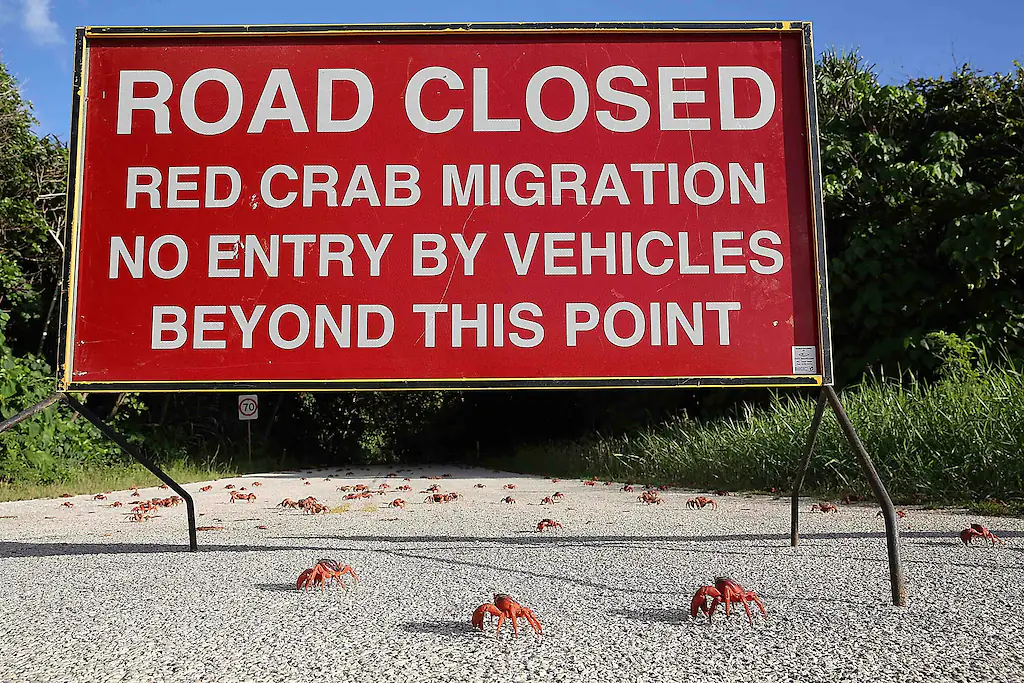
Breathtaking moment 50 million bright red crabs shut down roads as they migrate to the ocean

Millions of flame-red crabs have started their annual migration from the jungles to the beaches of Christmas Island.
The island - located just off the coast of Western Australia - is home to over 50 million red crabs, whose yearly march to the ocean shuts down roads and is known as one of the most wondrous phenomena of the natural world.
Tourists come from far and wide to watch the crabs swarm across the island. Videos and photos have captured whole sidewalks and crossings taken over by the sea of red crustaceans, while visitors are encouraged to leave their cars so they can stand among the crabs.
There are so many crabs on the roads that on Sunday, residents of the Drumsite settlement were unable to leave their neighborhood, 9News reports.
Christmas Island National Park staff are well accustomed to dealing with the mass migration, which happens every year around October/November time with the first rains of the wet season.
As well as shutting down roads, sweeping crabs onto sidewalks, and putting up barriers, the staff even go as far as building special bridges which the crabs can use to avoid traffic.
The migration is essential for the crabs to reach their seaside breeding grounds. Male crabs begin the march from their jungle home and are joined along the way by the females.
Once they reach the beaches, mating begins. Each female crab will then release a staggering 100,000 eggs into the Indian ocean before returning back to their homes.
The vast majority of the baby crabs will be feasted on by fish, manta rays, and whale sharks. Those that survive will return to the shores of Christmas Island a month later.
Dr Tanya Detto, an invasive species program coordinator at Christmas Island, told Daily Mail Australia that while they could predict the crustacean's route it altered slightly every year.
She also said that they hadn't seen so many migrating crabs since 2005. "It's been really nice to see them being funneled away from the traffic and getting there safely," she said.