


Stories5 min(s) read
Major theory about what Harambe planned to do with child who fell in enclosure

A major theory suggests what Harambe may have been trying to do with the child who fell into his enclosure.
What began as a routine day at Cincinnati Zoo ended in tragedy on May 28, 2016, when a three-year-old boy climbed over a three-foot barrier and fell into the gorilla habitat.
At the time, the 17-year-old silverback gorilla lived in the enclosure alongside two females.
When zoo staff urgently called the animals indoors, the females retreated, but Harambe remained behind and focused his attention on the child.
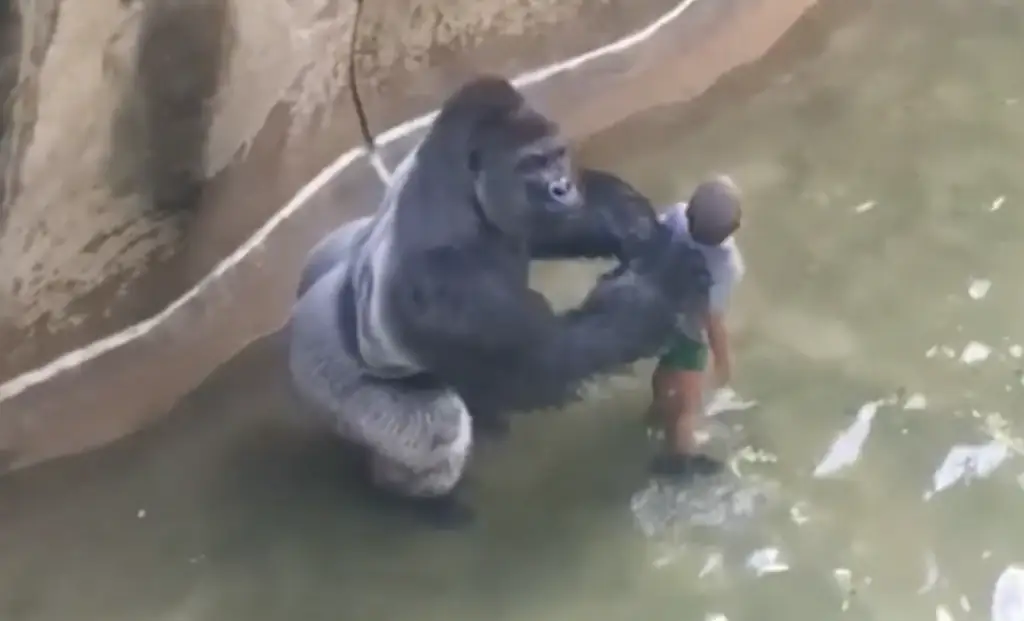
As horrified visitors looked on, the 400-pound gorilla switched between lifting the boy and pushing him back down, becoming increasingly agitated as panic spread through the crowd.
Once the child became trapped between Harambe’s legs on dry land, the zoo’s Dangerous Animal Response Team decided to fatally shoot the gorilla.
"We are heartbroken about losing Harambe, but a child’s life was in danger and a quick decision had to be made," Zoo Director Thane Maynard said in a statement. "Tranquilizing the gorilla was not an option."
The boy's mother spoke out after backlash
The boy survived the incident with a concussion and minor scrapes, but his mother, Michelle Gregg, soon found herself at the center of an intense public backlash.
Responding to the criticism in a statement shared on Facebook, she wrote: "As a society, we are quick to judge how a parent could take their eyes off of their child, and if anyone knows me, I keep a tight watch on my kids," per Metro.
"Accidents happen," she bluntly said, adding: "But I am thankful that the right people were in the right place today."
She also thanked those who had reached out and shared: "My son is safe and was able to walk away with a concussion and a few scrapes… no broken bones or internal injuries."
A Change.org petition demanding that Gregg be held accountable attracted more than half a million signatures before eventually being closed.
No charges were ever filed.
Was Harambe trying to save the boy?
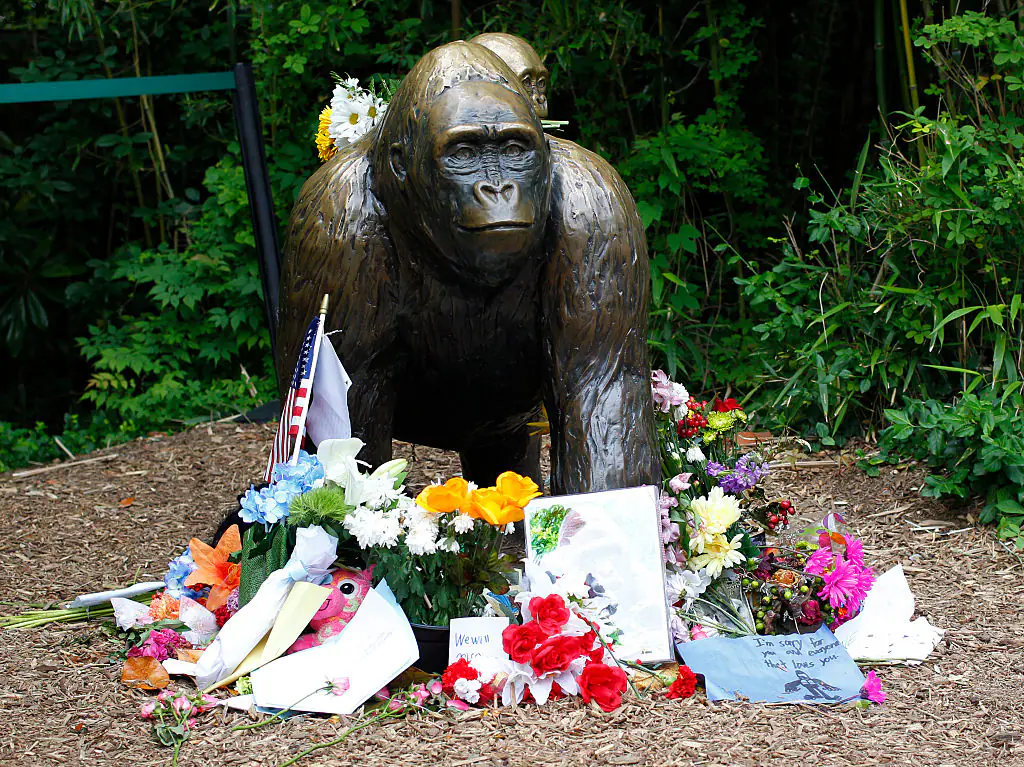
Harambe's death evolved into a bizarre cultural phenomenon, inspiring endless internet memes and a physical statue.
The narrative around the incident was revisited in filmmaker Erik Crown's documentary, Harambe, which was released on September 24, 2023, to coincide with World Gorilla Day.
Speaking with UnchainedTV, Crown explored the ultimate question: Did Harambe actually intend to harm the child?
He suggested that the silverback was completely misunderstood, claiming that the ape was actually "trying to return the boy to his parents" and that panic in the zoo sealed his fate.
"Understandably, they were very frightened for the child's safety," Crown noted. "But that fear created a series of chaos and confusion which led to his death opposed to an understanding of animal behaviour. If he wanted to harm the boy he could've in an instant."
However, zookeeper Amanda O’Donoughue disagreed with this theory, stating: "I keep hearing that the Gorilla was trying to protect the boy. I do not find this to be true," per Bored Panda.
"I have watched this video over again, and with the Harambe's posturing, and tight lips, it’s pretty much the stuff of any keeper’s nightmares," she added.
Why Harambe was killed
The documentary also explored why officials chose to shoot Harambe rather than use a tranquilizer.
According to Crown, "tranquilizers don't work the way people think of in movies," explaining: "You don't fire a tranquilizer dart and somebody goes down, it actually puts the system into overdrive which then shuts the system down."
"It can take up to 20, 25 minutes to become active, especially inside of a large gorilla. That may have agitated Harambe, may have led to a different outcome or a very dangerous outcome for the boy."
The filmmaker added: "As much as we would have liked to have seen a non-lethal ending to it, I don't believe the zookeepers necessarily had a choice with the way their program runs, and that is exactly why we feel we should not have endangered animals in captivity anymore."
White House's bizarre tribute
On Wednesday (May 27), the White House surprised social media users by posting a tribute to Harambe for the 10th anniversary of his death.
"On this day in history, Harambe would have celebrated another birthday. An icon that became part of internet history, American culture, and an entire generation’s timeline," they penned.
"Tomorrow marks 10 years since we lost him. Ten years since the moment the world stopped scrolling and collectively mourned something bigger than a meme."
"He became a symbol of loyalty, strength, chaos, unity, and the strange beauty of the internet bringing millions of people together for one cause: never forgetting Harambe."
The post concluded by saying his "legacy lives on" and describing the gorilla as a "true patriot."
Safe to say, plenty of people were left scratching their heads over the unexpected tribute.
"Glad to see the White House is laser focused on the key issues of the day," one user quipped, while another added: "This is the official white house post. You can't make this sh** up, even in a movie."