Uncategorised3 min(s) read
against the odds1 min(s) read
Grappling with a life-threatening illness is a difficult ordeal for anyone, but imagine having to contend with one as serious as leukemia at just a few months old.
Well, now aged four, Josh Stockhill was one such child. He fell ill from the potentially fatal cancer twice in his short life, per SWNS. Defying the odds, he has recently started school.
Josh, who has three older brothers and a younger brother, was just eight months old when he was diagnosed with acute lymphoblastic leukemia.
Learn more about brave boy's touching story:
[[jwplayerwidget||https://content.jwplatform.com/videos/3yhzOWxp-Q0L14jDU.mp4||3yhzOWxp]]
Naturally, his parents Kirsty Knighton and 36, and Craig Stockhill, 40, were devastated by the news.
"We started noticing him coming out in bruising, which we thought was a bit strange as he wasn't even moving about at that point," Kirsty said per SWNS.
She continued:
"We took him to the doctor, who sent us to Peterborough City Hospital for a blood test.
"They told us they suspected leukemia, and they sent us to Addenbrookes Hospital at 8pm that same evening, where we were told he had infantile acute nymphoblastic leukemia.
"We were devastated. We were absolutely floored by it. We never, ever thought it would be that."
According to the UK's National Health Service (NHS), acute lymphoblastic leukemia is a rare type of cancer that affects white blood cells. It can progress quickly and aggressively and requires immediate treatment.
Around 790 people are diagnosed with the condition each year in the UK.
Shortly after Josh began his "rigorous" chemotherapy, he developed sepsis, landing him in intensive care.
"We were told that there was a 50/50 chance he would make it through the night. We almost lost him at nine months old," Kirsty said.
Following nine months of treatment, the family was hit with yet more upsetting news - their now-two-year-old had relapsed. Josh was now counting on a brain marrow transplant.
"He got a rash and an abscess on his face, and we kept asking whether it had returned," Kirsty recalled.
In an attempt to find a bone marrow match for Josh, his brother Zach was tested. Unfortunately, he was not compatible.
All was not lost, however, as Addenbrooke's Hospital in Cambridge managed to find a perfect match for Josh's surgery - a patient in Spain.
Just a couple of months short of the two-year mark since Josh began treatment, the young schoolboy is now better than ever.
"We mark every milestone, and with each one he is getting better and better," his mother said. "He will be on medication for life, and under consultation for life, because of how severe his leukemia was. We don't know what the future holds for him. But he's such a jolly child. He's so excited to start school."
In the wake of the ordeal, Kirsty is encouraging people to think about donating blood.
She explained: "It was a cord blood donation from Spain that saved him. Some hospitals keep it, some don't, but it can be a real lifesaver.
"It is so, so important - if you ever get the chance to donate, please do."
us2 min(s) read
People have been left outraged after discovering that a seven-year-old girl in Alabama is selling lemonade inside her family-owned bakery to fund her brain surgeries.
Elizabeth Scott is the mother of Liza who suffered a seizure earlier this year, leading doctors to discover "multiple cerebral malformations in Liza's brain that require immediate attention to prevent further seizure, possible bleeding, hemorrhage, or stroke."
Scott said that while doctors typically only find one of these malformations, her daughter has three.
In an interview with CBS 42, she said: "She has three cerebral malformations. One is what they call a schizencephaly. So it's a cleft in the frontal lobe in the right side of her brain, and we think that's what causing the seizures."
Scott explained that her daughter now needs to have surgery at Boston Children's Hospital, 1,275 miles away from their home.
Despite Scott purchasing additional medical insurance to help fund the surgery, the family has still been left with $10,000 out-of-pocket as a result of additional travel, hotel, and medical expenses.
The seven-year-old is therefore attempting to offset some of this cost by selling lemonade for $25.
"I can't handle it. So, I hope I make it," Lisa said. "My mom keeps saying I'm going to, but I feel like I'm not."
As remarkable as little Lisa is, after her story was broken, many people took to social media to share their frustrations about the current state of the US healthcare system.
One Twitter user wrote: "The fact that a seven year old [sic] has to raise money for her own brain surgery is so unfathomably evil that no words could possibly do it justice. We need Medicare for All immediately."
A second added: "I'm so sick of articles like this. Give me a detailed explainer on why a 7-year-old girl cannot get brain surgery, who is responsible, and who is profiting. Focusing on the lemonade stand is letting everyone who created the system that forced her into this off the hook."
A third wrote: "The American pay-to-live healthcare system is inhumane. No child should have to sell lemonade to pay for brain surgery. We need a #MedicareForAll healthcare system. Everyone in. Nobody left out. No co-pays, no deductibles, free at the point of service."
Meanwhile, a fourth summed up the story, writing: "This is not a feel-good story."
Hopefully, Lisa is able to make the money she needs for her surgery.
health2 min(s) read
We all have dreams that we wish would come true: hopes and aspirations that are near and dear to our hearts, some of which are attainable, others which are impossible. Every once in a while however, an impossible dream becomes attainable, and people get what they really desire. Schoolgirl Leah McDonald had always been a hard worker: a real-life Hermione Granger who studied hard, handed homework in on time, and who never took a day off sick ... until 2015, when everything changed.
Leah, who was then six-years-old, was suffering from a bobbing eye which made her unable to control her own line of sight. Concerned, her mother Elaine consulted a doctor, and Leah was scheduled for an MRI scan as a precaution. However, Leah's condition deteriorated practically overnight, and she was rushed to Ninewells hospital in Dundee, where scans revealed that she had a suprasellar pilocytic astrocytoma - a benign tumour, but one that could cause problems if it grew any larger.
A large operation managed to remove around 70 per cent of the growth, but Leah still had to endure 18 months of chemotherapy. Leah spent most of her time in the hospital, where she missed out on a lot of her schoolwork. She tried to keep up with her studies, but the child felt frustrated that she was falling behind. Nurses at Ninewells hospital decided to contact the Make-A-Wish Foundation, who arranged things to make Leah the schoolteacher of a classroom for a day.
Commenting on her daughter's experience in a recent interview, Elaine stated: "It all happened in the summer of 2018, as we had a lot going on with Leah and all her hospital appointments, so had to wait a while. But it was amazing. First, they sent her through lots of lovely things in the post – a lanyard to hold her ‘teacher’s ID card,’ a personalised notebook and so on. Then, they picked her up in a limo and took her off for a pampering session to prepare her. On the day itself, she was so confident, leading the class all day and even awarding some certificates.
She added: "After everything Leah has been through, it was wonderful for us as parents to have a special day of great memories. She’ll remember that day for the rest of her life, and now her heart is set on becoming a teacher for real more than ever. I can’t thank Make-A-Wish UK enough. They go above and beyond, making an amazing effort with every child."
Elaine is now a firm supporter of the Make-A-Wish Foundation, and has entered into a partnership with The Original Factory Shop. They've now a limited edition of pyjamas for the whole family, (including PJs for dogs), with £2 from every sale going to the charity. It's good to see that dreams really can come true: but I'm sure that a hard worker like Leah will manage to become a teacher for real later in life.
health3 min(s) read
A 16-year-old boy from the UK, initially believing he had a pulled muscle, was later diagnosed with a rare and aggressive form of cancer. The tumor, located in his pelvis, grew to the size of a watermelon. Despite undergoing chemotherapy and surgery, the cancer was deemed terminal.
The teenager first noticed discomfort in his hip, which he attributed to a sports injury. As the pain intensified and his mobility decreased, medical examinations revealed the presence of a large tumor. Further tests identified the cancer as a rare and aggressive sarcoma.
She told The Independent: "We went to see a nurse practitioner who lifted Jack's shirt and she didn't even touch him or examine him and within two minutes we were out she said ‘oh it’s just a pulled muscle don’t do anything and if it doesn’t go down come back in eight weeks."
The boy's mother expressed her devastation upon learning of the diagnosis. She emphasized the importance of early detection and urged others to seek medical advice if they experience persistent pain.
The family has since focused on creating meaningful memories together. They have received an outpouring of support from their local community, including fundraising efforts to help cover medical expenses and facilitate special experiences for the teenager.
A family friend commented on the community's response.
The teenager's school has also been supportive, organizing events to raise awareness about rare cancers and providing counseling services to students affected by the news.
In light of this situation, medical professionals stress the importance of paying attention to persistent or unusual pain, especially in young individuals. Early detection of cancer can significantly improve treatment outcomes.
The family continues to cherish their time together, focusing on the teenager's comfort and happiness. They remain hopeful for advancements in medical research that may one day provide more effective treatments for rare cancers.
For those interested in supporting the family or learning more about rare sarcomas, local community centers and cancer research organizations can provide resources and information.
In other news, a woman who was diagnosed with stage 4 terminal lung cancer has opened up about the five warning signs she ignored for months.
Linda Chavez was only 34 when she found out that she had Metastatic Bronchial Carcinoma after a series of misdiagnoses.
The woman, who is a wife and mother of two, claimed that for years doctors attributed her symptoms to less serious conditions.
By the time Chavez was diagnosed, the disease progressed to a terminal stage after it had spread to her brain and bones.
She now uses her TikTok page @theterminalcancershow to regularly update her followers about her condition and raise awareness about the disease.
In a recent video shared on the platform, the now-35-year-old collaborated with Young Lung Cancer Is A Thing to talk about the subtle signs she noticed before receiving her devastating diagnosis.
A GoFundMe page has been established by Chavez's brother-in-law, Kyle Gregory, to support her cancer treatment.
On December 3, an update on the fundraiser revealed that the TikToker was diagnosed with Leptomingeal dissemination disease, which means cancer has traveled to the cells of the fluid in her brain.
Due to this, Chavez will be "in [and] out of the hospital for labs, procedures, and a rigorous new infusion regime".
“It's no doubt the kids and family, friends, and even social media followers breathe life into Lin and her fight," the update continued. “To those who know Lin, she's a fighter through and through and won't go down without fighting the good fight."
lifestyle2 min(s) read
A father penned birthday cards for his twin daughters to cover the first 30 years of their lives, knowing his time was limited due to a severe brain tumor.
Nick, from West Sussex, UK, sadly passed away in 2020 at just 34 years of age. At the time, his twin daughters, Rose and Sophia, were only 17 months old.
His wife, Victoria, explained that her husband wanted to find a way to still be with them on their birthdays. She is now spearheading a campaign aimed at boosting research funding for brain tumors.
In the final six months of his life, Nick could only communicate non-verbally. Despite his personal challenges, he remained a pillar of strength for those around him.
Per BBC News, Victoria fondly remembered how he served as a pillar of strength for everyone around him, particularly for her. She felt his incredible resilience, evident in his daily commitment to work even amid his radiotherapy and chemotherapy sessions, was inspiring.
She said the birthday cards Nick wrote will offer the twins a more intimate insight into who their father was during that phase of his life.
Stepping up her campaign, Victoria is backing a petition that demands increased awareness around brain cancer.
Despite brain tumors being the leading cause of deaths from cancer among children and young adults under the age of 40, a mere 1% of the UK's cancer research funding has been allocated to them since 2002, as per recorded data.
Many people were touched by the family's story, taking to social media to share their devastation over Nick's passing.
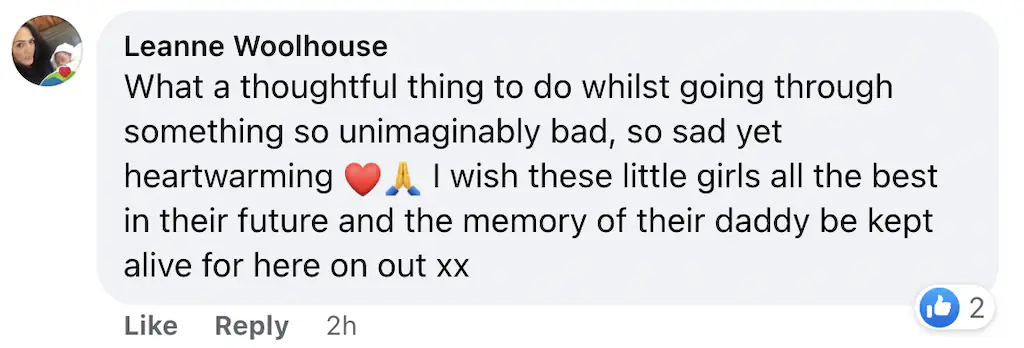
One person wrote: "What a thoughtful thing to do whilst going through something so unimaginably bad, so sad yet heartwarming. I wish these little girls all the best in their future and the memory of their daddy be kept alive for here on out."
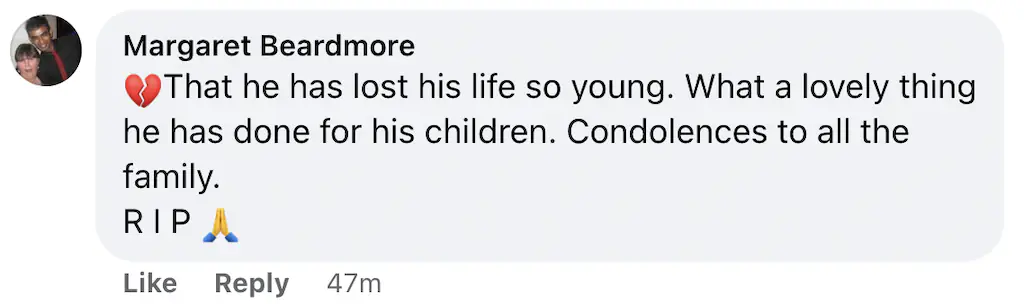
Another remarked: "That he has lost his life so young. What a lovely thing he has done for his children. Condolences to all the family."
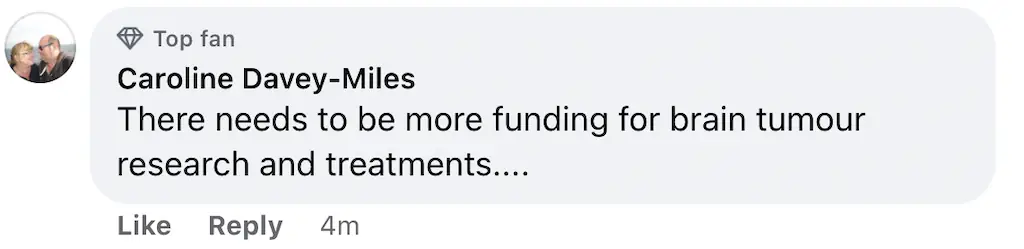
A third suggested: "There needs to be more funding for brain tumour research and treatments."