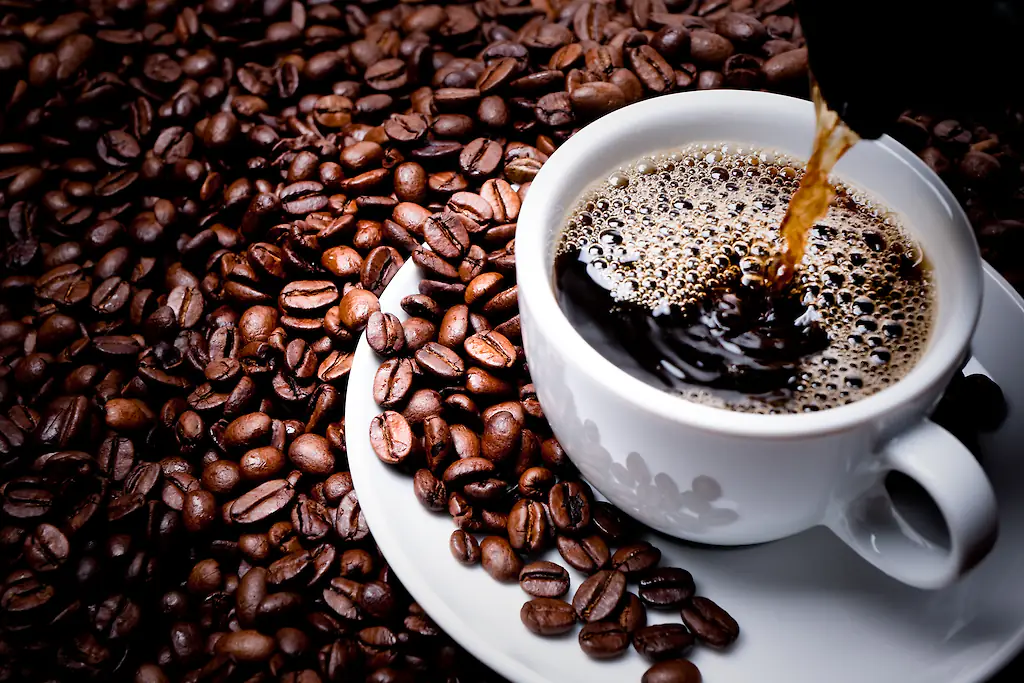
Planet earth gets through a lot of coffee. On a modern high street, few things are more pervasive than the cartoonish facade of a franchised coffee shop. The fourteenth century had the Black Death, we have Starbucks. You can run, but you can’t hide. Estimates put global daily consumption at a whopping 2.25 billion cups, giving weight to the argument that we are now all slaves to caffeine. But for all its contemporary ubiquity, the world was not always as coffee mad as it is today. Like many marriages, humanity’s relationship with coffee has taken time to properly brew. In a world where the coffee market is such a dominant force, we’ve delved into the drink’s past to get a grip on how we all became so hooked and whether there is any prospect of, or indeed point in, breaking our habit.
[caption id="attachment_12344570" align="aligncenter" width="1920"]
Credit: Pixabay[/caption]
While today coffee is grown throughout the world, the plant actually originates in tropical East Africa. Though the invigorating effects of coffee have been known since the 9th century, it was not until much later that a process anywhere close to our modern techniques was used. Previously, people had either eaten the bright red, ripe coffee fruit raw, or made a wine-like drink from the fermented pulp. It took until the 13th century for some enterprising Arabians to roast the beans and create the first examples of what could be considered contemporary coffee.Coffee remained exclusively available in Africa and Arabia for over 600 years, until the drink finally made its way to Europe in the 17th century. Arriving as a result of trade with the Ottoman Empire, it became wildly popular across the continent. This popularity meant that the ever empirically-minded European powers of the day exported the drink to all corners of the globe - hence why coffee is now grown everywhere from New Guinea to Nicaragua.
[caption id="attachment_12344572" align="aligncenter" width="1920"]
Credit: Pixabay[/caption]
There were a number of reasons why coffee proved to be such a hit. For centuries, countless questionable health claims helped the industry to flourish and expand. The drink was said to sharpen the intellect as well as increase alertness. Famous patrons ensured that the drink gained legitimacy: the renowned French author and philosopher Voltaire, for instance, was said to drink between 40 and 50 cups a day. In addition to the stimulating effects of a caffeine-loaded cup, coffee became the number one alternative to alcohol in countries where booze was banned. In some circles, coffee was seen as a catalyst for intelligent political and critical discourse, where alcohol was the refuge of the intellectually inferior. In addition to the exaggerated benefits, coffee consumption has been boosted by a unique collection of historical circumstances. There have been several specific events that have fuelled our obsession and helped spread the word around the world. For instance, despite being perhaps the greatest of all current coffee-drinking nations, America was largely indifferent until the late 18th century. It took the Boston Tea Party of 1773 to turn coffee drinking into a patriotic duty. Similarly, the presence of coffee as a staple of soldiers’ rations during the First and Second World Wars helped distribute the drink across every strata of society.
[[heroimage||http://cdn.junglecreations.com/wp/junglecms/2018/01/GettyImages-3259064-compressor.jpg||People queuing outside a coffee truck]]
For all our history with the drink, however, nothing has done more to shape our current relationship than the advent of the franchise. Traditionally, coffee houses operated as individually-run businesses. Though incredibly popular, they were not the monolithic giants of global food and drink that they are today. Perhaps the most significant factor that limited a coffee business’ growth was speed. Until the 20th century, the average cup of coffee took about four minutes to properly brew. This necessitated a more leisurely approach to coffee drinking than an average modern consumer would be happy with. As a result of the technological hurdle, the first truly successful businesses focused on selling pre-roasted beans, rather than profiting from the drink itself. This allowed people to bring coffee into their homes. Entrepreneurs such as the Arbuckle brothers enjoyed great success selling beans directly to the emerging cowboy and gold mining markets across America’s “Wild West”. This approach continued until relatively recently and even Starbucks started out exclusively selling beans for use in the home.
[caption id="attachment_12344588" align="aligncenter" width="2044"]
Credit: Wikimedia[/caption]
It was not until 1905 and the invention of the first ever espresso machine that things really began to gather steam. The “La Pavoni machine” reduced brewing time from four minutes to 20 seconds, meaning that coffee became a drink for the speedy as well as the stationary. Using these machines, coffee houses in Italy began offering an ever-expanding menu of readily available beverages to their customers. As well as speed, it was this greater diversity that helped coffee franchises to thrive. The mechanisation of coffee brewing allowed businesses to experiment and innovate with a range of different products. When Starbucks did eventually decide to sell the drink as well as beans, it was the ability to cater to a range of tastes that allowed them to explode. The same is true for every coffee-based franchise around the world. While a frappuccino might be about as far removed from Arabia as it’s possible to get, it’s only through similar inventions that coffee has come to dominate the world.
[caption id="attachment_12344598" align="aligncenter" width="1920"]
Credit: Pexels[/caption]
While there is currently little real threat to coffee’s grip, there are a few factors that might affect the drink’s popularity in the future. Beyond the seemingly endless debate over the health benefits and drawbacks of a cup of Joe, there are more insidious psychological factors that may drive new customers away. While diversification has given rise to a host of tasty options, the drink is increasingly developing an elite status. No longer just a regular brew, many people are turning their noses up at anything other than hand-harvested beans from a particular Peruvian plantation, or any number of other unnecessarily criteria. It could be argued that the “hipsterfication” of coffee is turning it from an everyday person’s drink into something far more snobby, and ultimately unappealing.
[caption id="attachment_12344591" align="aligncenter" width="1920"]
Credit: Pixabay[/caption]
That we hear so much complaining about the huge numbers of coffee shops invading the high street could be a sign of our relationship turning bitter. Despite the power that the industry wields and the continued popularity of the drink, there are signs that our attitudes are changing. Between irritating remarks from overly interested hipsters and scorn over various tax scandals and ethical considerations, we may just be getting fed up. It remains to be seen whether coffee can change as it has before or if the days of the giant franchise are numbered. In any case, it seems that, for many people, it’s annoyance with the industry rather than anything to do with the drink itself that could be what prompts a breakup. We might be hooked, but that doesn’t mean we can’t walk away.
Every day when I get into work, I speak at length with my colleagues about how if I don't have my morning coffee I will be very tempted to bite somebody. They think I'm kidding, but I'm not. Although energy drinks aren't good for you and caffeine pills come with their own litany of issues, I would say the smell of coffee is enough to get me going in the morning, but I'd really need the taste too.
I'm sure I'm not the only one with a coffee addiction here, and although there are some people who think tea is a better option for staying hydrated, a study suggests that soon enough, we'll outlive all those coffee haters. Feel free to pour yourself a cup of coffee as we go through what this study means for you.
[[imagecaption|| Credit: Getty]]
The results of this study, published in the journal JAMA Internal Medicine, took a look at around 500,000 people in the United Kingdom, with roughly 75 percent of them being coffee drinkers (387,494). There, they found that the coffee drinkers who drank between two and five cups of coffee a day were around 12 percent less likely to die over a 10-year period than their non-coffee-drinking counterparts.
People who had six or seven were 16 percent less likely to die, but at eight cups or more, that went down to 14 percent. It didn't matter if it was regular, decaf or instant, either - regardless of the type of coffee, the effects were seen across the board (though they were slightly less pronounced with the instant stuff).
The results didn't even change if the subjects metabolised coffee more slowly:
"Coffee drinking was inversely associated with mortality, including among those drinking 8 or more cups per day and those with genetic polymorphisms indicating slower or faster caffeine metabolism. These findings suggest the importance of noncaffeine constituents in the coffee-mortality association and provide further reassurance that coffee drinking can be a part of a healthy diet."
[[imagecaption|| Credit: Getty]]
Of course, these results don't necessarily show that coffee's the cause of this increased resilience to death; it only shows that people who drank coffee in that 10-year period tended to live longer on average. But other research has suggested that coffee drinkers are also less likely to develop Type 2 diabetes, depression, Alzheimer's, dementia, liver cirrhosis, and heart disease, as well as several forms of cancer.
One study which looked at around 50,000 women showed that drinking at least one cup of coffee a week was associated with around a 15 percent reduced risk for depression, while two to three cups saw a 20 percent reduced risk. As caffeine is a stimulant, however, the same can't be said for anxiety.
[[imagecaption|| Credit: Getty]]
So there you have it, folks. Drinking coffee isn't a way of life for everybody, that's for sure, but for those of you who enjoy a nice cuppa or five a day, you can feel a little bit more secure in knowing that your morning cup is capable of giving you life in more ways than one.
Fans of the ancient Ethiopian drink only have one thing on their minds when they wake up: how soon they can get their first caffeine hit of the day. It's delicious and addictive (and that's a fact based on Swedish scientific research; caffeine hits the same parts of the brain as cocaine).
But despite how great it feels to guzzle down that steaming concoction first thing in the morning, gut health experts have warned that consuming it on an empty stomach is a big nutritional no-no. So before you race to the coffee machine or kettle, you should probably check out this video from nutritional therapist Olivia Hedlund.
The US-based expert posted the video to her 120,000+ followers, warning them: "If you drink coffee first thing on an empty stomach in the morning, stop what you're doing and listen.
"You are messing with your hormones."
Check out Hedlund's video below:
She explains that the acidic nature of coffee wreaks havoc on your stomach, causing your body to enter stress mode.
"It literally causes our body to go into a stress response, to shoot out cortisol and to put us in kind of a fight or flight state," she says. "That's why a lot of people get jittery, shaky when they drink coffee on an empty stomach in the morning."
"But that's also why we get like that really good feeling where we feel like we can conquer the world," she says. Yes, Olivia, we know that feeling - you're preaching to the choir!
"I used to drink multiple cups of coffee on an empty stomach, feel like I was on top of the world and then I would have a bunch of hormonal acne and wonder why. It's because your body is stressed out," she adds.
Olivia recommends eating something prior to drinking your first coffee. According to her, it doesn't have to be big: "Have something small before you have a coffee, make it your goal, and I promise you will notice a difference."
Most users commenting underneath the video had the same reactions, with one person writing: "Damn as I just sat down with my straight black coffee."
Credit: TikTok.com
"Bold of you to assume I don't live my life stressed constantly anyway," someone else quipped.
Credit: TikTok.com
Well, there you have it! The coffee advice many of us probably needed to hear. Though, do with it what you will - nothing will stop me from having my hot cup of java.
People can be very particular about their tastes in coffee. Just go to any coffee shop in your town and you'll soon realise this, especially if you get stuck behind the guy ordering a skinny mocha frappe latte with light soy milk and an extra shot of sugar-free caramel syrup with some cinnamon sprinkles on top.
As for me, I like my coffee the same way I like my men: I don't like men.
Still, that hasn't precluded me from noticing the coffee-drinking habits of others (nor the dating habits of other female friends, for that matter), and I always find it a little strange that some people choose to have their coffee without anything else added to it. To me, it's always seemed too strong and bitter, and I can't ever help but assume that anyone who chooses to drink their coffee black is just a little - how do I put this gently? - odd.
And, according to one study, there might actually be some scientific truth behind this assumption, as those who prefer black coffee are more likely to have psychopathic tendencies.
[[imagecaption|| Credit: Pexels]]
The study, conducted by the University of Innsbruck in Austria and published in the journal Appetite, used a sample of almost 1,000 adults and quizzed them on their flavour preferences. Then, they gave those same adults personality tests in order to assess their proclivity for narcissism, psychopathy, sadism, and aggression.
According to the researchers, "The results of both studies confirmed the hypothesis that bitter taste preferences are positively associated with malevolent personality traits, with the most robust relation to everyday sadism and psychopathy."
In other words: the people who preferred bitter tastes (i.e. black coffee) were more likely to have sadistic or psychopathic personality traits.
[[imagecaption|| Credit: Pexels]]
Meanwhile, the converse was true about people who had especially sweet tastes, as those who enjoyed milky or sugary coffee were found to have more "agreeable" personality traits such as sympathy, cooperation, and kindness.
Before you go jumping to conclusions about that guy from your office who drinks super strong coffee, however, there are a number of things that should be noted.
First of all, "bitter" is a subjective term, and taste preferences can be influenced by a whole number of things. The kinds of foods we favour also change over time, so there is every chance that someone who prefers black coffee right now will later prefer a sweeter beverage, and vice versa.
Most importantly, the researchers are not sure why there is a correlation between bitter taste preferences and psychopathic tendencies, and more studies would need to take place in order to work this out.
[[imagecaption|| Credit: Pexels]]
Essentially, drinking black coffee or eating bitter foods won't make you a psychopath, but a preference for those sorts of flavours might hint at sadistic or psychopathic personality traits.
Still, there is at least one benefit to hanging around with someone who drinks black coffee: when they're in front of you at Starbucks, you know it's not going to take a million years to prepare their order.
Luxury ingredients come in all shapes and sizes. From filet mignon to foie gras, food and drink that costs the earth is often prepared using wholly unorthodox and utterly unappetising methods. However, in the great pantheon of strange foods that we consider delicacies, few can be more unusual than Kopi Luwak - the world’s most expensive coffee.
[caption id="attachment_12352525" align="aligncenter" width="2048"]
Credit: Flickr/Pierce Hanley[/caption]
As one of the world’s most popular drinks, coffee comes in many forms. Every country that specialises in bean growing has their own premium products. Today, you can’t turn on the television for five minutes without being bombarded by vivid descriptions of slowly roasting arabica beans, hand picked from pristine hidden highlands and lovingly ground into specially selected cups. Kopi Luwak has no need for all of this nonsense. This coffee is so highly sought after because it comes from somewhere unlike any other drink - the anus of the Asian palm civet.The palm civet is a cat-like creature native to Southeast Asia, whose relatives are distributed across Asia, Africa and parts of Southern Europe. An omnivorous creature, the palm civet survives on all manner of small animals, insects and fruits, including those of the coffee plant. Palm civets eat coffee for the fleshy pulp of the fruit, but are unable to digest the hard beans.
[caption id="attachment_12352527" align="aligncenter" width="2048"]
Credit: Flickr/Sublap Debnath[/caption]
As the beans are ingested, the civet’s intestinal tract impregnates them with digestive juices. Once the beans are excreted in the civet’s droppings, they are collected by hand before being ground and roasted as normal. The result is a coffee with a unique, smooth taste, unlike anything else on the planet. While this process may sound intriguing, a sample does not come cheap. An average 500g bag of “normal” coffee may cost you anywhere between $3 and $10. The same weight of Kopi Luwak, however, will set you back at least $500 dollars. This extraordinary price is due to the relatively minuscule amount of product that is produced. While nearly 900 million kilograms of coffee are produced around the world each year, the entire yield of wild Kopi Luwak is a mere 250 to 500 kilos a year. The battle of supply versus demand helps to explain why a cup of Kopi is so costly.
[caption id="attachment_12352531" align="aligncenter" width="600"]
Credit: Flickr/AppleFoodees[/caption]
It is both due to the high price and high demand from coffee lovers across the world that the process by which Kopi Luwak is procured is coming under ever more intense scrutiny. In an attempt to cash in on the trend, there are a whole host of pseudo-Kopi Luwak vendors, selling knock-off coffee at hugely inflated prices. Indeed, one estimate from Mark Prince of “Coffee Geek” suggests that there is, “probably 5000 percent more Kopi Luwak sold each year than is actually produced”. Clearly, the scale of the fake produce is a huge issue for genuine manufacturers.
[[heroimage||http://cdn.junglecreations.com/wp/junglecms/2018/02/GettyImages-89740954-compressor-e1518003555197.jpg||Civet eating coffee beans]]
There are other, perhaps more insidious ethical concerns over Kopi Luwak production. While it’s widely acknowledged that the best coffee is harvested from wild animals, there are a number of facilities in Southeast Asia that produce Kopi Luwak from captured civets. These animals are often kept in woefully inadequate conditions and are fed a diet consisting entirely of coffee fruit. Though “farming” civets in such a way is a much less-labour intensive way of securing the sought-after beans, the results are dire for the animals’ wellbeing. Oxford University’s Wildlife Conservation Unit assessed 16 sample plantations in Bali and reported a bleak picture of animal abuse. Cages were described as “soaked through with urine and droppings” and civets covered in “sores and abrasions”.
[caption id="attachment_12352533" align="aligncenter" width="2048"]
Credit: Flickr/Melanieleman[/caption]
Apart from the hideous conditions in which the animals are kept, the practise of attempting to farm Kopi Luwak actually has an enormously adverse effect on the final product. In the wild, civets select the beans that they eat based on ripeness and as part of a balanced, omnivorous diet. This “selection” process is integral in the production of top quality Kopi Luwak. By removing the selection element and solely feeding the civets a mixture of sub-par coffee fruit, the beans that pass through are inherently of poorer quality.
[caption id="attachment_12352542" align="aligncenter" width="1024"]
Credit: Flickr/Costa Rica Beauty[/caption]
The huge question marks over the Kopi Luwak trade are forcing some individuals to take action. Tony Wild, a coffee consultant and the man responsible for introducing the coffee to the West, has called for an end to the practise over ethical concerns. The Sustainable Agriculture Network (SAN) has recently prohibited the caging of civets for its guidelines in Indonesia, showing that action is beginning to be taken.In addition to the responses of those concerned about the natural world, there are also potential solutions coming from the scientific community. Manufacturers in Vietnam have managed to artificially reproduce the enzymic effect of the civet’s digestive tract, meaning that they can create a bean that has the taste of true Kopi Luwak with none of the unpalatable side-effects. If technology can help us produce a superior product without harming the animals, then there may be hope for Kopi Luwak yet.
[caption id="attachment_12352537" align="aligncenter" width="1024"]
Credit: Flickr/Fredenslund[/caption]
With its unusual origins and controversial manufacturing process, the world’s most expensive coffee is certainly a divisive product. As ever, where there is money involved, the possibility of corruption and corner-cutting increases. Though technology may be able to assist, if we want to get a taste of the real thing guilt-free, we will have to pay for it. It may be expensive, but the consequences of a cheap cup of Kopi Luwak are far worse than a big price tag.
If you like a super strong, freshly-roasted black coffee then you may be someone who prefers to take care of their health or just enjoys the strong, bitter flavors.
Or, you may have a very dark and scary side to you, meaning you possess psychopathic personality traits that include: anti-social behavior, sadism, and narcissism.
At least, that's according to a study carried out by researchers from the University of Innsbruck in Austria, who investigated 953 Americans on their coffee preferences.
The investigation discovered a correlation between a love of black coffee and sadist or psychopathic tendencies.
Credit: GeorgHanf / Getty
The participants were questioned about their opinions on sweet, sour, salty, and bitter meals and beverages. They were then instructed to answer four different personality surveys that evaluated anti-social characteristics such as psychopathy, narcissism, aggression, and sadism.
The results shockingly revealed that there was an important link between the "increased enjoyment of bitter foods" - which includes gin and tonics, black coffee, and dark chocolate - and "heightened sadistic proclivities."
"In two studies, we investigated how bitter taste preferences might be associated with anti-social personality traits," the study’s abstract read. "Two US American community samples self-reported their taste preferences using two complementary preference measures and answered a number of personality questionnaires assessing Machiavellianism, psychopathy, narcissism, everyday sadism, trait aggression, and the Big Five factors of personality.
"The results of both studies confirmed the hypothesis that bitter taste preferences are positively associated with malevolent personality traits, with the most robust relation to everyday sadism and psychopathy," they added.
The study discovered a correlation between a love of black coffee and sadist or psychopathic tendencies. Credit: cold snowstorm / Getty
According to Psychology Today, everyday sadism refers to a person who "takes pleasure from ordinary experiences in which cruelty is vicarious," meaning they may enjoy gory films, violence, or think torture is exciting.
Meanwhile, Psychopathy is a disorder "characterized in part by shallow emotional responses, lack of empathy, impulsivity, and an increased likelihood for antisocial behavior," as stated in the National Library of Medicine.
The research concluded that "bitter taste preferences are associated with more pronounced malevolent personality traits, especially robustly with everyday sadism." They added that since a "large community sample" was questioned, it was a clear representation of a "wide section of the population".
However, the investigators acknowledged the crucial distinction between preference and practice, emphasizing that some people will avoid consuming desired foods that are expensive or fattening while eating other meals to be social or healthy.
They also noted that food items such as beer, wine, chili pepper, and coffee are initially disliked, yet become fondly accepted through exposure and social consequences. There is also the case of food sensitivity, as well as experience, which can occasionally result from accidental consumption.
Nevertheless, if you enjoy your coffee black then you need to reevaluate your life...