Uncategorised3 min(s) read
weird1 min(s) read
On Wednesday, Canada became the latest major country to legalise the recreational use of cannabis. While medical marijuana has been legal in the country since 2001, this was a landmark day in the drug trade laws for the country.
[[twitterwidget||https://twitter.com/ThatKevinSmith/status/1052410713589903360]]
[[twitterwidget||https://twitter.com/xo_noe_/status/1052382211239043072]]
Various Canadian provinces and municipalities have been preparing for the end of cannabis prohibition, and once the day came where it could be legally purchased, many stores weren't able to cope with the demand. Even after just two days, it seems that they have burned through their stocks, with many turned away from stores.
The number of orders have reportedly reached up to 38,000 in Ontario and 42,000 in Quebec, with hundreds in line waiting to get to the SQDC store in Quebec on Wednesday all the way through to the night.
"This volume of orders far exceeds the forecasts," The SQDC said of the shortages. "[It was] difficult to anticipate the volume of sales, given the lack of data from a sector that 48 hours ago was still illegal."
[[twitterwidget||https://twitter.com/JustinTrudeau/status/1009227308216045568]]
There are plenty of people turning up wanting to be part of this significant change in the law, but some are taking it a bit far. Winnipeg Police wrote on Twitter that a ticket handed out to one driver who was caught smoking while driving, just an hour after the legislation came into effect.
"A Consume Cannabis in a Motor Vehicle ticket was issued," they wrote. "Just like alcohol, consuming cannabis is legal - and like alcohol, consuming it in your vehicle is **not**."
[[twitterwidget||https://twitter.com/wpgpolice/status/1052641000525586433]]
"I'm a little shocked that I sold out so fast, and also very upset that I don't have product for everybody,” Thomas Clarke, who runs THC Distribution in Portugal Cove-St Philip’s, explained to the CBC. “I'm letting down a lot of people here and I was assured that if I paid for the cannabis I would receive it."
"It's very bad news in my eyes. I ran out at 4:20 today, believe it or not," he added.
This problem also affected online stores, which were hit with glitches, stock shortage, and some complete website failures. One company in Winnipeg, Delta 9, reported that they sold out in the early morning after selling $50,000 worth of product.
However, this shortage was seen in advance by those monitoring the industry closely. In a study released earlier in the month, it was forecast that demand would outweigh supply by a considerable amount.
Researchers at the University of Waterloo, in collaboration with the C.D. Howe Institute, found that while Canada could supply approximately 210 tonnes, but the demand would be around 610.
It seems like they were right, and anyone who was a little late to the party this week may find it a little hard to join in on the party. Seeing as the marketplace is still in its infancy, a number of analysts foresee issues with the production in the near future, with Ontario not opening stores until the Spring.
world2 min(s) read
For decades, cannabis activists have argued marijuana should be legal. They say the health risks are minimal, there's evidence of therapeutic benefits, and the massive sales revenue is a boon for cities. But despite the popularity of legalizing weed, governments have been slow to take action. (If only they could make marijuana as healthy as alcohol and cigarettes!)
But perhaps we're reaching a turning point on the devil's tobacco. In news that will surely delight Seth Rogen, Canada has become the the second country in the world to legalize marijuana. The first? Uruguay. I know, right? I thought it was The Netherlands, because of Amsterdam's liberal reputation, but no. In 2013, Uruguay became the first country to legalize weed. So now you have one reason to book a trip there!
On Tuesday night, the Cannabis Act passed the Canadian Senate 52-29. This makes Canada the first G7 country to legalize marijuana, and hopefully the United States will get a sweet contact high. Canadian Prime Minister and Man Way Too Handsome For Politics Justin Trudeau actually campaigned on this issue in 2015. Trudeau's Liberal Party believes legalizing marijuana will keep the drug out of young people's hands and "remove the criminal element" in the illicit market.
[[twitterwidget||https://twitter.com/JustinTrudeau/status/1009227308216045568]]
"It's been too easy for our kids to get marijuana — and for criminals to reap the profits," tweeted Trudeau, possibly in between bong hits. "Today, we change that. Our plan to legalize & regulate marijuana just passed the Senate."
Senator Tony Dean, who sponsored the bill, praised the news, which was long a time coming. "We've just witnessed a historic vote for Canada," said Dean. "The end of 90 years of prohibition. Transformative social policy, I think. A brave move on the part of the government."
Cannabis activists hoped legalizing weed in Canada might be a "gateway bill" to other country legalizing "Canada's progress will galvanize support for drug policy reforms in the US and all around the world," stated Hannah Hetzer, the senior international policy manager for the Drug Policy Alliance.
Erik Altieri, the executive director of the National Organization for the Reform of Marijuana Laws, agreed. "We applaud Canada for showing federal legislators in the United States what can be accomplished with true leadership and dedication to sound public policy."
Just like the liquor laws, the minimum age to purchase marijuana is 18, and some totally lame provinces might raise it to 19. Recreational sales will begin in eight to 12 weeks, and profits are expected to be a huge benefit for the economy. By the year 2020, the legal cannabis market will be a $6.5 billion industry, according to The Canadian Imperial Bank Of Commerce.
However, there's no news on the hundreds of thousands of Canadians who are incarcerated over marijuana-related offenses. Activists argue they should be given amnesty, since the laws are outdated. Time will tell if the government will address this issue. Anyway, congratulations to the Great White North - soon to be Great Green North.
weird1 min(s) read
A marijuana-reviewing website is offering a lucky candidate the chance to earn up to $36,000 a year to smoke weed for them.
AmericanMarijuana.org is searching for an expert who would be willing to use their expertise in all things marijuana-related, such as weed strains, edibles, and CBD oils, to try out and review legal weed.
The company has already approached celebrity weed aficionado and rapper Snoop Dogg to offer him the role. Snoop turned the offer down, so now the site is looking to hire a member of the general public, and pay them $3,000 a month, to smoke some samples and give their opinion.
The job advert reads: "This job is 100 per cent for real and it's an important job that includes more than just getting paid to smoke weed. If you think that's the entire scope of the job, then this might not be for you. [sic]"
It continues: "We're looking for someone to review a wide variety of cannabis products to give our readers an honest and reliable insights on various cannabis products. And they have to live in a state in America or Canada where medical marijuana is legal. If you think you got the guts to smoke weed every day (plays Snoop Dogg song) and get paid doing it, you might just be the guy we need."
Watch this hilarious video about Snoop Dogg getting a 'weed bouquet' for his birthday:
[[jwplayerwidget||https://content.jwplatform.com/videos/bdZ0BExk-Q0L14jDU.mp4||bdZ0BExk]]
It adds: "But DO NOT expect us to hire you just because you can smoke because we're looking for a guy who also has extensive knowledge of marijuana to educate our readers. Lastly, the applicant needs to be physically fit and healthy in general to carry out cannabis product reviews regularly. [sic]"
Meanwhile, AmericanMarijuana.org boss Dwight Blake told British tabloid newspaper The Sun: "Everyone is going crazy about smoking weed. And getting paid to do just that (and a little more) makes it all the more alluring."
So if you think you're up to the task, then why not send in a CV? You might even be allowed to show up stoned in the interview...
film & tv1 min(s) read
By this point, the writers of The Simpsons are just oracles, right?
The cartoon comedy has accurately predicted so many major things, that gone are the days where we could put it down to lucky guesses. It's official: Matt Groening and his co-workers are prophets, we are all their loyal puppets, and that is that.
The latest big, real-life twist that the show predicted years ago? Canada's legalisation of recreational marijuana use.
[[youtubewidget||https://www.youtube.com/watch?v=OsqX8TQQyEY]]
On Wednesday, the Great White North became the second country after Uruguay to legalise possession and use of recreational cannabis, sending citizens into celebration.
The new law allows Canadians aged 18 and older to carry and share up to 30g of marijuana in public. They will have access to pre-rolled joints, cannabis oil, and dried flowers, both in shops and online.
It was a surprise to some, but for others, they had pretty much expected this all along, given the fact The Simpson had told them it would happen all the way back in 2005.
In an episode titled Midnight Rx, the sixth episode of the sixteenth season, the price of prescription drugs goes up and eventually all plans are cancelled. This means all elderly people at the retirement home are left to go cold turkey - but things quickly change when Grampa Simpson comes up with a plan.
[[instagramwidget||https://www.instagram.com/p/BgjmSD1BpUX/?hl=en&taken-by=thesimpsons]]
To get more drugs for Springfield, he and Homer go to Winnipeg, Manitoba and, with help from one of Grampa's Canadian friends, they are able to get unlimited access to the drugs they need. Afterwards, they take them back into the United States and are heralded in Springfield as heroes.
Keen to make more smuggling trips, they return to Canada with Apu and Ned. This is where Ned meets his Canadian doppelgänger, who offers him a 'jazz cigarette'.
"Would you like to puff on a reefer-ino? It’s legal here," he says.
Ned replies: "They warned me Satan would be attractive. Let’s go."
[[youtubewidget||https://www.youtube.com/watch?v=hnewjEEUs1c]]
Of course, it's far from the first time that the cartoon has predicted the future.
The popular show foresaw that Disney would take over 21st Century Fox in 1998; in an episode called When You Dish Upon A Star, a sign outside of a building is shown that reads "20th Century Fox, a Division of Walt Disney Co." This came true in 2017 when Disney announced a $71 billion deal to buy most of 21st Century Fox’s assets, including X-Men and the Home Alone series.
[[twitterwidget||https://twitter.com/RobbieUK84/status/715277062051856384]]
In addition, 17 years ago, the show foresaw the Donald Trump presidency. In an episode titled Bart to the Future, Lisa becomes the first female President of the United States after Donald Trump ruins the economy.
Furthermore, they've also predicted the 2016 joint Nobel Prize winners, the Siegfried and Roy tiger attack, the fact that a faulty voting machine would affect the 2012 Barack Obama vs Mitt Romney election, the 2013 horse meat scandal and the invention of the tomacco plant, among other things.
How do they do it?!
us2 min(s) read
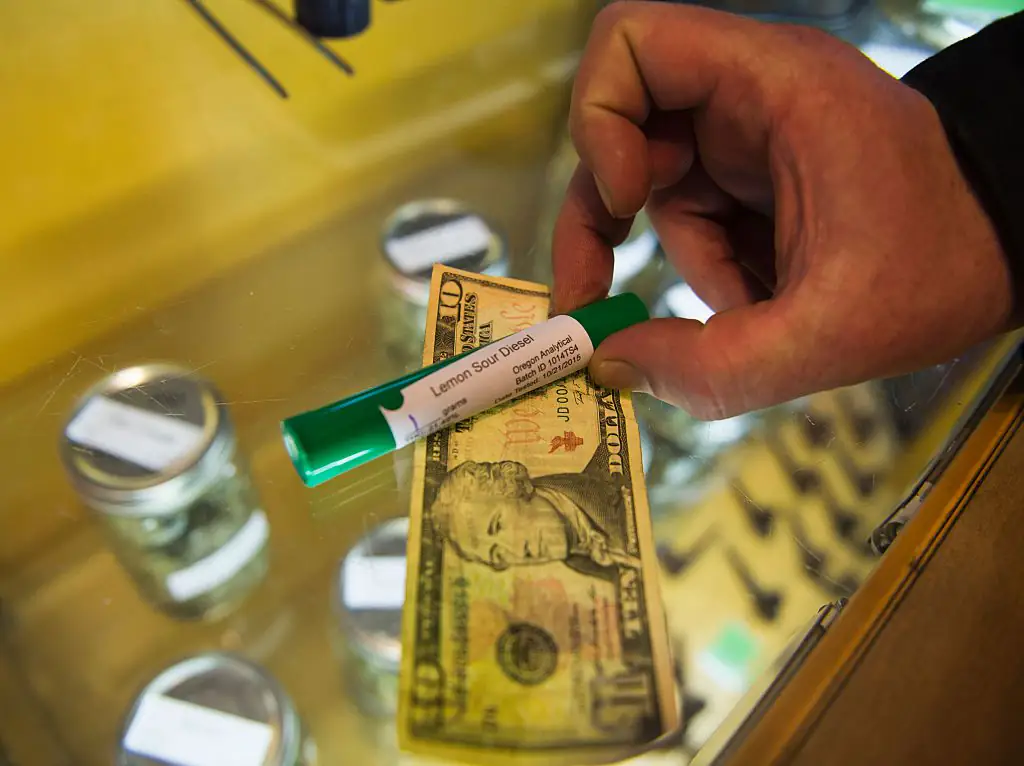
Weed was legalized in Oregon back in 2014, but fast forward to present day, and the people of Oregon have more pot than they can smoke or eat.
TIME reports that five years after voters moved to legalize marijuana, Oregon is trying to curb production, with there being so much marijuana around that even if production stopped instantly, it would take up to six years to consume all of the marijuana left over, according to a report from the OLCC.
"The harsh reality is we have too much product on the market," says Oregon Governor Kate Brown, who intends to sign a bill put forward to the House of Representatives that not only reducing the huge surplus, but making sure that the excess weed doesn't end up on the black market.
Of the 10 states which legalized marijuana in America, Oregon had a head start over the likes of Colorado or California thanks to its moist climate and rich soil. There were a lot of illegal growers who went legitimate once smoking pot became legal, and the saturation of supply means that demand is down.
In October of 2016, marijuana was worth around $10 a gram, but that's dwindled in the months and years since, going as low as half that in December last year. Margo Lucas, a marijuana grower, hopes the new measures will make it easier for her business to thrive. "We’re a very young industry," she explained.
"So when we go out of business, we’re going to go down hard. Many of us will lose our homes. … You’re going to have a lot of entrepreneurs in this state that are pretty unhappy with the way that this ends if we don’t get some support with this bill."
But not everybody's happy with the development, saying the law will drive growers and business owners into the illegal side of marijuana distribution. "This current track seems like a giant step backwards toward prohibition, which has always been a disaster," said Blake Runckel, in a written statement to lawmakers.
In the long-term, the hope for Oregon is that the federal government will allow the state to sell to other states around America, which would help to offset some of the overstuffed marijuana reserves currently in the state.
"We will kind of be like what bourbon is to Kentucky," said state Senator Floyd Prozanski.