Uncategorised3 min(s) read
world3 min(s) read
Scientists have found a new planet that could hold life that we are quite familiar with.
As a species, we have been asking ourselves for a long time about whether we are alone in the universe or not.
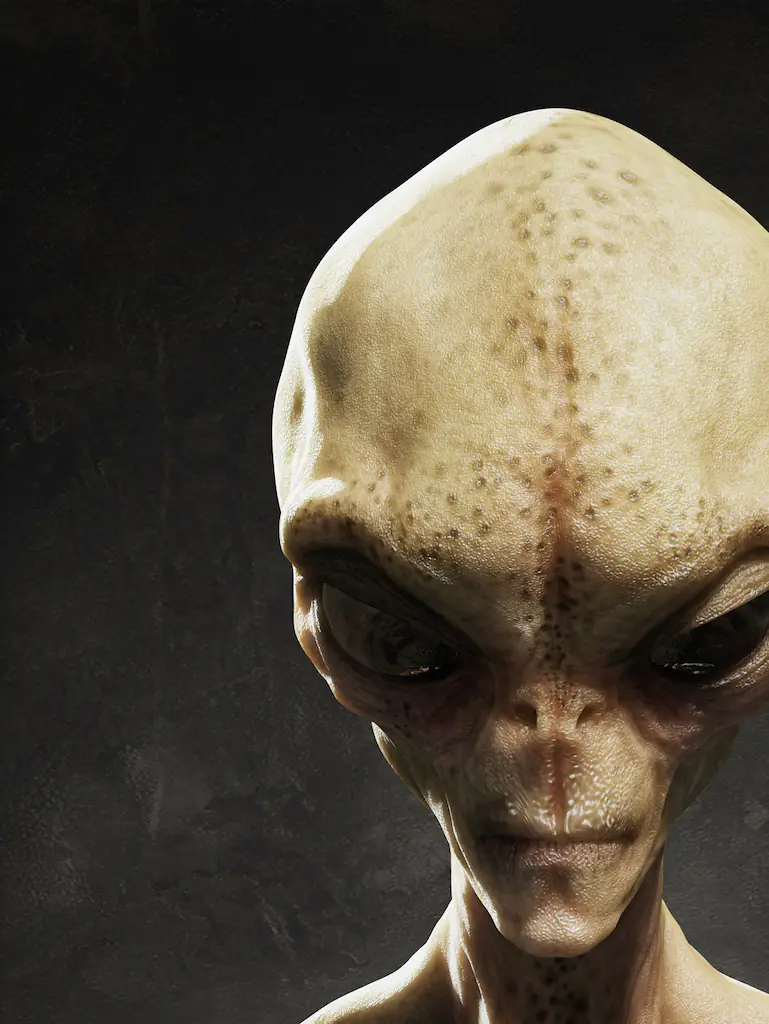
When we think of aliens, we presumably think of something that looks a bit like E.T., but what if that isn't the case at all?
I must admit, I'll be quite let down if we find other life on the planet and it isn't funky looking but I guess it'll still be cool.
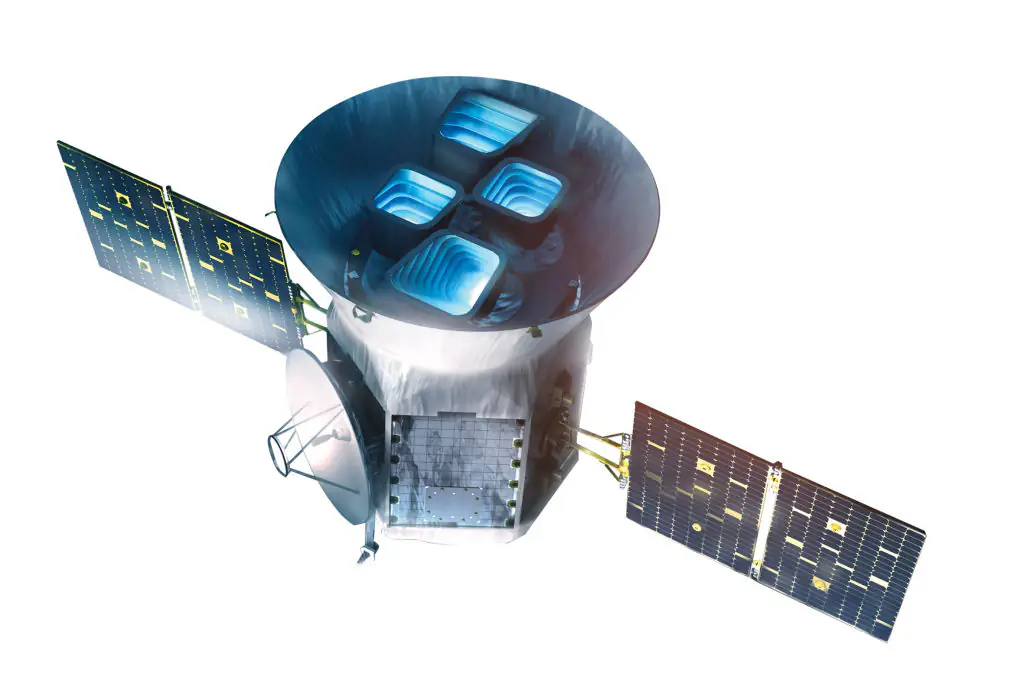
Scientists have discovered a new planet that could potentially support human life, using data from NASA satellites.
Named Gliese 12 b, this planet is described as "the closest Earth-sized and temperature planet we know," per BBC News.
The discovery was made by researchers from the University of Warwick in the UK, in collaboration with NASA and the European Space Agency (ESA).
Gliese 12 b orbits a cool red dwarf star, Gliese 12, completing one orbit every 12.8 days, resulting in very short years. Despite this, the planet is of a similar size to Earth and is considered "one of the few known rocky planets where humans could theoretically survive."
Dr. Thomas Wilson, an astrophysicist from the University of Warwick involved in the discovery, highlighted the significance of the find.
“This is a really exciting discovery and will help our research into planets similar to Earth across our Galaxy," he stated in a press release.
“Thrillingly, this planet is the closest Earth-sized and temperature planet we know. The light we are seeing now is from 1984 (40 years ago) – that’s how long it has taken to reach us here on Earth.”
Wilson added: “Planets like Gliese 12 b are very few and far between, so for us to be able to examine one this closely and learn about its atmosphere and temperature is very rare.”
The planet’s estimated surface temperature is around 42 degrees Celsius, which might be uncomfortably warm for some, as reported by the Daily Mail.
A significant challenge is the planet's distance from Earth, located in the constellation Pisces, about 40 light years away.
Scientists have yet to determine the exact composition of Gliese 12 b's atmosphere. One critical aspect of sustaining an atmosphere is the behavior of its star.
Red dwarfs are known for their magnetic activity, which often results in powerful X-ray flares. However, scientists have found no signs of extreme behavior from Gliese 12 so far.
Larissa Palethorpe, co-lead of the study and a doctoral student at the University of Edinburgh and University College London, emphasized the importance of this discovery for future research.
She stated: "The discovery marks a unique candidate for further atmospheric study that may help unlock some aspects of our own solar system’s evolution."
Palethorpe added: "Earth remains habitable, but Venus does not due to its complete loss of water. Gliese 12 b’s atmosphere could teach us a lot about the habitability pathways planets take as they develop."
space3 min(s) read
In a discovery that sounds straight out of science fiction, Chinese scientists have identified a never-before-seen strain of bacteria living and thriving aboard the Tiangong Space Station.
This feels like a story we've seen time and time again, and it never ends well for humanity.
The newly discovered bug, Niallia tiangongensis, was collected from the surface hardware of the China Space Station and has some seriously unusual traits, according to a report.
Taikonauts from the China Space Station Habitation Area Microbiome Program (CHAMP) captured the bacterium in 2023 using a surprisingly low-tech method—sterile wipes.
The frozen samples were then returned to Earth for analysis. The research was conducted by the Beijing Institute of Spacecraft System Engineering and published in the International Journal of Systematic and Evolutionary Microbiology.
So what makes this bug so fascinating?
For starters, it’s a mutated cousin of the earthly Niallia circulans, a bacterium found in soil, sewage, food, and even human stool.
But this space variant comes with several genetic upgrades. The paper explains that the strain “demonstrates a unique ability to hydrolyze gelatin suggesting that it can utilize gelatin as a substrate in nutrient-limited environments.”
Translation? This bacteria is built to survive - and feast - where few others can.
Even more impressive, the researchers found “structural and functional” differences in two of its key proteins that “may enhance” its ability to form biofilms, fend off oxidative stress, and repair radiation damage.
All of these traits make Niallia tiangongensis especially resilient in space, with scientists suggesting the mutations could be directly related to the harsh conditions onboard the space station.
“These unique formations,” the study stated, “likely mutations of the earthly bacteria developed in space, make Nialla tiangongensis incredibly resilient and adaptable to the space environment.”
The CHAMP program behind the discovery isn’t just about collecting weird space germs for fun - it’s part of a broader initiative tracking microbial dynamics in long-term space operations.
According to the South China Morning Post, the program also studies “active substances, genetic resources, and metabolic functions of microbes.”
Experts believe findings like these could be crucial for future space missions, particularly long-term manned flights, and may even offer breakthroughs for medicine and agriculture here on Earth.
And this isn't the first time space bugs have caused a stir.
A similar unsettling discovery was made last year aboard the International Space Station, when American astronauts identified a mutated, drug-resistant version of a common gut bacterium floating around.
That study sent shockwaves through the scientific community, especially with concerns about what future pathogens might look like in extraterrestrial environments.
space2 min(s) read
For over 50 years, NASA has been engaged in the search for answers to the ultimate questions. You know, all that Star Trek stuff. Are there aliens out there on other planets? Where did life on Earth originally come from? What is humanity's place in the cosmos? But so far, despite all the billions of dollars and dearest hopes of the best scientists, the search for extraterrestrial life has been fruitless. However, recently, the space agency announced that it plans to investigate a new theory on the origins of life on Earth, and their hypothesis is more bizarre and fantastical than any science fiction story.
NASA has allegedly awarded a whopping $6 million grant to a team of scientists from Rutgers University called ENIGMA. The acronym stands for "Evolution of Nanomachines in Geospheres and Microbial Ancestors". Their mission? To prove whether or not tiny 'robots' once inhabited Earth before the evolution of microbial carbon-based life forms. The ENIGMA team believes that, if these protein nanomachines actually existed, they were probably alien in origin, and delivered to Earth via meteorite, spacecraft, or some other means of interstellar transport.
Commenting on his theory, ENIGMA principal investigator Paul Falkowski stated: "All life on Earth depends on the movement of electrons; life literally is electric. We breathe in oxygen and breathe out water vapor and carbon dioxide, and in that process we transfer hydrogen atoms, which contain a proton and an electron, to oxygen to make water. We move electrons from the food we eat to the oxygen in the air to derive energy. Every organism on Earth moves electrons to generate energy."
He added:
"Protein nanomachines are are enzymes that physically move. Each time we take a breath, an enzyme in every cell allows you to transfer electrons to oxygen. Enzymes, like all proteins, are made up of amino acids, of which there are 20 that are used in life. Early on, amino acids were delivered to Earth by meteorites, and we think some of these amino acids could have been coupled together and made nanomachines before life began. We’ve been looking for evidence of life on Mars since the Viking mission, which landed in 1976. I think it will be very difficult to prove there is life on Mars today, but there may be signatures of life that existed on Mars in the distant past. Mars certainly had a lot of water on it and had an atmosphere, but that’s all largely gone now."
Professor Falkowski has also proposed a mission to the moon of Europa, which orbits Jupiter, to see if he can find any evidence of these nanomachine enzymes. The origins of life on Earth is still a subject which divides astrobiologists, but perhaps the ENIGMA team's theory will one day be proven correct. All we can do until then is keep watching the stars.
uncategorised3 min(s) read