With people becoming more informed about mental health and the stigma that surrounds it, it's evident that society has undergone a shift in recent years. However, we still have a way to go. Statistically, one in four people will experience a mental health problem at some point in their lives, but many people's symptoms worsen on account of the discrimination they face - from society, but also from their family, friends and employers.
Now, beloved British comedian and actor, Stephen Fry, has opened up about his struggle with bipolar disorder.
While Stephen Fry has battled bipolar disorder for much of his life, he wasn't diagnosed until he was 37.
On Fearne Cotton's podcast, Happy Place, the 60-year-old talked about his struggle with the disease, and how it affects his day-to-day life, disclosing that he sometimes feels in danger of becoming "professionally mentally unstable".
"There was and still is, and I still feel it occasionally, a danger of becoming sort of professionally mentally unstable, that that’s what I am, that’s who I am," the Fry and Laurie comedian stated. "I’ve always viewed it’s not who I am. It’s a condition I live with. I’m always prepared to talk about it, but there’s also a danger, because I do live with this condition. I'm not going to kid myself that it's cured, because it isn't."
Fry then went on to assert that his team are very aware of his condition and that they actively aid him in managing it. The comedian revealed that if he takes on a project while going through a difficult period with his mental health, his assistant will convince him to delay production until he is more stable.
"I’ll say, 'Yes, I’ll do it', because I think it’s my duty. They’ll say, 'No, don’t. Don’t, or if you do, do it in a month’s time'," he stated.
Fry also told the television presenter about how much he missed his "dear friend", Carrie Fisher, who also suffered from bipolar disorder. "I saw her in some states where it really was touch and go," he confessed. "But she would go for electric shock therapy. Of course, she never lost her sense of humour."
"I remember her saying, she said, 'The thing about it is it works for me. It works. It has a few drawbacks. Memory, short-term memory. You lose your short-term memory. The other thing is you lose your short-term memory, losing your short-term memory.' I said, 'Carrie, you’re so bad'. She was able to laugh at herself. That’s an amazing thing.
"She was a hero, but she also showed that it can bring you down. Her life was shortened by it, there’s no question about that."
Fry's transparency about his mental health struggles come a month after he released a 13-minute video revealing that he has prostate cancer, which is now in remission.
"Cancer is a word that rings in your head. 'I’ve got cancer' I kept saying to myself, good heavens. You’re not supposed to get cancer. I know it’s a cliche but you don’t think it’s going to happen to you, cancer is something that happens to other people," he stated.
"So far as we know, it’s all been got. Are there greater chances of me getting other cancers now? Apparently not. But I won’t know for sure until I get my PSA levels checked. They should be zero because I have no prostate, so the prostate-specific antigen should be zero."
Stephen Fry, the legendary British comedian, actor and presenter, announced today on his website that he was diagnosed with prostate cancer. The 60-year-old, who has shared many personal details about his life before in a number of autobiographies, made a 13-minute long video about "some news" that he wanted to share, and went into detail about his recent battle with the illness.
"I - I don't know how to say this, really ... but I went to see my doctor just before Christmas for a flu jab," Fry said, and explained that his doctor encouraged him to have a general check-up, too. "The next day, he called me up and said, 'I'm a little worried about your PSA [Prostate-Specific Antigen] levels ... maybe you should consider an MRI'".
The former Blackadder star then went on to describe his experience at the hospital in great detail (as we all know Fry is wont to do), the MRI, a following visit to a specialist, and then a biopsy on the suspect area, before getting to the crux of the story: "They took a clip of living tissue from the prostate and again another wait, and I got the results the next day and yes indeed there is a cancer there."
"I went around saying to myself, 'I've got cancer. Good heavens, Stephen, you're not the sort of person who gets cancer,'" he said. "I know it's an old cliche but you don't think it's going to happen to you."
Fortunately for Fry, the cancer was caught early enough, and doctors were able to intervene. He was given a number of prospective options, and ended up taking a fairly invasive route to recovery.
"One option was radiotherapy but it's a long process," Fry explained. "The other was to get rid of the prostate by sending little robots in through tiny holes in your tummy."
So, he continued, "In the first week of January, I had the operation, it seemed to go well. They took the prostate out, and eleven lymph nodes. It was an aggressive little bugger."
The former QI host then went on to explain that he wanted to update his fans on his current situation, as he knew that there had been rumors circulating about his health, and he wanted to clear the air about why he hadn't been making as many public appearances lately.
"If you're wondering why I've been out of the public eye - I'm sure you haven't - I have been keeping my head down because you want to get better without strangers - with the best of intentions - sending cards and flowers," he explained. "You have to reply and I wasn't really up to that."
He also finished up the video on a surprisingly joyful note, saying: "Here's hoping I've got another few years left on this planet because I enjoy life at the moment and that's a marvelous thing to be able to say, and I'd rather it didn't go away."
While it's sad to hear that Fry had been dealing with such a terrible illness by himself, it's wonderful to hear that he is getting better, and was able to tackle the issue in such a warm and honest way. We wish him a speedy recovery, and hope that he is back to full health very soon.
Kim Kardashian has issued a statement on Kanye West's mental health.
The reality television star took to her Instagram Stories today (Wednesday, 22nd July) to call for "compassion" and "empathy", as she discussed her husband's bipolar disorder. The follows the rapper posting a slew of tweets that prompted widespread concern.
"As many of you know, Kanye has bi-polar [sic] disorder. Anyone who has this or has a loved one in their life who does, knows how incredibly complicated and painful it is to understand," Kim wrote.
[[imagecaption|| Credit: PA]]
"I've never spoken publicly about how this has affected us at home because I am very protective of our children and Kanye's right to privacy when it comes to his health. But today, I feel like I should comment on it because of the stigma and misconceptions about mental health," the mother-of-four continued.
"Those that understand mental illness or even compulsive behavior know that the family is powerless unless the member is a minor. People who are unaware or far removed from this experience can be judgmental and not understand that the individual themselves have to engage in the process of getting help no matter how hard family and friends try."
While the 39-year-old noted that she "understands" that Kanye is "subject to criticism because he is a public figure and his actions at times can cause strong opinions and emotions," she added: "He is a brilliant but complicated person who on top of the pressures of being an artist and a black man, who experienced the painful loss of his mother, has to deal with the pressure and isolation that is heightened by his bi-polar disorder. Those who are close with Kanye know his heart and understand his words some times do not align with his intentions."
The 43-year-old rapper took to Twitter on Wednesday morning (July 22) to assert that he's been wanting to end his marriage to the reality television star wife since she met with Meek Mill to discuss prison reform around November of 2018, in a slew of now-deleted tweets.
“MJ told you about Tommy before they killed him Kim saved my daughters life in the name of Jesus It’s Gods choice only I will live for my children Kris I’m in Cody if your not planning another one of your children’s playboy shoots [sic],” he wrote.
[[imagecaption|| Credit: PA]]
"They tried to fly in with 2 doctors to 51/50 me I been trying to get divorced since Kim met with Meek at the Warldolf for ‘prison reform’ I got 200 more to go This my lady tweet of the night … Kris Jong-Un Lil baby my favorite rapper but won’t do a song wit me [sic],” the rapper continued.
He then went onto assert: "Meek is my man and was respectful That’s my dog Kim was out of line I’m worth 5 billion dollars and more than that through Christ But ya’ll ain’t listen to MJ and now ya’ll believe them??? [sic]"
“Kriss and Kim put out a statement without my approval … that’s not what a wife should do White supremacy [sic],” Kanye added.
[[imagecaption|| Credit: Twitter / Kanye West]]
Earlier this week, Kanye alleged that Kim Kardashian tried to get a doctor to "lock" him up after he spoke about how the couple considered an abortion while expecting their first child, North West. These tweets have also since been deleted.
The rapper, who says he is running for the 2020 presidential candidacy, told a crowd in South Carolina on Sunday that a message from God convinced him to keep the baby, who was born in 2013.
West, who has been open about his bipolar disorder diagnosis, took to Twitter on Monday evening to claim that his reality television star wife attempted to bring a doctor to his ranch in Wyoming. He even compared the situation to Jordan Peele's 2017 horror film, Get Out, which sees disturbing psychological tricks used on Daniel Kaluuya's character.
"Everybody knows the movie get out is about me," he wrote in one of the deleted tweets. He went onto to demand that Kim and his mother-in-law, Kris Jenner, "call me now".
"I put my life on my God that Norths mom would never photograph her doing playboy and that’s on God I’m at the ranch ... come and get me," he continued.
West alleged that Vogue editor-in-chief, Anna Wintour, "looked at me like I was crazy," when he told her about the deal to sell his Yeezy fashion line through Gap stores.
He also shared a photo of himself with his four children, in a tweet that has not been removed.
This comes a day after an event in North Charleston, South Carolina, where Kanye spoke about his presidential bid.
Per The Evening Standard, the 43-year-old wore a protective vest during the event and had "2020" shaved into his head. He suggested giving struggling mothers one million dollars to discourage abortions.
However, last week it emerged that the Yeezy designer missed the deadline to appear on the presidential ballot in South Carolina. He did not submit a petition of 10,000 signatures by noon local time on Monday and would therefore not appear on the ballot, a state official said, per the publication.
South Carolina State Election Commission spokesman Chris Whitmire stated: "The deadline has passed for any candidate to submit a petition for the November 3, 2020, General Election. Kanye West did not submit a petition."
Mental health is a silent killer and something that, although we are doing our best to do so, isn't discussed enough.
Whether it is depression, social anxiety or another form of mental illness, it can destroy lives and end in tragic circumstances. Unfortunately, we are living in a world where mental illnesses are on the rise, with someone being diagnosed with depression or anxiety every 2.1 minutes in the UK alone.
However, it is not just in the UK that mental illness is on the rise. Research carried out by Dr. Jean Twenge, a social psychologist at San Diego State University who is the author of Generation Me: Why Today’s Young Americans Are More Confident, Assertive, Entitled—and More Miserable Than Ever Before, shows that depression and anxiety has been on the rise in America since the 1930's.
Twenge believes that the root of this growing misery lies in the ways in which young people live their lives, especially when compared to previous generations:
"Obviously there’s a lot of good things about societal and technological progress," she said, "and in a lot of ways our lives are much easier than, say, our grandparents’ or great-grandparents’ lives. But there’s a paradox here that we seem to have so much ease and relative economic prosperity compared to previous centuries, yet there’s this dissatisfaction, there’s this unhappiness, there are these mental health issues in terms of depression and anxiety."
“Modern life doesn’t give us as many opportunities to spend time with people and connect with them, at least in person, compared to, say, 80 years ago or 100 years ago. Families are smaller, the divorce rate is higher, people get married much later in life.”
While smaller families and late marriage are seen as a positive by many, mainly due to the fact it is seen as representative of women getting a greater standing in the workplace, Twenge believes that this lack of compassion and security is contributing to the rise of depressed individuals. She also believes that the prominence of celebrities on social media haven't helped, saying:
"There’s clear evidence that the focus on money, fame, and image has gone up," she said, referring to various surveys that have been conducted in which young people are asked about their goals in life, "and there’s also clear evidence that people who focus on money, fame, and image are more likely to be depressed and anxious."
One girl who knows all about the effects that mental illness can have on someone's life, is Aurora Holt. Holt took to Twitter a few days ago to share her story of overcoming her demons, and understandably, it has gone viral. Sharing a series of images, including one her engagement ring, Holt says:
[[twitterwidget||https://twitter.com/aurora_holt/status/910846658526765057]]
"Sept. 21 2016 I decided to take my life. Luckily I failed & 365 days later I'm engaged,going to college & starting my future. Don't give up."
Unsurprisingly, her story has captured the imagination of other Twitter users, who have been sharing their own stories of battling depression, with the majority of people calling her a role model and praising her for her bravery and going public with her story.
Holt's story shows that despite how bad things can become, you never know what might be around the corner. Since she tried to end her life, Holt has gone on to do more than she ever would have thought was possible, and she deserves all the plaudits she can possibly get for that.
If you have been affected by any of the issues in this article, contact Your Life Your Voice on 1 800 448 3000, Samaritans on 116 123 or the National Suicide Prevention Hotline on 1 800 273 8255. For recorded information, call Mind on 0300 123 3393.
It's no secret that disabled people have historically been marginalised in our society. And unfortunately, to this day, little is done to shed light on their experiences from their own perspective.
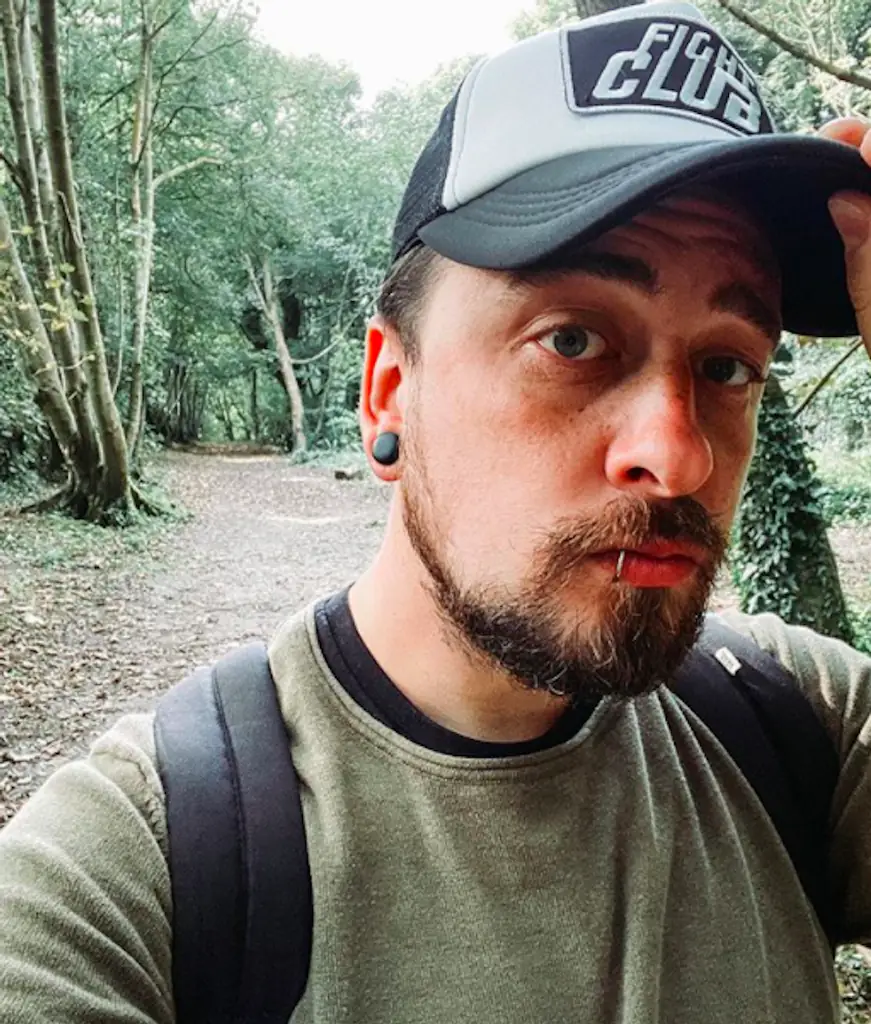
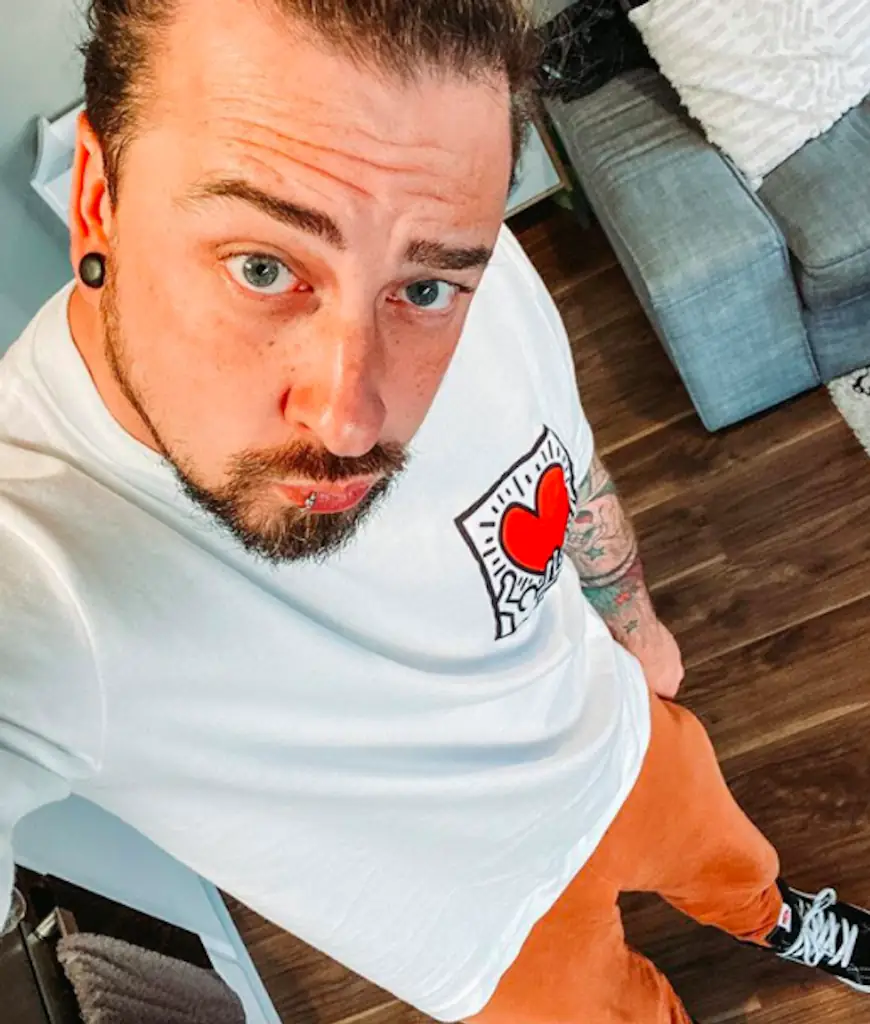
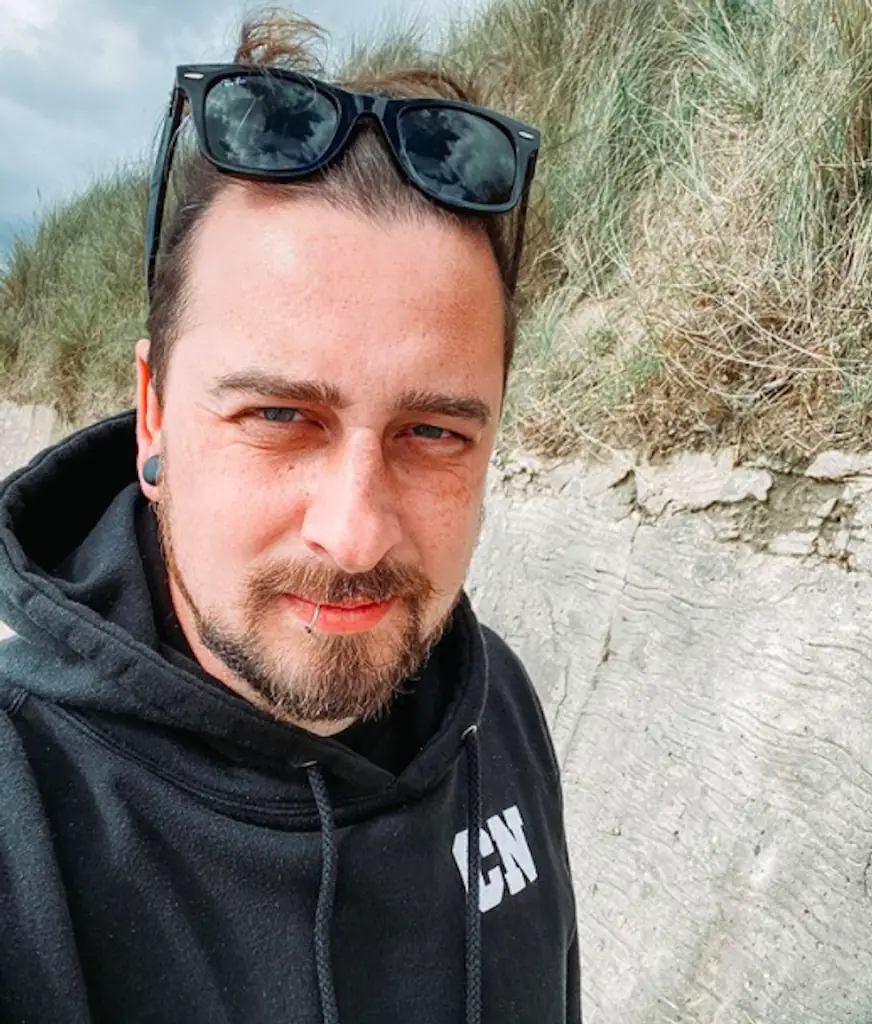
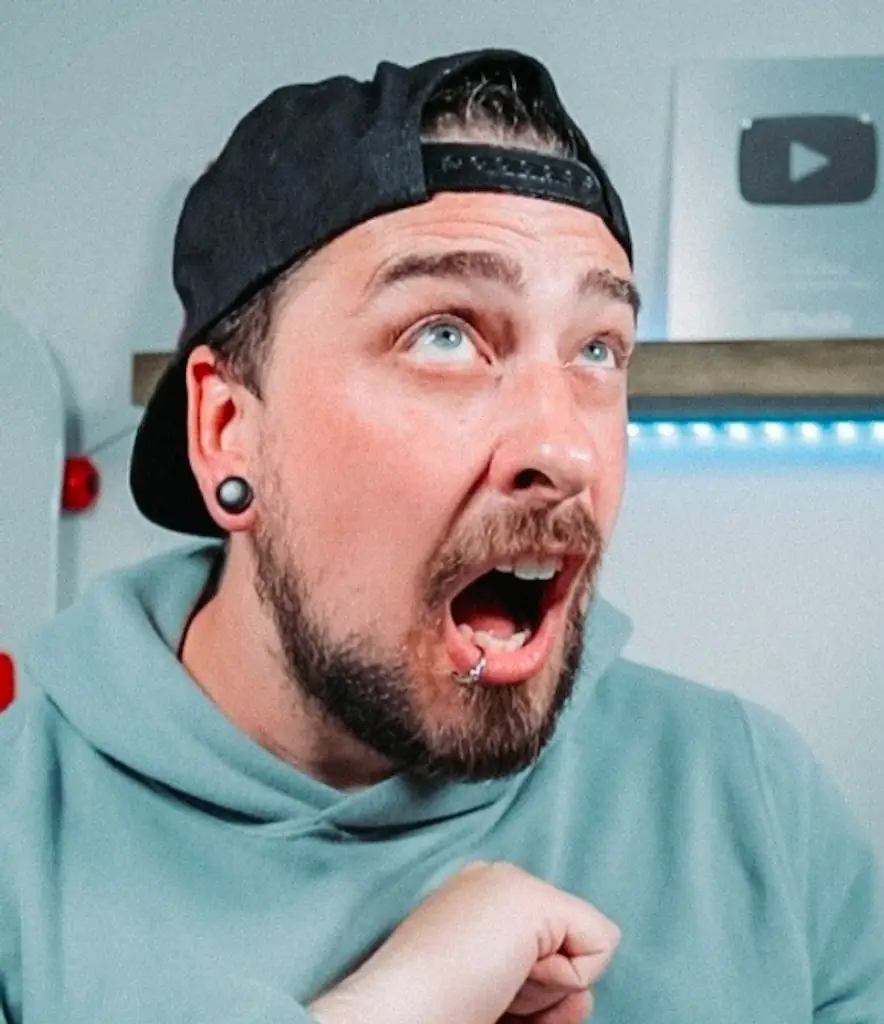
Far too often, disabilities such as autism are misunderstood, oversimplified, and undermined. So, keen to learn more about autism, VT spoke with one of the UK's most influential voices on the topic, Daniel Jones.
The Welsh content creator currently has more than 140,000 subscribers on his YouTube channel, The Aspie World.
Credit: Dan Jones / The Aspie World
When Dan, who is now 34, was diagnosed with Asperger's Syndrome at the age of 26 back in 2013, he knew practically nothing about the condition.
These days, Asperger's Syndrome is widely considered an outdated term.
In fact, in the same year that Dan received his diagnosis, Asperger's merged with other sub-diagnoses to become the all-encompassing Autism Spectrum Disorder (ASD).
It should be noted, however, that there are autistic people who still identify with the label of Asperger's Syndrome and may use it interchangeably with autism.
Credit: Dan Jones / The Aspie World
Autism is a lifelong developmental disability whereby communicating, processing information, and adapting to social norms can be extremely challenging for the individual.
It can also affect the way that autistic people experience everyday life through their five senses.
"Basically, all my life I'd been struggling with issues up until I was 26 and got diagnosed. Issues ranging from socialising, finding friends, shyness, and what my parents thought was extreme agoraphobia," Dan tells VT.
From a young age, his parents and teachers were aware that he had "issues", but Dan grew up in Anglesey, Wales, which was a "long way away from anywhere that was diagnosing autism back in the '90s," he explains.
Credit: Dan Jones / The Aspie World
Concerned about Dan’s development, his parents took him "to see all kinds of shrinks".
"At about six or seven years old, they arranged with the school that I was allowed to stay indoors at break times and play on the computers," he recalls.
"Because autism wasn't a thing that people were diagnosed with, they were like 'maybe it's attachment issues, extreme separation anxiety, extreme shyness, or short-term memory loss'. They just didn't know.
"I was given one-to-one sessions every day in the library to improve my speech and reading," he explains.
Credit: Dan Jones / The Aspie World
Dan also shared that he was placed in "the special ed class" at school.
"It was rubbish," he says. "They didn't really teach anything. You'd just draw pictures all day. It was s**t."
Teachers noticed that while Dan showed signs of developmental issues, he also showed a precocious interest in topics such as Ancient Egyptian history and science.
In fact, following an access course, Dan later went on to earn a degree in Chemistry.
But while Dan enjoyed learning, he found the social aspect of university overwhelming.
Credit: Dan Jones / The Aspie World
"I felt quite alone," he says. "Sometimes I thought, 'Am I brain-damaged or bipolar?' Because I'd heard of those things. But I didn't align with any of those."
On top of all this, Dan is extremely sensitive to certain sounds, smells, tastes, textures, food temperatures, and lighting due to his Sensory Processing Disorder (SPD), which often co-exists with autism.
One of the more interesting aspects of Dan's SPD is that even certain words can be extremely uncomfortable - painful even - for him to hear.
"There are certain words that hurt," he explains. "The sound and formation of the word. It just hurts when I hear them."
Credit: Dan Jones / The Aspie World
Dan’s Asperger's diagnosis at the age of 26 came about during a difficult time in his life.
"The company I worked for was quite a small company. There were only about six of us in the office and it was cool because I had my spot," he says. "But then on one of the days I went in, they moved our desks around and it expanded to a 200-person company."
"I had a meltdown because they were changing my desk around, moving me from where I was positioned," he continues. "I had to take time off work and I worked from home for a little bit. That really rocked me to my core. I had to go to therapy."
It was only when his partner, Naomi, who was studying Childhood Development in Autism, and her mother, a mental health nurse, suggested he might be on the spectrum that a developmental disability became a possibility for Dan.
Credit: Dan Jones / The Aspie World
Through his doctor, Dan was able to get a referral for an autism assessment. The process included interviews, tests, and neurological brain scans. Ultimately, he was diagnosed with Asperger's Syndrome and ADHD.
"When they said I had Asperger's Syndrome, I went home and Googled it and went on YouTube," he recalls. "There was nothing really on YouTube. It was really bleak. The videos on YouTube were all very depressing."
"I wanted to create educational and entertaining videos," Dan says. "I don't want people who have the condition to feel alone."
At the start of each video, the content creator - now a bona fide influencer - introduces himself, saying: "My name is Dan. I have autism, ADHD, OCD, and dyslexia" - conditions that often go hand in hand.
Credit: Dan Jones / The Aspie World
But in spite of the many challenges he has faced from an early age, Dan told VT that he sometimes feels "guilty" that he is classified as having the same disorder as non-verbal autistic people with much higher support needs.
"There are kids with Autism Spectrum Disorder who cannot even go to the bathroom on their own - and they can't say one word," he says.
"People are visual - so to them, disability has to be visual," Dan adds. "So, if there's a guy with tattoos talking on a stage about autism, they're thinking this doesn't compare to the kid next door who has to use an iPad to talk."
"It's a lack of knowledge," he continues. "If everybody knew that autism was a spectrum of different levels of ability and support needs then no one would bat an eyelid."
Credit: Dan Jones / The Aspie World
Unfortunately, this lack of knowledge certainly isn't helped by the fact that autistic people in mainstream media are very hard to come by.
In fact, Dan was actually supposed to feature on a reality TV show called The Circle, but at the last minute, Channel 4 pulled the plug on his involvement.
"People are too scared to put autistic people on reality television," he says. "They don't want to be persecuted for representing somebody and potentially getting it wrong."
"But Channel 4 is one of the most diversity-driven channels - people with disabilities, people of colour, people of different religious backgrounds, and I love that. But then they let me down."
Credit: Dan Jones / The Aspie World
There are many misconceptions about autism - and excluding autistic people from the media only serves to perpetuate them.
When VT asked Dan what he felt was the biggest misconception about autism, he responded:
"Everyone thinks you're going to be like Rain Man. There's a misconception that we're all great at maths, that we can't communicate, and that we'll never fall in love and start a family.
"But I've got a partner I've been with for 11 years, and I've got a son who's two years old. Yes, I may be good at maths and have a degree in chemistry, which is a bit cliché - but not everybody on the spectrum is like that."
Credit: Dan Jones / The Aspie World
On the whole, it's important to realise that autism is referred to as a spectrum for a reason.
Not all autistic people will have each and every trait associated with autism. Some may be non-verbal, in need of round-the-clock care, or have severe temper tantrums - while other autistic people might be independent, have jobs, partners, and children.
However, the autistic people who may outwardly seem as though their condition is "not as severe" may have other common - albeit less visible - autistic traits.
Some of these traits include severe social anxiety, OCD, depression, ADHD, difficulty following instructions, difficulty learning via mainstream teaching methods, difficulty connecting with and understanding people, and repetitive behaviour patterns.
If you identify with some of these traits, have a think about whether you might want to seek a diagnosis. It might end up helping you in the long run.
In the meantime, if you'd like to download Dan's free PDF on Autism Hacks, click here.
At some point in our lives, we’re all going to have to contend with our emotional state not quite being in tip-top shape. In the United Kingdom, it’s estimated that 25 percent of people will experience some kind of mental health problem, while in any given week, one in six people experience anxiety, depression, or some other form of emotional distress.
When it comes to the younger ones, the numbers are just as worrying, and in ways, more difficult to deal with. YoungMinds are a charity fighting for the mental health of children, teenagers and young adults.
They estimate that in the UK alone, there are around 850,000 young people who have a diagnosable mental health problems, as the growing pains of life begin to take their toll. I have personally struggled with my mental health in the past, but if it’s not you, then might be someone close to you who is attempting to hold it all together.
Having a loved one with mental health issues can also be hard, and although you’d do anything to try and help out, there are some phrases that it's best you avoid. Here are just a few things you say to someone struggling with mental health that really don’t help as much as you’d think.
1. “Why don’t you just do this?”
To an innocent bystander or the uninitiated, mental health problems can at times seem easy to solve. Your friend drinking in the dark after a bad breakup just needs to get out there and meet people. After a near-death experience, your partner needs to stop feeling paranoid by realising they’re not in any danger. You might be right, but don’t be surprised if your advice doesn’t help one iota, because it’s just not that simple. When someone is struggling with their mental health, even the most basic of things things can be extremely difficult and it doesn’t always help to point out seemingly ‘simple’ solutions. If someone is struggling, the best thing to do is let them know you’re there for them and encourage them to get help.
When in the middle of a mental health crisis, some people might start to self-harm. If you start to notice some marks, alongside slight behaviour changes and other worrying signs, it’s a good idea to check in to see if that person is OK. But please don’t point out new scars in public. If someone is in a bad place and has started to self-harm, it can be embarrassing or distressing to bring it up in public discussion.
Mental health problems can affect anyone at any time. It’s easy to assume we can identify someone struggling with their mental health just by looking at them, but that’s just not the case. To that end, if someone you care about opens up to you about something they’re struggling with, resist the temptation to tell them that because they don’t mope around all day with a face like thunder, softly crooning Johnny Cash’s Hurt to themselves, they’re not actually depressed. A mental health problem is a beast with many faces, and sometimes, your friend smiling and laughing is their way of coping. Don’t interpret this as a sign they’re over their issues, or that their problems can in any way be dismissed.
4. “Have you tried [insert ridiculous homeopathy solution here]?”
Although it’s not always easy to put yourself in the shoes of someone living with OCD, depression or anxiety, there are some attempts to empathize that are more helpful than others. I can tell you from experience about people who have recommended a certain herb or supplement to me, based upon the time where they felt really sad for a while. “Best of all, it’s only £4.99 at Holland and Barrett!" I hate to say it, people, but the situation might be more nuanced than simply ingesting the right kind of plant life. While different things work for different people, if you’re struggling with your mental health, it’s important that you reach out to your GP.
5. “It’s your choice”
Sometimes, it can be really, really difficult to live with or love someone who’s struggling with their mental health. They don’t always respond to things in the way that you’d like them to, and with their mood inconsistent or consistently low, it can be easy to get frustrated. That’s natural, and it’s okay. What isn’t okay, however, is to imply that your friend, sibling or loved one is doing what they’re doing on purpose. First off: no. No they are not. Nobody struggling with their mental health is having suicidal thoughts for attention. Secondly, by telling them their actions are theirs alone, you might as well be saying: “I give up. You’re on your own.” Needless to say, the last thing your loved one needs to feel is like they’ve been abandoned.
6. “Just be positive”
Hold on! This isn’t to say that positive thinking isn’t useful for overcoming mental issues, or that you should allow your friend’s negative self-talk to take root. But when you’re in the middle of an anxious or depressive episode, it’s not always easy or possible to control where your mind goes in a situation. Put it this way: no matter what your loved one has been through in their life, the chances are that they’ve tried “thinking positively” or “being happy” in the past. If it were that simple, then we would’ve cured mental illness a long time ago.
Well, everyone, there you have it. If you’ve got someone out there who’s struggling with their mental health, very often the best thing to do is to attempt to listen to and understand their problems, no matter how obvious you think the solution is, or how difficult it is for you to hear.
And while it’s good to think about what you say, don’t worry too much: the main thing is just to do your best to help them. Always remember: when you’re there for somebody and you feel like you’re not making a difference, it doesn’t mean they don’t appreciate what you do.
This article was written in collaboration with Young Minds - a charity helping thousands of young people around the United Kingdom to cope with emotional distress. To find out more, please click on the following link: http://bit.ly/LookAfterYourself