


Film & TV5 min(s) read
All the things you missed in Bad Bunny’s Super Bowl Halftime Show
.jpg_I4Ebof?tr=cr-0.338.2730.3068,f-webp,q-70,w-100)
Bad Bunny’s halftime show at Super Bowl LX moved quickly. Between the music, choreography and scale, a lot of detail was easy to miss.
But once the performance is broken down, it becomes clear that many elements were very specific, intentional and rooted in real people, places and events.
Below is a factual breakdown of what was included, and why it mattered.
The Wedding Was Real and Pre-Existing
The wedding shown during the performance was not staged for television.
The couple were already engaged and had previously invited Bad Bunny to attend their wedding.
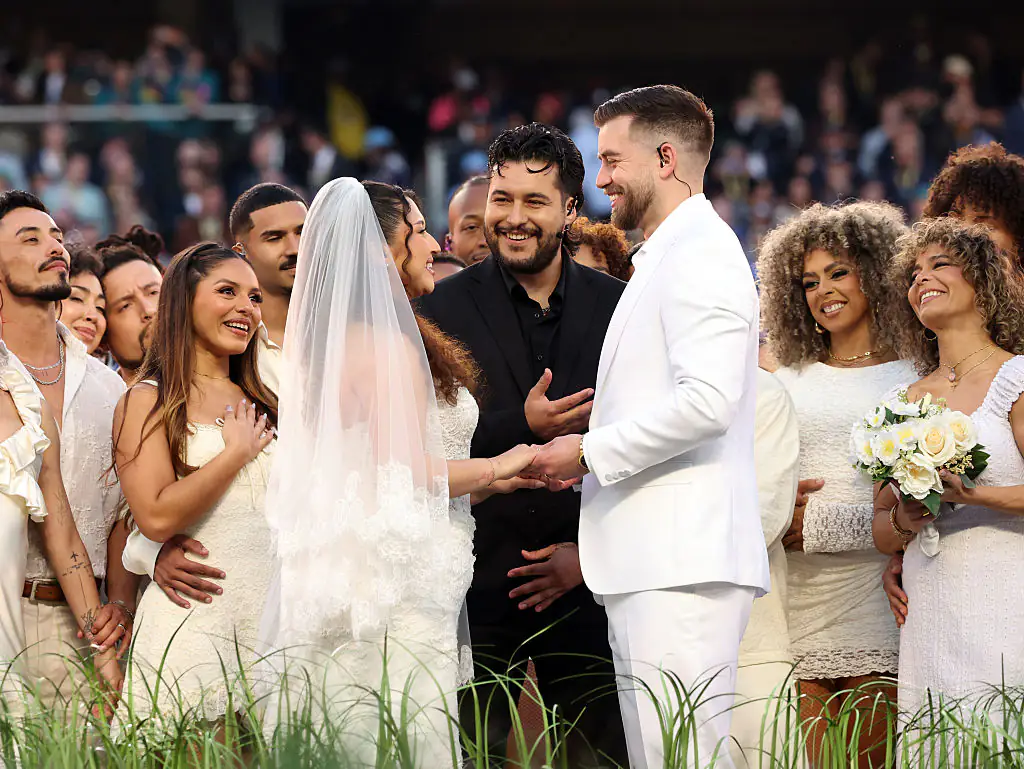
Due to scheduling and scale, that was not possible in a traditional setting.
Instead, Bad Bunny invited the couple to take part in the halftime show and arranged for their wedding to take place live during the performance.
The ceremony was legally recognised. The vows were real, there was a real wedding cake, and Bad Bunny signed as a witness. It was not a symbolic recreation.
The Neighbourhood Set Referenced Real Community Spaces
Rather than abstract staging, the set was designed to resemble a lived-in neighbourhood.
Several storefronts and signs referenced real types of community spaces found in Puerto Rican and Latino neighbourhoods across the US.
One of the most notable references was to Toñita’s Caribbean Social Club.
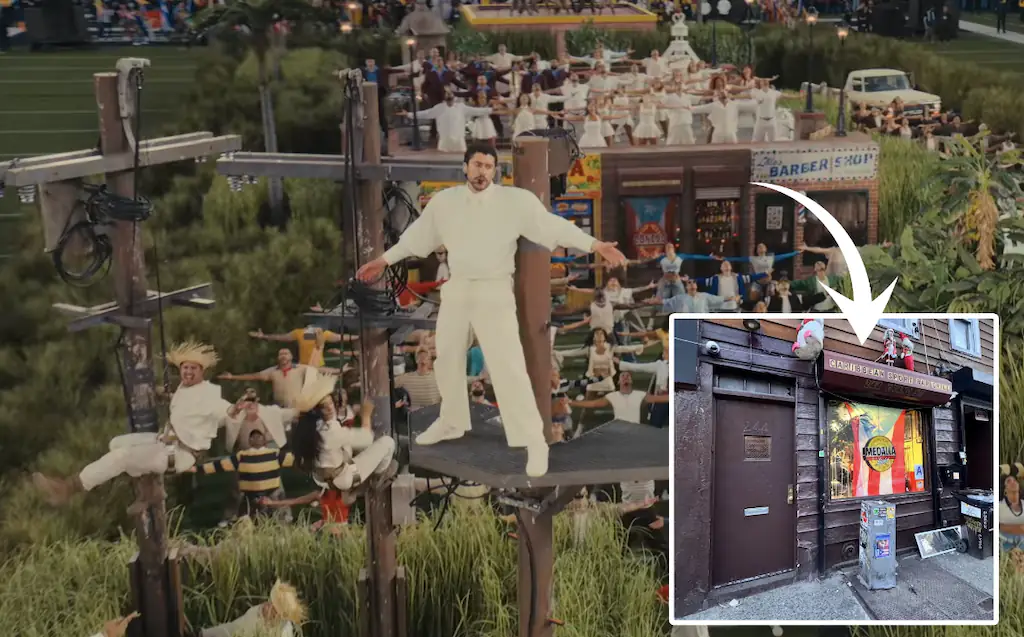
Toñita’s is one of the last remaining Puerto Rican social clubs still operating in New York City.
These clubs historically served as cultural hubs, hosting music, dancing, dominoes and social gatherings. Many similar clubs have closed over the years.
The reference was confirmed after the show and was not a fictional business created for the performance.
Pedro Pascal Appeared Briefly on Stage
Pedro Pascal appeared on stage during one segment of the performance.
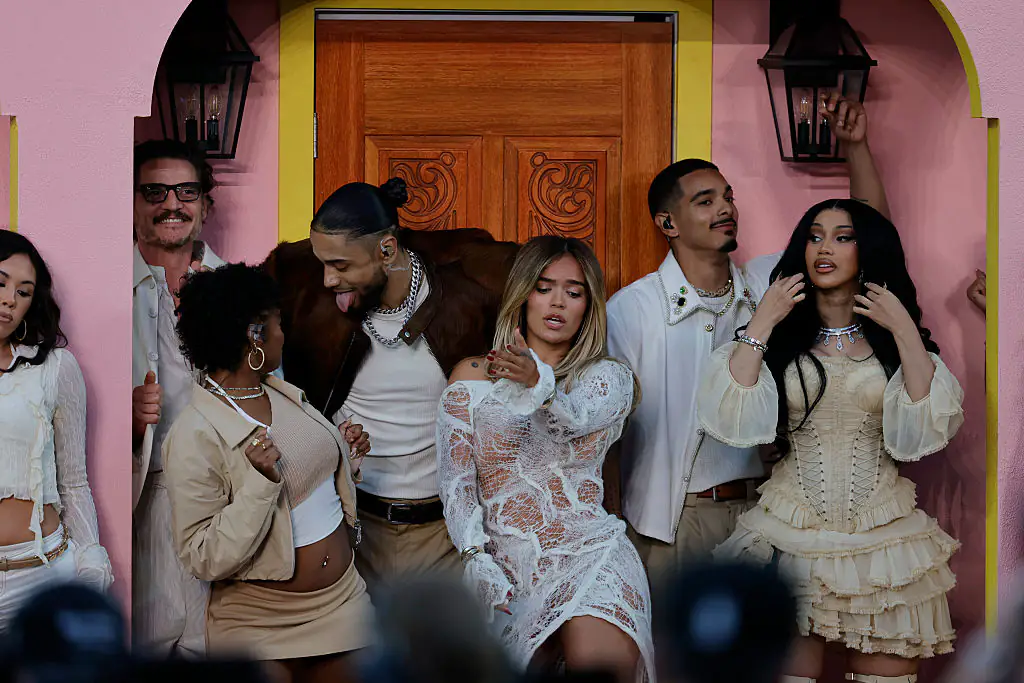
He did not perform or speak. He was positioned within the neighbourhood-style set during a group scene designed to resemble a communal, front-porch setting. His appearance was brief and easy to miss during the live broadcast.
The Food Carts Were Modelled on Real Vendors
The food carts shown on stage were not generic props.
They were designed to reflect real street food vendors from Bad Bunny’s neighbourhood and from Latino communities more broadly.
The foods shown, including piraguas, tacos and coconut water, are staples of local street food culture.
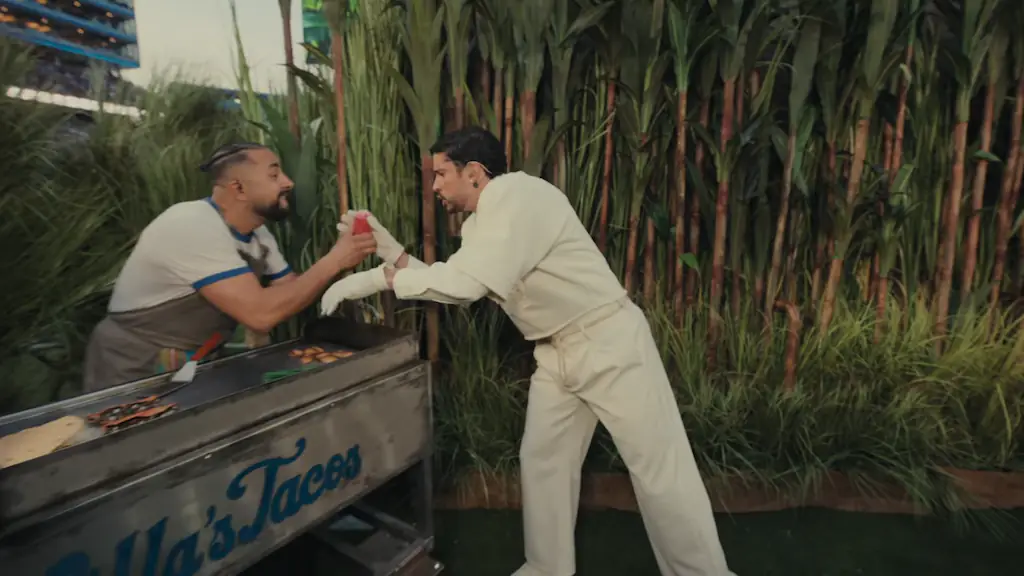
At least one of the vendors represented later confirmed their involvement publicly, stating that their inclusion was based on their real business rather than a stylised imitation.
His Outfit Used Identity, Not Branding
Bad Bunny’s outfit was deliberately specific.
The jersey-style top featured his real surname, Ocasio, rather than his stage name.
This mirrored the way athletes are presented during the Super Bowl, but replaced team branding with personal identity.
The number 64 also appeared on the outfit.
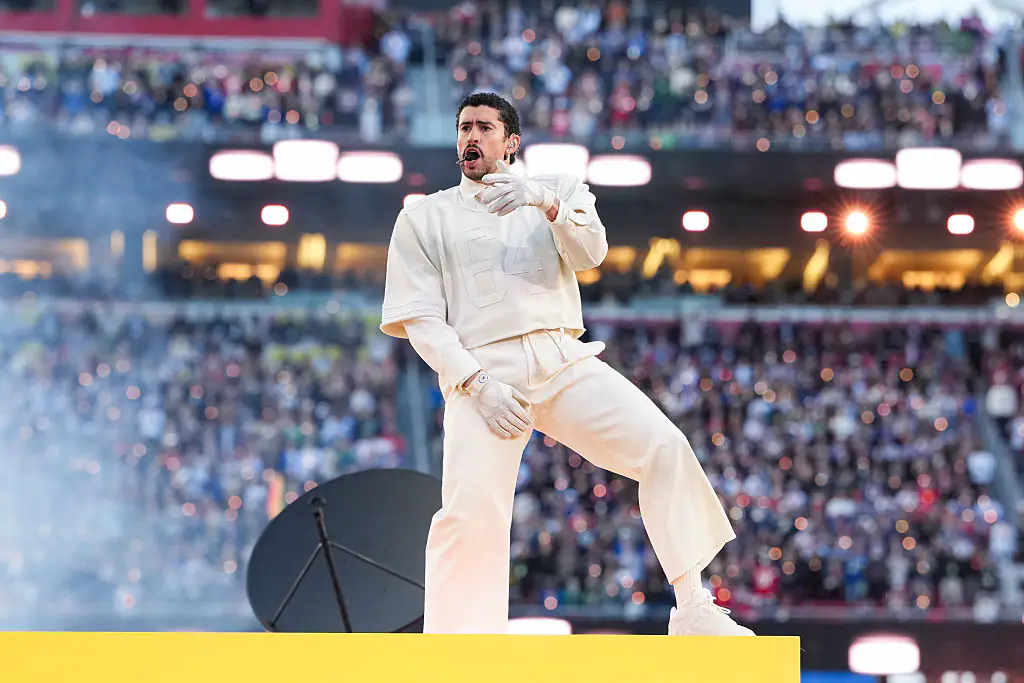
This has been linked to Puerto Rico’s modern historical timeline and political era. No explanation was given during the broadcast.
The outfit avoided luxury fashion labels, despite Bad Bunny’s previous association with high-end brands. The styling aligned with the neighbourhood setting of the stage rather than separating him from it.
Traditional Puerto Rican Dress Appeared Across the Performance
Several performers wore jíbaro-style hats, traditionally associated with rural, working-class Puerto Rican communities.
These items are commonly used as cultural symbols tied to agricultural life and heritage on the island.
They appeared briefly and repeatedly throughout the performance but were not highlighted or explained on screen.
The Grammy Moment Was Planned
Bad Bunny handing a Grammy to a young child during the show was not improvised.
The moment was planned in advance and quickly gained attention because viewers connected it to a widely shared photograph earlier in the year involving Liam Ramos, the 5-Year-Old Detained by ICE.
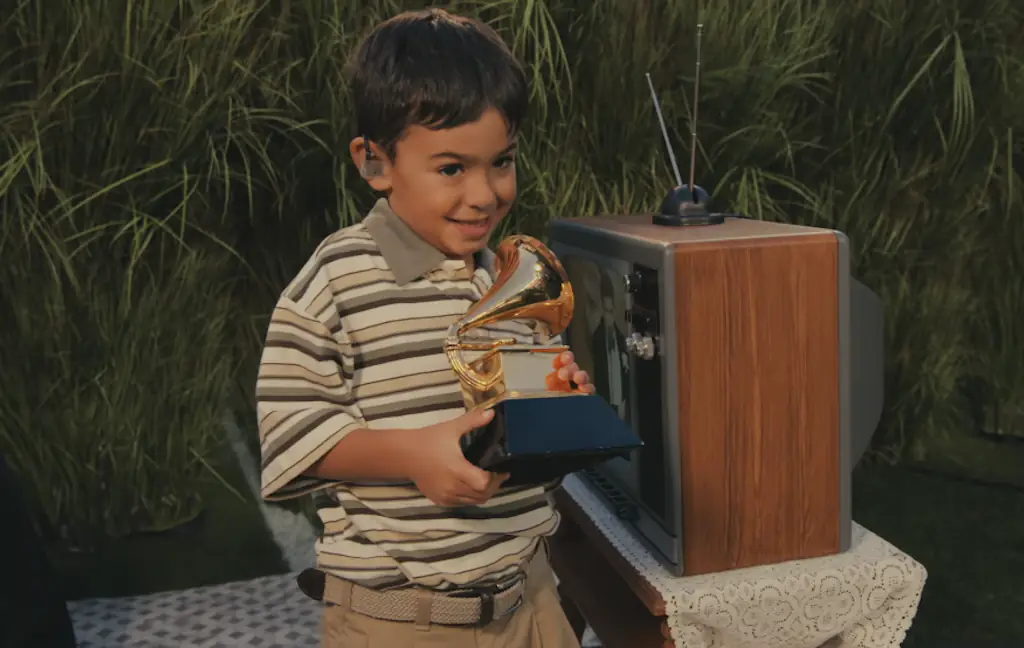
Although it quickly spread online, we can confirm it was not the same individual from the viral image after Huffpost Deputy Editor Philip Lewis confirmed on X.
The Performance Was Predominantly in Spanish
The halftime show was performed almost entirely in Spanish.
This marked one of the first Super Bowl halftime performances to be led primarily in Spanish without switching language for the broadcast audience.
The setlist reflected Bad Bunny’s existing catalogue and was not adapted linguistically for the event.
Puerto Rican Sign Language Was Used
The performance included Puerto Rican Sign Language interpretation.
This differed from standard American Sign Language typically used on major US broadcasts. The interpreter was integrated into the performance rather than positioned separately.
Nothing on the Set Was Accidental
Across the show, recurring elements were drawn from real life rather than symbolism alone.
The wedding involved a real couple with a prior connection.
The businesses referenced existing community spaces. The food carts mirrored real vendors. The clothing referenced identity and heritage. The language remained unchanged.
Most of these details were not explained during the broadcast.
They were present on screen, but easy to miss unless you knew what to look for