ADVERT
Film & TV5 min(s) read
Published 13:14 03 Jul 2026 GMT
Netflix's new docuseries, Worst Neighbor Ever, has revealed the haunting warning a man gave police before killing his neighbor.
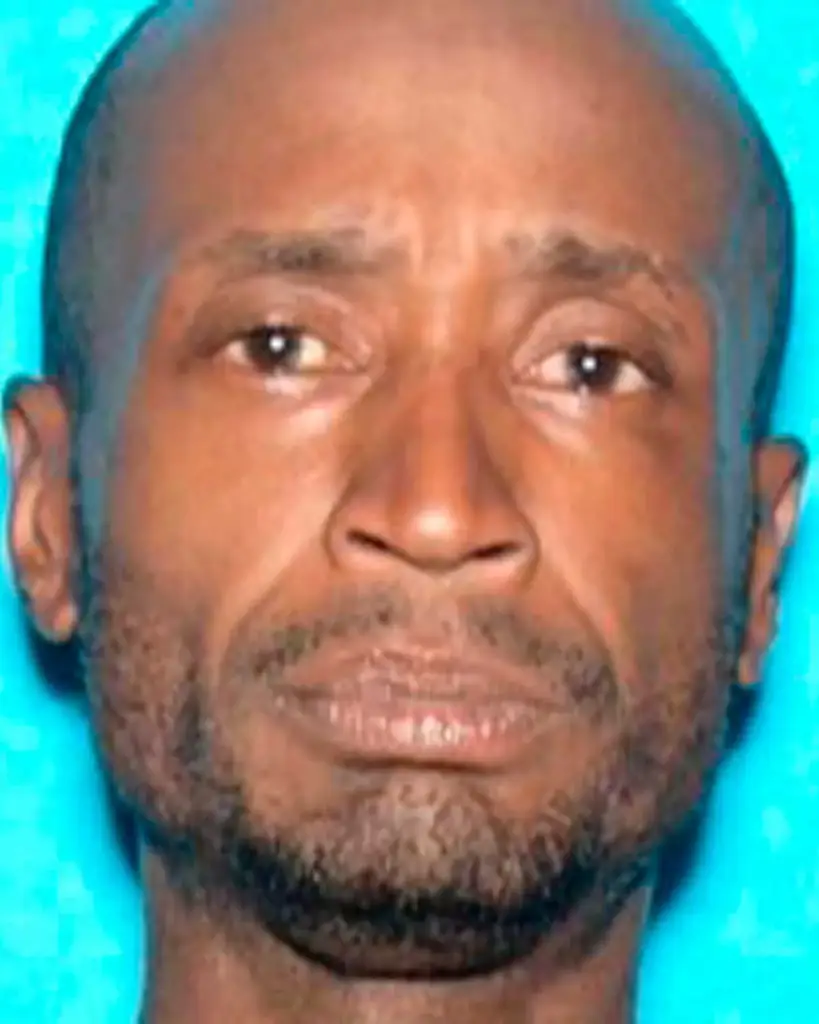
Episode three of the true crime show, Fear Thy Neighbor, tells the story of Jamal 'JT' Thomas and the months-long campaign of harassment that ultimately ended with the murder of expectant dad Miles Armstead in Oakland, California.
Before carrying out the fatal shooting, Thomas had already told responding officers exactly what he intended to do.
Miles and his wife, Melina, had moved into California's Eastmont Hills neighborhood, hoping to raise their growing family in a peaceful community.
The couple, who were expecting their first child together, initially got along with Thomas, who lived next door with his parents.
However, after the Thomas family was evicted from the property in August 2019, JT continued returning to the home and began squatting there despite new occupants living inside.
According to the documentary, his behavior quickly went from repeatedly knocking on the Armsteads' door late at night to smashing windows with rocks and bricks, shouting abuse, and making violent threats.
Melina said their windows were smashed with rocks or bricks more than 20 times during the ordeal, forcing them to board them up for protection.
The harassment became so relentless that Miles spent his nights sitting outside the house with the family's Boxer dog and a baseball bat while his wife and children slept inside.
Eventually, the couple got a restraining order requiring Thomas to stay at least 100 yards away from them and their home.
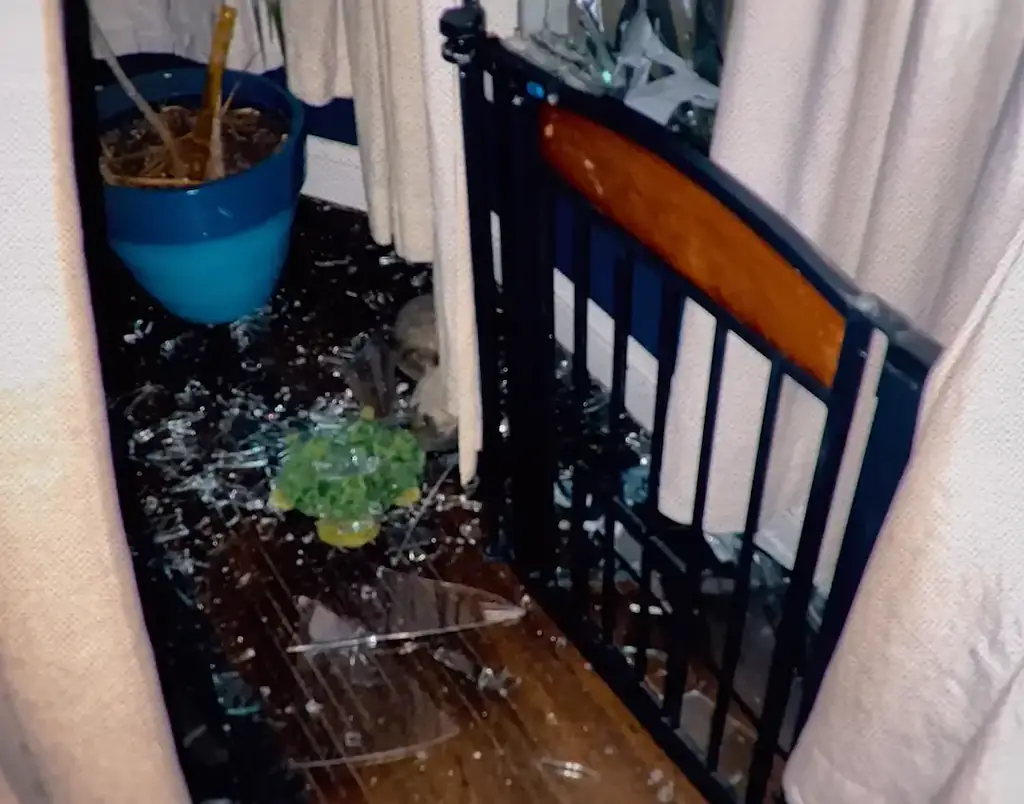
Despite the restraining order, another confrontation broke out between Miles and JT in February 2020, prompting police to respond.
Bodycam footage shown in Worst Neighbor Ever captures one officer appearing to downplay the seriousness of the situation.
The Oakland Police Department officer can be heard shouting: "Grown ass men can't listen to simple instructions."
"Acting like 12-year-old girls, both of you guys," he added while directing Thomas into the back of a patrol car.
As he was being arrested, Thomas made a chilling prediction: "I'm gonna kill him next time."
He then repeated the threat, telling officers: "Guess what guys, I'll be right back. I'm gonna kill [Miles] next time."
Thomas was arrested for making criminal threats, and the Armstead family believed the nightmare was finally over.
Instead, he was released from custody just 48 hours later.
The Armsteads were never informed that Thomas was back on the streets.
Civil rights attorney Adante Pointer, who appears in the documentary, said Thomas had been on "the highest level of supervised probation" when he was arrested in February 2020 and should have remained in custody.
His probation had begun in 2012 and was due to continue until 2022.
Fearing for their safety, Miles and Melina eventually made the hard decision to move into an apartment, where they finally felt some relief from the harassment.
But in May 2020, when Miles returned to the neighborhood to run an errand, Thomas was waiting for him with a gun.
He shot Miles dead in the street.

At the time of the shooting, Melina was heavily pregnant.
She gave birth to their daughter, Ava, two months after Miles' death. Miles is also survived by the three children he shared with his first wife.
In the documentary, the widow tearfully recalled sensing something was wrong before learning what had happened.
"I was sitting at my desk, working, and never in my life have I felt a feeling the way I had felt," she said.
"It was like for a quick moment he was there, then I felt him, so close. And [then] he felt, like, so far. And then I just started balling, crying."
"It was the weirdest experience. I just had this, like, panic. I called, and I kept calling.
"He wasn't a texter but he always picked up my phone calls, and he didn't pick up.
"So I literally waddle all the way back to the bedroom, putting clothes on, and I'm like, 'I have to go to the house, I have to find him, something's wrong'."
When she arrived near their former home, she saw police tape, a coroner's van, and her husband's car, immediately realizing the worst had happened.
In July 2024, Thomas was found guilty of first-degree murder. He was also convicted of assault with a deadly weapon and possession of a firearm by a felon with prior convictions.
He was sentenced in April 2025 to life in prison with the possibility of parole after 28 years and eight months, where he remains incarcerated.
You can watch all episodes of Worst Neighbor Ever on Netflix.
film & tv1 min(s) read
us3 min(s) read
lifestyle2 min(s) read
Published 17:18 06 Mar 2021 GMT
us news3 min(s) read
Published 14:32 21 Jun 2024 GMT
us3 min(s) read
Published 16:13 17 Sep 2020 GMT
Netflix has just released a disturbing trailer for an upcoming true crime documentary, examining the horrific homicides committed by Christopher Lee Watts, who brutally murdered his wife, two daughters, and unborn son in 2018.
The documentary is called American Murder: The Family Next Door. Directed by Jenny Popplewell, the documentary uses previously-unseen archive footage.
Christopher Lee Watts and Shan'ann Cathryn Watts, who both hailed from the state of North Carolina, first met in 2010 and married two years later. They later had two daughters - Bella Marie and Celeste Cathryn - and moved into a five-bedroom home in the town of Frederick in Colorado.
Take a look at the disturbing trailer for the documentary in the video below:
[[jwplayerwidget||https://content.jwplatform.com/videos/kjLtWoqD-Q0L14jDU.mp4||kjLtWoqD]]
Shan'ann was last seen alive at 1:48 a.m. on August 13, 2018, after being dropped off by a colleague. Shan'ann, who was pregnant at the time of her disappearance, as well as the two girls, were reported as missing to the police the next day, after Shan'ann missed a work appointment.
Chris Watts initially insisted he did not know the whereabouts of his spouse or children, but on August 15 he confessed that he had strangled his girls and wife, and buried their bodies in a shallow grave at his work-site. He pleaded guilty to first-degree murder and other charges and received five life sentences without the possibility of parole.
[[twitterwidget||https://twitter.com/GeorgePallas4/status/1304109884141645828]]
Per Collider, Netflix has since released a synopsis for the show, which reads:
"Told entirely through archival footage that includes social media posts, law enforcement recordings, text messages and never-before-seen home videos, director Jenny Popplewell pieces together an immersive and truthful examination of a police investigation and a disintegrating marriage."
American Murder: The Family Next Door is due to drop on Netflix on September 30, 2020.
Published 13:12 27 Nov 2024 GMT
In a chilling sequence of events that culminated in November 2023, Tiffanie Lucas, a 33-year-old mother from Shepherdsville, Kentucky, committed an unthinkable act that led to the death of her two young sons, Maurice, aged six, and Jayden, aged nine.
The incident, captured partially on police body cams and a neighborhood Ring camera, unfolded in a tragic narrative that has since been dissected by both the media and the courts.
Tiffanie Lucas carried out the murders in her own home. Shortly after, a neighbor’s Ring camera captured the sounds of gunshots, followed by Lucas running out of her house pleading for help.
Responding officers found her collapsed in her driveway, where she confessed that her children were dying inside. The boys were discovered next to a gun, their bodies covered in blood.
Lucas’s behavior post-arrest was erratic and distressed. In a video released by Law&Crime, she is seen lying on her driveway in handcuffs, struggling to stand and insisting to the officers that she felt unwell and "not right."
During her interrogation, her mental state appeared increasingly unstable as she fixated on minor details like an officer’s movements, and reacted strongly to sounds and disturbances, suggesting a deep psychological turmoil.
Her explanation for the murders pointed to a disturbing blend of external influences and internal conflict. Lucas claimed that the video games her children played and content they viewed on YouTube had a manipulative effect on their minds, which she felt extended to herself, leading her to believe that something had been "put upon" her house.
She told the police: "I feel like someone put something upon my house or me or something. I just don't feel right. I don’t do this. I love my kids."
The complexity of Lucas’s mental health was a key component of her defense. Initially pleading not guilty, she later changed her plea to guilty as her attorneys prepared an insanity defense, citing "powerful delusions" on the day of the shooting.
They argued that she was manipulated through digital means like Facebook and Wi-Fi, which they claimed influenced her actions.
This defense highlighted her vulnerability and the possible impact of her mental health on her perception and actions.
During her sentencing, the emotional weight of the tragedy was palpable. Maurice Baker Sr., father of one of the victims, expressed his profound loss and missed moments with his son, directly confronting Lucas in court.
The judge reflected on the unimaginable horror the children must have experienced, emphasizing the devastating impact of Lucas’s actions.
Tiffanie Lucas was sentenced to two life terms, with the possibility of parole in 20 years, as the community and the victims’ family grappled with the dual themes of immense loss and the critical importance of addressing mental health issues comprehensively.
California neighbors have rallied together to guard the home of an Asian-American family following a series of "deeply upsetting" racist attacks.
Haijun Si and his family - as well as some of their neighbors - recently spoke to the Los Angeles Times about a series of racially motivated incidents the family endured.
The Si family moved to America from China four years ago and relocated to a new home in Ladera Ranch, Orange County, in September.
However, soon after the move, Si, his wife, and their two young children were targeted by a group of around 20 teenagers in the area.
Learn more about the story in the report below:The teens persistently pranked the family by ringing their doorbell and running away, throwing rocks at their house, and hurling racial slurs at their new neighbors.
"My kids are scared. I'm very annoyed," Si, 48, told the Times. "At night, my wife and I could not sleep for more than three or four hours. Please, parents, tell your kids don't do that again."
Si took action by putting in place a new fence and cameras around his home, and he also got in touch with the authorities to launch an investigation.
His neighbors also took it upon themselves to help prevent the attacks by standing guard in the driveway and from their cars.
"I did not understand the extent of the harassment and how often it was occurring, at first. I was immediately outraged and wanted to help," neighbor Layla Parks told the Times.
Parks even shared a video of one of the attacks to a local Facebook group, which prompted people in the community to help guard the family's home.
"This harassment started almost immediately upon them moving here, and the fact that it was so clearly tied to their race is deeply upsetting," neighbor Olivia Fu told KABC.
Parks admitted to the Times that the harassment faced by the Si family made her "physically ill," and that it made her realize racism is "alive and well" in Ladera Ranch.
"It's definitely made me sad for this community because this is just a wonderful place full of friends and neighbors that love and care about each other," she told the Times.
Over the last year, particularly as a result of the Covid-19 crisis, the LA Times reports that there has been a rise in violent attacks against Asian people in many parts of the US.
Published 10:30 06 Jun 2025 GMT
A neighbor of the dad who allegedly murdered his three daughters has opened up about the final words they exchanged before the tragedy.
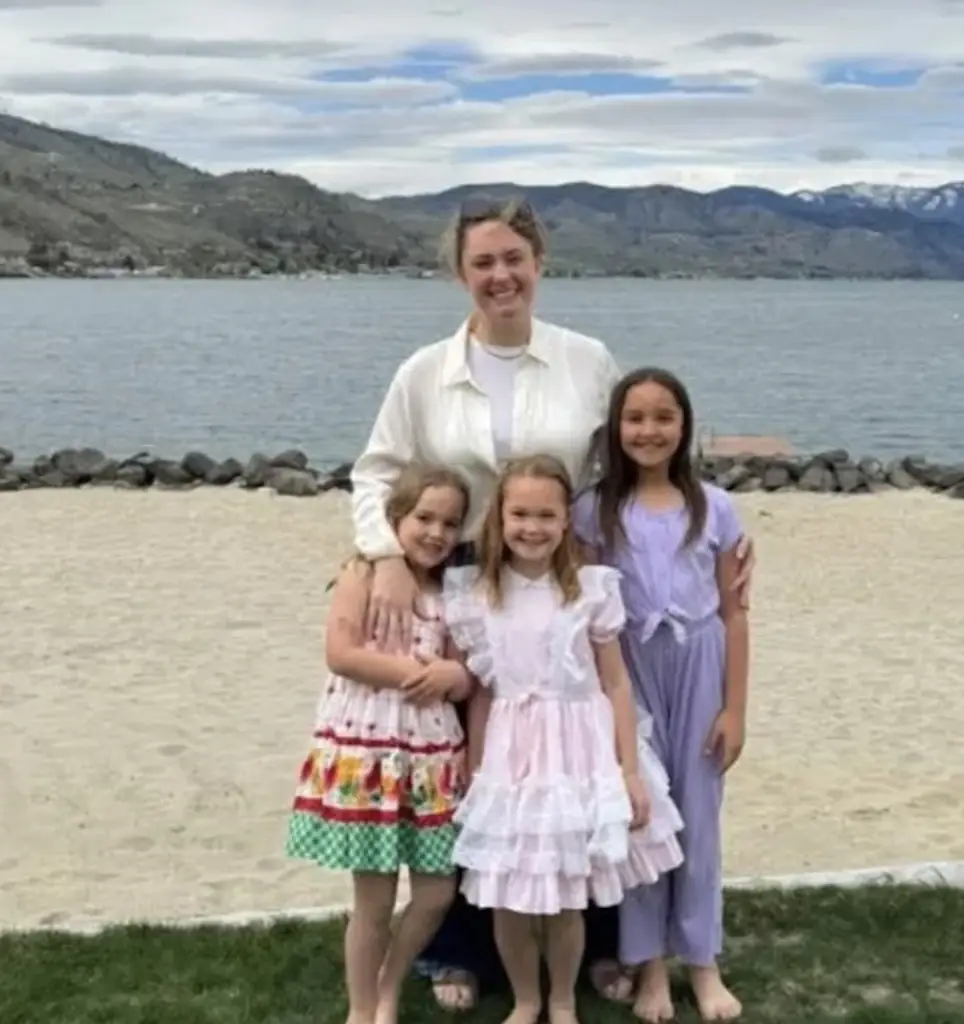
Travis Decker, 32, is now the subject of a massive, multi-agency manhunt after the bodies of Paityn, nine, Evelyn, eight, and Olivia, five, were found at a remote campground in Washington.
Their mother, Whitney Decker, had contacted police on May 30 after their father failed to return them on time.
“What prompted her to call us was that… he was late returning the girls and had not communicated to her that he was going to be late, which was his typical fashion and so this was out of the ordinary,” Capt. Brian Chance told NBC4 Washington.
One of the last people to see Travis Decker was his neighbor, Binh Nguyen, who shared disturbing observations from that final encounter.
"Decker had a 'sad look' as he was picking up his children on Friday," Nguyen told the Daily Mail.
What struck Nguyen was how Decker kept repeating himself. “What was strange was that he kept asking me the same question at different points in our conversation,” Nguyen said. “Like he wasn't remembering he already asked.”
Nguyen said that Decker kept asking "how are you doing" multiple times.
Nguyen, visibly shaken, now regrets not seeing the signs. “I simply couldn't understand how the man could have killed those beautiful children,” he said, speaking from his kitchen just a few yards from the Decker family’s home.
He recalled texts shared between Whitney and himself - heartbreaking messages that revealed her gradual realization that the girls weren’t coming back.
Nguyen referred to Whitney Decker as “the ideal mom” - juggling college, two jobs, and her daughters’ activities from sports to Disney World trips.
Her daughters, he said, were kind and thoughtful. Evelyn once gave him a friendship bracelet. Paityn handed Nguyen’s son a card with a crumpled dollar inside, saying she hoped to get better at writing.
But things at home weren’t perfect. Nguyen was aware of the conflict in the Decker marriage, noting that he had seen Decker with a battered face and Whitney with a broken arm in a sling. When asked about the bruising, Decker claimed it was from “allergies.”
Whitney had told others that Decker “became a lunatic” and their divorce was driven by his “tantrums”.
Court documents reveal that while their divorce was reportedly civil, Decker refused to sign the final parenting plan, which required mental health and anger management counseling services he never pursued.
By the time of the murders, Decker had reportedly been living out of his truck and was considered homeless.
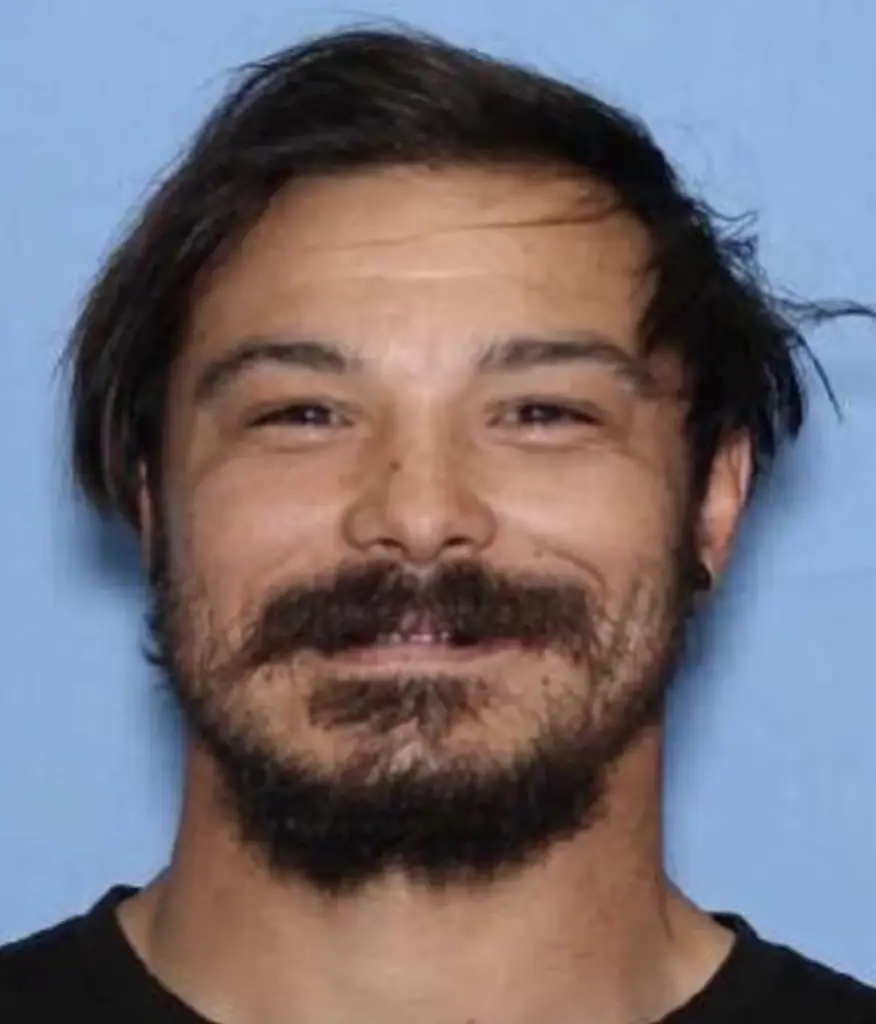
Decker is described as 5'8", 190 pounds, with black hair, brown eyes, and multiple arm tattoos. In some images, he has a ponytail, bushy mustache, and goatee. He was last seen in a light-colored shirt and dark shorts.
Authorities stress: “It is unknown if he is armed at this time but he should be considered dangerous and should not be contacted or approached.”