


Film & TV3 min(s) read
The scariest movie of all time according to science has been named and it's free to stream

Horror fans spend years debating which cinematic nightmare delivers the ultimate fright. While personal taste usually dictates what makes someone jump out of their seat, researchers have spent recent years turning to empirical data to settle the argument once and for all.
By tracking real physiological responses under controlled conditions, scientific studies have officially crowned the title holder, and viewers can watch it without paying a dime on ad-supported streaming platforms.
Released in 2012, Sinister has held the title of scariest movie of all time for a fourth consecutive year. Directed by Scott Derrickson, the film stars Ethan Hawke as a crime writer who moves his family into a house where a series of gruesome murders once took place.
His research leads him to some horrific found footage, which is when things take a dark turn. Sinister has a Scare Score of 96, with heart rates spiking at 131 BPM.
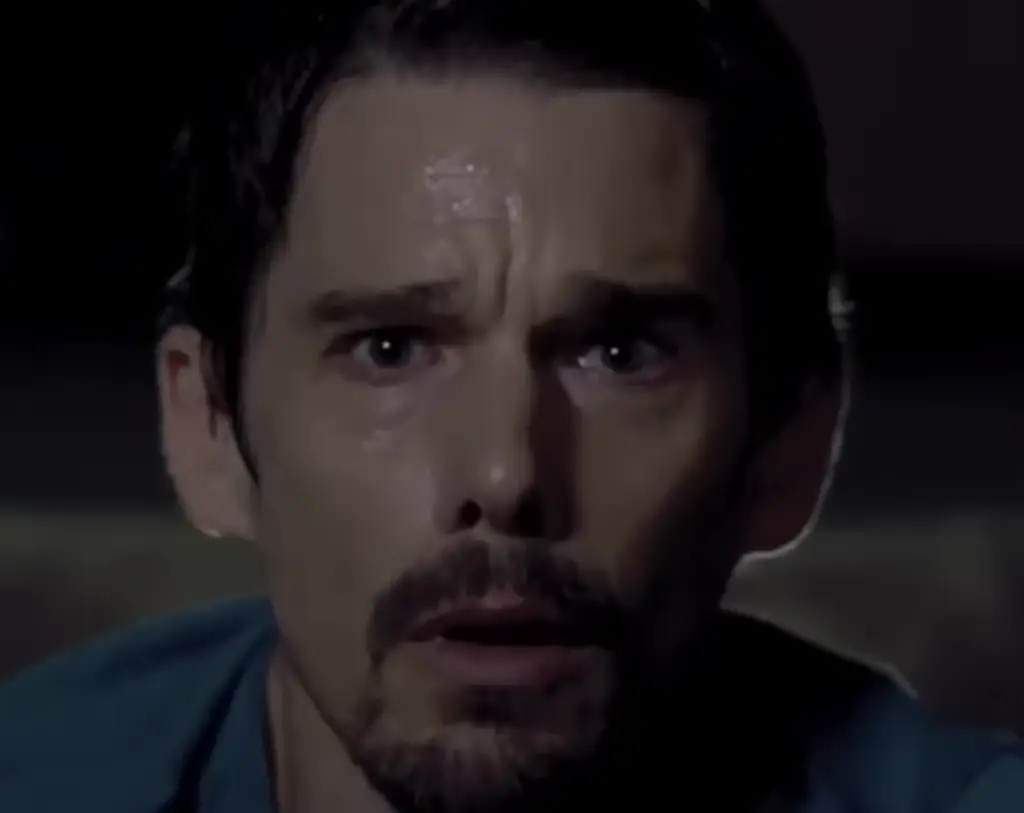
The project gained its scientific reputation through the Science of Scare Project, an ongoing experiment originally organized to measure biological fright responses.
By monitoring viewer heart rates and calculating both the average spike and overall cardiac agitation, researchers established a standardized metric for cinematic dread.
Even as contenders arrive in theaters every autumn, this low-budget masterclass in tension consistently ranks at the top of the leaderboard.
The science behind the terrifying results
The study began by gathering the highest-rated horror entries across major community platforms to build an exhaustive testing pool.
Participants were hooked up to heart monitors to track both resting heart rate and the sudden jumps caused by jump scares. While the average resting heart rate sat near 65 beats per minute, audiences watching Derrickson's film experienced sustained pulses averaging 86 beats per minute, alongside that extreme peak of 131 BPM.
The film relies on authentic Super 8 footage to simulate chilling home videos discovered inside the attic. To get the specific look of the footage, Derrickson insisted on practical authenticity.

Speaking with Cinema Blend, Derrickson recalled wanting to achieve a type of film grain that was nostalgic for him. "It's very grainy. And when you blow it up, especially on the big screen, the grain is very particular. The color, the way it captures color is different," the director said.
"The way it has always felt to me, and this includes Super 8 films that [I] would find that my grandfather shot that I would watch on the home projector when I was a kid. They always feel a little creepy to me."
A modest budget that created massive influence
Produced by Blumhouse Productions for a modest budget of $3 million, the film went on to generate $87.7 million globally. That financial success helped establish a repeatable production framework for the studio, laying the groundwork for later original horror releases.
Beyond the financial returns, the story established a chilling presence in popular culture through its primary villain, Bughuul, a fictional entity crafted with historical and mythological roots tied to ancient lore.
The production also favored practical camera work over heavy digital enhancements. Derrickson sought inspiration from major filmmakers who preferred authentic setups over computer graphics. In an interview with The Film Stage, Derrickson cited Christopher Nolan as inspiration.
"If you can shoot it real it will look better," the director said. "And that's why [Christopher] Nolan's movies look better than anybody else's big budget movies. Because he has that mantra in his mind. He doesn't like CGI. He wants to shoot it real."
The movie is currently available to stream on free platforms like Tubi.