


Sport4 min(s) read
Hyrox submits new rules after world record holder soiled herself mid-race and kept going
.jpg_I4Ebof?tr=cr-0.338.2730.3068,f-webp,q-70,w-100)
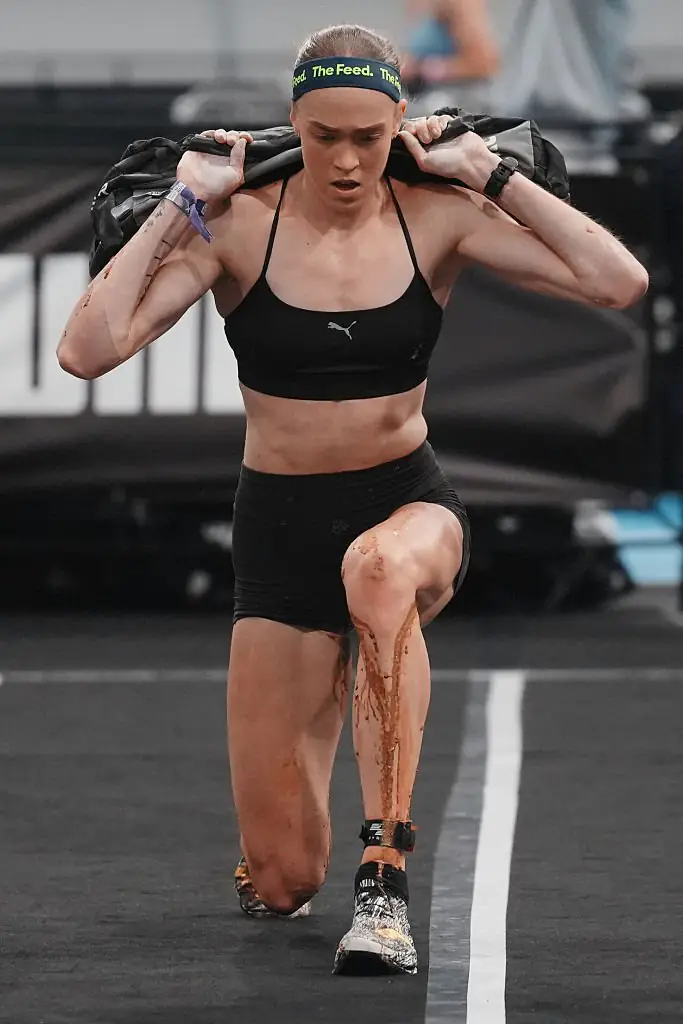
Hyrox has been forced to submit new rules to its global headquarters after an athlete suffered bowel incontinence during a race in Beijing and continued competing while videos of the incident went viral.
Australian athlete Joanna Wietrzyk, who holds the women's Hyrox world record, soiled herself during the women's elite race on Saturday.
She did not stop, she kept running. In the end, she won.
The footage spread across Chinese social media within hours.
The response from the public and from other athletes was immediate.
On Monday, Hyrox China issued a statement admitting that the organisation's current global rulebook has no provisions for what to do when this happens.
Why officials couldn't intervene
This is the detail that has angered people more than the incident itself.
Hyrox China said the officiating team 'had to make an on-the-spot judgment based on their experience at previous Elite15 events' because there was nothing in the rules telling them what to do.
They could not stop her. They could not disqualify her. They could not intervene at all.
The statement acknowledged this directly, calling it a gap 'in the event's competition rules and procedures'.
In practical terms, a woman ran through a public fitness event in a state of visible bowel incontinence, across shared equipment, over shared flooring, past other competitors and spectators, and nobody with authority could do anything about it because nobody had written a rule saying they could.
What Hyrox is doing now
Hyrox China has formally submitted a proposal for rule revisions to the organisation's global competition team.
The proposal covers four areas: course management, on-site intervention, event suspension, and result determination in cases involving what the statement describes as 'extreme physical distress or public health risks at competition venues'.
In other words, officials at future events would have the authority to pause or stop a competitor who presents a hygiene or health risk, and to determine whether their result stands.
After Saturday's race, the team replaced every piece of carpeting across the entire course and carried out a second round of deep disinfection before Sunday's events could go ahead.
Who Joanna Wietrzyk is
She is not an amateur. She is one of the best female Hyrox athletes in the world.
In April, she set the women's Hyrox world record in Warsaw with a time of 54 minutes and 26 seconds.
On Saturday in Beijing, she won the elite race in around one hour.
She is a serious, elite-level competitor who appears to have made a calculated decision that the cost of stopping was greater than the cost of continuing.
Whether that decision should have been hers to make is now the question Hyrox has to answer globally.
What is Hyrox?
Hyrox is a global fitness racing series that has exploded in popularity over the past few years.
Competitors alternate between one-kilometre runs and functional fitness exercises including sled pushes, sled pulls, burpee broad jumps, rowing, farmers carries, sandbag lunges, and wall balls.
A standard race involves eight rounds of each.
The elite division is faster and heavier. Events are held in indoor arenas and convention centres in cities worldwide. Thousands of amateur and professional athletes compete at each one.
Until Saturday, the biggest controversy in Hyrox was whether sled weights were fair across different venues. That conversation has been replaced by a very different one.

The wider debate
Incontinence during endurance events is not uncommon.
Marathon runners have dealt with it publicly for decades. The difference with Hyrox is that competitors share equipment. They run on the same carpet. They grip the same handles. They lie on the same floor for burpees.
The hygiene issue is not just about the individual athlete. It is about every person who used that course after her.
Hyrox China's statement acknowledged this.
Whether the global rulebook is updated in time for the next round of events remains to be seen. For now, the organisation has admitted the gap exists, and the world record holder is the reason they found out about it.