Keep your Christmas chocolate bounty close, folks, because I have some alarming news. Maybe you're a sucker for a KitKat or a kiss from Hershey's, and even if you strictly seek out the stuff with a cocoa percentage of 70 and up – it's going to be grim for everyone. I'm sorry to be the bearer of bad news but, um... experts are saying that the whole world could run out of chocolate in the next 30 years.
Dun dun DUUUUUN.
Yep, apparently the precious cacao plants that bring us the miracle that is chocolate in all its forms are struggling to survive in warmer climates. The trees require very specific conditions to thrive, including lots of rain and high humidity. This means that most of the world's cacao plants only grow in a narrow belt about 10 degrees either side of the equator, in tropical climates in countries in Africa and Asia.
The research published last year titled Destruction by Chocolate highlighted that if temperatures rise by just 2.1 degrees Celcius in the next 30 years, the plants would be put under a lot of stress and would probably struggle to stay alive. And with the rate of climate change thanks to global warming right now, that's not an impossible scenario.
Can you imagine? I'm expecting full pandemonium and for most people to react like this:
[[youtubewidget||https://www.youtube.com/watch?v=OZYY1r-RCdI]]
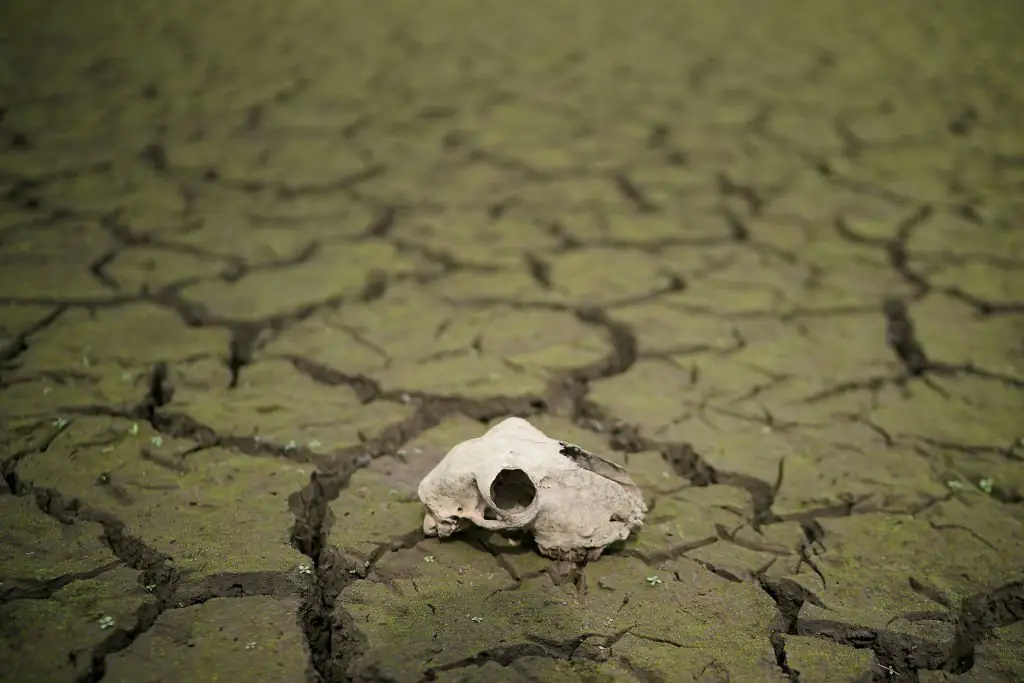
Higher temps will mean less water retention in soil and plants, and so areas where the trees are being farmed right now will become too arid for the cacao plants' liking. This poses a new dilemma for countries such as Côte d’Ivoire and Ghana to decide whether to push their production areas into the more moisture-rich mountains by 2050 – at the expense of upsetting what is at the moment a carefully preserved nature reserve. Do they continue to supply the world's choccy habits, or save their vulnerable ecosystems?
While the demand for chocolate keeps rising and rising as more parts of the world get a taste for the stuff, supply hasn't been able to keep up thanks to farming methods that are now very outdated and old-fashioned. Doug Hawkins from research firm Hardman Agribusiness said cacao production hasn't changed for hundreds of years.
"Unlike other tree crops that have benefited from the development of modern, high yielding cultivars and crop management techniques to realise their genetic potential, more than 90 per cent of the global cocoa crop is produced by smallholders on subsistence farms with unimproved planting material," he said.
And he thinks the possibility that we'll run out of chocolate in the next few decades could start becoming reality in the very near future: "All the indicators are that we could be looking at a chocolate deficit of 100,000 tonnes a year in the next few years."
Gulp. So it'd be wise to stock up on your choc right now and for Pete's sake remember to turn off your damn lights when you're not at home. The more energy you waste and fuel you burn means less chocolate in the future. And who would want to live in that kind of world?
The millennial generation have grown up with the the implications of climate change being very much a tangible reality. Alongside creating papier-mâché volcanoes in Geography, we also studied the hole in the ozone layer and the properties of greenhouse gases. But despite our increasing education on the topic, it's becoming more and more apparent that we, as a global community, have not done nearly enough to stave off the much-feared consequences of global warming.
If you're a user of the thing called the internet, I can guarantee that you've seen picture after picture of forlorn polar bears and penguins who are struggling with the rate at which their habitat is being destroyed. Whilst their plight has caught the public's consciousness for the better, our own land is also under threat.
According to a recent study, by the end of this century, temperatures in South Asia could become too hot and humid for humans to live there.
A new study published in the journal Science Advances claims that one quarter of the human population could be under threat as South Asian countries such as India, Pakistan, Bangladesh, Nepal and Sri Lanka could soon become too hot to sustain human life.
Researchers used data which was collected to analyse variations in terrain and vegetation, inputting it into global circulation models to extract computer simulations. The results showed extremes in "wet-bulb" temperatures in the South Asia region, which houses nearly 1.5 billion people.
"Wet-bulb" temperatures that are warmer than 35 degrees celsius (95 degrees Fahrenheit) stop the body from cooling down naturally. As researchers corroborated, "Human exposure to TW of around 35 degrees C for even a few hours will result in death even for the fittest of humans under shaded, well-ventilated conditions."
At present, "wet-bulb" temperatures do not tend to exceed 31 degrees celsius (88 degrees Fahrenheit), however, there is evidence that they are beginning to reach unprecedented highs. During the summer months of 2015, a heat wave hit Iran and areas of the Arabian Gulf, resulting in a "wet-bulb" temperature of 35 degrees celsius (95 degrees Fahrenheit).
Despite there being concerns about "wet-bulb" temperatures in the Middle East, scientists have chosen to focus on South Asia as the consequences could prove to be much more deadly. Not only does South Asia have a much larger population, but a great number of its civilians live below the poverty line and work outdoors in agricultural industries. Indeed, when India and Pakistan were hit by an extreme heat wave in 2015, around 4,500 people lost their lives.
Additionally, the warmest of the temperatures recorded in the Middle East occurred over the ocean, leaving citizens mostly unaffected.
As the study's leading researcher, Elfatih Eltahir states: "Most of these people rely on agriculture, and so they have to spend time outdoors that exposes them to natural temperatures." Eltahir, who is also a professor of civil and environmental engineering at the Massachusetts Institute of Technology, continued: "these three factors —extremely high temperatures, hundreds of millions of poor people and the reality of having to work outside — combine to define a very acute level of vulnerability."
The study concluded with the bleak assertion that were the second-hottest "wet-bulb" temperatures to occur in South Asia, they would occur over land, threatening the lives and livelihoods of billions of people.
Both before and after Bob Geldof committed to letting everyone know it’s Christmas time, intense debate has raged over the best way to feed the world. In a globalised era, we are all aware of the threat that many communities still face from famine and hunger. With an ever-expanding population and increasing pressure on agricultural industry, there are very real concerns over whether we can cope with greater demand for food. By 2050, the global population is estimated to reach nine billion. Considering the intense environmental pressure that we are already subjecting the planet to, the solution to feeding a further two billion people is not a straightforward one. Tackling the problem will prove to be one of the defining challenges of the next few decades.
[caption id="attachment_12344509" align="aligncenter" width="1920"]
Credit: Pixabay[/caption]
Agriculture is currently one of the largest contributors to global warming. Farming emits more greenhouse gases than all forms of transport combined, uses more water than any other industry and is the leading cause of habitat destruction around the world. It’s small wonder that calls for expansion in the sector are being met with scepticism in many circles. However, on top of the fast-approaching prospect of two billion extra mouths, an increased demand for more meat and feed for livestock in developing countries means that something has to give. Both environmental and economic realities mean that we cannot continue as we are. As seems to be the case whenever there is a potentially catastrophic issue affecting the planet, people are finding it difficult to agree on the best course of action. The largest schools of thought centre on technological, ethical and political solutions. In an age where so much is possible thanks to the might of mechanisation, it seems logical that an application of greater scientific resource to the food problem would make a massive difference. Over the last century, we’ve already seen how agricultural industrialisation has dramatically increased crop yields, while the use of pesticides and GMOs has helped our food supplies to become more resilient and more easily controllable. The proven benefits of technology suggest that a similar approach to the growing crisis may well provide at least part of the solution.
[[heroimage||http://cdn.junglecreations.com/wp/junglecms/2018/01/GettyImages-756738-compressor.jpg||GMO protestors in a field]]
On the other side of the debate are those who believe that a tech expansion misses the point of the situation entirely. There are many who propose that the most effective way to increase yields is not to rely on already industrialised industries, but focus our energy on empowering small, local and organic farms in the world’s poorest areas. Not only would this increase food production in areas that need it most, such as sub-Saharan Africa, but farmers would have the ability to lift themselves out of poverty whilst providing for local communities. Again, the argument that these advocates make is a compelling one. Another persuasive case is made by those who believe that the situation has nothing to do with food supply whatsoever. This group highlights the fact that, in reality, we have plenty of food currently available to feed people around the world and that, historically, supply has always been able to keep up with demand. The problem is political and global poverty is the key issue. The fact that famine almost exclusively affects developing economies around the world highlights the role that poverty plays in food shortages. Were we to focus on the disease of global poverty, rather than tackling the symptom that is hunger, we could ultimately alleviate concerns over population growth. While this argument ignores many of the wider environmental considerations, it nonetheless raises an interesting point about our attitude to the incoming crisis.
[caption id="attachment_12344513" align="aligncenter" width="1920"]
Credit: Pixabay[/caption]
Despite the doom, gloom and growing schism between those of differing opinion, all is not lost. Beyond the solutions advocated by the three main opposing camps, there are several ways that the whole agricultural industry can tackle the issue. The first is to all be more efficient with the land that we already have. With nearly 40 per cent of the earth’s landmass already dedicated to farming, we cannot afford to take up any more. Therefore, employing a combination of tech-based farming systems alongside organic strategies in both industrialised and developing economies will help ensure that the land we’ve already dedicated to agriculture is as efficient as possible.The second, unfortunately for indulgent foodies everywhere, is to be more thoughtful about our diets. Due to global demand for meat, only about 55 per cent of the food that we produce goes to feeding people. The rest is used in the meat and dairy industries. If we all ate fewer animal products, more of our arable produce could go to the hungry across the earth. Similarly, changing our global attitude to food waste has the potential to have a huge impact. With over 1.3 billion tonnes of food thrown away each year, even a slight reduction could make a massive difference.
[caption id="attachment_12344522" align="aligncenter" width="1920"]
Credit: Pixabay[/caption]
The key to overcoming our imminent crisis is finding a solution that’s in the best interests of the global community. Each of the main three camps offer solutions at the expense of other interested parties. By taking elements from each argument, it is certainly possible to envision a situation where the feeding of the nine billion is significantly more straightforward than catering for our current population. However, the time to act is now. If we fail to cooperate, the consequences for both humanity and the planet could be dire.
Another day, another prediction of when humans will be wiped off of the face of the Earth.
In fairness, if you keep predicting, it will probably be correct one day.
I think we should all give ourselves a pat on the back for how many supposed apocalyptic events we've lived through.
2012 is probably the biggest one that comes to mind, but I also remember sitting in school one day absolutely convinced that the Large Hadron Collider was going to destroy the Earth.
And yet, as a species, we persist... for now.
We've lived through many "world-ending" events. Credit: aryos/Getty
At the University of Bristol, researchers have recently unveiled a startling revelation about the eventual fate of life on our planet, per LBC.
Utilizing a supercomputer to analyze geological and atmospheric data, their findings point toward a dramatic conclusion: the formation of a colossal supercontinent that will reshape the Earth as we know it.
Dubbed Pangea Ultima, this future landmass is envisioned as the culmination of millennia of tectonic movement, where continents merge to form a singular entity.
Dr. Alexander Farnsworth, a member of the research team, explained the implications of this discovery, stating: "The newly-emerged supercontinent would effectively create a triple whammy, comprising the continentality effect, hotter sun, and more CO2 in the atmosphere, of increasing heat for much of the planet."
The planet could get too hot to live on. Credit: Christopher Furlong/Getty
The envisioned landscape of Pangea Ultima paints a grim picture of scorching temperatures and inhospitable conditions.
With average temperatures projected to soar between 40 and 50 degrees Celsius, coupled with high humidity levels, life as we know it would face unprecedented challenges.
The ability to regulate body temperature through sweating, a fundamental mechanism for mammals, would be heavily impacted.
Despite the dire forecast, the study suggests that a fraction of Pangea Ultima's landmass - estimated between eight and 16 percent - could potentially sustain life.
But even those areas wouldn't be comfortable to live in.
The Earth could have more supervolcanoes. Credit: Portra/Getty
In short, it's going to get very hot and we won't be able to survive it.
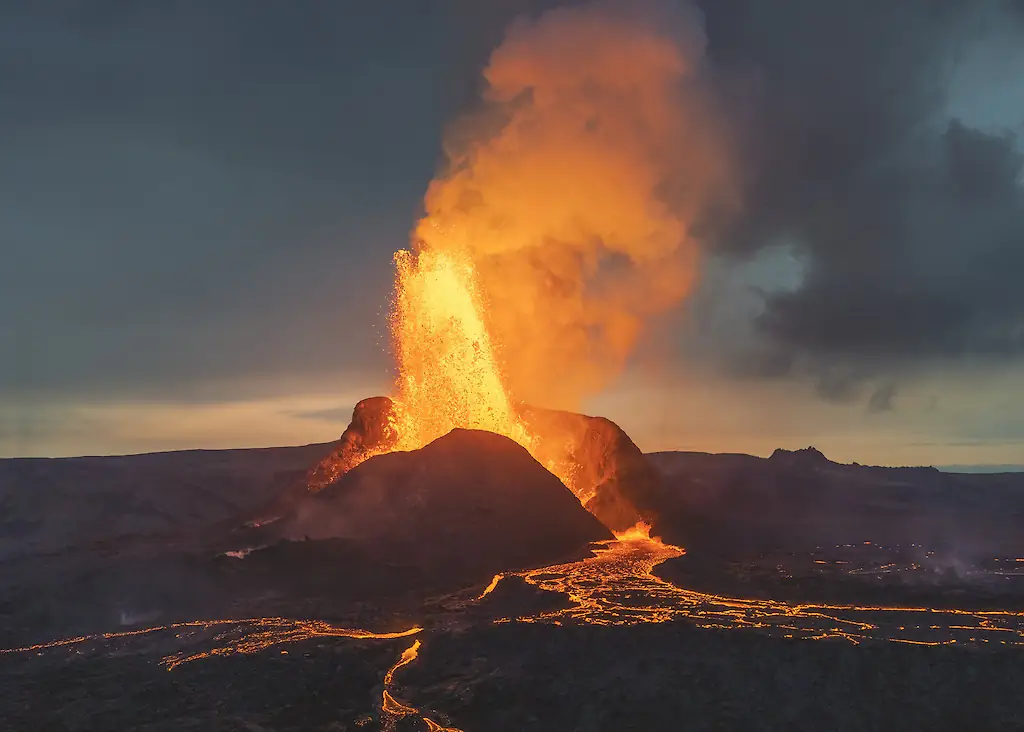
The convergence of tectonic plates could trigger a surge in volcanic activity, further complicating the environmental landscape.
The formation of new, massive volcanoes could certainly make things a lot worse than they already are.
Don't worry, all of this probably won't impact you unless you've found the fountain of youth.
The projected timeline for these events extends over the course of 250 million years. This vast timeframe offers humanity ample opportunity to prepare and adapt.
You'd hope that with Elon Musk wanting to colonize Mars right now, we'd have it sorted in 250 million years.
But for now, let's just do our bit to keep the planet as hospitable as we can!
Imagine this: you’re strolling down an east London street when you stop by a newsagents. You pop in, fully expecting to be in and out within the blink of an eye. Instead, the wall starts to move. All of a sudden, you’ve been transported into a 1930’s jazz era style chocolate salon.
Nope, you haven’t stumbled into Willy Wonka’s newest business venture. Instead, you’ve got a golden ticket to the world's first secret hot chocolate salon.
[[imagecaption|| Credit: Fairtrade]]
To mark Fairtrade Fortnight 2019, the Fairtrade Foundation is giving everyone the chance to discover the best-kept secret in the chocolate industry.
Everyone reading this is cordially invited to visit the mysterious newsagents, where they'll be able to push a button and be whisked away to the elusive salon. Here, they will take a seat and choose from three delicious hot chocolate recipes on the menu. Created by leading celebrity chefs, Melissa Hemsley, Tess Ward and Tom Hunt - each creation is named after a real cocoa farmer from West Africa.
So, what did all you chocolate lovers do to deserve this unadulterated bliss?
[[imagecaption|| Credit: Fairtrade]]
The fact of the matter is, just one visit to the Fairtrade Foundation’s new shop equals the chance to become an ally to female cocoa farmers in Africa.
As much as you adore chocolate, there are many things you don’t know about your favourite treat.
The world cocoa price has collapsed, leaving farmers even poorer than they were before. In short, behind the sweetness of chocolate lies a bitter truth: In the $100 billion global industry, most of Africa's cocoa farmers earn less than £1 a day, with 74p being the average daily income in Côte d’Ivoire.
This is less than half of the £1.86 they would need to have a decent life, leaving them short by £1.12 every day. Take a second to think about that.
That's less than the price of your average chocolate bar, less than the cost of the fuel it took to drive to the shop to get the chocolate, and less than a blow to your bank account - but for some farmers, this money can transform their daily lives.
Credit: Fairtrade]]
Needless to say, the shockingly low pay cocoa farmers receive in exchange for long and gruelling work days makes life more than a bit difficult. They often don’t earn enough to provide the basics for their families, or give opportunities to their children.
But there's one group who carry the greatest burden. Women. Labouring all day long, many female farmers not only have to stay out in the fields, but also carry water from place to place, look after their children and transport cocoa beans to market, among other things - often with fewer rights than male farmers, and definitely seeing less of the money for it all.
It is this inequality and unfairness that the Fairtrade Foundation is determined to tackle.
The UK charity has been working tirelessly for 25 years against inequality and to establish fair pay for farmers. Despite this however, the problems of poverty in the developing world are still pressing. Will you drink a hot chocolate and join the Fairtrade Foundation’s campaign to make living incomes a reality for farmers?
[[imagecaption|| Credit: Fairtrade]]
In the Fairtrade Foundation’s secret chocolate salon, each mouth-watering hot chocolate will cost just £1.86 - again, the small amount of money farmers need to earn each day to make a living income.
While enjoying drinks, guests will learn about Fairtrade’s campaign to ensure female cocoa farmers earn a living income, and with any luck, by the time they leave, they will have become an ally to cocoa farmers who work so hard to give people all over the world a food they adore.
The pop-up will run for 10 days, launching on Monday 25 February, the first day of Fairtrade Fortnight. The proceeds will go into creating a new generation of women leaders in Côte d’Ivoire so they can inspire others across Africa to become business owners, team up with other farmers and become leaders in their own communities.
So, are you ready to support female cocoa farmers to fight for the life they deserve? Trust us, chocolate tastes great, but equality tastes even better. Sign the petition to take exploitation out of our chocolate here.
For quite some time now, scientists and experts across the globe have been trying to warn us about the dangers of global warming and climate change. With ice caps melting, sea levels rising, and extreme weather conditions becoming more frequent, human life as we know it could be at serious risk if we don't start making serious changes to the way we live.
Unfortunately, too many people don't believe the facts, and even more are simply unable to make a change. Less developed countries still rely on fossil fuels for industry, and most people don't have the money to switch to electric cars or install solar panels.
As a result, this planet is becoming uninhabitable for its wildlife.
One of the most prominent examples of a species being affected by climate change is polar bears: a creature that relies on the cold conditions of the arctic circle to survive. As a result of global warming, however, the magnificent beasts are no longer able to hunt, and therefore end up starving to death.
In a video posted by National Geographic, a lone polar bear can be seen staggering through a snowless wilderness. There is no prey around for it to hunt and, even if there were, it is unlikely that the animal would have enough strength left to capture it.
Photographer Paul Nicklen, who witnessed the bear's suffering, told National Geographic: "We stood there crying – filming with tears rolling down our cheeks."
He explains that he and the team considered intervening and feeding the poor creature, but realized that this would only prolong its suffering. Moreover, it's actually illegal to feed the polar bears in Canada, which is where this footage was recorded.
Despite the heartbreaking nature of the video, Nicklen believed it needed to be shared with the world so that this bear's struggle would not have been in vain.
"When scientists say bears are going extinct, I want people to realize what it looks like," Nicklen said. "Bears are going to starve to death. This is what a starving bear looks like."
The photographer posted the clip on Facebook, noting in the caption:
"It’s a soul-crushing scene that still haunts me, but I know we need to share both the beautiful and the heartbreaking if we are going to break down the walls of apathy. This is what starvation looks like. The muscles atrophy. No energy. It’s a slow, painful death."
He went on:
"People think that we can put platforms in the ocean or we can feed the odd starving bear. The simple truth is this – if the Earth continues to warm, we will lose bears and entire polar ecosystems. This large male bear was not old, and he certainly died within hours or days of this moment. But there are solutions. We must reduce our carbon footprint, eat the right food, stop cutting down our forests, and begin putting the Earth – our home – first."
[[twitterwidget||https://twitter.com/NatGeo/status/939283476334895104]]
At this point, it is frankly unbelievable that some individuals choose to deny climate change - especially considering that whole towns and families have been torn apart by various freak storms and floodings and wildfires in just the past few months.
Hopefully, the footage of this poor bear will be enough to convince people that more needs to be done to save our planet - if not for the animals that are already suffering, but for the human beings that will suffer in the future if we don't act now.