Uncategorised3 min(s) read
health3 min(s) read
There's nothing more exciting than an upcoming trip. But whether you're jetting away to some exotic locale, or taking a mini-break in a picturesque European city, one thing is for sure: the travelling portion of your holiday is seldom enjoyable.
Sure, the top one per cent are able to travel in luxury, on the other side of the grey curtain where they are served cocktails and gourmet meals. Us scrimpers and savers, on the other hand, have to contend with knocking our knees against table trays, eating food with plastic cutlery, and standing in never-ending bathroom queues.
But in one regard, we're all equal. Regardless of how great your fortune is or how influential you are, we all have to deal with the toll that long haul flights take on our body, and it extends far beyond just jet lag...
Aside from dealing with crying children and subpar airplane food, those who fly long-haul can expect it to take a toll on their health, and in some cases it can even be serious.
Your chances of getting deep vein thrombosis are tripled from taking long-haul flights. A study found that women, especially those who take the contraceptive pill, and people who are particularly tall, short and overweight are most at risk.
It makes sense - if you're cramped in a confined space for over eight hours - you can expect to be at greater risk of blood clots. It can be prevented by a few simple measures, however. Ensure that you're moving about the cabin as often as possible, and invest in properly fitted flight stockings - which help speed up the flow of blood in the veins.
We should also ensure that we're hydrated when cruising the skies. This is because humidity on planes can get as low as 10 per cent, which is incredibly low. In fact, there are times when the humidity of the world's deserts are significantly higher than that.
Alcohol should accordingly be avoided. Not only does it dehydrate you, but it also acts as a diuretic - meaning that even more fluid is passed out of the body as urine. If you're still intent on getting through the G&T's, however, try to balance it out with plenty of water.
The lack of humidity also dries out your mucus glands, meaning that it's easier to counteract someone else's cold or flu.
It's common knowledge that airplanes are hotbeds for bacteria and viruses. They reside all over the armrests, in the seat pockets, the toilet cubicles, and hover in the air, just ready to pounce.
Microbiologists have tested planes and discovered that germs certainly are commonplace, and can survive for hours or days after the passenger who brought them on board has departed. As well as being responsible for the common cold and flu, these bugs can cause everything from stomach upsets to skin diseases.
But, there is some good news. The theory that the air circulation systems within planes recycle all the germs and bacteria found inside is a bit of a myth, as they take in air from outside as well as re-circulating air from within.
Well, if you're not rethinking your 12 hour flight now, you better begin hydrating, stat.
travel3 min(s) read
As you might have noticed, human beings weren't really designed to fly. We don't have wings, can't deal with air pressure at high altitudes and we tend to prefer to be as close to sea level as possible. But, since we are able to travel by airplane, we can, and do, take to the skies.
However, while we may love a bit of air travel, it can often have some negative effects.
Dr. Steve Iley, the Medical Director for Bupa, has shared some of the most common problems caused by flying - and also some ways of dealing with/preventing them.
1. Back Pain
No matter where you are, sitting down for long periods of time with a bad posture can lead to back problems. But, if you keep yourself in the correct position, you can avoid any longterm damage. "Try to sit back, with your shoulders straight back rather than rounded and with both feet flat on the floor," says Dr. Iley. "Avoid crossing your legs or twisting your spine." Moreover, if you are able to, try to move around at least once an hour on a flight. Walking up and down the aisle or doing some stretches can make a huge difference.
2. Nausea
"The reduction in air pressure on a flight may cause you to feel dizzy, nauseous or have a headache. Plus, the air in the cabin is recycled and lacks moisture, making you feel more dehydrated than normal," the doctor explains. If you get travel sick, you can pick up some things to help at the pharmacy; and carrying some hand sanitizer/washing your hands regularly will help to ensure that you don't pick up any bugs.
3. Deep Vein Thrombosis
DVT is a fairly serious condition that can affect people - most often older individuals or pregnant women - while traveling or sitting still for long periods of time. It causes pain and swelling in the legs and, if left untreated, could cause a pulmonary embolism. "To prevent excess swelling in your feet, make sure to keep moving ... If this isn’t possible, move your feet up and down and side to side," recommends Dr. Iley. "Wearing comfortable footwear that's easy to slip on and off can help you to stay comfy if swelling occurs, and if you have poor circulation consider using flight socks."
4. Bloating
"The drop in cabin pressure at altitude can cause the gases in your stomach to expand, leaving you feeling bloated and uncomfortable," says the doctor. If you want to avoid this, try not to consume any fizzy drinks before boarding and steer clear of foods that you know cause excess gas. Drinking lots of water or peppermint tea can also help reduce bloating.
5. Jet Lag
Depending on the journey you're taking, jet lag might seem like an inevitability. However, its effects can be fairly serious (memory problems, constipation, indigestion), so it's important to do all you can to avoid it. "Staying hydrated is essential to decreasing the effects of jet lag, so drink plenty of water," says Dr. Iley. "Try to adjust these to your destination as quickly as possible helps minimise jet lag - getting some sleep may help."
6. Increased drunkenness
"It’s not as much fun, but avoid or limit your alcohol consumption on an aeroplane. Because of the low pressure and dry air in the cabin, you may feel more intoxicated than usual," the doctor explains. Plus, with the prices they charge on flights, you'll be saving your wallet some damage too.
So, if you're planning on a long-haul flight anytime soon, make note. Unfortunately, we don't have anything to recommend for that screaming kid two rows behind you. Maybe pack some earplugs, just in case.
travel2 min(s) read
A 33-year-old Canadian woman, known on TikTok as Emily (@alwayssingingmom), is sharing her harrowing experience of a near-fatal medical emergency during a long-haul flight, aiming to raise awareness about the risks associated with prolonged immobility during air travel.
Long-haul flights can be physically and mentally exhausting due to the extended periods of immobility, cramped seating, and changes in air pressure.
Sitting for hours without movement can slow circulation, increasing the risk of deep vein thrombosis (DVT), while the dry, pressurized cabin air can lead to dehydration and discomfort.
Jet lag is another challenge, as crossing multiple time zones disrupts the body's internal clock, causing fatigue, headaches, and difficulty sleeping.
Limited movement, poor sleep quality, and altered meal schedules can leave passengers feeling drained upon arrival, making long-haul travel a significant strain on the body.
Emily was on a 13-hour flight from Toronto to Dubai when, after remaining seated for ten hours, she stood up to use the restroom.
While waiting, she experienced a sudden, deep, dull ache in her chest and collapsed, losing consciousness for approximately five minutes. The fall resulted in a black eye and extensive bruising.
Upon landing in Dubai and seeking immediate medical attention, doctors diagnosed Emily with a life-threatening saddle pulmonary embolism—a large blood clot lodged at the bifurcation of the main pulmonary artery, blocking blood flow to both lungs. This condition is often fatal if not promptly treated.
Emily attributes her medical emergency to a combination of not moving during the long flight and her use of hormonal birth control, both known risk factors for blood clot formation. She is now urging fellow travelers to take preventive measures during flights, especially long-haul journeys. Her recommendations include:
Emily's experience serves as a stark reminder of the potential dangers associated with prolonged immobility during flights. She emphasizes the importance of being proactive about health and consulting with healthcare providers regarding individual risk factors before embarking on long-distance travel.
lifestyle3 min(s) read
People have taken to social media to discuss their new travel "hack" but an expert has issued a warning against it.
Traveling on planes can be a nightmare at the best of times.
A short-haul flight isn't too bad, but if you're doing upwards of five hours with limited legroom, it can really start taking its toll.
If you're anything like me, sleeping on public transport is impossible unless you're in business class and can lie down but... sadly that makes things very pricey.
Well, one sleeping hack that is doing the rounds on social media has caught the attention of experts.
The trend, which involves travelers folding their legs up to their chests and fastening their seatbelts around their ankles, is touted as a method to get comfortable rest on long flights.
TikToker @BrookeDoesEverything is a strong advocate of this practice. As a frequent traveler, Brooke claims to have discovered this method long before the rise of the internet.
"I fly two to four times a month, all flights that average more than four hours," Brooke shared with PEOPLE. "When I was a kid, I would play around all the time to find a comfortable way to sit, and I found one that worked. I have been doing the seatbelt hack since I could remember."
Brooke elaborated on the benefits of the method, stating: "It allows you to relax and not throw a limb onto your very close neighbor. It’s also one of the best ways to put your feet up without grossing anyone out."
Acknowledging the warnings from flight attendants and air travel experts, Brooke emphasized her caution.
"I, of course, do not do this during takeoff or landing. Only when we have reached cruising altitude and people are moving about the cabin," she explained. "When there is turbulence I definitely click in properly out of fear."
Despite the criticism, Brooke believes that travelers will continue using the seatbelt method due to the limited space provided by airlines.
"With the airlines constantly making the distance between the seats in front of us smaller and smaller, it’s getting harder and harder to rest your head on the tray table without your neighbor jamming their seat back into your head," she said.
However, several experts have voiced strong opposition to the trend.
Dr. Michael Breus (PhD, FAASM), Founder of The Sleep Doctor is particularly against the sleeping hack.
“This appears to be one of the dumbest ideas I have ever seen. If there is an emergency, I'm guessing both legs get broken, and if there is even mild turbulence, it could be another issue — probably a head injury," Dr. Breus stated.
Claiming that "sleeping on a plane is not rocket science," he said that a better way of sleeping would be to take an eye mask and maybe a sleeping aid such as a small pillow or even take over-the-counter sleeping medication.
Sadly none of those things work for me, so I guess it's back to staring out of the window while counting down the hours.
relationships4 min(s) read
Probably not for the nervous flyers, this.
If you've ever spotted a flight attendant sitting on their hands when the plane is taking off, the reason has finally been revealed.
Flying isn't everyone's preferred method of travel, but if you're wanting to go somewhere far away, it's usually the fastest way of getting there.
Personally, I don't have an issue with flying, but I still get a little jittery when the plane hits some turbulence or anything like that.
But we're in good hands, because the staff are prepared for every eventuality.
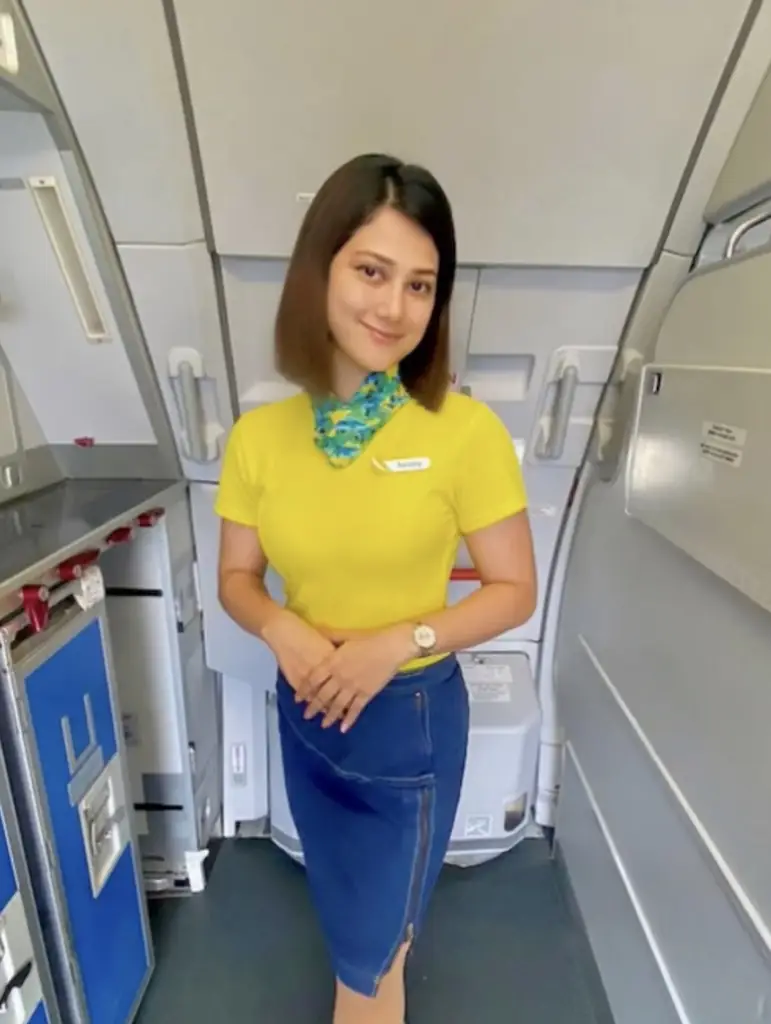
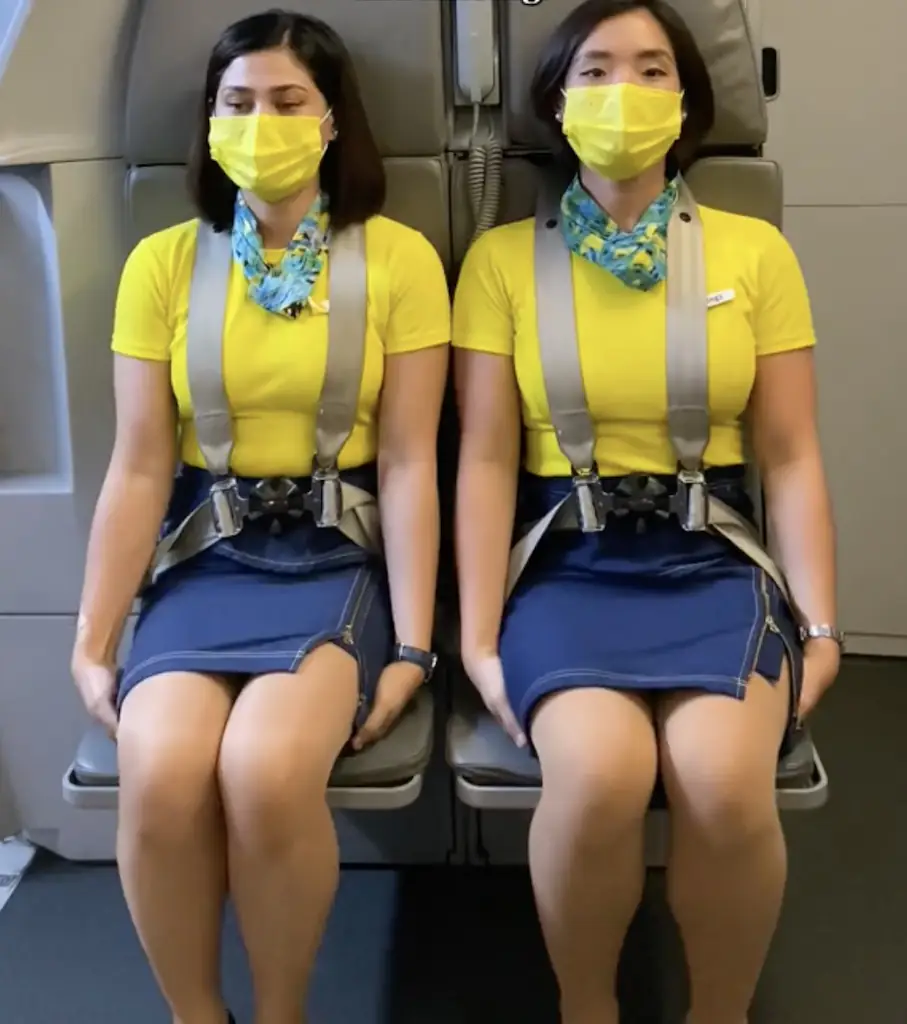
In a TikTok post, Henny Lim, a seasoned airline hostess with Cebu Pacific in the Philippines, shed light on a crucial safety measure that often goes unnoticed by passengers.
The video has generated a fair bit of interest, as she described what she calls the "bracing position". It reduces the risk of physical injuries in the case of an emergency.
"This position involves fastening your seatbelt securely, sitting upright, sitting on your hands — palms up, thumbs tucked and arms loose — and placing your feet flat on the floor," explained Lim, emphasizing the importance of maintaining a rigid posture to minimize potential injuries during unforeseen emergencies.
Accompanied by a coworker, Lim showcased the specialized posture, illustrating the meticulous steps flight attendants take to secure themselves in their seats, preparing for any eventuality.
But it's not just about physical positioning. Lim revealed that during these critical moments, cabin crew members engage in silent reviews, mentally preparing themselves for any emergency scenario during takeoff and landing.
"This includes being aware of emergency equipment locations, door operations, commands given, and any visual clues outside of the aircraft," she added.
People took to the comments to offer their thoughts, with one person referring to the need for this "bracing position" as "scary": "Good info. Always preparing for a crash is scary though."
The chances of the plane crashing are incredibly small, but that's part of the risk of working on a plane, I suppose.
Though while you most likely won't be involved in a plane crash, passengers can face other uncomfortable experiences onboard, such as the seats not being big enough.
Taking to Instagram, model Gracie Bon opened up about the struggles she faces as a plus-size passenger.
In the clip that divided her followers, the 26-year-old could be seen standing on a travelator as she headed to her boarding gate, before showing herself squeezing into the wide seat and using a seatbelt extender to strap herself in.
"Airplanes should have bigger seats. So today I had a flight and even if I was flying in first class I couldn't fit on the airplane seat. So this is a petition for all the airlines so big girls like me fly," she said.
"It's not my fault to have an a** this big. Please just make them bigger," she added.
"Airplanes are too small for big people," she continued. "It's 2024, bodies are changing so planes should too."
She then stated that she wouldn't "lose" her butt just to fit on a plane so people should "give me another solution or make planes bigger."