


Health4 min(s) read
Doctor tells patient he has three to six hours left to live and his reply has gone viral

A doctor recently shared a deeply moving account from his hospital career on his YouTube channel, capturing the attention of millions of viewers.
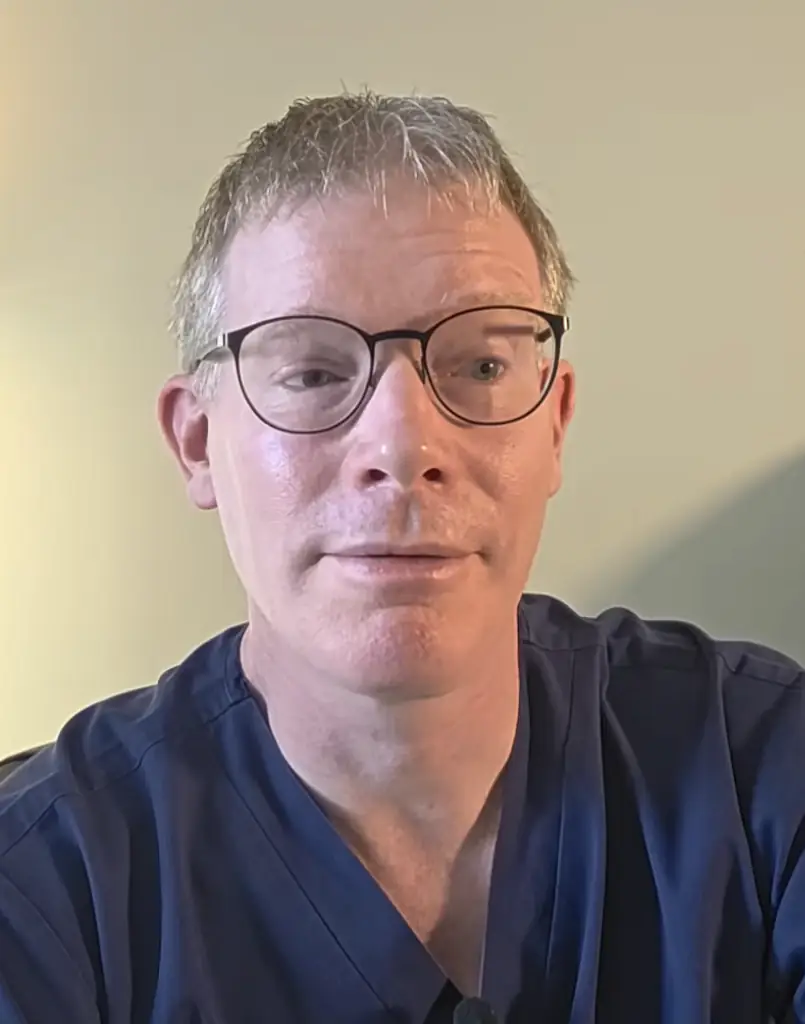
In the widely viewed video, Barrie Stevenson recounts the day he had to inform a seemingly stable older patient that he had only hours to live. Rather than reacting with panic or despair, the patient responded with a level of grace and gratitude that profoundly impacted the doctor.
The encounter took place several years ago when a man, whom Stevenson refers to as Arthur to protect his confidentiality, was admitted after fainting on a bus.
Arthur had been experiencing intermittent stomach pain for a couple of days, though painkillers had eased his discomfort. By the time Stevenson prepared to speak with him, Arthur was feeling well, sitting up in bed eating a cookie, and likely expecting to be discharged home.
Despite Arthur appearing comfortable, Stevenson had ordered a CT scan because severe abdominal pain in older adults is always a major concern.
The results uncovered a catastrophic medical emergency: Arthur had a massive ruptured aneurysm in his aorta, the largest artery in the human body.
While a ruptured abdominal aortic aneurysm often causes fatal internal bleeding within minutes, the bleeding in Arthur's case was temporarily contained by surrounding tissues at the back of the vessel, keeping him stable for a brief window of time.
Delivering devastating news
Stevenson immediately sent the scan to the on-call vascular surgical consultant and called him to discuss emergency intervention. The surgeon confirmed there was no realistic chance of saving Arthur through an operation. Staring at the scan after hanging up the phone, Stevenson felt a heavy sense of dread knowing the words he was about to speak would shatter a man who felt completely fine.
Stepping into the hospital cubicle and drawing the curtains, Stevenson sat beside Arthur. He recalls his throat feeling dry and his hands shaking so intensely that he sat on them to hide his nerves.
Drawing on his medical training, Stevenson explained the terminal diagnosis plainly and gently, then forced himself to stop talking.
"One of the most important things we're taught about breaking bad news is to allow silence," Stevenson explained, recalling how he silently counted to ten in his head to give Arthur space to absorb the shock without overwhelming him with complex medical jargon.

A surprising reaction
Arthur initially lay back against his pillows in stunned silence, staring up at the ceiling. Gradually, his expression softened into calm acceptance. Turning back to Stevenson, Arthur asked, "How long have I got, doc?" The physician gently told him the surgical team estimated three to six hours. After another quiet pause, Arthur reached out and gripped Stevenson's hand with a firm handshake.
Instead of expressing anger or fear, Arthur thanked the doctor, praising the medical team for their care and expressing gratitude for the time Stevenson took to sit with him and explain everything clearly. Stevenson felt almost embarrassed by the praise, realizing the roles had completely shifted.
"I'd gone into that cubicle thinking it was my job to help this man face death and accept what had happened, but actually, he was showing me how it might be done," Stevenson reflected.
Peaceful final hours
Stevenson promised Arthur that the staff would keep him comfortable and reach out to his daughters. When asked if he wanted anything, Arthur simply requested a cup of tea. Stevenson brewed the tea himself, wanting an excuse to check back in and ensure Arthur was not spiraling into distress once the initial shock wore off. He found his patient completely composed and polite.
Before ending his shift, Stevenson checked on the cubicle one last time and saw Arthur's daughters sitting quietly beside the bed with their hands resting on his arm.
When Stevenson returned to work the next day, a colleague told him Arthur had been moved to a private side room overnight, where he passed away peacefully in the early hours with his daughters by his side.
Reflecting on the memory years later, Stevenson shared his own hopes for the future: "If I'm fortunate enough to have some time to collect my thoughts, I hope I'll remember Arthur and I'll try to be as brave as he was."