Finland's new Prime Minister has stated her intentions to introduce a four-day working week and six-hour days, Evening Standard reports.
Sanna Marin, the youngest female world leader, intends to trial the reduction in working hours, on the occasion of the 120th anniversary of the Social Democratic Party (SDP) in Turku. She says it would allow those in employment to spend more time with their families and loved ones. Currently, people in Finland work on average eight hours a day, five days a week.
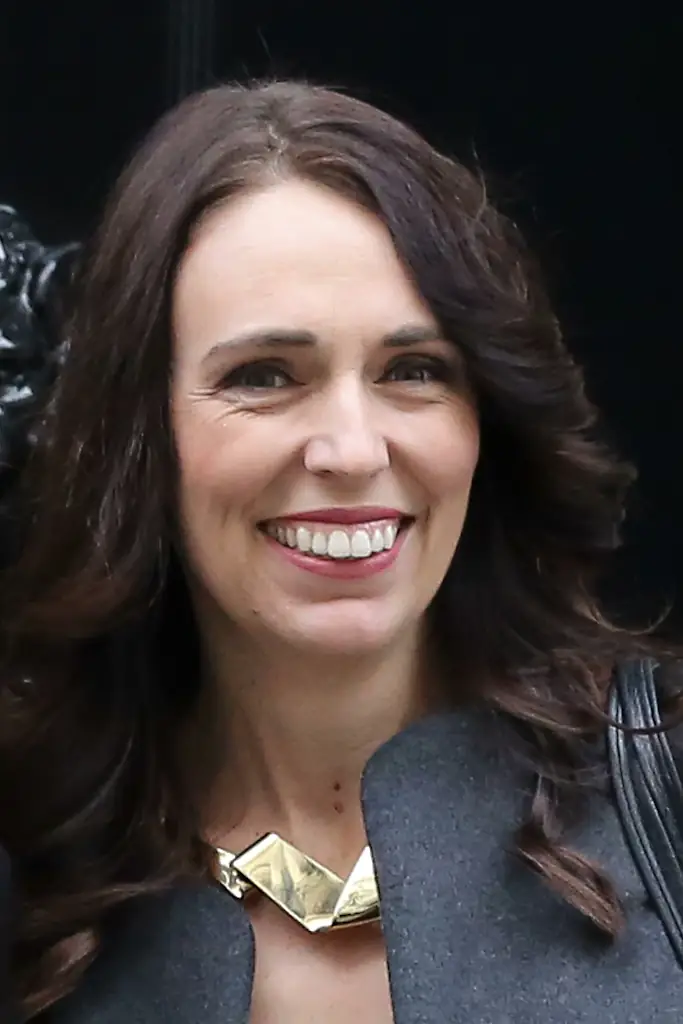
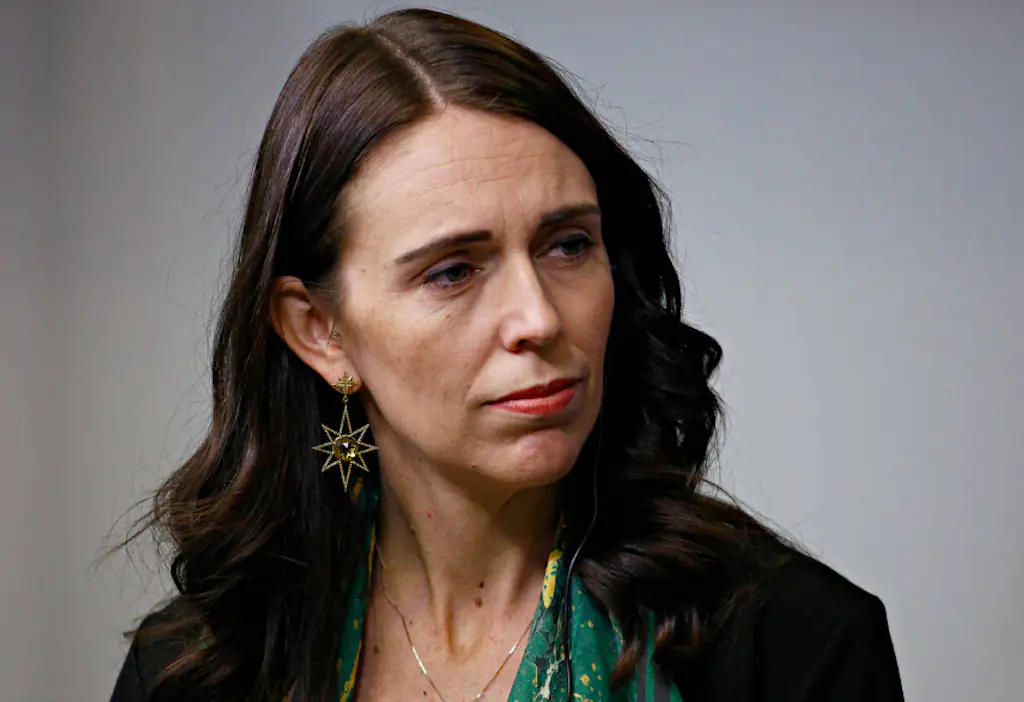
Sanna Marin has been serving as the Prime Minister of Finland since 10 December 2019:
According to The Independent, the Social Democratic Party leader said at her party's conference in the autumn of 2019: "I believe people deserve to spend more time with their families, loved ones, hobbies and other aspects of life, such as culture. This could be the next step for us in working life."
The 34-year-old leads a five-party center-left coalition - completely led by women.
Before she became Finland's Prime Minister, the mother-of-one was the country's Minister of Transport. While in the role, Marin advocated a shorter working week to improve morale and productivity in the workplace.
In neighboring nation Sweden, the six-hour working day was trialed back in 2015. Following the trial, it was noted that workers were happier and more productive as a result of the change.
[[imagecaption|| Credit: PA Images]]
Marin's appointment provoked international media interest, to which the 34-year-old said in response:
"My thoughts have been in the proceedings and I have not followed the international and national media coverage. We have promised change. Now we need action. I believe that trust will return through action."
[[imagecaption|| Credit: PA]]
"I have never thought about my age or gender," Marin added. "I think of the reasons I got into politics and those things for which we have won the trust of the electorate."
"For me, human rights and equality of people have never been questions of opinion but the basis of my moral conception," she states on her website, per Evening Standard. “I joined politics because I want to influence how society sees its citizens and their rights."
"I want to build a society in which every child can become anything and in which every human being can live and grow old with dignity."
Workers in Spain could soon be enjoying a four-day working week after the government agreed to launch a trial project for companies interested in testing the idea.
If successful, the scheme could be rolled out across the country - making Spain one of the only nations in the world to permanently introduce a four-day working week, with the hopes of improving employment rates and productivity.
Per The Guardian, the scheme was announced earlier this year by the small leftwing Spanish party Más País, who revealed that the Spanish government had agreed to test the idea.
Más País representative Iñigo Errejón wrote on Twitter:
"With the four-day work week (32 hours), we’re launching into the real debate of our times. It’s an idea whose time has come."
It is believed that a shorter working week will not only tackle unemployment numbers and productivity levels, but also improve the mental health of workers and help fight climate change.
Stock Image. Credit: Ketut Subiyanto / Pexels
The Guardian also reports that the proposal has been spurred on by the ongoing Covid-19 pandemic, which has resulted in many people struggling to maintain a healthy work-life balance.
"I maintain that working more hours does not mean working better," Errejón added.
Exact details of the trial are still to be decided by the government, but Más País has reportedly proposed a three-year, €50 million ($69.4 million) project that would allow participating companies to trial the four-day week with little risk.
Héctor Tejero of Más País predicts that around 200 companies will participate, meaning between 3,000 to 6,000 workers will be enjoying an extra day off.
Stock Image. Credit: Westend61 GmbH / Alamy
"Spain will be the first country to undertake a trial of this magnitude," Tejero added. "A pilot project like this hasn’t been undertaken anywhere in the world."
Más País has also stated that the trial should be guided by a panel of experts from the government, workers unions, and business lobbies.
Spain is far from the first nation to have the idea of legitimately introducing a four-day working week, as the idea was also voiced by Finland's prime minister Sanna Marin back in 2019.
According to The Independent, the Social Democratic Party leader said at her party's conference in the fall of 2019: "I believe people deserve to spend more time with their families, loved ones, hobbies and other aspects of life, such as culture. This could be the next step for us in working life."
I'm sure this is something many of us would like to see become a reality in our own workplaces.
Finland has made history by forming the world's first entirely woman-led government.
The historic formation was officially announced on Sunday when five female-led parties came together to form a coalition. This happened after the country's female transport minister, Sanna Marin, was elected to become Prime Minister.
[[imagecaption|| Credit: PA Images]]
The 34-year-old will be replacing Antti Rinne as leader of the Social Democrats.
The center-left coalition is now entirely led by women - four of whom are under 35. Marin's role is particularly notable, as she has become the world's youngest Prime Minister and the third female leader of Finland, Helsingin Sanomat reports.
The formation of the coalition was celebrated by former Prime Minister Alexander Stubb, who said it "shows that Finland is a modern and progressive country."
[[imagecaption|| Credit: PA Images]]
Marin has been an MP since 2015, and will officially take up her new position as prime minister next week. Rinne left the role citing a lack of trust after losing the support of key coalition partner, the Centre Party.
Rinne became the country's first left-wing leader in 20 years when he was elected in April. But his rule came unstuck when he was criticized by the main coalition party over a two-week postal strike in November, which spread to other industries including airline Finnair.
When Rinne stepped down, the coalition of Social Democrats, the Centre Party and three junior partners: the Greens, the Left Alliance and the Swedish People’s Party of Finland all resigned.
"My party is not in government," he later tweeted, "But I rejoice that the leaders of the five parties in government are female."
The new government, which consists of the Social Democrats and the four other coalition parties, will have a strong majority of 117 in the 200-seat parliament.
Finnish MP, Tytti Tuppurainen, described Sanna Marin as "a brilliant new prime minister", tweeting: "She's eminently good."
The leaders of the coalition parties are Katri Kulmuni, Maria Ohisalo, Li Andersson and Anna-Maja Henriksson.
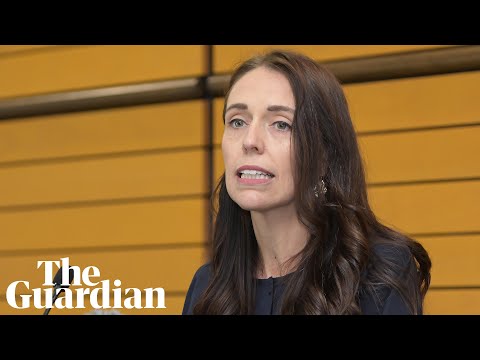
Jacinda Ardern has revealed her plans to step down as the prime minister of New Zealand in a shock announcement.
The 42-year-old became the world's youngest female head of government in 2017 when she took the position at 37 years of age.
Just a year later, she became only the second world leader to ever give birth while in office after Pakistan's Benazir Bhutto became the first in 1990, per BBC News.
The leader of the Labour government steered her country through the pandemic as New Zealand was praised for its approach towards Covid-19.
Watch the shock announcement below:
During the height of the pandemic, Ardern showed her ability to stay calm in a crisis as a live interview was interrupted by a 5.8 magnitude earthquake.
As reported by Sky News, Ardern has announced her plans to resign as New Zealand's prime minister, with her final day being February 7.
During an emotional news conference, the prime minister struggled to hold back tears, stating: "I know what this job takes, and I know that I no longer have enough in the tank to do it justice. It's that simple."
Jacinda Ardern took office in 2017, becoming the world's youngest female leader. Credit: SOPA Images / Alamy
BBC News reported that the announcement comes at a time when Ardern's Labour party faces a "difficult path" to reelection with a general election set to take place this coming October, though the 42-year-old believes that her party will still come out on top.
Speaking on her decision, Ardern said: "I know there will be much discussion in the aftermath of this decision as to what the so-called 'real reason' was.
"I can tell you that what I am sharing today is it. The only interesting angle that you will find, is that after going on for six years of some big challenges, I am human."
She concluded the conference by stating: "As to my time in the job, I hope I leave New Zealanders with a belief that you can be kind, but strong, empathetic but decisive, optimistic but focused.
"And that you can be your own kind of leader - one who knows when it's time to go."
Ardern became the second world leader to give birth while in office. Credit: ALEXANDROS MICHAILIDIS / Alamy
She added that while the last five-and-a-half years had been the "most fulfilling" of her life, it had also been difficult leading the country through a series of challenges over the past few years.
Ardern explained: "These events... have been taxing because of the weight, the sheer weight and continual nature of them. There's never really been a moment where it's ever felt like we were just governing."
Deputy prime minister Grant Robertson revealed he would not be seeking to enter a leadership contest, so it remains unknown who will take the position between February and the October election.
Featured image credit: ALEXANDROS MICHAILIDIS / Alamy
Microsoft Japan has tested a four-day workweek and discovered that it has boosted employee productivity.
The tech company recorded an almost 40 per cent increase in productivity after cutting working hours in a bid to promote a healthier work-life balance.
The Work Life Choice Challenge initiative was started back in August, and saw the firm shutter its doors on Fridays to give its 2,300 employees three-day weekends for an entire month to track any benefits of a reduced workweek.
[[imagecaption|| Credit: Pexels]]
Over the period, though staff spent 20 per cent less time in the office, productivity rose by 39.9 per cent - as measured by sales per employee. According to Microsoft, this was partially due to the fact that meetings were capped at 30 minutes, and there was an increase in remote conferences. At the same time, the company saw a decrease in costs, with 23.1 per cent less electricity used, and 58.7 per cent fewer pages printed.
Unsurprisingly, the scheme - which also incorporated self development and family wellness initiatives - was a hit with employees, with 92.1 per cent saying that they liked having three-day weekends.
[[imagecaption|| Credit: Pexels]]
In fact, the Work Life Choice Challenge was such a success that Microsoft Japan is planning to conduct a similar scheme this winter, with an emphasis on flexible working hours.
Overwork has been a subject of debate in Japan for a number of years, as the country is known to have one of the world's longest working hours. Per a 2016 government study, almost a quarter of Japanese countries require their employees to work more than 80 hours of overtime each month.
The nation even has its own term for the culture - "karoshi" - which translates to "death by overwork".
Commenting on the findings, Frances O'Grady, general secretary of the Trade Union Congress (TUC), stated;
"In the 19th century, unions campaigned for an eight-hour day. In the 20th century, we won the right to a two-day weekend and paid holidays. So, for the 21st century, let's lift our ambition again. I believe that in this century we can win a four-day working week, with decent pay for everyone. It's time to share the wealth from new technology, not allow those at the top to grab it for themselves."
As artificial intelligence (AI) continues to reshape industries and improve productivity, Senator Bernie Sanders sees an opportunity for a profound shift in the way we work.
In a recent appearance on the Joe Rogan Experience, Sanders proposed that AI's rise in productivity should be used to reduce the traditional workweek, providing more free time to workers.
"You're a worker, your productivity is increasing because we give you AI, right?" Sanders said. "Instead of throwing you out on the street, I'm going to reduce your workweek to 32 hours."
A 32-Hour Workweek: Sanders' Vision for the Future
Sanders' bold vision includes the introduction of the "Thirty-Two Hour Workweek Act," which he first introduced last year.
This bill would require employers to pay overtime for any hours worked beyond a 32-hour workweek, essentially moving toward a four-day workweek.
Sanders argues that with the increase in efficiency brought by AI and automation, workers should not have to continue working 40 hours a week.
"Let's use technology to benefit workers," Sanders said. "That means, give you more time with your family, with your friends, for education, whatever the hell you want to do. You don't have to work 40 hours a week anymore."
While the idea of a 32-hour workweek has gained traction in certain circles, it is still a controversial subject, especially in industries that are heavily impacted by automation and AI.
Sanders’ plan would roll out gradually over four years, giving businesses time to adapt to the changes.
Bernie Sanders wants a 32-hour work week. Credit: Aaron Schwartz / Getty
The Dark Side of AI: A Threat to Humanity?
However, Sanders' concerns go beyond just the potential benefits of AI in the workplace. In an interview with NBC News, Sanders warned that the rapid rise of AI also presents significant risks, particularly in the realm of warfare and wealth inequality.
"I think we are not all that far away from the development of robotic soldiers," Sanders remarked.
"Right now, politicians — at least sometimes — have to worry about loss of life when they decide to go to war. If you don’t have to worry about loss of life, and what you worry about is loss of robots, what does that mean for issues of war and peace globally? It’s a big issue."
Sanders expressed concern that if AI leads to the development of autonomous robots for warfare, the stakes of global conflicts could be radically changed.
"If you don’t have to worry about loss of life, and what you worry about is loss of robots, what does that mean for issues of war and peace globally?"
The rise of robotic soldiers could fundamentally alter the morality of war, making it easier for countries to engage in conflict without the same ethical concerns tied to human casualties.
Sanders has also warned about the dangers of AI. Credit: Tom Brenner / Getty
The AI-Driven Wealth Divide
While AI and automation offer new opportunities, Sanders believes they also exacerbate existing wealth inequality.
As the billionaires of Silicon Valley - figures like Elon Musk, Jeff Bezos, and Mark Zuckerberg - invest heavily in AI, Sanders fears that these technologies will concentrate wealth and power even further.
"Today, before we have seen the full implications of robotics and AI, you’re looking at unprecedented wealth and income concentration," Sanders said. "The top 1% of Americans own more wealth than the bottom 93%."
Sanders warned that this concentration of wealth could have far-reaching consequences for the economy and democracy.
"All of these zillionaires — the Musks, the Ellisons, the Bezoses, the Zuckerbergs — are investing hundreds and hundreds of billions of dollars into AI and robotics.
What is the result of all that?" With AI allowing these tech moguls to amass even more wealth, Sanders fears that it will lead to a significant erosion of democracy.
"It will mean even more wealth and even more political power for these guys at the top, while our democracy gets weaker and weaker. Working people will see a significant decline in their standard of living unless we turn this around."
Bernie Sanders. Credit: Anadolu / Getty
The Role of AI in Shaping Future Jobs
Sanders' concerns are not limited to the economic consequences of AI; he is also deeply worried about its potential to disrupt the job market.
Musk and other tech moguls have warned that AI and robotics could soon replace most jobs, making work "optional."
Sanders highlighted the implications of such a shift, stating, "Musk recently said that ‘AI and robots will replace all jobs. Working will be optional.’ But what the hell does that mean if it’s going to replace all jobs?"
This profound change raises questions about the future of work and how individuals will sustain themselves in an AI-driven economy.
Sanders pointed out that there has been little discussion in Congress or in the media about how society will cope with such dramatic job displacement.
"There has been far, far, far too little discussion among the American people, in the media and certainly in Congress about the implications of AI and robotics," Sanders said.