


Health4 min(s) read
Man 'locked in his body' for more than a decade woke up to tell a mind-blowing story

A man who was "locked in his body" for more than a decade eventually woke up to tell a mind-blowing story.
Martin Pistorius was 12 when a sore throat after school marked the start of a life-changing illness that left him unable to move or speak for more than a decade.
The South African boy, once healthy and happy, grew increasingly unwell as his condition deteriorated.
Doctors suspected cryptococcal meningitis and tuberculosis of the brain, and despite treatment, Pistorius lost the ability to communicate and was left in a vegetative state.
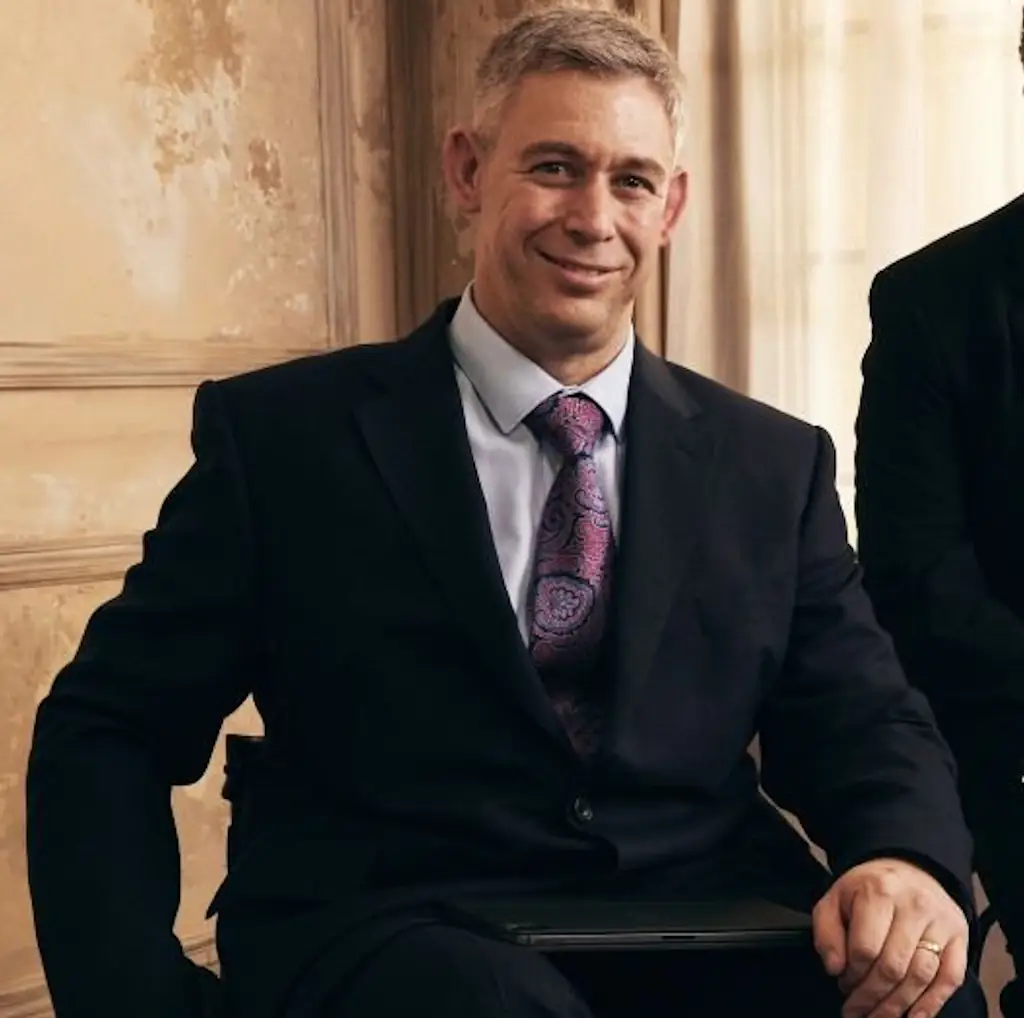
The young boy's parents, Joan and Rodney, were never given a clear explanation of what had happened to their son. But they refused to give up on him and kept caring for him while he lived in a care centre.
For years, everyone around Pistorius believed he was unaware of his surroundings. In reality, he had regained consciousness and was living trapped inside his own body.
Pistorius opened up about the experience, describing it as being "like being in an empty shell, unaware of anything around me," adding: "I was able to hear, see, and understand everything around me but I had absolutely no power or control over anything."
"For me, that feeling of complete and utter powerlessness is probably the worst feeling I have ever experienced, and I hope I never have to experience again. It is like you don't exist, every single thing in your life is decided by someone else," he shared.
Pistorius' mind was awake, but he could not respond
Pistorius spent years unable to tell anyone he knew what was happening around him.
He was forced to sit through episodes of children’s programmes, including Barney the Dinosaur and Teletubbies.
"I cannot even express to you how much I hated Barney," he once told NPR.
He later revealed that some carers at the facility mistreated him while believing he was unable to understand. Pistorius said the abuse left lasting emotional scars, though he has worked to come to terms with what happened.
"I am not angry about the abuse," he said, per Metro. "But it changes something inside you. It feeds feelings of worthlessness, being unlovable, self-doubt. It can break something deep within."
In Pistorius' memoir Ghost Boy, he recalled seeing himself in a mirror, describing seeing "a man with glazed eyes, a bib to catch his drool and arms drawn up to his chest like a dog begging for bones.”
"My mind was trapped inside a useless body. My arms and legs weren’t mine to control. My voice was mute. I was a nothingness - washed and fed, lifted from wheelchair to bed," he said.
The moment everything changed
When Pistorius was 25, a relief carer named Virna van der Walt encouraged his parents to take him to the Centre for Augmentative and Alternative Communication at the University of Pretoria.
In July 2001, nearly 13 years after he first became ill, specialists discovered that he was cognitively aware.
A researcher held up a sheet of paper containing symbols and asked him to identify objects.
Pistorius could respond with his eyes, marking the first time in years he had a way to communicate.
His parents bought him a computer equipped with communication software similar to the technology later used by theoretical physicist Stephen Hawking. Pistorius selected letters, words, and symbols using a band attached to his head that acted like a mouse.
"Everyone was so used to me not being there that they didn’t notice when I began to be present again," he said.
After regaining the ability to communicate, Pistorius began working with van der Walt at the care centre. He later met Joanna, a social worker, and the pair married in Essex in 2009.
The couple welcomed their son, Sebastian Albert Pistorius, in 2018, despite previously being told parenting might not be possible.
Pistorius and Joanna taught their son signing from birth, allowing them to communicate early.
"It was amazing to see him sign 'change nappy' at around three months old," Pistorius said.
Parenting has brought challenges, especially because Pistorius uses a wheelchair and communicates through technology. He said he cannot always call out to his son immediately.
"Sometimes, with a child, you can’t wait 20 seconds for your command to come," he explained. "But we’ve worked out ways. He understands me, sometimes just from the way I look at him."
Today, Pistorius works as a computer scientist, web developer, technology adviser, and accessibility specialist. He has also written his autobiography and become a public speaker.