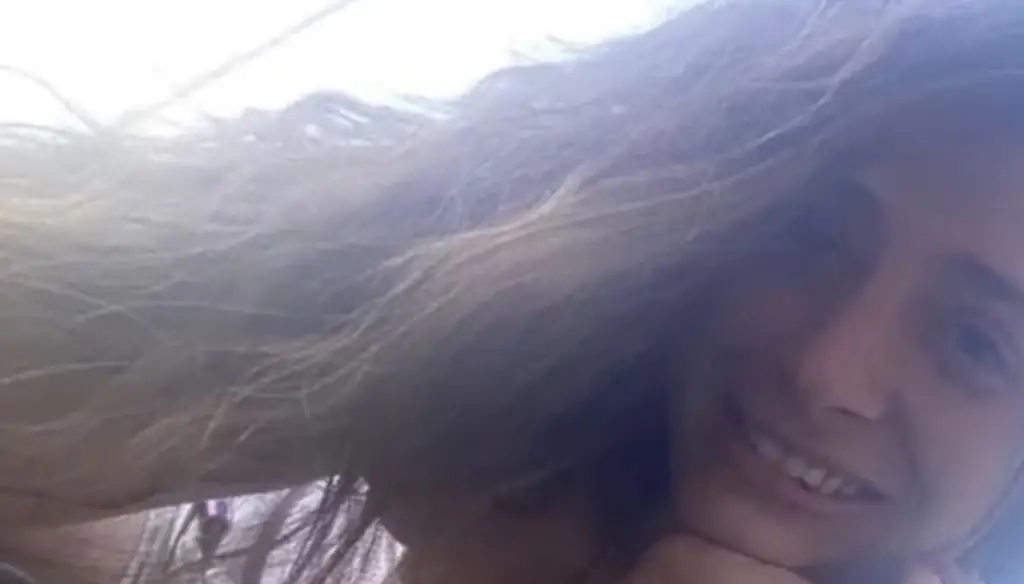
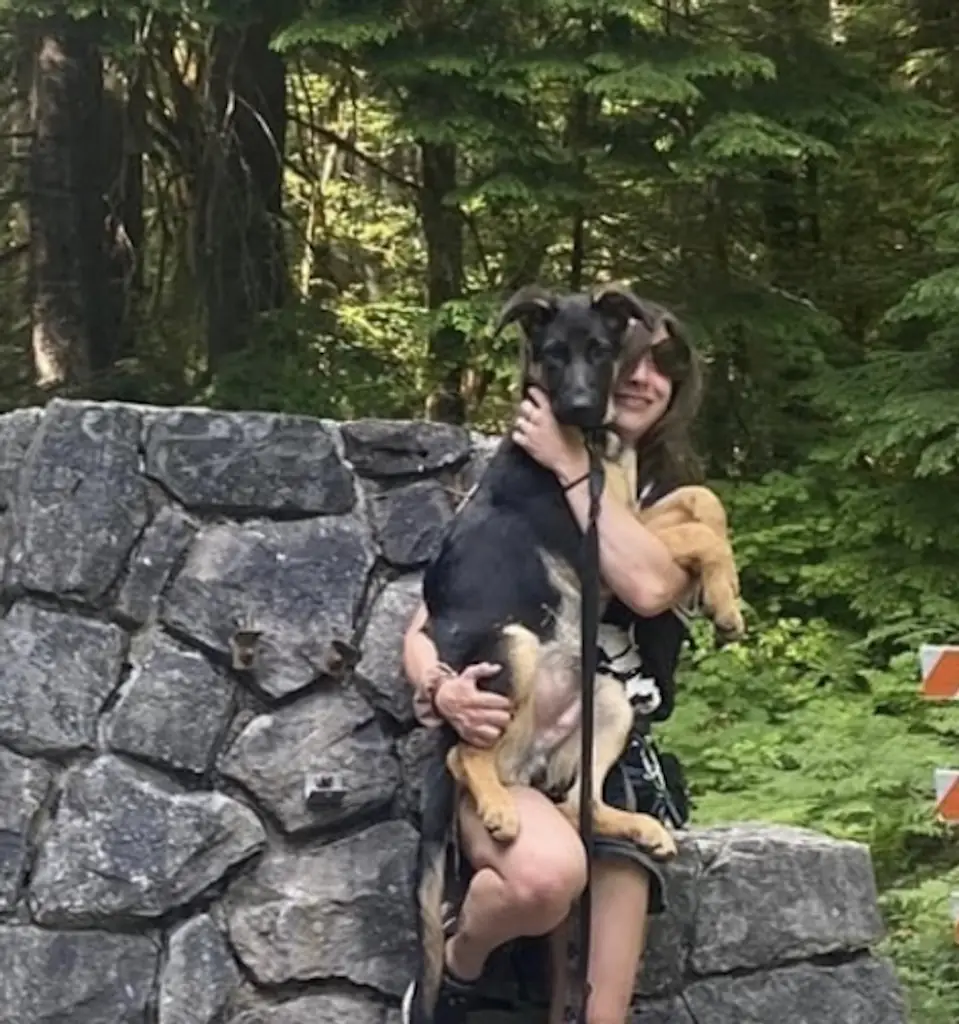
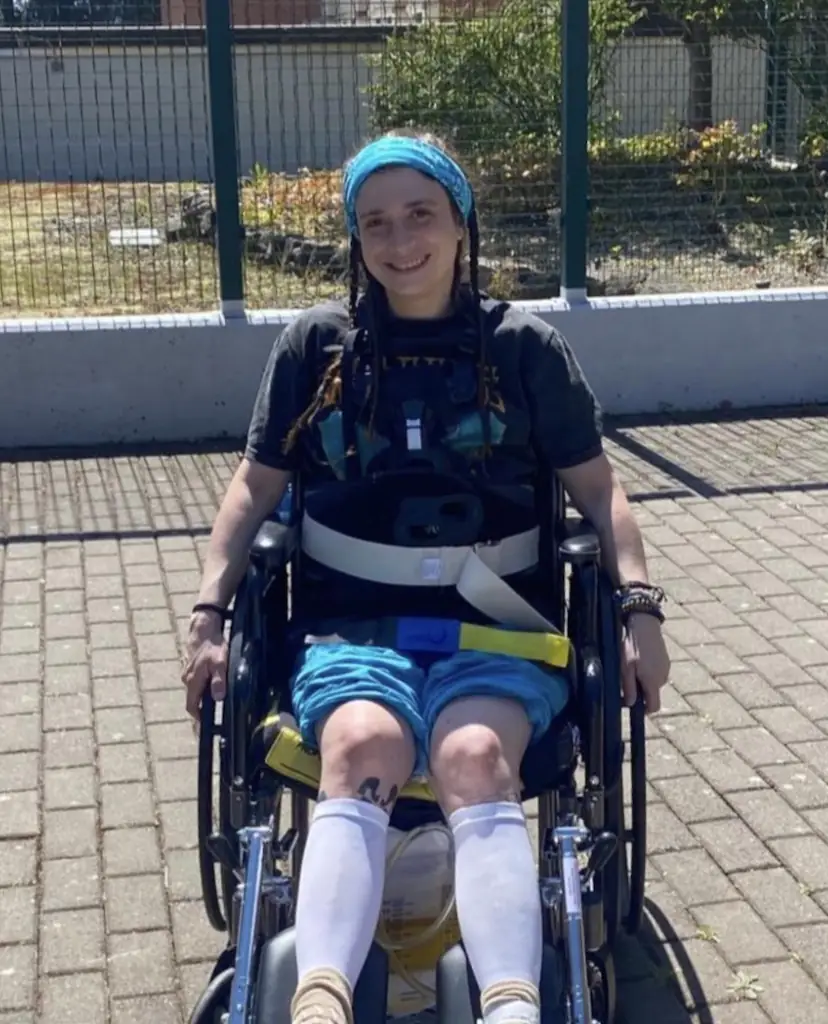
A 26-year-old model has been suddenly left paralyzed after she suddenly lost consciousness while out with her friends.
Amelia has been left paralyzed. Credit: GoFundMe
Amelia Keam was enjoying herself at The Hamilton Station Hotel in Newcastle, Sydney, on March 22 when she suddenly felt dizzy, lost consciousness, and collapsed.
Without warning, she had gone into cardiac arrest.
Luckily, two off-duty Australian Defence Force members who were nearby rushed to her aid and performed life-saving CPR until paramedics arrived.
Although Amelia’s heart had stopped, she was revived at the scene and rushed to John Hunter Hospital. There, doctors placed her in an induced coma as they scrambled to stabilize her condition.
The cause was a stroke that cut off blood flow to the area where the brainstem connects to the spinal cord — the part responsible for controlling motor reflexes.
The damage left Amelia paralysed from the neck down, completely dependent on a ventilator to breathe.
Her father, Stephen Keam, is still in shock. “How does this happen to a 26-year-old female that goes to the gym every single day?” he asked, holding back tears in an interview with 7NEWS.com.au.
Amelia suffered a cardiac arrest. Credit: GoFundMe
Amelia, known as “Amy” to friends and family, had everything going for her. She was a psychology graduate, worked as a support coordinator in a mental health facility, and had a passion for helping others.
“She is really active, like she loves being outdoors, hiking, like going to the gym and different sports and things like that,” her best friend Chloe Gillette shared.
Amelia was also working part-time as a model and planning to pursue a master’s degree in psychology. Gillette, who has known her for 16 years, described her as “a really beautiful soul” with “a very different sense of humour but you’d always have a good laugh with her.”
Stephen described his daughter with equal adoration: “She’s the most beautiful person I’ve ever known inside and out.”
“I was, and still am, incredibly proud of her,” he said. “Even though she can’t move at all, she lies there, unable to swallow, breathe, or speak. Yet, she remains perfectly polite to everyone who comes near her. She says ‘please’ and ‘thank you,’ and it’s just phenomenal.”
“She smiles, she’s still cracking jokes. She can’t move. She’s a complete quadriplegic … she’s making everybody else laugh around. She’s been very, very strong.
“I don’t know how she’s not angry at the world.”
Amelia's family and friends are rallying around her. Credit: GoFundMe
Now fully conscious, Amelia is aware of her condition. But that awareness, her friend says, comes with added pain.
“She’s quite aware of what’s happening which I don’t know that kinda makes it worse in some ways,” Gillette said.
Amelia’s support system has been steadfast. Alongside her father and sister, Chloe and five other close friends have been rotating visits at John Hunter Hospital before she was recently transferred to Prince of Wales Hospital.
At one point, Stephen said, doctors brought up the possibility of euthanasia — until they realised Amelia had a chance to recover with long-term intensive rehabilitation.
But the road ahead is anything but easy. Every small task — from breathing to blinking — now requires help. Amelia’s recovery demands a comprehensive team of specialists, including neurologists, physiotherapists, physicians, nurses, and social workers.
Stephen is now trying to move from Mackay in Queensland to Newcastle just to be closer to his daughter during her long hospital stay.
“We have no clue on how long it’s going to be, but… she won’t be coming out of hospital for a very very long time,” he said.
Amelia will require special rehabilitation. Credit: GoFundMe
To help ease the burden of mounting medical bills and living expenses, Gillette launched a GoFundMe for Amelia.
“We are reaching out to you today to ask for your support as Amelia navigates this extremely difficult chapter in her life,” she wrote.
“Spinal rehabilitation is critical to helping Amelia regain as much function as possible after her spinal injury.
“Early intervention is essential to prevent further complications and reduce the length of her hospitalisation.
“She is facing mounting medical expenses, including treatments, therapies, and daily living costs, which are adding up quickly.
“Amelia’s road to recovery may be long, but with your help, we remain hopeful.”
A 28-year-old woman has been left paralyzed from the waist down after a piano crushed her during a freak accident.
Danielle Drummond, 28, was helping a friend move an upright piano when the friend lost grip, causing the heavy instrument to fall on her last month, WOIO reported.
Drummond, who had recently relocated from Ohio to Oregon, was rushed to the hospital for emergency surgery. Doctors found that her spinal cord had been severed, resulting in paralysis from the waist down.
Drummond has been left with life-changing injuries. Credit: GoFundMe
“I’m trying to keep like in high spirits because I know this is my life now, but it’s hard,” Drummond told the outlet. “As of right now, I need a lot more physical therapy. I need to rebuild my strength.”
In the wake of her injury, Drummond faces extensive rehabilitation and requires a home health aide.
To add to the difficulties, she was living in a van with her dog at the time of the accident, which is no longer feasible given her injuries.
With no family in Oregon, Drummond is now in urgent need of a permanent place to live.
Drummond was living in a van with her dog at the time of the accident. Credit: GoFundMe
“I don’t even know like how I would get home, let alone like how to transfer all the medical stuff, and I don’t feel like I’m able right now to do like that far of a car ride or a trip in an airplane,” she explained.
To support her sister, Rosie Hayne has set up a GoFundMe campaign to cover Drummond’s medical expenses and help her find stable housing.
“Our hearts are completely broken. My baby sister means the world to me,” Hayne wrote.
“Such a strong and wise woman, down to earth and humble, her aura reflects her beautiful soul. We will get through this with lots of prayer and positive guidance. This is in God’s hands now, please wrap them around her tight!”
In an update posted on May 1, Hayne added: "Danielle is getting around really well in the hospital wheelchair. She is going to need one of her own, not to mention a home to keep it in.
Drummond is paralyzed from the waist down. Credit: GoFundMe
"She wants to make it clear that she is not expecting to ever walk again. She has accepted the reality of her situation. But she has an amazing spirit and an overall positive outlook, focusing on what she can do."
At the time of writing, the fundraising campaign has received $7,720 out of a $25,000 target.
When you have a stroke, and are in the hospital bed fearing paralysis, the last thing you need is the collapse of your marriage. But for 37-year-old Riona Kelly, that is exactly what happened. Her husband informed her that he wanted a divorce while she was paralyzed from the waist down, suffering a spinal stroke, laying in a hospital bed.
They had been together for 14 years, and Ms. Kelly's husband insists that he informed her of his intent the day before she had her stroke. Either way, she was left alone with her children, her paralyzed body, and a new life to build from scratch.
She had four children, Leighanra, Caleb, Izabela and Logan. They needed their mother. And day by day, she was working to regain her ability to walk. Rigorous physical training was designed to get her out of a wheelchair and onto her feet. Today, Riona can walk just fine with the aid of crutches.
And it's all thanks to her new lover, a former Rugby player turned physical trainer, the man who taught her how to walk again - Keith Mason.
Ms. Kelly had a lot to say about her situation.
"After suffering a stroke not only did I have to deal with paralysis but I had to deal with losing my partner of 14 years. After he asked me for a divorce I was left completely alone. After five days in the hospital, I was told it would take me six months to a year to recover.
"At the time I felt like giving up, but I knew I had to be strong for my children and so when I finally took my first steps it felt amazing. I put a post on Facebook last January looking for a personal trainer to help me and some friends suggested that I get in touch with Keith.
"After our sessions Keith and I stayed in contact, he would ask me how I was getting on and our relationship blossomed from there. We have now been together for 11 months, the children really like him and I finally feel like I'm living the life I deserve."
Reflecting on her 2015 stroke was difficult:
"It was the time I needed my husband the most."
It's an inspiring story of physical recovery against all the odds, and an abandoned mother finding her future in the incident that seemed to take it away. In the end, Ms. Kelly considers it the best thing that ever happened to her. She got out of a doomed marriage and found someone she was truly in love with.
Mason has one daughter of his own, so now their families are together as one, bigger and happier than ever before.
"One day Keith asked me out for coffee and we picked up from where we left off. I just couldn't believe a gorgeous rugby player wanted to date a disabled woman like me. Keith says I inspire him, but he encourages me every day and understands and sees the pain that I am in. He has been amazing with me and the children and I love him more each and every day.
"I now only need my wheelchair to go long distances but my home hasn't been adapted so I try not use it. Looking back, going through what I did was the best thing to ever happen to me. I'm now back in the gym, and with Keith's help I'm getting better and stronger than ever. After my stroke I thought my life was over but it's only just beginning and has opened so many wonderful doors, I've signed up with Models of Diversity and have just landed my first TV commercial."
We're glad to see how well things have turned out.
A woman who was placed into an induced coma after she was hit by a rollercoaster has finally woken up but is still currently unable to communicate with her loved ones, it has been reported by Daily Mail Australia.
Shylah Rodden, 26, sustained a substantial injury to her brain on September 24 after she was hurled 29 feet into the air by a rollercoaster while trying to retrieve a phone she'd dropped at the Melbourne Royal Show.
The outlet reported that staff at Royal Melbourne Hospital had confirmed that the young woman's condition is stable.
However, her family has disagreed with this determination, with Shylah's younger sister Caisha telling the newspaper: "She had suffered a severe traumatic brain injury so if that’s what people think is stable they are wrong."
Daily Mail Australia reports that Shylah's vital signs are now considered to be at a normal level, which means she can be moved from a high dependency ward to a regular ward.
Caisha said although her sister has woken up, she is still unable to communicate with friends and family and faces years of rehabilitation.
"Just because she’s awake doesn’t mean she's stable," she said.
A GoFundMe fundraiser has since been set up to help with Shylah's recovery, and it has raised more than $21,000 at the time of writing.
Credit: GoFundMe
While her condition has been getting better over the last few weeks and is no longer regarded as critical, the extent of the damage done to her body remains to be seen.
It has been reported that it's unlikely she will go on to live a normal life and there are concerns she may never be able to speak again.
Shylah's father Alan Rodden told Daily Mail Australia not long after the accident that his daughter had sustained life-changing injuries.
"I can't talk to my daughter. She's going to be in a coma for quite a while," he said. "The injuries are horrific. Horrific. She's brain damaged. It's pelvic, her arms, legs, back, neck - there's hardly a thing that's not broken. I just can't work out how the hell so much damage has been done."
He added: "Even the doctors have said they haven't seen anything as bad as this for a long time."
A friend told the paper that the money raised from the fundraiser will cover Shylah's recovery and rehabilitation.
"People are under the impression that this money is just for her family. But people need to know this money is for Shylah's recovery," the friend said. "This money will go towards her therapy, her rehabilitation, things they need to change around the house for showering and toilet needs."
The fundraiser, which was set up by Shylah's friend Sylvia Dess, reads: "Hi my name is Sylvia and I’m a close friend of the family of Shylah Rodden. Shylah was involved in a tragic incident at the Royal Melbourne Show on Sunday the 24/9.
"I would like to raise as much money as I can for Shylah’s 24 hour care, rehab, therapy, possible equipment as Shylah has suffered brain injury, changes that will need to be made around her house (shower and toilet.) Family and friends are devastated during this crucial time and thank everyone for all the kind wishes and donations. It has not went unnoticed.
A 23-year-old paramedic has suffered a stroke after a "neck crack" went wrong. She is now sharing her one-in-a-million story to raise awareness of strokes in young people.
The incident happened on March 4 when Natalie Kunicki, an employee of the London Ambulance Service (LAS), was enjoying an evening in with a friend watching movies.
While in front of the TV, she strained her neck and heard a loud "crack", as did her friend, but assumed that it was nothing. She went to bed "tipsy", and when she woke up 15 minutes later, she realized that something was seriously wrong when she was unable to walk after losing control of her left leg.
Natalie struggles to move after rupturing her vertebral artery:
She was rushed to hospital in the early hours of March 5. There, a CT scan revealed that she had suffered a stroke after unknowingly rupturing the vertebral artery in her spine. This triggered a brain clot which led to a stroke.
The 24-year-old, who is originally from Canberra, Australia, moved to England in December 2017 to fulfill her dream of being a paramedic, Kennedy News and Media reports.
"People need to know that even if you're young, something this simple can cause a stroke. I wasn't even trying to crack my neck. I just moved and it happened," she said.
"I'm a paramedic and I didn't ring 999 for 10 minutes because I thought it was too unlikely it would be a stroke when I should have known much better," Natalie continued. "Every minute more of your brain cells are dying, so don't ever discount a stroke just because someone is young."
[[imagecaption|| Credit: Kennedy News & Media]]
She then explained the risk which gym bunnies are at of a similar incident happening to them:
"People need to be more mindful when doing any chiropractic exercises or strenuous gym weights. I was in bed watching stuff with a friend when it happened.
"I stretched my neck and I could just hear this 'crack, crack, crack'. My friend asked 'was that your neck?' but all my joints crack quite a bit so I didn't think anything of it. I just laughed.
"I fell asleep and when I woke up about 15 minutes later. I wanted to go to the bathroom but I could feel this leg in the bed and I was asking my friend if he could move his leg.
"He told me it was my leg but I was a bit tipsy so I wasn't taking anything seriously and just thought 'that's a bit weird'. I got up and tried to walk to the bathroom and I was swaying everywhere. I looked down and realised I wasn't moving my left leg at all - then I fell to the floor."
To put how slim the chances of a young person having a stroke are into context, Everyday Health reports that seven to 15 people in every 100,000 under 45 will suffer one.
This is because stroke risk factors like high blood pressure are so closely liked to age.
After discovering that she had suffered a stroke, the 23-year-old said that she went into a state of shock that lasted three days:
"When the consultant told me I'd had a stroke I was in shock.
"The doctors told me later that just that stretching of my neck had caused my vertebral artery to rupture. It was just spontaneous and there's a one in a million chance of it happening.
"I don't smoke, I don't really drink, I don't have any family history of strokes so it's quite strange it happened to me when I was just moving in bed.
"I was in shock for about three days in ICU. I was a bit of a wet blanket. I didn't really say much and I wasn't engaging with anyone. I had no sense of humor.
"I was just completely shut off, trying to compute what had happened. People said I was a bit like a robot and didn't show much emotion."
[[imagecaption|| Credit: Kennedy News & Media]]
However, with a little help from her friends, Natalie was able to begin her journey to recovery:
"But a couple of my friends from the ambulance service told me, 'You have a week from the day of your stroke to snap out of this or we will snap you out of it.'
"I was able to have my little pity party for a week but that's it. They told me, 'What's done is done now - just work and do all the exercises.'
"They were fantastic and they would come in and do all the exercises with me. I think if I didn't have them I would have been in my pity party quite a bit longer but instead, I smashed through all the therapy goals.
"I just love my job and I want to get back to it. I'm so used to being busy and now I feel like I'm climbing the walls a bit. I definitely want to get back to work as soon as I can."
She also explained that while her friends were instrumental in helping to get her out of the shock she experienced, they were also the reason that she was reluctant to call the emergency services when she first suspected something was wrong.
[[imagecaption|| Credit: Kennedy News & Media]]
"I was trying to call 999 but I was dithering about it," Natalie said. "There was a high chance the crew who turned up would be my friends and I didn't want them to see me tipsy. I tried to go back to sleep but I couldn't, so I called 999 and I didn't recognize the crew who turned up."
"I think they did look at me at first like they thought I was just a classic drunk 23-year-old but I told them I was a paramedic and I knew something was wrong.
"They took my blood pressure and heart rate and they were both sky high. Then they did this test where they hold their finger in the air and you have to touch your nose then their finger. My hand went all over the place and I was thinking 'oh no'. I knew something was going down."
After being taken to the hospital, Natalie then had to have emergency surgery. This involved repairing the burst artery with a stent. It is believed that the clot left in her brain will drain itself in time.
"I expected to wake up from this miracle surgery and everything would be fixed but my mobility was worse and they couldn't clear the clot. At the start I couldn't move my thumb and forefinger. I could kind of move my wrist up and down. I couldn't lift my arm. I could bend my left leg but I couldn't wiggle my toes," she said.
[[imagecaption|| Credit: Kennedy News & Media]]
"The doctors would do tests - I had to close my eyes and they would touch my left side but I couldn't tell where they were touching. It was like when you have really bad sunburn and your skin is sizzling. I felt that all down my left side.
"I think I scared my consultant because after I woke up, she came in to ask how I was going - but I told her, 'You should have killed me.' Depression is really common after a stroke because you lose so much of your independence and your dignity.
"I had to have a nurse help me shower in a wheelchair. What 23-year-old needs someone to help them shower and wash their hair? It was just a bit surreal."
Thankfully, less than two months later, Natalie is feeling "much better". She has now moved back in with her parents, who also live in London, and said that this has helped her to recover faster.
She is hoping to be back to "light duty" as a paramedic within the next six months to a year.
[[imagecaption|| Credit: Kennedy News & Media]]
"I was scared at first about being discharged, because my parents' home has lots of stairs and I didn't know how I was going to manage, but it's gone well. I've recovered movement in my left side. I can walk but not for more than five minutes. I'm really clumsy. I can't do up buttons, I find it too difficult. I can feel hot and cold now but I still feel a bit numb," she said.
"Being discharged and at my parents' is definitely helping with my recovery because I had to do things for myself. I have to get dressed, make the bed and I can go to make a cup of tea. I'm definitely doing something right but it's slow going.
"It has been strange being on the other side but the ambulance crew who came out to me were amazing. They did a perfect job. They even stayed with me to hold my hand while I waited for my parents and blue-lighted me to the other hospital for my surgery, even though their shift had ended."
In addition to getting back to work as soon as possible, Natalie is hoping that by sharing her story, it will increase awareness of strokes in young people. While the odds are slim, she is living proof that they can and do happen - and the causes can be extremely innocuous.
[[imagecaption|| Credit: Kennedy News & Media]]
"I have been called out to so many people having strokes and they're always in their 70s or 80s. I have never been to a young person having a stroke. Mine was one in a million but a ruptured vertebral artery is actually quite a common cause of strokes in young people," she said.
"They will be in the gym or doing something quite physical and it happens. Strokes are also quite common in kids. It was a shock for me. I thought as a professional I would have an idea but even I didn't know. Normally if you're called out to a young person, you wouldn't do a test for a stroke."
[[imagecaption|| Credit: Kennedy News & Media]]
Natalie's parents, however, Peter, 65, and Anne, 62, are moving back to Australia in July. Her brother, Michael, 33, has set up a GoFundMe in a bid to help his sister raise the funds she needs to stay in London and return to work.
"When I woke up from surgery my brother told me he'd set up a fundraising page and all my friends and colleagues have been sharing it. Eighty percent of the donations are from people I work with which means so much. It's going to be so helpful," she said.
"I really want to get back in my own flat and I really don't want to have to move back to Australia. I love my work too much and I don't want to leave them."
If you would like to donate to Natalie's GoFundMe, you can do so here.
A woman who reportedly "died for 17 minutes" while at the gym had an experience that she'll never forget.
Victoria Thomas, a 35‑year‑old accountant, collapsed during a high‑intensity boot camp session after lifting weights.
She described feeling off, queasy, suddenly drained of energy, and a touch dizzy.
“I was also feeling slightly dizzy. I’d only just said it when I suddenly collapsed on the floor,” she told the Mirror.
Paramedics arrived quickly and began CPR. As each second passed with no response, fears grew.
She recounted what happened next: “When it happened, it went black and there was nothing, then I became aware of looking down on my body.
"I was floating near the roof and was looking down at myself on the gym floor. My first thought was that my legs looked really fat. And when I looked at a photo of myself taken just minutes before I collapsed, I could see that my legs were actually swollen.
"I didn’t see a light, or feel peaceful, I was just watching myself, and I could see some yellow machines around me.”
After 17 long minutes, her heart finally restarted.
At the time, Victoria was young, fit, and had no known heart issues.
“They never gave up on me. The minutes ticked by, but they refused to stop trying. I was so young, fit and healthy, and it had come completely out of the blue,” she said.
Victoria spent three days in a coma at Bristol Royal Infirmary.
A pacemaker was fitted to help restart her heart if needed. Though she’d had no family history of heart disease, her heart stopped multiple times in the following months - each time, the pacemaker jolted it back to life.
Remarkably, three weeks after the collapse, she returned to netball - this time wearing the defibrillator device. “It was a shock whenever it went off, but it allowed me to carry on living my normal life, which I was so grateful for.”
In February 2021, she became pregnant, placing extra strain on her heart.
She experienced frequent arrests until, at 24 weeks, doctors diagnosed her with Danon disease - a rare genetic disorder affecting fewer than one million people, per the Mirror.
It’s caused by a faulty LAMP 2 gene, which should generate an enzyme to keep the heart healthy. Life expectancy is just 19 years for men and around 24 for women.
“I was 24 weeks pregnant with Tommy and I was so shocked, I couldn’t take it in,” Victoria said upon seeing her diagnosis.
Doctors initially wanted to deliver her baby immediately - but she insisted on waiting.
Had he come at 24 weeks, survival chances would have been bleak. Yet by 30 weeks, she was struggling to breathe from fluid buildup and had to undergo an emergency caesarean.
Thankfully, baby Tommy came through fine. But the strain of pregnancy severely damaged Victoria’s heart.
When Tommy was six months old, she struggled to climb stairs without facing extreme breathlessness.
In April 2022, tests revealed her heart’s capacity had dropped to just 11% - a sign of failing heart function.
She’d been told she had only a few months left. “I asked the doctors how long I had left and they told me I had just another couple of months. It was devastating. All I could think of was Tommy. I vowed I wouldn’t leave him.”
Placed on the urgent transplant register, Victoria remained in hospital, seeing Tommy only during brief visits.
“I would cuddle him and cherish every moment I had with him,” she said.
Two donor hearts were found - but both proved unsuitable after further examination.
Each time her hopes were raised, they were dashed again: “Each time I’d get my hopes up thinking this was it, that I was going to be saved. And then I was told that the operation couldn’t go ahead. I didn’t know if they were ever going to find a heart in time. I’d given up all hope.”
Then in April 2023, the news Victoria had been waiting for arrived: a compatible donor heart.
The transplant at Queen Elizabeth Hospital in Birmingham was successful, and by May, she was home. “I’d been in hospital since Tommy’s first birthday in October and now I was finally home with him. I couldn’t believe it.”
Despite some post‑operative rejection episodes, she’s now back to full strength.
She has returned to netball, playing four times a week, and is set to compete in volleyball and basketball at the upcoming World Transplant Games in Germany.
Tommy is now three, and tests confirm Victoria no longer carries Danon disease - and her relatives are all in the clear.