


Health3 min(s) read
Study claims that tattoos could pose a serious long term health risk
.webp_SmgFsc?tr=cr-292.0.1244.952,f-webp,q-70,w-100)
Tattoos may carry bigger health consequences than many realize. A new international study suggests that the ink used in tattoos doesn’t always stay on the skin - it can travel deeper into the body and disrupt immune responses for years.
Experts now warn that this could have long-lasting effects on how the body handles disease and even vaccines.
The research, published in a peer-reviewed journal, found that after tattooing, ink particles make their way from the skin into the lymphatic system, where they accumulate in lymph nodes. In laboratory experiments on mice, scientists observed “chronic inflammation” in those lymph nodes, death of macrophages (a type of white blood cell), and altered immune responses to vaccinations.
That means even if a tattoo heals on the surface, its ink might remain lodged in the body indefinitely - potentially influencing immune function long term.
Tattoo ink can travel into your lymph nodes
The study tracked how commercial tattoo inks - including common black, red, and green pigments - move through the body. Researchers documented how ink travels through lymphatic vessels and is deposited in lymph nodes, often within minutes of tattooing.
Once there, these pigments appear to trigger persistent inflammation. Over time, this can lead to immune cells dying or malfunctioning. The team behind the study described their findings as “the most extensive” investigation of how tattoos affect immune response, arguing the results raise serious health concerns.
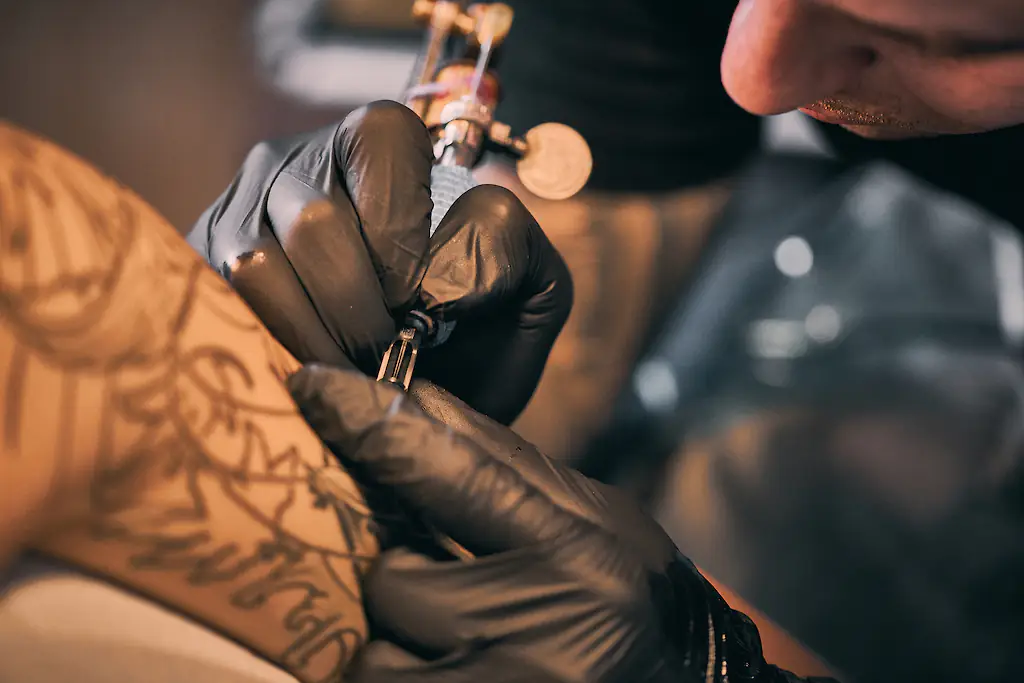
Tattoos may affect immune health and vaccine response
One of the most striking findings was how tattoos altered vaccine effectiveness in their experiments. Subjects previously tattooed had a weaker immune response to a Covid-19 vaccine, while their response to an inactivated flu vaccine was unusually strong - differences scientists linked to how the immune system was affected by the ink.
That suggests tattoo ink might interfere with how the immune system recognizes and fights pathogens, or responds to vaccination. Given that tattoos are very common worldwide - estimated to affect at least 1 in 5 people globally - the implications could be significant on a population level.
What this might mean for you
This study does not definitively prove that tattoos will harm every person’s immune system or prevent vaccines from working. However, it is the first time researchers have shown that tattoo ink can travel away from the skin and affect immune-system behaviour long term.
As the authors of the study said: “This work represents the most extensive study to date regarding the effect of tattoo ink on the immune response and raises serious health concerns associated with the tattooing practice.”
It may be time for policymakers and health regulators to reassess the safety of tattoo inks - and for individuals considering tattoos to be aware that what looks like harmless skin art might have deeper consequences for your immune health.



.jpg_I4Ebof?tr=cr-0.338.2730.3068,f-webp,q-70,w-100)

.webp_QQJmGo?tr=cr-345.0.1535.1190,f-webp,q-70,w-100)





.jpg_I4Ebof?tr=cr-0.338.2730.3068,f-webp,q-70,w-1024)


.webp_QQJmGo?tr=cr-345.0.1535.1190,f-webp,q-70,w-1024)