


Health3 min(s) read
Terrifying changes which happen to the human body after taking just one puff of a cigarette
.webp_lli6Ty?tr=cr-74.9.445.380,f-webp,q-70,w-100)
The terrifying effects of a single puff of a cigarette have been revealed - and it starts from the very first drag.
Most people are aware that smoking is pretty terrible for your health, but many would assume that the damage occurs after years of indulging in the habit.
That's unfortunately completely incorrect, as even a single puff of a cigarette can start to cause problems.
According to the 704-page report, How Tobacco Smoke Causes Disease, from the United States Surgeon General’s office, as reported by Keck Medicine of USC, the effects begin immediately.

Here's what happens inside your body from the first puff:
Immediately:
You may start to cough as your nose and esophagus becomes red and irritated from the chemicals and smoke.
This can lead to bad breath and a dry mouth as the good bacteria in your mouth start to die, and the back of your throat can start to itch.
Though it takes time to build up, the heat and nicotine from cigarettes can start to discolor the teeth, gums, and lips - and even your fingers, and puckering to take a drag can start creating fine lines around the lips which are characteristic of smokers.
Within 20 minutes:
Your pulse and blood pressure may start to increase as nicotine enters the bloodstream, and its stimulant effects (the ones which also make you irritable when you don't smoke) begin to take hold.
The sense of smell is also reduced.
Eight - 48 hours
If you stopped after that one puff and haven't smoked anything since, now is when the nicotine and carbon monoxide finally begin to leave your system and the excess mucus your body created to coat and protect your lungs will also start to drain.
Your senses of smell and taste will also start to recover and return to normal if you have not smoked any more.
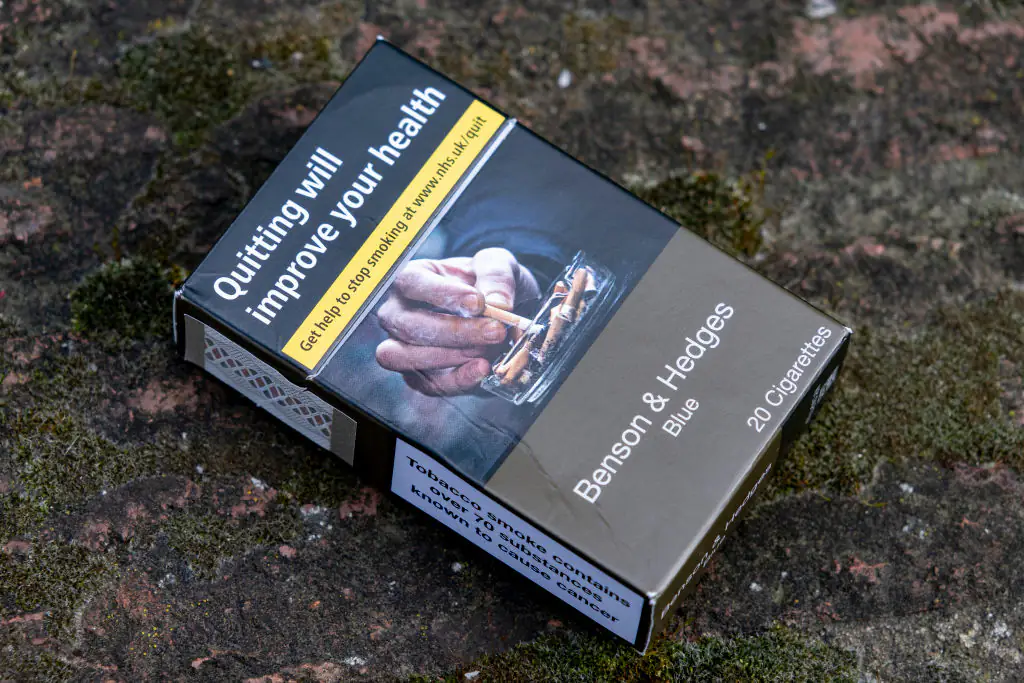
The effects of smoking on the body are wide-ranging, with it even being able to affect the hearing by depleting the oxygen in the inner ear.
It can also leave you breathless when exercising or undertaking physical activity as it makes it harder for the blood to circulate, and can end up causing lung cancer, too.
The best way to protect yourself from the harmful effects of smoking is never to start.
Anthony W. Kim, MD, division chief of thoracic surgery with Keck Medicine of USC, explained: "It is in any individual’s absolute best interest to never smoke or at least quit smoking, if they are current smokers.
"There are hundreds of thousands of people who are literally dying from smoking-related diseases and wish that they had the option again to have never started."