


Health6 min(s) read
Major vaping study finds 'shocking' results as two reviews reach opposite conclusions
.jpg_I4Ebof?tr=cr-0.338.2730.3068,f-webp,q-70,w-100)
A major new review has found 'high certainty evidence' that vaping is substantially less harmful than smoking and is the most effective way for smokers to quit.
That might come as a surprise given the direction the conversation has been heading.
A separate study published six days earlier found the exact opposite for young people, linking vaping to respiratory problems, mental health issues, and a higher chance of eventually picking up cigarettes.
Another major study earlier this year found that vaping likely causes lung and mouth cancer.
Both studies are credible, although both reached very different conclusions.
The gap between them is where the entire vaping debate now sits.
What the Cochrane review found
Cochrane, one of the most respected names in independent health research, analysed 80 randomised controlled trials involving 29,861 participants. Nine of the trials were new to this review.
They found that nicotine e-cigarettes were the single most effective method for helping smokers quit.
On average, vaping led to about four more successful quitters per 100 people compared to nicotine replacement therapies like patches and gum.
Quit rates remained higher regardless of whether the person had behavioural support or was going it alone.
The review found no evidence of 'increased serious harm' from using vapes to quit smoking.
"We have very strong evidence that regulated nicotine e-cigarettes are substantially less harmful than smoking," said Dr Jamie Hartmann-Boyce, senior author of the review from the University of Massachusetts Amherst.
"Based on the consistency of the findings here, it's clear that they are a proven and viable option for people wishing to quit traditional cigarettes."
The key word in all of that is 'regulated'. The findings apply to licensed, regulated nicotine e-cigarettes. Not black market products.
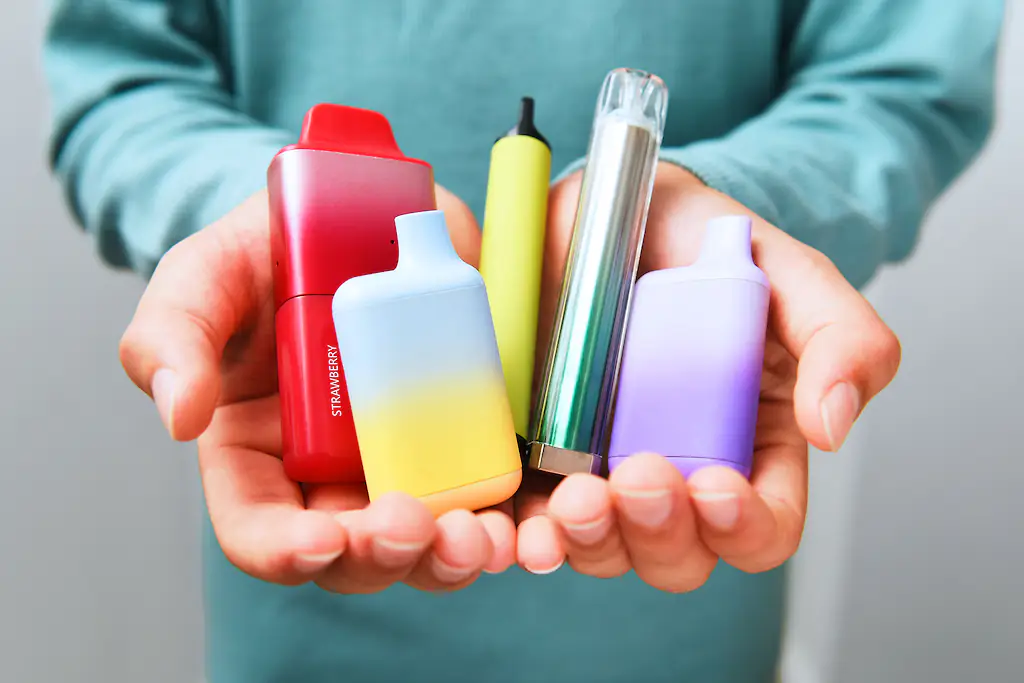
Not devices containing THC or other substances. Not the disposable vapes being sold to teenagers out of corner shops.
An alarming simulation comparing the effects of smoking and vaping went viral earlier this year precisely because the visual difference between the two shocked people who assumed they were equally bad.
What the other study found about young people
Six days before the Cochrane review dropped, the Royal College of Paediatrics and Child Health published its own findings. They were not reassuring.
The RCPCH examined over 14,000 published articles, 325 full-text studies, and 81 individual studies.
They found consistent evidence that young people who vape are more likely to report coughing, wheezing, bronchitis symptoms, and asthma flare-ups.
Beyond the lungs, they found links to poor oral and dental health, mental health problems including anxiety and depression, disrupted sleep, eye health issues, and allergies.
A separate study found vapes are 3,000 times dirtier than an average toilet seat.
And here is the finding that cuts through everything else: vaping was found to lead to 'subsequent cigarette smoking' in young people.
The thing that is supposed to help adults stop smoking may be the thing that gets teenagers started.
"Vaping should not be seen as a harmless part of growing up," said Professor Will Carroll, co-author of the RCPCH review.
"The evidence shows clear links with respiratory symptoms, nicotine dependence and subsequent cigarette smoking, while concerns about wider impacts on young people's health continue to grow."
How both can be true at the same time
Because they are answering different questions.
The Cochrane review asks: is vaping a safer alternative for adults who already smoke? The answer is yes, significantly.
The RCPCH review asks: is vaping safe for young people who would not otherwise be smoking? The answer is no, and the evidence is getting worse.
The Cochrane study itself acknowledged this.
Vaping has its own risks, but for someone already addicted to cigarettes, those risks 'pale in comparison to the dangers of smoking'.
A heart surgeon who went viral warning people to cut one thing from their lives made the same distinction, calling smoking the single worst thing a patient can do to their cardiovascular system while noting that vaping, though not harmless, does not carry the same level of risk.
A separate simulation showing the true long-term effects of smoking reinforced why the comparison matters: smoking damages lung linings, causes chronic cough, bronchitis, and dramatically increases the risk of cancer in ways that regulated vaping has not been shown to replicate.
Dr Hartmann-Boyce put it plainly: "For somebody who is already addicted to nicotine through cigarettes, having a safer alternative like an e-cigarette is something worth considering, especially when other quit aids have proven unsuccessful."
That is a very different statement from 'vaping is safe'.
It is saying vaping is less dangerous than the thing it replaces.
For an adult smoker trying to quit, that matters. For a 15-year-old who has never smoked a cigarette in their life, it is irrelevant.
Where the UK stands now
More people in the UK now vape than smoke for the first time.
There are 5.4 million vapers in the country and usage among young people has risen sharply.
A new law comes into force on October 29 making it illegal to sell any vape or nicotine product to anyone under 18.
That includes an adult buying one for someone underage, and vaping in a car carrying anyone under the age limit.
Carroll welcomed the law but said it does not go far enough.
He wants the government to limit the types of flavours available, not just rename them, to stop products being marketed in ways that appeal directly to children.
Research has already flagged that certain vape flavours may cause significantly more harm than others, making the flavour question a health issue as much as a marketing one.
"It must not be seen as a one-and-done solution," said Dr Mike McKean, RCPCH vice president for policy.
"We need to keep pace with a rapidly evolving market and continue to take action to protect children from nicotine products that are deliberately made and marketed to appeal to them."
Two studies. Two conclusions. One says vaping saves lives. The other says it is damaging a generation.
Both are right, and the fact that both are right at the same time is the problem nobody has solved yet.