Health4 min(s) read
Health4 min(s) read
world2 min(s) read
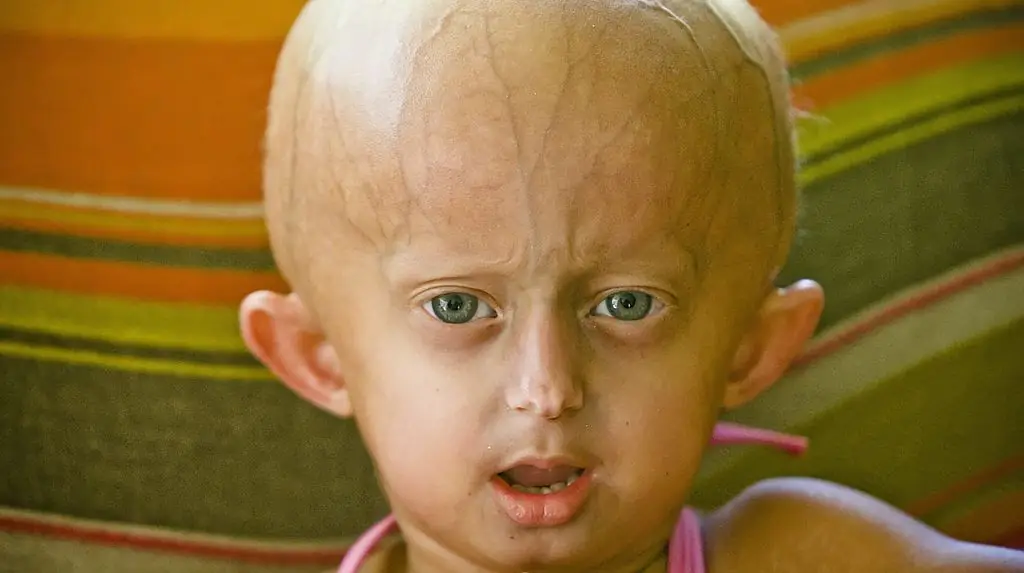
Beandri Booysen has sadly died at 19.
Booysen is a social media personality who rose to fame over the years by sharing her inspirational story online, but her mother has recently confirmed that that the teenager had died.
Taking to Facebook on Wednesday (December 18), Beandri's mom, Bea Booysen posted a statement alongside a black-and-white photo of the star with her birth date as well as the day she died.
"It is with deep sadness that we announce the passing of Beandri Booysen, one of South Africa's most beloved and inspiring young women," the statement read. "Beandri was not only known for her vibrant personality and infectious laugh but also as the last surviving individual in South Africa living with Progeria - a rare genetic condition that causes children to age prematurely."
According to the Cleveland Clinic, progeria occurs when there is "tiny genetic mutation" in the DNA of an individual.
It also stated that the condition is "always fatal" adding that: "Death most often occurs as a result of heart attack or stroke."
However, the official cause of death has not yet been confirmed for the 19-year-old.
The statement went on to state: "Despite the challenges she faced, Beandri radiated hope and joy. She became a symbol of awareness for Progeria and other special needs, using her unique spirit to inspire thousands of people worldwide."
It concluded: "The Booysen family kindly requests privacy during this profoundly difficult time as they mourn the loss of their beloved Beandri. Further details regarding the memorial service will be shared in due course."
Beandri racked up an impressive 279.2 thousand followers on TikTok alone, and after a tribute video was posted to the account yesterday (December 19), many have taken to the comments to send their well wishes.
"RIP Beandri you were born an angel now you received your wings..." wrote one user while another added: "RIP precious Beandri. Deepest condolences to family."
A third also chimed in writing: "Rest in peace Beandri. You fought the good fight, you've been a great inspiration to many and your fight is over now..."
And this user commented: "Rest in peace angel. I used to watch her videos here on tik tok, thank you for encouraging humanity Beandri, go rest my love."
According to the Progeria Research Foundation, there are an estimated 400 children living with the condition worldwide.
Our thoughts are with Beandri's loved ones during this difficult time.
health2 min(s) read
Michiel Vandeweert, a Flemish content creator who documented his life with progeria, has died at age 28. His family shared news of his death in a statement obtained by the Flemish news broadcast VRT NWS.
Vandeweert was diagnosed at a young age with progeria, a rare and progressive genetic disorder that causes children to age rapidly starting around age 2. According to the Mayo Clinic, the condition typically results in a life expectancy of about 15 years, and there is no known cure.
Doctors once told Vandeweert that he would likely only live to age 12. He far surpassed those early expectations, eventually becoming one of the oldest living people in the world with the condition.
Through his Instagram, YouTube, and Twitch accounts, where he gathered a combined following of more than 90,000 people, Vandeweert posted regular gaming content alongside insights into his experience with progeria. At age 15, he published his memoir, Ik Ben Michiel (translated as “I Am Michael”), which focused on facing a short life expectancy and navigating daily life with the disease.
Earlier this year, Vandeweert and his 20-year-old sister Amber, who also has progeria, were featured in the documentary How To Be Alive: Amber and Michiel. A film crew followed the siblings over several months to highlight the everyday realities of living with the disorder.
News of his death brought widespread condolences throughout Belgium. Rik Kriekels, mayor of Diepenbeek where Vandeweert lived, shared his admiration for Vandeweert's outlook. "People sometimes complain and nag a lot about small things. When you look at how Michiel lived his life, you can only have admiration for that," Kriekels wrote, according to VRT NWS.
The soccer team KRC Genk, which Vandeweert closely followed, also published a tribute on Instagram on August 10.
"It is with deep sadness that KRC Genk bids farewell to Michiel Vandeweert. Michiel truly loved life and was a loyal Genkie. His courage and positivity were a source of inspiration to many," the post stated. "Our thoughts are with Amber, his parents, family, and friends. Rest in peace, Michiel. 💙"
uncategorised3 min(s) read
health4 min(s) read
A woman who lived to the incredible age of 117 ate one food that scientists believe could have contributed to her long life.
When Maria Branyas Morera passed away in 2024 at the age of 117 years and 168 days, she held the title of the world’s oldest person.
Before her death, Branyas asked doctors to study her body.
Samples of blood, saliva, urine, and stool were collected at different times, giving scientists a unique opportunity to explore the biology of extreme aging.
According to researchers at the University of Barcelona and the Josep Carreras Leukaemia Research Institute, Branyas carried rare genetic variants linked to longevity, immune function, and healthy heart and brain activity.
Dr. Manel Esteller, chairman of Genetics at the University of Barcelona’s School of Medicine, explained: “The conclusion is that the clues for extreme longevity are a mix between what we inherited from our parents and what we do in our lives.
"And this mix, the percentage depends, but it can be ... half and half.”
Branyas “had very good genes that protect against many disorders, many genetic variants that nobody has seen before,” Esteller said.
Her cells, scientists noted, “felt” or “behaved” much younger than her chronological age.
She exceeded the life expectancy of women in Catalonia by more than 30 years.
While her DNA gave her an advantage, lifestyle also played a key role.
Branyas avoided smoking and drinking alcohol, instead following a Mediterranean diet rich in fish, olive oil, and especially yogurt.
She ate three plain yogurts daily, which Esteller said helped replenish “good bacteria” in the gut, reducing inflammation — one of the leading causes of aging and disease.
“These are good bacteria that provide an advantage to humans,” Esteller explained.
In fact, Branyas once posted online about her love for yogurt, saying it “gives life.”
The study added: “Whether the dominance of the Bifidobacterium [beneficial gut bacteria] related genus is fully attributable or not to the yogurt diet cannot be completely confirmed...
"However, we believe that it is likely that a beneficial effect of yogurt ingestion via modulation of the gut ecosystem could have contributed to her well-being and advanced age.”
Despite her advanced years, Branyas showed markers of health often seen in much younger people.
Scientists observed excellent cardiovascular health, very low levels of inflammation, high levels of “good” cholesterol, and extremely low levels of “bad” cholesterol and triglycerides.
Her immune system and gut microbiome also resembled those of younger cohorts. These factors, researchers say, may have helped her avoid diseases that commonly affect older people.
Remarkably, she lived free of cancer, dementia, and major cardiovascular issues.
One surprising discovery was a “huge erosion” in Branyas’ telomeres — the protective caps at the ends of chromosomes. Short telomeres are usually linked to aging and a higher risk of death.
But in her case, scientists believe shorter telomeres may have helped protect her from cancer by limiting the lifespan of her cells, making it harder for tumors to proliferate.
“The picture that emerges from studying Branyas shows that extremely advanced age and poor health are not intrinsically linked and that both processes can be distinguished and dissected at the molecular level,” Esteller and his colleagues wrote in Cell Reports Medicine.
Another team of epigeneticists, Eloy Santos-Pujol and Aleix Noguera-Castells, added: “The picture that emerges from our study, although derived only from this one exceptional individual, shows that extremely advanced age and poor health are not intrinsically linked.”
Researchers caution that aging is “highly individualized” and that conclusions from a single person should be taken with care. Still, studying supercentenarians like Branyas provides valuable insight into human longevity.
Maria Branyas Morera was born in San Francisco in 1907 before moving to Spain at age 8. She survived two world wars, two pandemics, and raised three children. By the time of her passing, she had 13 great-grandchildren.
health3 min(s) read
A mother thought her baby had inherited a facial feature from her dad, but was shocked to learn that it was actually a sign of childhood dementia.
Morgan Rachal, a mother of two from Louisiana, played a pivotal role in uncovering her daughter’s serious brain and nervous system disorder.
Rachal noticed that her 18-month-old daughter, Lydia, exhibited a few health issues common in infants, such as gastrointestinal problems and difficulty sleeping.
Lydia also had prominent eyebrows, which Morgan initially attributed to genetics from her father.
“Everyone always said, ‘She looks just like her daddy,’” Rachal shared in a TikTok video, featuring photos of Lydia's striking eyebrows.
The breakthrough came in March when Rachal’s mother sent her a TikTok video showcasing a young girl diagnosed with Sanfilippo syndrome, a severe disorder impacting the brain and nervous system, often leading to childhood dementia.
“I looked at it and I just saw Lydia's face in this child,” Rachal told PEOPLE.
Despite Lydia meeting all her developmental milestones, frequent ear infections, constipation, and sleep disturbances made Rachal push for more testing. “Those are all common things with babies,” she added.
Prompted by the video, Rachal took Lydia to her pediatrician a week later, showing him the TikTok and inquiring about genetic testing for Sanfilippo syndrome.
The pediatrician admitted he had never encountered the condition before. “He said he had never seen anyone with it, and had never even been asked about it,” Rachal recounted.
After conducting his own research, the pediatrician referred the family to another hospital for comprehensive blood and urine tests.
Following a tense week, the tests confirmed that Lydia had Sanfilippo syndrome.
The family was subsequently referred to a genetics specialist in New Orleans, who provided a glimmer of hope by revealing that the disorder had likely been caught early enough to prevent brain damage.
“They told us it hasn't affected her brain yet,” Rachal said. “It usually doesn't start affecting them until age three or four — that's when children with Sanfilippo start to regress.”
However, Lydia's future remains uncertain. She has Type B Sanfilippo syndrome, meaning she lacks a specific enzyme crucial for breaking down certain sugars.
There is currently no cure, but potential treatments include clinical trials for enzyme replacement and gene therapy.
“Those treatments could ultimately slow down the regression and prolong her life,” Rachal explained.
Currently, Rachal is navigating what she calls a “limbo period.” She remains active in fundraising efforts to enable Lydia’s participation in future clinical trials if she qualifies and uses social media to raise awareness about Sanfilippo syndrome.
“It's so rare that a lot of moms have told me their child was first diagnosed with autism because that's how it presents,” Rachal said.
“I hope that by sharing our story, we can bring awareness and ultimately that will lead to more research of the disorder.”
Reflecting on the crucial video, Rachal expressed gratitude for her mother sending her the video in the first place.
“If someone reaches out to you with concerns about your child, it's because they love you,” she said.
“Though it is a scary journey, I am glad my mom sent me that TikTok. I was able to advocate for my daughter and get the early diagnosis.”
We wish Lydia and her family all the best with her health in the future.