ADVERT
Health3 min(s) read
Published 15:57 09 Jun 2026 GMT
A woman who became convinced she was a pedophile after a single intrusive thought has revealed how she was eventually diagnosed with a little-known form of OCD.
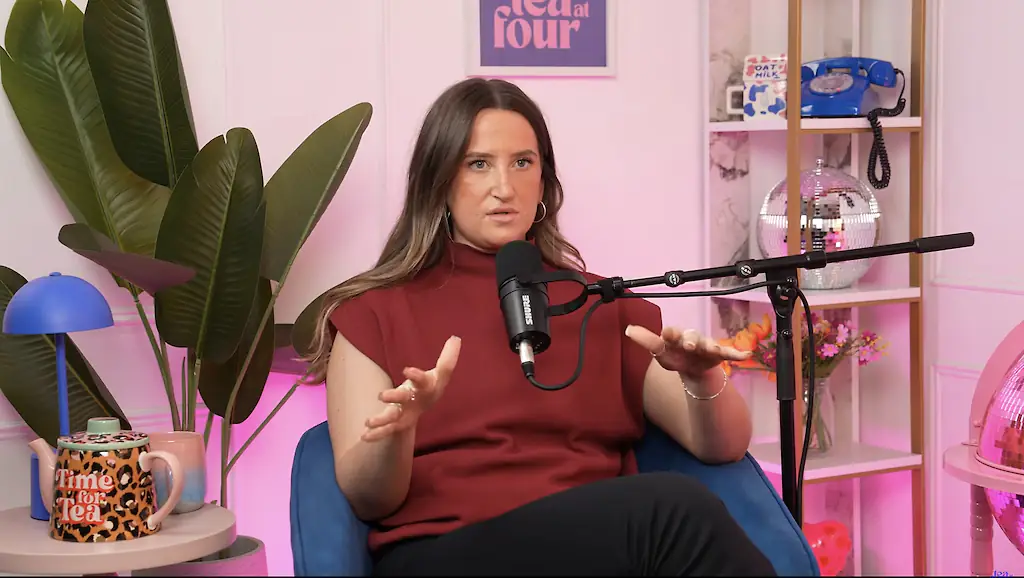
Molly Lambert, 22, appeared on ITV's This Morning on Monday (June 8), where she opened up about being diagnosed with a subtype of obsessive-compulsive disorder known as P-OCD.
The condition causes sufferers to experience intrusive thoughts, images, fears, and doubts related to minors, often leaving them overwhelmed by guilt, fear, and anxiety despite having no desire to act on those thoughts.
For Molly, this all began when she was around 14 or 15 years old and preparing to go on vacation.
She recalled noticing a young girl wearing what she considered to be an inappropriate outfit for her age, but instead of dismissing the observation, she became fixated on why she had thought it in the first place.
That passing thought soon developed into an all-consuming fear that something was wrong with her.
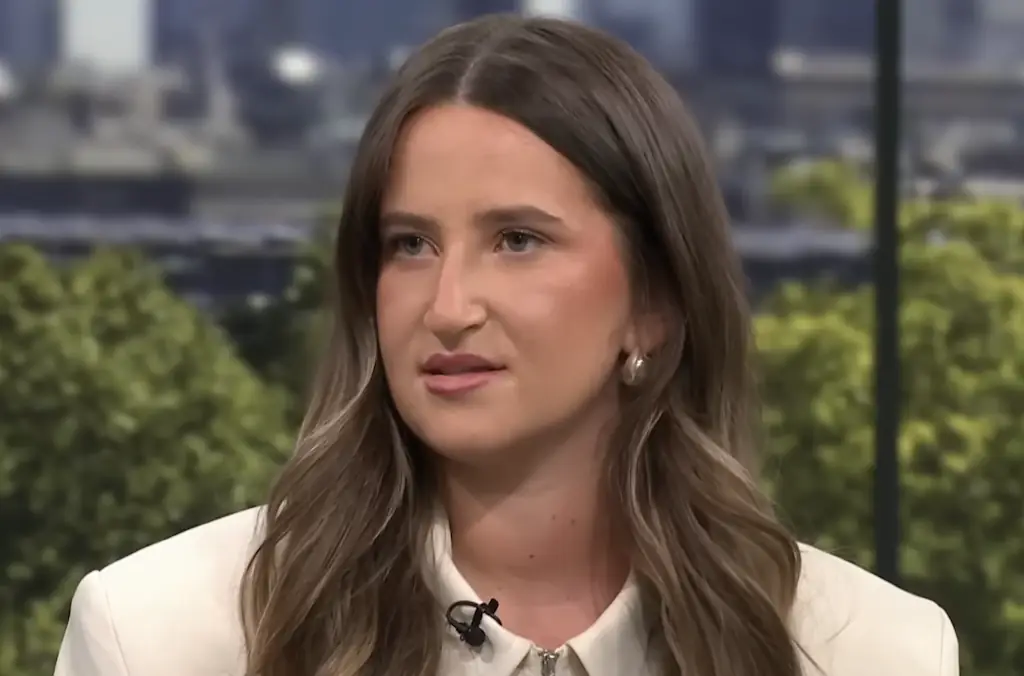
Although she managed to move on from the incident, the intrusive thoughts resurfaced the following year while she was revising for exams.
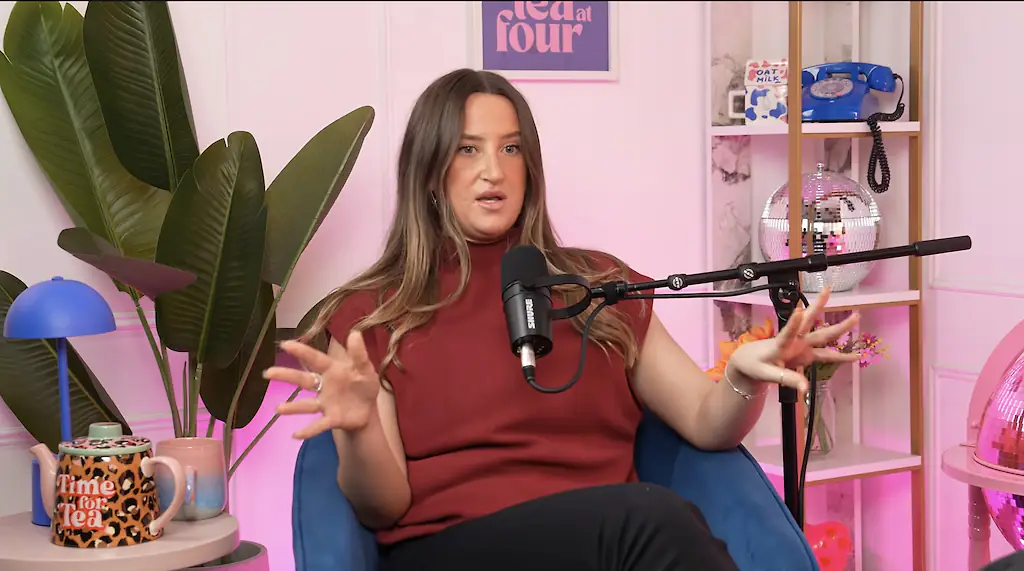
"From that moment, my life was forever different," she said in a previous appearance on the Tea At Four podcast.
"From that desk day, I was just a different person - obviously everyone around me didn’t know what was happening and just thought I was stressed about my exams. Every second of every day I was just thinking about how much of an awful person I was," she added.
Molly's thoughts became increasingly severe, leading her to believe she was a danger to children and even those closest to her.
Looking back, she says she had no idea OCD could manifest in such a way.
"Obviously, when I first experienced it at 14, 15, I had no idea that OCD looked like this and could be anything that what I was experiencing," she said.
The 22-year-old knew she was experiencing thoughts about "harming people and being a pedophile," but believed that admitting them would get her into serious trouble.
"I couldn't eat. I lost so much weight. I wasn't sleeping. I was so terrified to be alone because obviously when you're alone, you know, the thoughts get worse," she explained. "My parents were like, 'Why is she always with us all the time?'
"I was quite an independent person before, and I was, you know, sitting in their bed all the time and just like terrified. They thought I was nervous about my exams. That was that was the least of my worries, you know."
She feared that if she told anyone what was happening, she could be arrested.
Molly continued to keep her fears hidden from those closest to her.
"I mean, my parents are amazing and like they've always been very, like, emotionally intelligent and quite an open household. And I thought I could never tell them that I'm obsessing about being a pedophile," she said.
Eventually, she reached the breaking point and opened up to them on Christmas Eve.
"They were amazing," she said, adding that her parents did not initially understand what she was describing, but quickly helped her find professional support.
"Obviously, they didn't know what I was talking about. I was quite distressed and um, they got me therapy pretty quickly," she said.
Although she was reluctant to seek help, therapy eventually led to the diagnosis she had been desperately searching for.
Molly now uses her platform to speak openly about her experiences in the hope of raising awareness and helping others who may be suffering in silence.
health6 min(s) read
Published 13:45 09 Apr 2026 GMT
A woman who was diagnosed with OCD (obsessive compulsive disorder) in adulthood revealed the terrifying thoughts that consumed her brain, convincing her that she could be a danger to children.
Molly Lambert, 22, was diagnosed with OCD last year but has been battling intrusive thoughts since childhood, which took an increasingly dark turn in her teenage years.
Appearing on the Tea At Four podcast, Molly explained: "When I was younger, I would always obsess over events and social stuff, like ‘how do I act in that?’ and go over conversations.
"I was just a really anxious little bean when I was younger - which, looking back, is sad because it was obviously OCD. I was really obsessing over Madeleine McCann and if that could happen to me, and what would happen if someone came into my house.
"I had night terrors - all the signs were there at a very young age but that was put down to child anxiety and whatever."
It wasn't until she was around 14 or 15 years old that things began to worsen after she saw a small child in a crop top and shorts at an airport and thought it was a "weird outfit", which then made her worry why she'd even thought the clothing was inappropriate.
Her whole vacation was then spent obsessing over why that thought had entered her head and whether she was safe to be around other children at the pool or beach.
Somehow, she managed to put that incident out of her mind eventually, but found that stress events and triggers could make her OCD flare up even more.
The following year, while sat at her desk revising for her exams, she remebered the thought from the summer before, adding: "From that moment, my life was forever different.
“From that desk day, I was just a different person - obviously everyone around me didn’t know what was happening and just thought I was stressed about my exams. Every second of every day I was just thinking about how much of an awful person I was."
These intrusive thoughts began to spiral and make her worry that she was a pedophile, a danger to her family and friends, and even fear that she could become attracted to her family or even her dog - despite having a phobia of dogs.
"Now I’m out of it, it’s so irrational, but all these themes are irrational. If you can understand OCD from a perspective of someone wiping the side five times, because that’s irrational, right?", she explained.
"But so is me thinking I was a paedophile when I was 15 - I obviously wasn’t a paedophile, it was my brain.
"OCD is a neurodivergence so the way you process information is different, so it gets stuck and you have a loop. You just can’t forget something."
She revealed that she didn't initially think she had OCD as "I’m not clean, I’m not organized, I’m quite chaotic," she admitted.
"So I suffered for years without knowing about it, so I did not fit into [the stereotype]. But OCD is obsessive and intrusive unwanted thoughts. There are different themes within that, so harm, sexual, moral, the health and contamination - what you guys all know.
"Basically anything that you can become anxious about is a certain theme. Mine was the pedophilic, sexual, and harm themes because they scared me the most so I was attached to them the most."
She began to realize she had OCD after stumbling across a TikTok video of someone else who had similar intrusive thoughts without the stereotypical 'cleaning' symptoms many associate with OCD.
Molly finally opened up to her parents after having a few drinks one Christmas Eve, and they helped her to get therapy and finally a diagnosis.
While many people fear being labeled, Molly found it helped her compartmentalize her condition and separate it from herself, by having a medically-diagnosed reason for the thoughts that were popping into her head uninvited.
She found that the intrusive thoughts manifest around a person's biggest fears - so the thing she would least want to be is what her brain was convincing her she was capable of.
Molly revealed: "When I was growing up it was my fears about the world and danger and the things I could be put in, and then it flipped to ‘what if I am the danger?’ So I was just covering every area, basically.
"And I think we can all agree that pedophiles are the worst people in society, so my biggest fear was being that. That’s the top [worst] thing you can be, and it was almost like my thoughts of being a murderer were kind of easy compared to the pedophile ones because that’s the worst.
"The pedophile one was so distressing because why have I even had a thought that I could be that.”
The intrusive thoughts have had a lasting impact on her reluctance towards relationships, explaining: "When I was 15 - obviously that’s the kind of time you’re having crushes and figuring out your sexuality and having firsts, and I was thinking I was a pedophile so it kind of weirdly removed all of that.
"I should have been having crushes on George and Henry, but I was like ‘aghhh’. I’m joking about it but obviously it’s awful, and it kind of removed all of my nice thoughts about intimacy, sex, and romance from my mind entirely like ‘that’s not for me - I’m not allowed to do that’."
Since then, Molly has tried various types of talking therapy and even hypnosis, the latter of which she did not find very helpful for her OCD, and can manage the condition better.
She chose to speak openly about her experiences on her own platform to raise awareness of the condition and to reassure others that they are not alone if they are having obsessive and intrusive thoughts.
Check out the full episode with Molly Lambert and other episodes of Tea At Four on YouTube and Spotify now.
uk3 min(s) read
Published 12:10 18 Jan 2026 GMT
A woman has bravely shared the shocking moment she discovered her ex-husband was a pedophile, and the signs she now wishes she'd noticed earlier.
Lynsey Crombie, a TV personality and social media influencer, first rose to fame on the British reality show Obsessive Compulsive Cleaners.
However, her personal life took a dark turn when she learned that the father of her two children had a criminal past.
Crombie, who was 28 weeks pregnant with twin daughters at the time, found out just months before her ex-husband's arrest that he was a pedophile.
Appearing on This Morning in 2021, she described the moment she learned the truth as "unbelievable" and "completely shocking."
"I had no idea," she said. "I had gone back to visit my parents for a few days, and I just thought, 'What’s gone on while I was away?’”
At the time, Crombie was unaware of the full details of her ex-husband's crimes, but it was revealed that he was a "schedule one sex offender," meaning he had been convicted of offenses against a child.
What followed was an overwhelming emotional reaction. Crombie recounted grabbing bleach to clean her home, including herself, in an attempt to rid herself of any trace of him.
“I remember pouring it all over the work surfaces, and over my own hands and arms, and I scrubbed. I scrubbed everything - myself included - with a scourer," she recalled, per Daily Mail. "I remember thinking that this man had touched me physically and I want all his germs to go."
Looking back, Crombie believes there were several red flags that she overlooked during their relationship.
She explained how her ex-husband would often stay up late, often retreating to his office and pulling the plug out of the wall when she entered the room.
"Rather than just closing the laptop down or letting me see the screen, he’d actually pull the plug out of the wall," Crombie shared in a 2021 interview on the Life, Interrupted podcast.
"And it’s only when I look back – and I spotted this three or four times in the relationship – I think ‘what was he doing on the computer to actually physically pull it out of the wall?’” she added.
Crombie’s gut instinct told her to dismiss these odd behaviors at the time, but they now stand out as clear warning signs.
The psychological toll of learning about her husband's crimes left Crombie struggling to cope, but amidst the chaos, her children became her anchor.
After learning the truth, Crombie went into premature labor just five days later and gave birth to her twin daughters, Mollie and Olivia, who weighed under 3lbs at birth.
While initially struggling with the idea of having children with her abusive ex-husband, she now credits her daughters with saving her.
“Thank goodness that when my girls arrived, I looked at them and felt nothing but love. They actually saved me because I had to rebuild my life for them. I don’t think I’d be here without them,” she said.
Crombie has since moved on from the trauma of her past and found happiness with her second husband, Rob. The couple shares a teenage son, and the TV personality revealed that her daughters consider Rob to be their dad.
As for her ex, whom she refers to as "The Freak," Crombie says he has been incarcerated multiple times, most recently in 2022. Police had discovered disturbing content on his computer, involving children and animals, The Mirror reported.
She has since severed ties with his family, and her children will grow up without any connection to their father's relatives.
health3 min(s) read
Published 11:52 14 Aug 2018 GMT
They say that beauty is in the eye of the beholder, and it's true that everyone has their own standards when it comes to appearances. But on social media, sad to say, most people's looks seem to be more homogenised and less unique than ever. Scroll through Instagram and you'll see that everyone is taking their selfies the same way, using the same filters and poses and camera angles, so that every account is a clone of another. It's pretty aggravating to be honest.
But there are Instagram accounts out there that are more impressive, and champion unconventional looks. For example, take the case of 16-year-old Molly Matthews - an Instagram star with serious psoriasis who has taken it upon herself to prove to her many followers that she's (literally) comfortable in her own skin.
Molly was first diagnosed with the skin condition when she was 11-years-old, which first manifested itself as dandruff on her scalp. A dermatologist diagnosed her with psoriasis, and the itchy red patches of dry skin soon spread across her chest and neck. However, Molly decided to deal with her skin issues positively, and set up her Instagram page to celebrate her 'skin tattoos.'
In recent interview, Molly stated: "Before I set up my Instagram, I hadn’t openly talked about my psoriasis before, so I was a little nervous. I’m tired of people pitying me, or saying I’m brave for showing off my skin. This isn’t brave – it should be the norm. I do get some nasty comments. People ask what’s wrong with me, or tell me my skin looks bad."
"I’ve even had someone tell me not to wear red lipstick as it makes my psoriasis look worse – but that just made me go out of my way to wear it even more. That kind of thing can be incredibly damaging to people struggling with self-esteem, but I actually love my skin. I’m very comfortable having it out, and don’t feel the need to hide. I always say I won’t need tattoos when I’m older, as the psoriasis patches already look like little flower designs."
She added: "I have family members with the condition, so at first I felt quite pessimistic, as I’d seen them struggle. I also go to an all girls’ school, so there’s an awful lot of pressure on looks. At the time of my diagnosis, I was 11- an age when I didn’t want to be different. When it’s something as visible as the skin on your face, though, it’s hard to blend in. Thankfully, the girls at school have been lovely."
"It’s great to see celebrities like Kim Kardashian and Cara Delevingne speak out about it, but it’s also frustrating, as not everyone can afford the expensive treatments they have. I found taking pictures helped a lot. It gave me a chance to properly look at myself and appreciate when I was having a good day. You don’t have to love your psoriasis, but there’s a lot to be said for taking a moment to recognise when you look nice. I don’t think of myself as ugly because of my skin – it’s just part of me."
Personally I think Molly pictures are absolutely stunning, and she's looks great. If we all had her confidence, the world would be a better place.
health4 min(s) read
Published 19:57 10 Aug 2018 GMT
Why is it that some people are fat and some people are thin? It's a question which has fascinated nutritionists, personal trainers and bodybuilders the world over. Frankly, if you're slim and trim, it's easy to exercise what body-positivity activists dub "thin privilege" over overweight people, and assume that their own dietary choices and apathy are entirely to blame for their obesity. It's all too easy to stand at the sidelines and criticise; but the fact of the matter is that sometimes obesity and body fat is a symptom of an underlying problem, and not purely an issue in isolation. If you're struggling with your weight, if you're overeating and don't know how to stop, and if you dread to step on your bathroom scales, then the problem might be more to do with your psychology than your stomach.
Take 25-year-old Georgie Callé; a chronic binge-eater who would routinely chomp her way through 4000 calories a day without breaking a sweat, and spent an unhappy childhood and adolescence failing to beat her own impulse to gorge. But it wasn't until she was diagnosed with obsessive-compulsive disorder in adulthood, that she realised that her self-destructive eating habits were actually her response to the overwhelming fear and anxiety that was ruining her life. Once she dealt with her OCD, she was able to make an incredible body transformation, and now looks completely different.
In a recent interview, in which she opened up about her battles with mental illness and obesity, Georgia stated: "I didn’t understand at the time that I had OCD. I just felt like a horrible person. I’d cross the street to avoid being around people. It affected my concentration at work, my social life – it permeated everything. I felt so alone in my head and tried to control it with binge eating ... From a young age, I was constantly trying to lose weight in one way or another. The heart of the problem was that I was deeply unhappy though."
She said: "I found the space to talk and learn about what was wrong made a massive difference," and explained that, after her OCD became unmanageable, she decided to seek professional help. "The medication was the best thing that happened," she stated, "It reset my brain. I could tell it was finally getting under control when the medication began to work. I could feel a weight lift out my head, giving me space to really embrace the cognitive behavioural therapy. I was still binge eating at this point, but didn’t feel as scared of my condition."
"I looked around and thought, ‘Things are going well for me – why haven’t I got this sorted yet?’” she said. “I’d hear people talking about the gym or healthy eating and realised that it didn’t come naturally to anyone. If I wanted this, I’d have to work hard. I remember seeing a gorgeous Ted Baker dress that never would have fit me, even in the biggest size, so I used that as my motivation."
Georgia decided to take action; she changed her diet completely: sticking to lean meat, fish and veggie curries - cooking her meals herself. She also hit the gym five times a week, and almost immediately saw a massive improvement overall as she shed pound after pound. Now she only weights 11st 9lb (a mere 12lbs away from her target weight) and now intends to take part in the 2019 London Marathon on behalf of The Mental Health Foundation.
Georgia is now keen to spread awareness about obsessive-compulsive disorder, and believes that tackling mental problems should be our first priority when trying to improve our physical health. She stated: "My anxiety and OCD are much easier to deal with. I haven’t felt unwell since I started living a healthier lifestyle. I was really inspired by reading other people’s stories, so I hope sharing mine can help others. My blog keeps me on track, and it’s amazing to see all the lovely messages I receive. To anyone else out there, I’d say lose weight for yourself, not other people, as it’s so important to learn how to love yourself."
I couldn't agree more. If you want to keep up-to-date with Georgia's weight-loss journey, then check out her Instagram blog @inpursuitof healthyness.
health3 min(s) read
Published 12:14 05 Apr 2025 GMT
A woman who left her husband and slept with 200 men after she was diagnosed with cancer has opened up about why she did it, and how he reacted.
Molly Kochan from California turned her devastating diagnosis into an unexpected journey of self-discovery -- breaking free from her marriage and embracing a wild and unapologetic sexual adventure that ultimately inspired a hit podcast and FX series, per the Daily Mail.
Her story is now the subject of Dying for Sex, with Michelle Williams playing Molly and Jenny Slate as her best friend, Nikki Boyer — the confidante who helped her share every twist, turn, and Tinder hookup along the way.
Molly first felt a lump in her breast back in 2005, but doctors dismissed her concerns, telling her she was "too young" for cancer.
Six years later, she was finally diagnosed with breast cancer and began treatment. By 2015, the cancer had spread. The diagnosis was terminal.
Faced with the reality of limited time, Molly made a radical life pivot — and left her husband.
She also made a decision to have as much sex as she wanted, with whomever she wanted, and whenever she wanted.
Molly’s hormone treatment — which usually lowers libido — had the opposite effect on her. “I wanted to hump everything and everyone,” she admitted.
She opened up about the transformation on her and Nikki’s Dying for Sex podcast, revealing: “I was horny all of the time.”
But her marriage wasn’t keeping up.
“For a long time with sex — and this is why I had a problem in my marriage — I was really, really, really good at figuring out what other people liked and then I could simulate that like an actor for them,” Molly explained. “But I never really knew what I liked.”
Her sex life with her husband had flatlined — but Molly didn’t hold it against him.
“I don’t blame him,” she said.
Instead, she took to the internet, diving headfirst into a new world of online flirtations, hookups, and romantic experiments.
When she told her husband what she planned to do, his response was surprisingly chill.
“Good for you,” he said.
Molly went on to sleep with around 200 men, chasing pleasure, connection, and — above all — joy.
One particularly memorable moment was when a man who asked her to kick him in the balls.
“It was like an amusement park built for me with one ride, and that was the ride, and there was no line, so I’m going to do it again and again,” she said.
Molly passed away in March 2019, but not before leaving a legacy through her six-part podcast with Nikki Boyer — which has since been streamed over five million times — and a memoir titled Screw Cancer: Becoming Whole.
For Molly, every encounter wasn’t just a physical act — it was a statement.
As Nikki put it: “Sex felt like the antithesis to death.” It was, she said, “a great distraction from being sick.”