


Health3 min(s) read
Woman shares before-and-after results of taking collagen for a year as expert reveals whether you really need the supplement

A woman has shared the results of taking collagen supplements every day for a year, opening up about whether the popular beauty trend actually made a difference by sharing before and after pictures.
The rigid, youth-giving protein, chewed up and spat out by ‘Big Pharma’ into consumable form, is glossed with the promise of anti-ageing and the eternal physical exuberance of youthfulness.
Collagen, described by the National Institutes of Health as the body’s most abundant protein, acts like a structural support system that helps keep skin firm and elastic while also supporting joints, bones, tendons, and cartilage.
The rise in popularity of collagen
Although our bodies naturally produce collagen, making up around 30 percent of total body protein, interest in supplements and treatments has exploded in recent years, particularly in the beauty industry.
Much of that demand has been driven by the rise of more 'natural' cosmetic trends.
Experts at cosmetic insurance company Hamilton Fraser previously said people are moving away from dramatic procedures and toward more subtle treatments.
Nurse practitioner Julie Scott explained: “Patients now prefer subtle enhancements and natural rejuvenation.”
Cosmetic lead Ella Vranjkovic added: “There’s an increasing demand for subtle and ‘no-makeup’ looks.”
She said treatments designed to stimulate collagen production are becoming increasingly popular because they can deliver 'natural-looking, long-term results.'
Searches for collagen-boosting treatments have surged, with polynucleotide injections reportedly increasing by 188 percent worldwide, according to AL Aesthetics.
What has the research revealed?
But despite the hype, new research suggests collagen may not be the miracle age-reversing fix many people believe it is.
Researchers at Anglia Ruskin University reviewed studies into daily collagen supplements and found they can have 'some legitimate' benefits, particularly for skin hydration and elasticity.
However, they warned collagen is 'not a cure-all.'
Professor Lee Smith, one of the lead researchers, explained: “Collagen is not a cure-all, but it does have credible benefits when used consistently over time, particularly for skin and osteoarthritis.”
He added: “Our findings show clear benefits in key areas of healthy ageing, while also dispelling some of the myths surrounding its use.”
The research found collagen may help improve ageing or sun-damaged skin over time, especially in menopausal women, but there was little evidence to support claims that it completely prevents wrinkles.
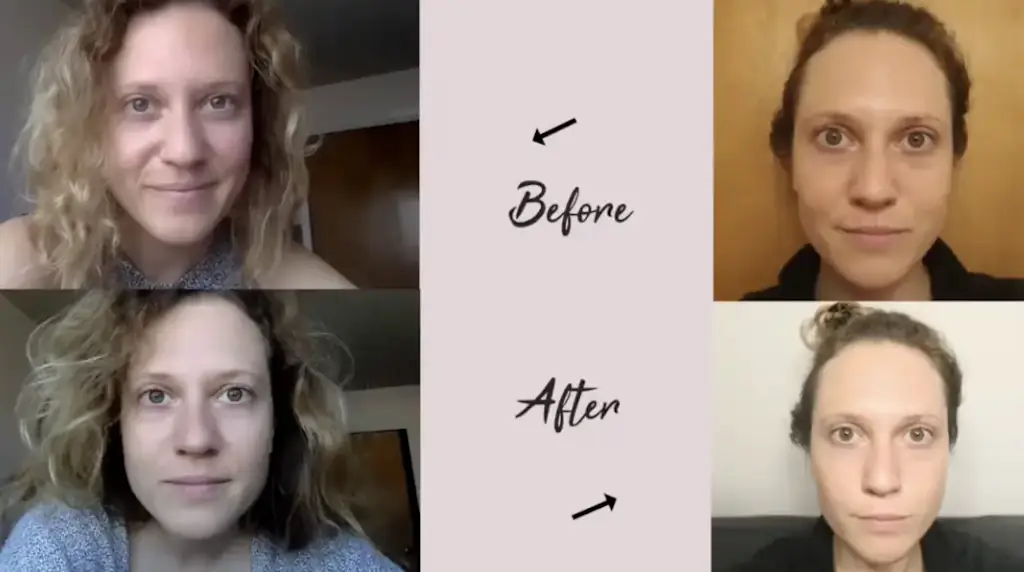
Meanwhile, YouTuber Sara Anderson decided to document her own experience after taking collagen for an entire year.
In a video update, she said the supplement appeared to improve her skin, nails and joints, though she was less convinced about its impact on her hair because she had been treating that separately.
Sharing before-and-after photos, Sara admitted she still gets breakouts but noticed changes fairly quickly.
She said she managed to reduce the 'roughness' and 'bumps' on her face within about a month of using the collagen.

She also noticed improvements in her complexion, explaining: “Before, sometimes if I didn't have any sort of foundation on, my face was just kind of blotchy and pinky.”
She added: “I think that since I started taking this, that has improved.”
Sara said the biggest improvements were in her skin tone and nails, while pointing out that collagen powder is 'basically a protein powder.'
Even though she admitted the lighting in her progress photos wasn’t always consistent because she 'didn’t expect' to keep documenting the process, she felt there were enough noticeable changes to continue taking it.
The findings from the university study appear to support some of her experience.
While researchers stressed collagen is not a miracle anti-wrinkle treatment, they said it may still help people maintain healthier-looking skin as they age.
Professor Smith explained: “If we define anti-ageing as a product or technique designed to prevent the appearance of getting older, then I believe our findings do support this claim for some parameters.”
He added: “For example, an improvement in skin tone and moisture is associated with a more youthful-looking appearance.”